




















Planning a visit? See seasonal allergy care in South Plainfield for what care at our clinic involves.
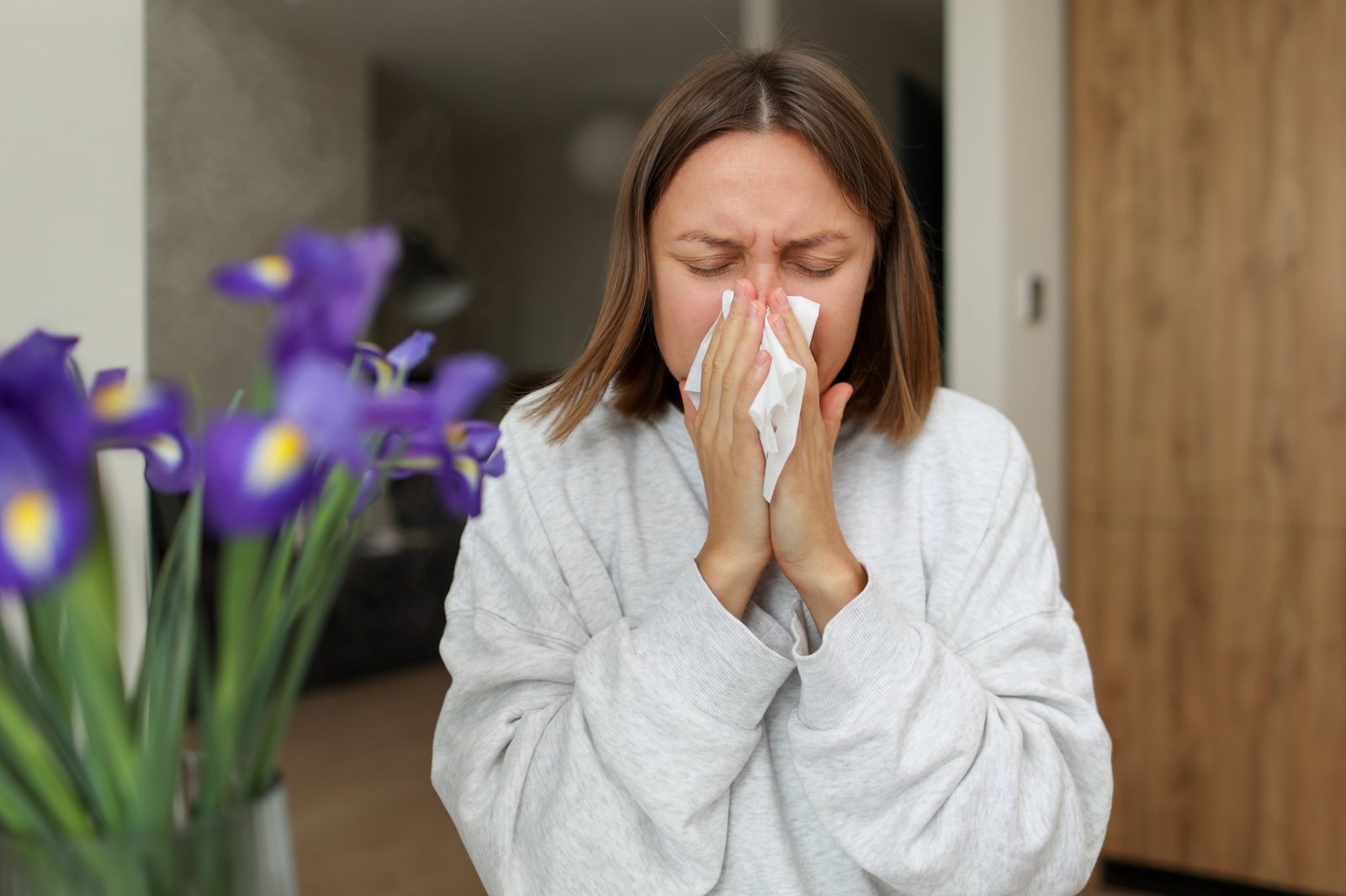
Acupuncture for allergies has better support than most people expect, at least for hay fever, the sneezing, itchy, runny-nose kind of allergy doctors call allergic rhinitis. The American Academy of Otolaryngology–Head and Neck Surgery Foundation says in its allergic rhinitis guideline that clinicians may offer acupuncture to patients who want a non-drug option. A review summarized by the National Institutes of Health found relief of nasal symptoms across 13 studies with 2,365 people. The largest single trial found that adding acupuncture to an antihistamine improved quality of life and cut antihistamine use during pollen season, though the authors were unsure the gains were large enough to matter much in daily life. This article explains what that evidence means, how acupuncture fits with nasal sprays and allergy shots, how to time a course around your allergy season, and which allergy symptoms are emergencies that acupuncture has no role in.
It was written by Netra Integrative Health Clinic in South Plainfield, New Jersey, for adults with seasonal or year-round nasal allergies who want fewer symptoms and, in some cases, less medicine.
The essentials, briefly
Acupuncture does not cure an allergy or change what your immune system reacts to. Allergy shots and tablets (immunotherapy) are the treatments that do that. What the trials suggest is that acupuncture, added to usual care, can ease nasal and eye symptoms and improve how people feel during their allergy season, with a modest effect and a good safety record. It is a reasonable add-on if sprays and tablets leave you still miserable, if side effects bother you, or if you would like to rely less on daily medicine.
It has no role in severe allergic reactions. Anyone with a history of anaphylaxis, or who carries an epinephrine auto-injector, needs an allergist, and the auto-injector stays with them whatever else they try.
Hay fever in plain terms
Allergic rhinitis is common. The AAO-HNSF guideline, as summarized by American Family Physician, calls it the fifth most common chronic disease in the United States, affecting about one in six Americans. Mayo Clinic describes it as an allergic response to something harmless in the air, indoors or outdoors.
Symptoms
- Runny or stuffy nose, sneezing and sometimes a cough.
- Itchy, watery, red eyes.
- Itching in the nose, the roof of the mouth or the throat.
- Postnasal drip.
- Dark, bruised-looking skin under the eyes, sometimes called allergic shiners.
- Tiredness, often because blocked noses ruin sleep.
Allergy or a cold?
Mayo gives a simple way to tell them apart. Allergy symptoms start right after exposure, the discharge is thin and watery, there is no fever, and symptoms last as long as the exposure does. A cold starts one to three days after catching a virus, may bring thicker yellow discharge, body aches and a low fever, and usually clears in three to seven days.
Seasonal and year-round triggers
Seasonal allergies follow the pollen calendar. In Mayo's outline, trees release pollen first, in early spring; grasses follow in late spring and summer; ragweed takes over in the fall. Many people have a spring season, a fall season, or both. Year-round allergies come from indoor triggers: dust mites, cockroach droppings, pet dander and mold. Mayo notes that pet allergies can get worse in winter when homes are closed up.
Why it is worth treating
Hay fever is easy to dismiss, but Mayo lists real consequences: missed work or school, poor sleep and daytime fatigue, worse asthma, sinusitis from long-running congestion, and ear infections, especially in children.
Allergies rarely travel alone
The AAO-HNSF guideline describes a well-established link between allergic rhinitis and other allergic conditions, including asthma, eczema and allergic conjunctivitis, and a possible link with ear infections, sinusitis and sleep-disordered breathing. Mayo Clinic lists eczema, asthma and a family history of allergies among the risk factors, along with regular exposure to allergens at home or work and irritants such as smoke and strong odors. That is why we ask about your chest, skin, sinuses and sleep as well as your nose. If you have asthma, your allergy plan should be coordinated with your asthma care.
Cutting down exposure at home
The guideline says avoiding allergens may improve symptoms and reduce the amount of medicine you need. The measures it mentions include air filters, allergen-proof covers for mattresses and pillows, products that kill dust mites, and, for some people, rehoming a pet. Simple habits help too: checking the local pollen forecast, keeping windows closed on high-pollen days, and changing clothes after yard work in pollen season. None of this replaces treatment, but every reduction in exposure lowers the load your nose has to deal with.
What standard treatment looks like
Before thinking about acupuncture, it helps to know what the guideline recommends, because acupuncture is meant to sit alongside these options.
- Nasal steroid sprays are strongly recommended for people whose symptoms affect their quality of life. They help sneezing, itching, runny nose and congestion, and eye symptoms too. For seasonal allergies, the guideline notes they work best when started several days before pollen season.
- Second-generation oral antihistamines, the less sedating kind, are strongly recommended, especially when sneezing and itching dominate. They are quicker but less effective than steroid sprays.
- Antihistamine nasal sprays are another option and may help when tablets do not.
- Allergen avoidance may improve symptoms and reduce medicine use: air filters, bed covers against dust mites and, for some people, finding a new home for a pet.
- Immunotherapy, as shots or under-the-tongue tablets, should be offered or referred when medicines are not enough or when a patient prefers it. It is the only option here that changes the allergic response itself.
- Allergy testing with skin or blood tests is recommended when treatment fails, the diagnosis is uncertain, or knowing the exact trigger would change the plan.
The guideline also advises against using leukotriene blockers such as montelukast as a first choice, and against routinely adding an oral antihistamine when a steroid spray alone is not working. It recommends keeping decongestant sprays such as oxymetazoline to less than three days to avoid rebound congestion.
Acupuncture for allergies: three key pieces of evidence
A guideline, a pooled review and one large trial carry most of the weight.
The AAO-HNSF guideline
In its 2015 guideline on allergic rhinitis, the AAO-HNSF included acupuncture among its options: clinicians may offer acupuncture, or refer to someone who can, for patients interested in non-drug therapy. The American Family Physician summary says studies have shown some symptom relief and better quality of life in people with year-round allergic rhinitis, and no evidence of significant harms. The same guideline made no recommendation either way on herbal therapy.
For a guideline written by ear, nose and throat surgeons, this was a notable inclusion. It is an "option" rather than a strong recommendation, which fits the size of the effect.
Pooled studies
The National Center for Complementary and Integrative Health (NCCIH) summarizes a 2015 review of 13 studies with 2,365 participants that found acupuncture helped relieve nasal symptoms of allergic rhinitis. The details are on the NCCIH acupuncture page.
The largest trial: acupuncture during pollen season
A German trial published in the Annals of Internal Medicine in 2013 enrolled 422 people with seasonal allergies who were sensitized to birch and grass pollen. They were assigned to one of three groups: real acupuncture plus the antihistamine cetirizine as needed (212 people), sham acupuncture plus cetirizine (102), or cetirizine alone (108). Needling, real or sham, was given 12 times across an eight-week stretch.
According to the published abstract, at weeks seven and eight the real acupuncture group had better allergy-specific quality of life and used less antihistamine than both the sham group and the medication-only group. By week 16, after treatment had ended, the groups no longer differed. In the second year, small differences again favored real acupuncture over sham. The authors concluded the improvements were statistically significant but might not be clinically significant, and noted that baseline symptom scores were fairly low.
What this adds up to
Taken together, acupuncture for hay fever looks like a modest, safe add-on. People tend to feel somewhat better and lean less on antihistamines while they are having treatment. The effect seems to fade once treatment stops, which suggests it works best timed to the season rather than as a one-off. It is not a replacement for a steroid spray that works, and it does nothing to prevent severe reactions.
What a realistic result looks like
Based on the trials, a good outcome from acupuncture for hay fever is not a season without a single sneeze. It is more like this: fewer days when symptoms disrupt work or sleep, fewer antihistamine doses, and a season that feels more manageable. In the German trial, the advantage over sham was clear statistically but modest in size, and the benefit faded once treatment stopped. If you go in expecting that kind of change, and keep a diary to see if you get it, you will be in a good position to decide whether it is worth repeating next year.
Who might consider it
In our view, acupuncture for allergies is worth discussing if you:
- Still have troublesome symptoms despite a steroid spray and an antihistamine.
- Get side effects such as drowsiness, nosebleeds or a bitter taste from your medicines.
- Would like to use less medicine, for example while trying to conceive or during pregnancy, after checking with your doctor.
- Have allergies tangled up with poor sleep, sinus headaches or fatigue.
- Are waiting for allergy testing or for immunotherapy to take effect.
It is not the right tool for food allergies, insect sting allergies or drug allergies, all of which need an allergist.
How acupuncture may affect allergy symptoms
NCCIH says the mechanism of acupuncture is not fully understood and points to possible effects on the nervous system, local tissue effects and nonspecific effects such as expectation. In the German trial, real acupuncture beat sham during treatment, which suggests something beyond expectation alone, but the size of the difference was small. Researchers have proposed effects on inflammation and nasal blood flow, and none of these is settled.
Chinese medicine describes seasonal allergies in terms of a weakened defensive layer that lets "wind" in, and treats both the acute symptoms and the underlying pattern. Ayurveda tends to see a running, congested nose as excess Kapha, with Vata or Pitta features depending on whether dryness or burning dominates. These are traditional frameworks for choosing treatment, not proven descriptions of immune biology, and we use them in that spirit.
Timing treatment around your allergy season
Because the benefit in trials appeared during treatment and faded afterwards, timing matters. A practical approach:
- Know your season. Look back at when symptoms usually start: early spring (trees), late spring and summer (grass), or late summer and fall (ragweed). Year-round symptoms point to indoor triggers.
- Start a little early. We suggest beginning a few weeks before your usual season, much as the guideline advises starting steroid sprays several days before pollen arrives.
- Treat through the peak. The German trial used 12 sessions over eight weeks, which gives a reasonable template for covering a pollen season.
- Review and repeat if it helped. In the second year of that trial, small benefits were seen again. If a course helps you one season, repeating it the next is reasonable.
For year-round allergies, a course of several weeks followed by a review works better than open-ended treatment. Planning in general is discussed in our piece on session numbers.
Keep an allergy diary
Allergy symptoms rise and fall with pollen counts and weather, so judging a treatment by memory is unreliable. A short daily diary helps:
- Nose: runny, blocked, itchy, sneezing, each scored 0 to 3.
- Eyes: itchy, watery or red, scored 0 to 3.
- Sleep: did congestion keep you up?
- Medicine: which ones you took and how many doses. A drop in rescue medicine was one of the main results in the German trial.
- Exposure: high pollen days, yard work, time with pets.
- Asthma symptoms, if you have asthma: wheeze, cough at night, inhaler use.
Comparing your diary from this season with last season, or with the weeks before treatment, gives a much clearer answer than a general impression.
Ayurvedic and herbal approaches
Questions about Ayurvedic care and herbal medicine for allergies come up often. Ayurvedic advice for seasonal congestion traditionally covers diet, daily routine and seasonal adjustments, and herbal formulas may be prescribed individually.
Be aware of the limits. The AAO-HNSF guideline made no recommendation for or against herbal therapy for allergic rhinitis, reflecting uncertain evidence. Herbs are active substances that can interact with prescription medicines, and some Ayurvedic products sold online have been found to contain heavy metals. When we do prescribe herbs, the formula is written for one person, comes from a tested supplier, and is cross-checked with every medicine you use, inhalers included.
About your practitioner

At Netra Integrative Health Clinic, allergy patients are seen by Dr. Saikumar Gandapodi, DAOM, Dipl. OM, AP, L.Ac. He founded the clinic and directs it, and he personally conducts every consultation, treatment and review at the South Plainfield office, so the person who reads your allergy diary knows your history.
He has a particular interest in complex and advanced conditions, and in patients who have tried the usual approaches elsewhere without results. Allergies often fall into that group when they overlap with sinus trouble, asthma, eczema, poor sleep or digestive complaints. He looks at the whole pattern rather than the nose alone. He will also be straightforward about what is realistic for you; no result can be promised in any individual case.
Credentials at a glance
The letters after his name each mean something specific. DAOM is the doctoral degree he earned at Five Branches University, which followed a master's in Traditional Oriental Medicine from Pacific College of Health and Science. Dipl. OM marks national board certification in Oriental Medicine. L.Ac. reflects his New Jersey and New York licenses as an acupuncturist and herbalist. AP is Florida's board certification for an Acupuncture Physician and Doctor of Oriental Medicine. Beyond these, he studied Ayurveda in the classical way, trained in Yoga Therapy and spent time in advanced clinical practice in India.
Areas of focus
Allergy care sits within internal medicine, one of his core interests together with chronic and complex illness, musculoskeletal problems and fertility. Chinese medicine, Ayurveda and Yoga Therapy all feed into how he plans treatment. The clinical content of our condition pages is his, and he reviews it. A fuller profile is on our team page.
The allergy consultation
Visit one is an hour of history-taking and examination. Needles normally wait until visit two.
Dr. Gandapodi will ask when your symptoms occur during the year, what seems to trigger them, how your nose, eyes, sleep and energy are affected, and what you have tried. He will ask about asthma, eczema, sinus infections, headaches, digestion and family history, and about any severe reactions. Tongue and pulse are checked too, which is standard in a Chinese medicine assessment.
Please bring:
- Government ID and the card for your health plan.
- The most recent full set of blood results you have; sending them ahead is fine.
- A list of medicines and supplements, including sprays, eye drops, inhalers and any allergy shots.
- Any allergy test results and notes from an allergist or ENT doctor.
- Your allergy diary, or notes on when your seasons usually start.
- Your epinephrine auto-injector, if you carry one.
The plan you leave with is built around your season, with a start date and a review date. The new patients page covers check-in and forms.
What an allergy session feels like
Each follow-up runs about half an hour, and you lie on a cushioned table throughout. Points are often used on the face around the nose and eyebrows, on the hands and forearms, on the lower legs and feet, and sometimes on the upper back. The choice depends on your symptoms and pattern.
Needles are single-use, sterile and much thinner than the ones used for injections. Expect a pinprick, then a dull, heavy or tingly sensation. Points beside the nose can make your eyes water for a moment. Discomfort is a cue to tell us, and that needle can be shifted. After that you simply rest. Some people notice their nose clears a little during or after the session, though that is not the main goal; the trials measured change over weeks. The acupuncture treatment page has general background on the method.
Keep using your prescribed sprays and tablets unless your doctor changes them. If your diary shows you are needing less medicine, discuss reducing it with your doctor rather than stopping on your own.
Insurance and payment
- Is the doctor in network? With most insurance plans, yes.
- Medicare and Medicaid? The clinic does not participate in either. Most Medicare Advantage plans that include acupuncture are accepted.
- Original Medicare? Per Medicare.gov, it pays for acupuncture only for chronic low back pain, so allergies are not covered.
Benefits differ by plan, so submit the verification form and we will find out what yours covers, free of charge, within three to five business days. Only acupuncture goes through insurance; Ayurvedic, Chinese herbal, Panchakarma and Transdermal Medication Therapy care is paid privately. The insurance page and our guide to acupuncture coverage in New Jersey go into more detail.
Tax-advantaged health accounts work here: HSA, FSA and HRA money can be spent on acupuncture, backed by a Letter of Medical Necessity if the administrator asks (HSA and FSA details). CareCredit is another way to pay. Seniors receive a discount, and a financial assistance program is available. Call and our staff will go over it with you. Separately, for injuries from a car accident, the clinic can bill auto insurance personal injury protection (PIP).
Safety, and allergy emergencies
Acupuncture carries little risk when a licensed practitioner uses sterile disposable needles. In NCCIH's summary, reported complications are uncommon and tend to involve unsterile needles or poor technique; the FDA treats acupuncture needles as medical devices. The AAO-HNSF guideline found no evidence of significant harms from acupuncture for allergic rhinitis. Expect, at most, a small bruise or a little soreness. Before treatment, mention any blood thinner, bleeding condition, pacemaker, pregnancy or tendency to faint.
Anaphylaxis is a medical emergency
A severe allergic reaction can be life-threatening. Mayo Clinic lists the warning signs, which usually appear within minutes of exposure:
- Hives, itching, or flushed or pale skin.
- Swelling of the tongue or throat, wheezing or trouble breathing.
- A weak, rapid pulse, or dizziness or fainting.
- Nausea, vomiting or diarrhea.
Get emergency help right away; call 911. If you have an epinephrine auto-injector, use it immediately. Mayo advises going to an emergency department even if symptoms improve, because they can come back. Acupuncture has no role in treating anaphylaxis, and nothing in this article is a reason to delay emergency care.
See your doctor if
- Your symptoms are not controlled by medicines, or the medicines cause side effects.
- You have wheezing, shortness of breath or a night-time cough, which may mean asthma needs attention.
- You have frequent sinus infections, facial pain with fever, or nasal polyps.
- Congestion is only on one side, or comes with nosebleeds that keep returning.
Your allergist stays in charge
We see acupuncture for allergies as complementary care. It works alongside your primary care doctor, allergist or ENT doctor, and does not replace them. Keep your steroid spray, antihistamines, inhalers and immunotherapy as prescribed, and keep your epinephrine with you if you have one. If you agree, we will keep your doctor informed in writing. Allergists and physicians can refer through the page for clinicians. For related breathing conditions, see our respiratory disorders page; for skin allergies such as eczema, see skin disorders.
Frequently asked questions
Is acupuncture effective for hay fever?
The evidence suggests a modest benefit. A review of 13 studies found relief of nasal symptoms, and a large trial found better quality of life and less antihistamine use during treatment. The AAO-HNSF guideline lists acupuncture as an option for people who want a non-drug approach. Results vary from person to person.
Will acupuncture make my allergies go away for good?
No. It does not change what your immune system reacts to. Allergy shots or tablets are the treatments designed to do that.
When should I start before allergy season?
We suggest a few weeks before your usual symptoms begin, and continuing through the peak. The largest trial used 12 sessions over eight weeks.
Can I stop my nasal spray or antihistamine?
Not on your own. Keep taking them as prescribed. If your diary shows you need less, talk to your doctor about adjusting.
Will the benefit last after the season?
In the German trial, differences faded by week 16, after treatment ended, and small benefits reappeared with treatment the next year. Plan on seasonal courses rather than a one-time fix.
Can acupuncture help year-round allergies to dust or pets?
The guideline summary specifically mentions benefit in year-round allergic rhinitis. Reducing exposure, such as dust mite covers and air filters, still matters.
Does it help itchy, watery eyes?
Trials measured allergy-related quality of life as a whole, which includes eye symptoms. Track your eyes separately in your diary so you can see what changes.
I have asthma as well. Is acupuncture safe?
Yes, but it does not replace your asthma medicines. Bring your inhaler to every visit, and see your doctor if asthma symptoms increase.
How is this different from allergy shots?
Allergy shots and under-the-tongue tablets are immunotherapy. They gradually change how your immune system responds to specific allergens, and the guideline says they should be offered when medicines are not enough or when a patient prefers them, with a possible bonus of helping prevent asthma. They can cause local or, rarely, whole-body reactions, so they are given under medical supervision. Acupuncture works on symptoms, not on the immune response, and the two can be used together.
Do I need allergy testing before I start?
Not to begin acupuncture. The guideline recommends skin or blood testing when treatment is not working, when the diagnosis is uncertain, or when knowing the exact trigger would change the plan, for example before starting immunotherapy. If any of those apply, ask your doctor or an allergist about testing.
Is it safe during pregnancy?
Tell us if you are pregnant or trying to conceive. Certain points are avoided in pregnancy, and herbs need careful review. Many allergy medicines need a doctor's input during pregnancy too, so involve your obstetric provider in any changes.
Can acupuncture help food allergies?
No. Food allergies need an allergist, avoidance of the trigger food and, where prescribed, an epinephrine auto-injector.
Is allergy acupuncture covered by insurance?
Some plans include it. A free benefits check takes three to five business days. Original Medicare excludes allergies.
Can I come in the evening or on Saturday?
Yes. Weekday hours stretch from 10:00 AM to 8:00 PM, and Saturday hours from 9:00 AM to 5:00 PM. Phone for same-day availability, which is limited.
Book your allergy consultation
We are in South Plainfield at 5001 Hadley Road, Suite 210 (NJ 07080), close to Edison, Piscataway, Plainfield, Metuchen, Dunellen and Middlesex; get directions. There are no walk-in hours. Choose a time with our online scheduler and you will receive confirmation by text and email, or phone (908) 402-7301. Insured patients should send the verification form ahead of the first visit. For seasonal allergies, try to book a few weeks before your season begins, and start your allergy diary now. Plans fall through sometimes; a call a day ahead lets us offer your time to another patient.
General information only; your doctor or allergist should guide decisions about your allergic rhinitis. Sources include the American Academy of Otolaryngology–Head and Neck Surgery Foundation allergic rhinitis guideline as summarized in American Family Physician, the National Center for Complementary and Integrative Health, the 2013 Annals of Internal Medicine trial by Brinkhaus and colleagues, Mayo Clinic's pages on hay fever and anaphylaxis, and Medicare.gov.