




















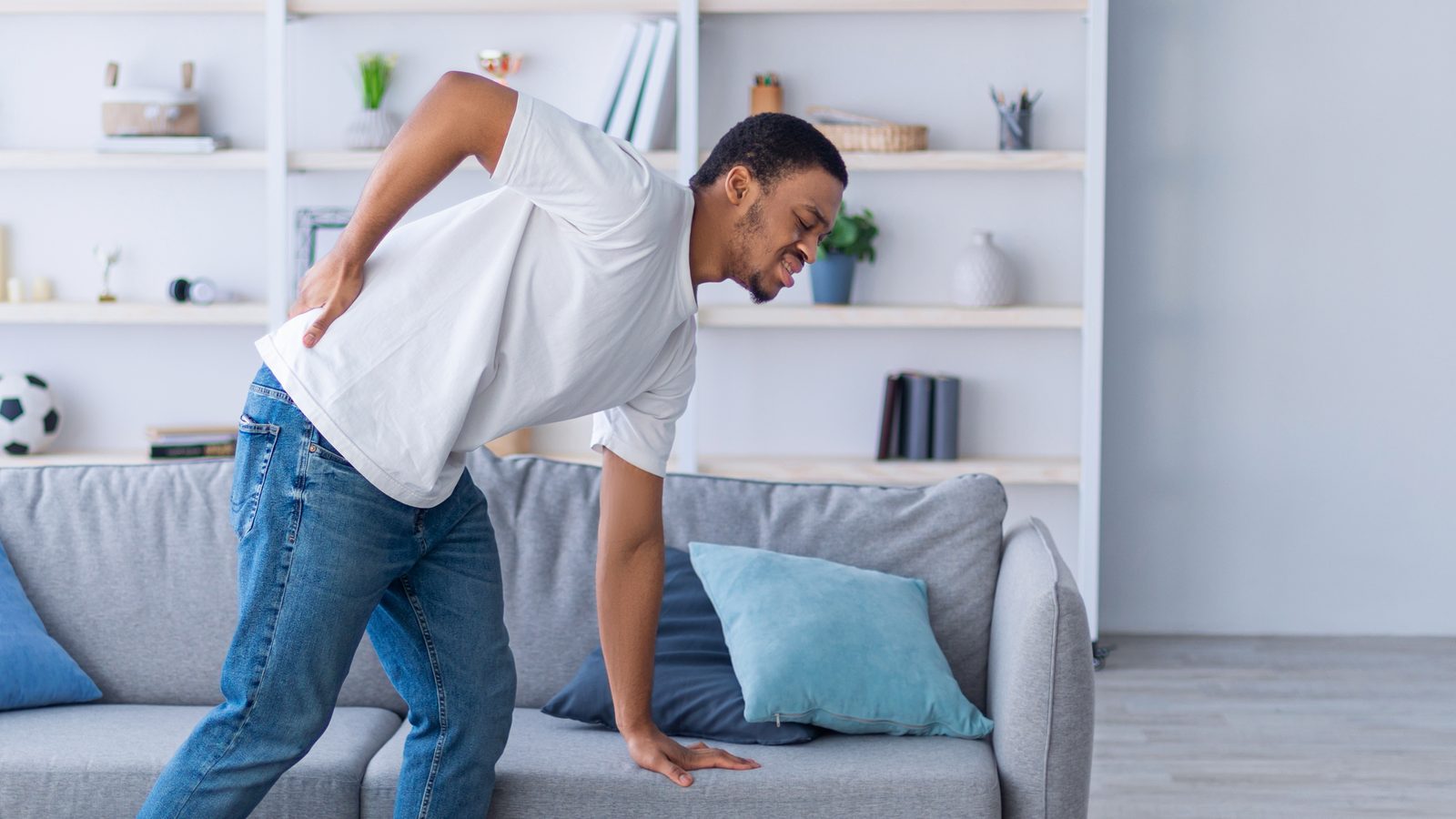
Acupuncture for sciatica is a reasonable treatment to try if you have leg pain from an irritated nerve root in the lower back, as long as a doctor has checked the cause and you have none of the warning signs listed below. The best single study so far, a 2024 trial in 216 adults with long-standing sciatica from a herniated disc, found that 10 sessions over four weeks reduced leg pain and disability more than sham acupuncture, and the difference was still there a year later. Older reviews are less convincing, because many of the studies in them were small or poorly run.
This article covers what sciatica is, how acupuncture is thought to act on it, what each main study found and how much weight it deserves, how many sessions people usually need, and what else you should be doing alongside treatment. It is written by Netra Integrative Health Clinic in South Plainfield, NJ.
The short answer
- What it can do: In the strongest trial, leg pain and the disability it caused improved more with real acupuncture than with a convincing sham.
- What it cannot do: It does not shrink a disc, widen a narrowed spinal canal or replace surgery when surgery is needed. It is complementary care, used with your physician's plan.
- How many sessions: Trials used 9 to 12 sessions over three to four weeks, and a difference from sham showed up after about two weeks in the largest one.
- Who should see a doctor first: anyone with bladder or bowel changes, numbness around the groin or buttocks, worsening leg weakness, or sciatica after a serious fall or accident.
What sciatica is, and what it is not
Sciatica is pain that follows the course of the sciatic nerve. The nerve forms from several roots leaving the lower spine, then runs through the buttock and down the back of each leg. When one of those roots is pressed on or inflamed, you feel it in the leg. MedlinePlus, the National Library of Medicine's consumer health site, describes sciatica as a symptom of another problem and not a condition in itself. The treatment and the outlook depend on what is irritating the nerve.
The pain usually starts in the low back or buttock and travels down the back of the thigh, sometimes into the calf or the sole of the foot. According to the Mayo Clinic, it can range from a mild ache to a burning pain or a feeling like an electric jolt, and coughing, sneezing or long sitting can make it worse. It usually affects one side, often with tingling, numbness or weakness in the leg or foot. MedlinePlus adds that the foot may catch when you walk.
Plenty of back pain is not sciatica. A sore, stiff low back that stays in the back is usually ordinary low back pain. Pain that runs below the knee, with tingling or numbness in part of the leg or foot, is more typical of a nerve root problem. If your pain stays mainly in the back, our article on acupuncture for lower back pain covers that research, which is larger and somewhat stronger.
Common causes of sciatica
Most sciatica comes from a problem in the lower spine that crowds or inflames a nerve root. The Mayo Clinic and MedlinePlus list these causes:
- Herniated disc, the most common cause. The soft center of a disc pushes through a tear in its tougher outer layer and presses on a nerve root.
- Bone spurs and spinal stenosis, where bony overgrowth or narrowing crowds the nerves. These become more common with age.
- Spondylolisthesis, where one vertebra slips forward over the one below.
- Piriformis syndrome, where a muscle deep in the buttock irritates the nerve. This is a muscle problem, not a spine problem.
- Pelvic injury or fracture, and rarely, tumors.
The Mayo Clinic names several risk factors: age (herniated discs are most common between 20 and 50), extra body weight, jobs involving twisting, heavy lifting or long hours of driving, prolonged sitting, and diabetes, which raises the risk of nerve damage. Nerve pain from diabetes can look similar to sciatica; our article on acupuncture for neuropathy explains the difference.
How sciatica usually behaves over time
The outlook for most people is good. The Mayo Clinic notes that sciatica from a herniated disc often clears up within weeks to months, and most people recover fully, often without treatment. MedlinePlus says it often improves on its own but frequently comes back.
That natural course is why research on sciatica needs a comparison group. If you start any treatment in the third week of an episode, you may well be better by the sixth week whatever you did. A study without a sham or control group cannot show that the treatment caused the improvement.
Warning signs that need urgent medical care
A small number of people with sciatica have pressure on the bundle of nerve roots at the bottom of the spinal canal, called the cauda equina. Cauda equina syndrome is a medical emergency. The Cleveland Clinic advises going to an emergency room straight away if symptoms appear, and notes that a herniated lumbar disc is its most common cause. The American Association of Neurological Surgeons (AANS) says treatment within 48 hours of onset gives a significant advantage, and that untreated cauda equina syndrome can cause permanent paralysis and incontinence.
Call 911 or go to an emergency department, and do not wait for an acupuncture appointment, if you have:
- Difficulty passing urine, or a full bladder without the normal urge to go. The AANS lists urinary retention as the most common symptom.
- Loss of control of your bladder or bowels.
- Numbness or altered feeling around the anus, genitals or buttocks, sometimes called saddle numbness.
- Leg weakness that is new or getting worse, such as a foot that drags.
- Pain, numbness or weakness in both legs.
- New sexual dysfunction alongside back or leg pain.
- Pain that started after a violent injury, such as a car accident or a bad fall.
Some symptoms are less urgent but still mean you should contact your doctor promptly. MedlinePlus lists back pain with unexplained fever, redness or swelling over the spine, pain that is worse lying down or wakes you at night, unintended weight loss, steroid use or injected drug use, and an episode that feels different from and worse than earlier ones. The Mayo Clinic suggests seeing your primary care doctor if self-care does not help, or if pain lasts longer than a week, is severe or keeps getting worse.
Dr. Gandapodi asks about these signs at the consultation and at follow-up visits. If any appear during treatment, he will stop and send you for medical assessment.
How acupuncture is thought to help sciatica
No one can yet say exactly how acupuncture works. The National Center for Complementary and Integrative Health (NCCIH), part of the National Institutes of Health, states that the mechanism is not fully understood. The evidence it summarizes points to effects on the nervous system, effects on the tissue where the needles are placed, and nonspecific effects such as your belief in the treatment and your relationship with the practitioner.
For nerve root pain specifically, a 2024 review in Frontiers in Molecular Neuroscience gathered the proposed mechanisms. Near the spine, needling may ease muscle spasm, reduce mechanical pressure on the nerve root and improve small-vessel blood flow. Chemically, it may dampen inflammatory signals around the root. Higher up, it may change how the spinal cord and brain process pain. The review is candid that these mechanisms are not fully worked out and that much of the detail comes from animal studies.
Muscle often plays a part too. NCCIH reports that needling tender trigger points reduced pain intensity in myofascial pain syndrome (5 studies, 215 participants), while needling traditional points away from them did not (4 studies, 80 participants). Piriformis syndrome, and the protective tightening of buttock and low back muscles that often comes with disc-related sciatica, are where that local effect may matter.
The Chinese medicine view
Chinese medicine describes sciatica as an obstruction of qi and blood in the channels along the back and side of the leg. The Bladder channel follows roughly the path of the sciatic nerve down the back of the thigh and calf, and the Gallbladder channel runs down the side of the hip and leg. Points on both are used. The 2025 trial described below, for example, included GB 30 in the buttock, GB 34 below the knee, BL 23 and BL 25 in the low back, and BL 40 behind the knee.
In that tradition, the type of pain also matters. Sharp, fixed pain that is worse at night, dull heavy pain that is worse in damp weather, and pain with cold legs and a weak low back are treated differently. That is why two people with the same MRI finding may not get the same points.
What the research shows
The evidence for acupuncture in sciatica has improved over the past ten years, but it still rests heavily on one well-designed trial. Here is each source, with a note on how much it can tell you.
The 2015 reviews summarized by NCCIH
NCCIH reports two 2015 systematic reviews, one of 12 studies with 1,842 participants and one of 11 studies with 962. Both suggested acupuncture may help sciatica pain, but NCCIH concludes the research was not of good enough quality for firm conclusions. The Mayo Clinic describes the results for back pain more broadly as mixed, with some studies showing benefit and others none.
The 2024 sham-controlled trial in JAMA Internal Medicine
This is the most important study to date. Researchers at six hospitals in China randomly assigned 220 adults with sciatica from a herniated disc to real or sham acupuncture, and 216 were analyzed. Everyone had one-sided pain lasting more than three months and scored at least 40 on a 100-point leg pain scale. Both groups had 10 sessions over four weeks, three a week at first and then two a week, with needles left in for 30 minutes. The sham used blunt needles that did not pierce the skin, at spots away from acupuncture points, plus one shallow real needle. Patients, outcome assessors and statisticians did not know who had which treatment; the acupuncturists did.
- After four weeks, leg pain fell by 30.8 points with real acupuncture and 14.9 with sham, on a 100-point scale.
- Disability, measured with the Oswestry Disability Index, fell by 13.0 points with real acupuncture and 4.9 with sham.
- A difference was already measurable at two weeks, at 7.8 points for leg pain.
- At one year, real acupuncture still led by 10.8 points for leg pain and about 5 points for disability.
- No serious adverse events occurred. Minor ones, mostly small bleeds or bruising under the skin, were reported by 24.1% of the acupuncture group and 4.6% of the sham group.
The authors list the limits themselves: the acupuncturists were not blinded, outcomes were self-reported, and the trial used only 10 sessions. All participants were treated in China. The results apply most directly to chronic, one-sided disc-related sciatica, and less clearly to stenosis, piriformis syndrome or a new episode.
Notice too that the sham group improved by about 15 points, probably through a mix of natural recovery and the effect of being cared for. Real acupuncture roughly doubled that improvement. That is meaningful, but it is not the whole of the change people felt.
An earlier, smaller sham-controlled trial
A 2019 single-center trial in Pain Medicine gave 46 people with chronic disc-related sciatica 12 sessions of real or sham acupuncture over four weeks. Leg pain fell 7.28 points more with real acupuncture, on a 100-point scale. There was no significant difference in back pain, disability or quality of life, and the authors called the benefit short-term. It is a useful reminder that one positive trial does not settle a question.
A 2025 trial comparing warm acupuncture with gabapentin
A small trial from Bhutan compared warm acupuncture with gabapentin, a medicine often prescribed for nerve pain. Seventy adults with sciatica for at least a month were split evenly, and the acupuncture group had treatment three times a week for three weeks. On a 10-point scale, average pain at day 30 was 1.4 with acupuncture and 3.6 with gabapentin, and disability also improved more with acupuncture. No adverse events from acupuncture were reported; four people taking gabapentin had lightheadedness or drowsiness.
Treat this one with caution. It was single-center and open-label, so everyone knew which treatment they had. The acupuncture group started with worse pain and disability, follow-up lasted only 30 days, and there was no sham group. It suggests acupuncture compares reasonably with a common medicine over a month, not that the needling itself caused the difference.
What a review of the reviews says
A 2025 overview in the Journal of Pain Research examined seven systematic reviews of acupuncture for sciatica. Pooled, the trials favored acupuncture, and it was generally safe. But the authors found significant methodological flaws, a high risk of bias and signs of publication bias, and concluded that the promise still needs high-quality studies to confirm it.
Putting the evidence together
- Chronic sciatica from a herniated disc: moderate support, in our reading, mainly from one large, well-blinded trial, with a smaller trial showing a smaller effect.
- Sciatica from other causes: low-quality evidence pointing in a favorable direction.
- A new episode: little direct evidence, and a good chance of recovering anyway.
- Safety: minor bruising and soreness are common; serious problems were not reported in these trials.
So we describe acupuncture for sciatica as a sensible thing to try, with a planned review, alongside the treatments your doctor and physical therapist recommend. It is not a guaranteed fix.
How many acupuncture sessions sciatica usually needs
There is no fixed number. Dr. Gandapodi sets a plan after the consultation and changes it as you respond. The research gives useful reference points: the 2024 trial used 10 sessions over four weeks, the 2019 trial 12 over four weeks, and the 2025 trial nine over three weeks. In each case, visits were close together at the start. One visit every couple of weeks is not what was tested, so expect the first month to be the busiest part of a course.
A typical plan, framed as ranges
- Weeks 1 and 2: two or three sessions a week while pain is at its worst.
- Weeks 3 and 4: one or two sessions a week if things are moving in the right direction.
- Review at about four weeks: has pain, sitting tolerance, walking or sleep changed enough to justify continuing?
- After the review: if you are improving, visits are spaced to weekly or every other week and then stopped. If nothing has changed, the plan is reconsidered, and it may be time to go back to your physician.
In the largest trial, the gap between real and sham acupuncture had appeared by two weeks, about six sessions on that schedule. Most people should have a fair sense of whether acupuncture is helping within the first six to eight sessions.
What changes the number
- How long you have had it. A recent episode has a good chance of settling within weeks to months anyway. Sciatica that has lasted many months, or keeps coming back, usually needs a longer plan.
- The cause. Disc-related sciatica has the best evidence. For stenosis and piriformis syndrome the research is less direct, so the review point matters more.
- Nerve involvement. Numbness and weakness are less predictable than pain. MedlinePlus notes that sciatica can sometimes leave lasting numbness or weakness.
- Other health problems. Diabetes, earlier back surgery or another pain condition make the picture more complicated, and the plan takes them into account.
- What you do between visits. The Mayo Clinic notes that long inactivity can make symptoms worse, so your exercises are part of the plan.
Some people with recurring sciatica choose occasional visits after the main course, which is optional. For how plans are built across different conditions, see our article on how many acupuncture sessions you may need.
How to tell whether it is working
Sciatica fluctuates, so one bad day tells you little. Track what matters to your life: how long you can sit before the leg starts, how far you can walk, whether you wake at night, how many pain tablets you took, and whether the tingling or numbness has changed. A short note each evening, brought to each visit, gives a far clearer answer after four weeks than memory does.
What treatment for sciatica involves at our clinic
Your first appointment is a 60-minute consultation, and needling is generally not done that day. Treatment sessions are 30 minutes, with fine, sterile needles that are used once.
For sciatica, points are usually placed on the low back, the buttock and along the leg, following the course of the pain, with others chosen from your overall assessment. You may lie face down or on your side; if lying on your front makes the leg worse, say so and another position can be used. Most people feel a brief prick or nothing as a needle goes in, then a dull ache, heaviness or warmth at the point, which acupuncturists call de qi. A sharp or electric pain is not the aim. Tell the doctor and the needle will be adjusted.
Points change from visit to visit according to how you responded. Afterwards most people feel relaxed; a few notice a brief flare in the leg for a day before it settles. The suite is on the second floor with elevator access, and parking is free. Directions are on our location page.
What else helps alongside acupuncture
For most people, the measures below are the main treatment, and acupuncture is one part of the plan.
Stay active, and avoid bed rest
MedlinePlus advises against bed rest. It suggests cutting back activity for a couple of days, then returning gradually to normal routines and starting gentle back exercises early. The Mayo Clinic notes that a short rest may help, but long inactivity can make symptoms worse.
Physical therapy and exercise
A physical therapist can work out which movements ease your leg pain and which aggravate it, and teach you an exercise program. The Mayo Clinic describes physical therapy focused on posture, core strength and range of motion once the worst pain has eased, partly to reduce the chance of another episode. MedlinePlus suggests restarting regular exercise after about two to three weeks. Acupuncture and physical therapy fit together well: acupuncture may lower pain enough for you to do the exercises, and the exercises build strength and movement in a way needles cannot. We are glad to coordinate with your physical therapist.
Heat, cold, stretching and lifting
- Cold packs, wrapped in a cloth, for up to 20 minutes several times a day in the first few days.
- Heat on a low setting after two or three days. Alternating warm and cold may help lingering pain.
- Gentle low back stretches held for at least 30 seconds, without bouncing or twisting.
- No heavy lifting or twisting for around six weeks after an episode starts, as MedlinePlus advises.
Sitting and work
Long sitting is a common aggravating factor. The Mayo Clinic suggests a chair with lower back support, armrests and a swivel base, with a small pillow or rolled towel behind the low back. Get up regularly. If your work involves long drives, twisting or heavy lifting, ask your doctor or physical therapist about adjustments while the nerve recovers.
Medical treatments
Your physician may suggest anti-inflammatory or other pain medicines, including drugs used for nerve pain. If pain does not settle, a corticosteroid injection near the nerve root is an option, and the Mayo Clinic notes that up to three can be given in a year. Surgery to remove the part of a disc or bone spur pressing on the nerve is usually considered for severe weakness, loss of bladder or bowel control, or pain that does not respond to other treatment. Imaging such as MRI is generally kept for severe pain or pain that has not improved after a few weeks. Acupuncture can run alongside any of these; tell us about injections or surgery, past or planned.
Ayurveda and herbal medicine for sciatica
The clinic also offers Ayurvedic medicine and herbal medicine. In Ayurveda, sciatica is called Gridhrasi and is treated as a disorder of Vata, the principle associated with movement. The research for these approaches in sciatica is much thinner than for acupuncture, mostly small studies without a placebo group, and we say so at the consultation. Any herbal prescription is chosen for you and checked against the medicines you already take. These treatments are not billed to insurance.
About your practitioner

Your treatment is given by Dr. Saikumar Gandapodi, DAOM, Dipl. OM, AP, L.Ac., founder and director of Netra Integrative Health Clinic. He treats every patient himself, in person at the South Plainfield office, so the person who assesses your sciatica is the person who adjusts the plan at each visit.
Orthopedic disorders are one of his main areas of practice, and sciatica falls squarely within them. Many people reach him after other treatments have not given them lasting relief. He takes on complex and advanced cases, including patients for whom other practitioners produced no results, and he will tell you honestly at the consultation whether he thinks he can help. No outcome can be promised in any individual case.
Training and credentials
- DAOM: clinical doctorate in Acupuncture and Oriental Medicine from Five Branches University.
- Master of Traditional Oriental Medicine from Pacific College of Health and Science.
- Dipl. OM: national board certification in Oriental Medicine.
- AP: board-certified Doctor of Oriental Medicine and Acupuncture Physician in Florida.
- L.Ac.: licensed as an acupuncturist and herbalist in New Jersey and New York.
- Classical training in Ayurvedic medicine, a graduate qualification in Yoga Therapy, and advanced clinical training in India.
Areas of expertise
Dr. Gandapodi works across Chinese medicine, Ayurveda and Yoga Therapy, and uses whichever combination suits the problem. His special interests are complex and chronic conditions, orthopedic disorders such as back pain, sciatica and joint pain, fertility, and internal medicine. He writes and clinically reviews the condition pages on this website, including the pain management section. More about him is on our team page.
Your first visit for sciatica
The 60-minute consultation covers where the pain starts and where it travels, what makes it better or worse, any numbness or weakness, imaging and tests you have had, and what you have already tried. Dr. Gandapodi also asks about your general health, sleep and digestion, and looks at your tongue and takes your pulse as part of a Chinese medicine assessment. He checks for the warning signs above. If your leg pain has not been medically evaluated, or something does not fit a straightforward picture, he will ask you to see your physician before or alongside treatment.
Bring a photo ID and insurance card, your most recent complete blood work reports (you can send these ahead), a list of medicines and supplements with doses, reports from any spine MRI, CT or X-ray, notes on injections or surgery, and your physical therapy exercises if you have them. You leave with a proposed plan: how often to come, roughly for how long, and when the first review will be. More detail is on our new patients page.
Is acupuncture safe if you have sciatica?
With a licensed practitioner and sterile, single-use needles, acupuncture is low risk. NCCIH reports that relatively few complications have been recorded, and that serious ones, such as infections or punctured organs, have been linked to improper delivery. The U.S. Food and Drug Administration regulates acupuncture needles as medical devices and requires them to be sterile and labeled for single use. In the 2024 sciatica trial, about a quarter of the acupuncture group had a minor reaction, mostly bruising or slight bleeding, and none had a serious one.
Tell us before treatment if you take a blood thinner or have a bleeding disorder, are or may be pregnant, have a pacemaker or other implanted device, have reduced feeling in your legs or feet, have an infection or broken skin in the area, or tend to faint with needles. None of these automatically rules out acupuncture, but each changes how treatment is given.
Insurance and payment
Dr. Gandapodi is in network with most insurance plans. The clinic does not participate in Medicare or Medicaid, but it accepts most Medicare Advantage plans that include acupuncture. Whether your plan covers acupuncture for sciatica, and for how many visits, depends on the plan. Insurance applies to acupuncture only; Ayurvedic medicine, Chinese herbal medicine, Panchakarma and Transdermal Medication Therapy are not billed to insurance. Our free benefits check takes 3 to 5 business days through the insurance verification form. See also our insurance page.
For background, Original Medicare Part B covers acupuncture only for chronic low back pain lasting 12 weeks or longer, with no identifiable systemic cause and not related to surgery or pregnancy, and it cannot pay licensed acupuncturists directly. Our article on whether Medicare covers acupuncture explains the rule.
If you were hurt in a car accident, the clinic also bills auto insurance personal injury protection (PIP) for acupuncture. Mention the accident when you book, and have your auto insurance claim number ready.
HSA, FSA and HRA funds can be used, because acupuncture is a qualified expense, and we can provide a Letter of Medical Necessity if your administrator asks; see our HSA and FSA page. We accept CareCredit, and discounts are available for seniors and through our financial assistance program. The office can explain the options by phone.
Acupuncture as part of your medical care
We offer acupuncture for sciatica as complementary care. Keep seeing your physician, spine specialist or physical therapist. Do not stop or change a prescribed medicine because you have started acupuncture; if you feel you need less, discuss it with the doctor who prescribed it. We do not diagnose the cause of sciatica, and new or worsening leg symptoms should be checked medically. With your permission, we can send a treatment summary to your physician. Clinicians who want to refer a patient can use the referring providers page.
Frequently asked questions about acupuncture for sciatica
Does acupuncture work for sciatica?
It helps some people, and the best evidence is for long-standing sciatica from a herniated disc. The wider research is weaker, so acupuncture is a reasonable option, not a proven cure.
How quickly will I notice a difference?
Some people notice a change within the first few sessions. If you have had six to eight sessions and nothing has changed, the plan should be reviewed.
Can acupuncture make sciatica worse?
Some people have a brief flare for a day after a session. If pain keeps worsening, or you develop weakness, numbness or bladder or bowel changes, stop and see a doctor promptly.
Should I have acupuncture or physical therapy?
Usually both. They work on different parts of the problem, and acupuncture may make the exercises easier to do.
Can acupuncture help if my MRI shows a herniated disc?
That is the group with the best evidence. Acupuncture does not change the disc itself, and many herniated discs settle with time.
Does it help sciatica from spinal stenosis or piriformis syndrome?
The main trials studied disc-related sciatica, so the evidence for these causes is less direct. Acupuncture is still used for both, with a review after a short course.
Can I have acupuncture while taking gabapentin or other nerve pain medicines?
Yes, these medicines do not by themselves rule it out. Keep taking them as prescribed, and talk to your prescriber before changing any dose.
I had acupuncture before and it did not help. Should I try again?
It depends on what was done. Points, the number and spacing of sessions, and whether exercise was part of the plan vary a great deal. Dr. Gandapodi will tell you whether he thinks a different approach is worth a trial.
When should I go to the emergency room instead?
Go straight away for loss of bladder or bowel control, difficulty passing urine, numbness around the groin or buttocks, new or worsening leg weakness, or sciatica after a serious injury.
Booking an appointment
Request a consultation on our appointment page or call (908) 402-7301; online requests are confirmed by text and email. The clinic is at 5001 Hadley Rd, Ste 210, South Plainfield, NJ 07080, open Monday to Friday from 10:00 AM to 8:00 PM and Saturday from 9:00 AM to 5:00 PM, by appointment only. Same-day openings are limited, so call if your pain is bad. For more on how treatment is given here, see our acupuncture page.
This article is general health information and does not replace advice from your own doctor. Sources: the National Center for Complementary and Integrative Health; MedlinePlus (National Library of Medicine); the Mayo Clinic; the Cleveland Clinic; the American Association of Neurological Surgeons; Medicare.gov; Tu and colleagues, JAMA Internal Medicine, 2024; Huang and colleagues, Pain Medicine, 2019; Gyeltshen and colleagues, Journal of Evidence-Based Integrative Medicine, 2025; Zhang and colleagues, Journal of Pain Research, 2025; and Li and colleagues, Frontiers in Molecular Neuroscience, 2024. All are linked above.