

















An autoimmune rash is a skin eruption caused by the immune system attacking the skin or the small blood vessels in it. The best-known examples are the butterfly rash of lupus, the scaly plaques of psoriasis and the violet eyelid rash of dermatomyositis. They are told apart by where they appear, what they look like, whether sunlight sets them off and what other symptoms come with them, and the diagnosis is often confirmed with a skin biopsy. Treatment comes from a dermatologist or rheumatologist. Complementary care has a small supporting role at most.
Why the immune system causes rashes
Skin is full of immune cells, which makes it a common target when the immune system misfires. In some conditions the attack is confined to the skin. In others the rash is the visible part of a disease that also involves joints, muscles, kidneys or the gut. That is why a dermatologist looking at a rash will also ask about fatigue, joint pain, muscle weakness, mouth sores and bowel habits.
Most rashes are not autoimmune. Eczema, contact allergy, rosacea, fungal infection, heat rash and drug reactions are all far more common. If you are dealing with eczema, our article on Ayurvedic treatment for eczema covers that separately.
The main types
Lupus
Skin and mouth involvement occurs in more than 80 percent of people with systemic lupus, according to the StatPearls clinical reference on lupus. There are three main patterns.
- Malar ("butterfly") rash. A raised, red rash over the cheeks and the bridge of the nose that appears after sun exposure. It spares the creases running from the nose to the corners of the mouth, and it heals without scarring.
- Discoid lupus. Coin-shaped, red, scaly plaques, often on the face, ears and scalp. These do scar and can cause permanent hair loss. About 20 percent of people with systemic lupus get them, and they also occur in people who have no internal disease.
- Subacute cutaneous lupus. Ring-shaped or scaly patches on the neck, upper trunk and arms, usually sparing the face. It does not scar. Some medicines can trigger it, including hydrochlorothiazide and proton pump inhibitors.
Sun sensitivity runs through all three. The Office on Women's Health also lists sores on the roof of the mouth, hair loss and rashes on the eyelids among lupus signs.
Psoriasis
Psoriasis is common. A national survey analysis in JAMA Dermatology estimated that 3.0 percent of US adults, more than 7.5 million people, have it. The National Institute of Arthritis and Musculoskeletal and Skin Diseases (NIAMS) describes plaque psoriasis as raised, red patches covered with silvery-white scales, most often on the scalp, elbows, knees and trunk. Nails may become thick, ridged or pitted.
Less common forms look quite different: small red dots (guttate), pus-filled bumps (pustular), smooth red patches in skin folds such as the armpits and groin (inverse), and a rare, severe form with red, scaly skin over most of the body (erythrodermic). Some people with psoriasis develop psoriatic arthritis, with joint pain, swelling and stiffness. NIAMS warns that untreated psoriatic arthritis can cause irreversible joint damage, so mention joint symptoms to your doctor.
Dermatomyositis
Dermatomyositis is rare and important not to miss. The StatPearls reference describes its hallmark skin signs:
- A violet or dusky red rash on the upper eyelids, sometimes with swelling (the heliotrope rash). It can be hard to see on darker skin.
- Red or violet bumps over the knuckles (Gottron papules).
- Redness across the back of the neck and shoulders (the shawl sign) or in a V on the upper chest.
The rash usually comes with slowly worsening weakness in the shoulders, hips and neck: trouble climbing stairs, rising from a chair or lifting the arms to wash hair. In one county-wide study cited in that reference, about 21 percent of cases had the rash without muscle weakness. Dermatomyositis in adults is linked with cancer, found in about 24 percent of cases, with the risk highest in the first year after diagnosis. For that reason doctors screen for cancer when they make the diagnosis.
Dermatitis herpetiformis
This is the skin form of celiac disease. The National Institute of Diabetes and Digestive and Kidney Diseases describes intensely itchy bumps and blisters that appear symmetrically on the elbows, knees, buttocks, back or scalp, and says it affects about 10 percent of people with celiac disease. Because the itch is so severe, people often scratch the blisters away before a doctor sees them.
Others
Several other autoimmune conditions show on the skin. Vitiligo causes smooth white patches where pigment cells are lost. Alopecia areata causes round patches of hair loss. Scleroderma thickens and tightens the skin, often starting in the fingers. Vasculitis, an inflammation of blood vessels, can produce purple spots on the lower legs that do not fade when pressed. Autoimmune blistering diseases such as pemphigoid cause large, tense blisters, mostly in older adults.
How doctors tell them apart
A dermatologist works from a few questions.
- Where is it? Cheeks and nose suggest lupus. Elbows, knees and scalp with thick scale suggest psoriasis. Eyelids and knuckles suggest dermatomyositis. Itchy blisters on elbows, knees and buttocks suggest dermatitis herpetiformis.
- Does the sun bring it on? Lupus and dermatomyositis rashes are typically sun-sensitive.
- Does it itch, and does it scar? Dermatitis herpetiformis itches fiercely. Discoid lupus scars. The butterfly rash does neither.
- What else is going on? Joint pain, mouth sores, muscle weakness, fever, fatigue or digestive symptoms point toward a body-wide condition.
Lookalikes are common. The lupus reference lists rosacea and seborrheic dermatitis among the conditions that can pass for a butterfly rash. When the picture is unclear, the doctor takes a small skin biopsy under local anesthetic. Special staining of the sample can show antibody deposits in patterns that are specific to lupus or to dermatitis herpetiformis. Blood tests add information: an antinuclear antibody (ANA) test, more specific antibodies, muscle enzymes if dermatomyositis is suspected, and celiac antibodies. A positive ANA alone does not make a diagnosis, since MedlinePlus notes that many healthy adults test positive.
Conventional treatment
Treatment depends on the diagnosis, which is the reason not to treat an unidentified rash on your own for long.
- Lupus rashes: strict sun protection, steroid or tacrolimus creams, and hydroxychloroquine, which the StatPearls reference calls the drug of choice for most lupus skin disease. Resistant cases need other immune-modifying medicines.
- Psoriasis: NIAMS lists creams and ointments for mild disease, and pills, injections or light treatment for moderate to severe disease.
- Dermatomyositis: corticosteroids, usually with a second immune-suppressing drug, plus sun protection and often hydroxychloroquine for the skin.
- Dermatitis herpetiformis: a strict gluten-free diet, which the NIDDK calls the only treatment for the underlying disease, with the drug dapsone for quick relief of the itch while the diet takes effect.
Steroid creams are safe when used as directed, but strong ones can thin the skin, especially on the face. Follow the instructions you were given about strength, site and duration.
What acupuncture, Ayurveda and herbs can and cannot offer
The research here is thin, and for most autoimmune rashes there is none worth citing.
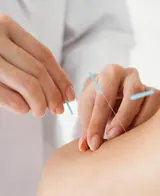
Psoriasis has been studied the most. A 2026 network meta-analysis pooled 33 randomized trials with 2,711 participants and found that several acupuncture-related treatments, alone or added to standard care, were associated with lower psoriasis severity scores. The authors rated the certainty of that evidence as very low, and no single technique came out consistently ahead. In plain terms, acupuncture might help some people with psoriasis, and the studies are not good enough to say so with confidence. For lupus rashes, dermatomyositis and dermatitis herpetiformis there are no trials showing that acupuncture improves the skin.
Ayurvedic herbs and oils are traditionally used for skin conditions. They have not been tested in good trials for autoimmune rashes. Two cautions apply. First, product quality: a study in JAMA found detectable lead, mercury or arsenic in about one fifth of Ayurvedic medicines bought online, so sourcing matters. Second, interactions: many people with these conditions take immune-suppressing drugs, and herbs can interact with them. Herbal safety in pregnancy is largely unknown. Herbal creams can also irritate or sensitize inflamed skin. Check with your doctor or pharmacist before using any herb, by mouth or on the skin.
What complementary care can reasonably offer is help with things around the rash, such as stress, sleep and itch-related discomfort, while your dermatologist treats the disease. At Netra Integrative Health Clinic, acupuncture and Ayurvedic care are provided only alongside your dermatology or rheumatology care. The clinic does not diagnose rashes, order biopsies or prescribe medicine.
When to see a doctor
See a doctor for any rash that lasts more than two weeks, keeps coming back, appears after sun exposure, or leaves scars or bald patches. Seek urgent care for:
- A rash with fever, joint swelling, chest pain or shortness of breath
- New muscle weakness, or trouble swallowing
- Widespread blisters, peeling skin, or sores in the mouth, eyes or genitals
- Red, scaly skin covering most of the body
- Purple spots that do not fade when pressed
- A rash that starts soon after a new medicine
- Swollen legs or foamy or bloody urine along with a rash
Frequently asked questions
What does an autoimmune rash look like?
There is no single look. Lupus tends to cause a flat or slightly raised redness on sun-exposed skin, psoriasis causes thick scaly plaques, dermatomyositis causes a violet color on the eyelids and knuckles, and dermatitis herpetiformis causes clusters of itchy blisters. On brown and black skin, redness can look purple, grey or dark brown.
Do autoimmune rashes itch?
Some do. Dermatitis herpetiformis is intensely itchy, and psoriasis can itch or burn. The lupus butterfly rash usually does not itch much.
Can an autoimmune rash be the only symptom?
Yes. Discoid lupus, psoriasis and the skin-only form of dermatomyositis can all occur without internal symptoms. Your doctor will still check for wider disease and may repeat tests over time.
Is an autoimmune rash contagious?
No. These rashes come from your own immune system, not from an infection, and they cannot be passed to another person.
Will changing my diet clear the rash?
Only in dermatitis herpetiformis, where a strict gluten-free diet treats the cause. For the other conditions no diet has been shown to clear the skin. Do not go gluten-free before testing, since that can hide the diagnosis.
Does sunscreen really matter?
For lupus and dermatomyositis, yes. Sunlight can trigger both the rash and, in lupus, a wider flare. Clinical references advise broad-spectrum sunscreen, protective clothing and a hat year-round.
To ask about complementary care alongside your dermatologist's or rheumatologist's treatment, contact Netra Integrative Health Clinic at 5001 Hadley Road, Suite 210, South Plainfield, NJ 07080, phone (908) 402-7301. The clinic is open Monday to Saturday, 9:00 AM to 6:00 PM, by appointment only. You can schedule an appointment online.
This article is general information. It cannot diagnose a rash and does not replace an examination by your own doctor or dermatologist.