


















- What it is: A tear in the skin lining the anal canal, most often at the back (posterior midline), called acute if it lasts under 6 weeks and chronic if it lasts longer.
- Common symptoms: Sharp pain with bowel movements that can linger for hours, and bright red blood on the stool or toilet paper.
- Conventional care: More fiber and fluids, warm sitz baths, prescription ointments or botulinum toxin injection, and surgery such as lateral internal sphincterotomy for fissures that do not heal.
- How integrative care fits: Acupuncture, Ayurvedic therapies and individually prescribed herbs are used alongside medical care for pain, bowel habits and comfort.
- Evidence at a glance: Limited for acupuncture and Ayurveda, based on a few small trials without sham controls; very limited for herbal medicine, with no controlled trials of Chinese herbs.
What is Anal Fissure?
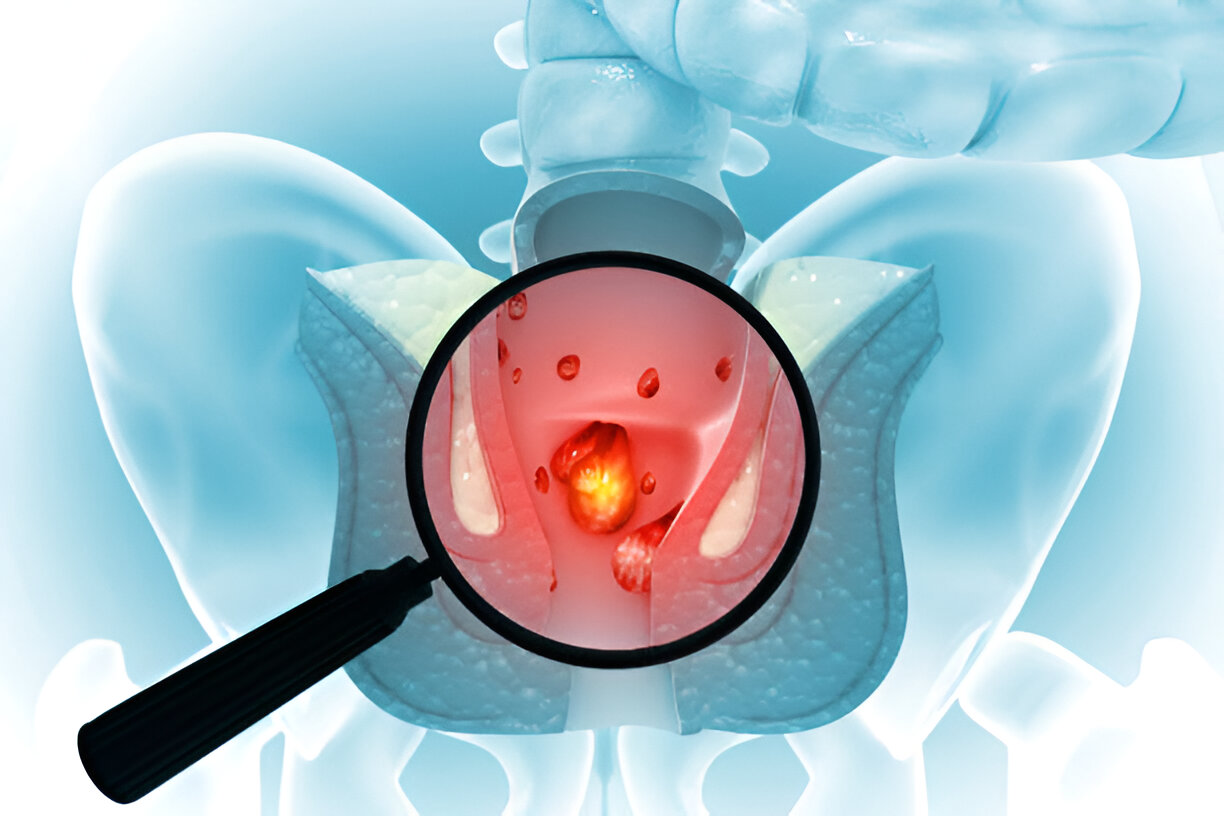
An anal fissure is a longitudinal tear in the skin of the anal canal below the dentate line, the point where the lining changes from rectal to anal skin. It is a common problem in both adults and children.[1] Most fissures start with local injury to the skin, often from a hard or bulky stool, and they are more frequent in people with chronic constipation.[1]
Common symptoms
The typical symptom is sharp pain during a bowel movement, often followed by a burning or aching pain afterward.[1, 2] Bright red bleeding on the stool or tissue is also common.[2]
Fissures are called acute when symptoms last under 6 weeks and chronic when they last longer. Chronic fissures often show a skin tag at the outer end or a small swollen papilla at the inner end.[1]
Causes and risk factors
Most fissures are linked to a tight anal sphincter muscle, and hard stools are a common trigger but are not present in every patient.[3] Other triggers include repeated irritation, anal surgery and anal intercourse.[1]
Fissures that sit to the side or occur in multiples are called secondary. They can point to another condition such as Crohn disease, tuberculosis, infection or cancer and need further evaluation.[1, 4]
How it is diagnosed and treated conventionally
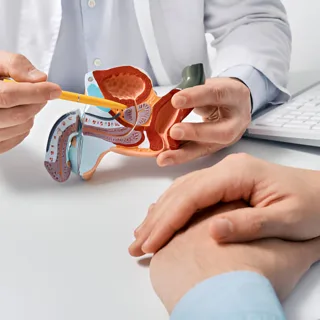
Diagnosis is usually made from your history and a gentle examination.[1, 4] Initial treatment is more fiber and fluids, plus comfort measures such as warm sitz baths.[2, 3] About half of patients heal with non-surgical care.[3]
Chronic fissures may need prescription ointments that relax the sphincter or botulinum toxin injection. A Cochrane review of 75 trials found that nitroglycerin ointment healed slightly more fissures than placebo (48.9% against 35.5%), that recurrence was common, and that no medical treatment matched the healing rate of surgery.[5] A 2025 network meta-analysis of 22 trials ranked topical nifedipine highest for healing.[6] Lateral internal sphincterotomy is the standard surgical treatment.[2]
Why Anal Fissure calls for a whole-person approach
An anal fissure is a local tear, but what keeps it from healing involves the whole bowel and the muscle around it. Stool consistency, sphincter tension and any underlying bowel disease can each matter.[1, 3]
This is why care that looks at digestion and daily habits as well as the wound itself is a reasonable companion to medical treatment.
Stool consistency and constipation
Hard or bulky stools are a leading cause of the original tear, and fissures are more common in people with chronic constipation.[1] High fiber and fluid intake is the first step in conventional care.[2]
Sphincter muscle tension
Most fissures are associated with raised pressure in the internal anal sphincter, and many medical and surgical treatments work by lowering it.[3, 5]
Underlying bowel conditions
When a fissure is off the midline, multiple or slow to heal, doctors look for conditions such as Crohn disease or infection.[1, 4] Treating the underlying condition is the main route to healing in these secondary fissures.[1]
Acupuncture for Anal Fissure
What the research shows
The research on acupuncture for anal fissure is limited. A PubMed search found no systematic reviews and no sham-controlled trials. Two small randomized trials, both from China and published in a Chinese journal, compared acupuncture-related treatment with medicines.
In one trial of 200 patients after fissure surgery, acupuncture at points on the lower back plus moxibustion near the tailbone was compared with an oral laxative. From the third day, defecation pain was lower in the acupuncture group, but stool difficulty and stool texture did not differ.[7] In the other trial, 60 patients with early-stage fissures received weekly acupoint catgut embedding, in which absorbable thread is placed at acupuncture points, or a nitroglycerin ointment. The embedding group had lower pain scores and fewer recurrences at 3 months (1 against 6).[8] Catgut embedding is not standard acupuncture, and neither trial used a sham control, so a placebo effect cannot be ruled out.
Symptom-level evidence comes from constipation. A meta-analysis of 6 trials with 1,457 people found that electroacupuncture produced more complete spontaneous bowel movements per week than sham electroacupuncture in chronic severe functional constipation, with no serious adverse events, although the effect faded after treatment ended and trial methods varied.[9] A network meta-analysis of 45 trials of functional constipation found electroacupuncture had the lowest rate of adverse effects among the treatments compared.[10] These findings concern constipation, not fissure healing.
How acupuncture may work
No mechanism studies specific to anal fissure turned up in PubMed. In Chinese medicine, points such as those near the sacrum and tailbone are chosen to relieve pain and regulate bowel function, as in the surgical trial above.[7] How acupuncture might affect a fissure biologically is unknown.
What treatment involves
Treatment uses fine, sterile, single-use needles, usually left in place for about 20 to 40 minutes, with moxibustion (warming with burning mugwort) added when it suits the person. We reassess after a short course of visits. The postoperative trial gave acupuncture on each of the first 5 days after surgery.[7]
Serious problems from acupuncture are rare. In prospective studies, about 9 in 100 patients had a minor reaction such as brief bleeding, soreness or redness at a needle site, and serious events occurred in about 1 in 10,000 patients.[11] Tell the practitioner first if you have a bleeding disorder, take blood thinners, are pregnant, or have a pacemaker (relevant to electroacupuncture).
Ayurvedic medicine for Anal Fissure
The Ayurvedic view
Ayurveda describes a fissure-like condition called Parikartika, a word meaning cutting pain. Classical texts describe it as a complication of therapeutic purgation (Virechana) and of diarrhea.[12] In this traditional framework, dry, hard stools and aggravated Vata are linked to the cutting pain. These are traditional categories, not biomedical diagnoses.
Therapies that may be used
Care is chosen for the individual and traditionally combines:
- Diet and daily routine to keep stools soft and regular, such as warm cooked meals, enough fluids and regular meal times
- Warm sitz baths, often followed by a medicated ghee or oil applied to the area; a ghee prepared with licorice (Yashtimadhu Ghrita) has been studied[13]
- Herbal formulas such as triphala, traditionally used to support regular bowel movements, prescribed individually
- Transdermal medication therapy, in which an herbal preparation is applied to the skin
Ksharasutra, a medicated thread ligation, and anal stretching are procedures done by trained surgical practitioners and are not services we provide. Strong purgative Panchakarma therapy is not suited to a painful fissure, and Panchakarma in general is not appropriate during pregnancy, acute illness or frailty.[12]
What the research shows
The research on Ayurveda for anal fissure is limited, and most of it concerns procedures we do not offer. A randomized trial of 36 patients with acute fissure compared licorice ghee with a lignocaine-nifedipine ointment for 4 weeks. Pain relief was slower with the ghee, ulcer healing was earlier, and the authors judged both similarly effective for symptom relief. It was small and had no placebo group.[13]
Other Ayurvedic studies tested Ksharasutra. A trial of 100 patients with chronic fissure found better results when thread ligation followed anal stretching than with thread ligation alone.[12] A trial of 30 patients found that both approaches gave significant results, with sphincterotomy giving relief somewhat sooner, though the difference between groups was not statistically significant.[14] A clinical report of 39 fissure patients described mostly good relief, but it had no comparison group.[15] No placebo-controlled trials were found.
Herbal medicine for Anal Fissure
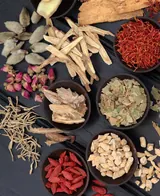
Herbs and formulas that have been studied
Herbal research on anal fissure is sparse. The Cochrane review of non-surgical therapy listed clove oil and a "healer cream" among agents that looked promising in single studies without comparison to established medicines.[5] A multicenter study of 157 patients tested an ointment made from a peptide extract of okra seeds (Hibiscus esculentus).[16] Licorice-based ghee, mentioned above, is the Ayurvedic preparation with a randomized trial.[13] No trials of Chinese herbal formulas for anal fissure turned up in PubMed.
What the research shows
The evidence is very limited. In the okra-peptide study, 65.5% of patients had complete healing at 30 days and pain scores fell, but all patients received the ointment and there was no control group.[16] The Cochrane authors judged the clove oil and healer cream results as lacking comparison with established medications.[5]
Herbs have not been shown to match the established ointments or surgery for chronic fissure. Warm sitz baths in plain water are a conventional measure: a systematic review of 11 articles found conflicting evidence on pain but overall support for their pain-relieving effect, and a randomized trial of 58 people found better satisfaction but no significant difference in pain or healing, with a perianal rash in two people.[17, 18]
Safety and herb-drug interactions
Herbs are active substances and can interact with medicines. Reported interactions include extra bleeding when danshen or ginkgo is combined with warfarin and altered levels of several prescribed drugs with St John's wort.[19] Tell us about every medicine you take, including ointments from your doctor.
In one study, about one fifth of Ayurvedic products bought online contained detectable lead, mercury or arsenic.[20] Herbs should come from tested sources and be prescribed individually. Preparations applied to the skin can irritate it, and herbal laxatives can cause cramping or loose stools, so tell us before using either. Tell us if you are pregnant or breastfeeding or have liver or kidney disease.
Translating traditional medicine into modern biological language
The links drawn here are interpretation, not equivalence. Chinese medicine may describe an anal fissure as damp-heat or dryness in the intestines with blocked flow of qi and blood in the area. Researchers measure things that loosely parallel this picture: stool consistency, bowel movement frequency and tension in the anal sphincter.[1, 3, 9]
Ayurveda's aggravated Vata, with dry hard stools and cutting pain, resembles the combination of constipation and sphincter spasm described in modern medicine.[3, 12] No study has shown that a dosha or pattern corresponds to a specific biological process.
How this care fits with your medical care
Integrative care for anal fissure is complementary. Keep your physician, colorectal surgeon or gastroenterologist, and do not stop or change prescribed ointments or other medicines without your prescriber. We do not diagnose the cause of rectal bleeding or anal pain, and a fissure that does not heal needs medical assessment.[1, 2]
Please bring your diagnosis, a full list of medicines and supplements, results of any colonoscopy or other tests, and details of any past anal or bowel surgery.
When to seek urgent medical care
Anal pain and bleeding have several causes, and some need prompt assessment.[1]
- Heavy rectal bleeding, or bleeding with dizziness or fainting
- Fever, chills, or a swollen, hot or very tender area near the anus, which may signal an abscess
- A fissure that is off to the side, multiple, or not healed after several weeks
- Blood in the stool with unexplained weight loss, a change in bowel habits, or a family history of bowel cancer or Crohn disease
- Loss of bladder or bowel control
If any of these occur, see a physician promptly. For severe bleeding or any emergency, call 911 or go to the nearest emergency department.
Frequently asked questions
What is anal fissure?
An anal fissure is a small tear in the skin lining the anal canal. It causes sharp pain during bowel movements, often with bright red blood on the stool or tissue. Hard or bulky stools are a common trigger. A fissure is acute if it lasts under 6 weeks and chronic if it lasts longer, and many heal with fiber, fluids and sitz baths.
Can acupuncture help with anal fissure?
It may help with pain, but the evidence is limited. Two small randomized trials from China, one after fissure surgery and one in early fissures, reported less pain than with medicine. Neither used a sham control. Larger trials of acupuncture for constipation, a common trigger, show some benefit. Acupuncture is used alongside medical care, not in place of it.
Does Ayurvedic or herbal medicine work for anal fissure?
The evidence is thin. A small trial found a licorice-based ghee roughly as effective as an ointment for acute fissure symptoms, and a few herbal ointments looked promising in small studies without a good comparison. No trials of Chinese herbal formulas were found. Herbs can interact with medicines, so they should be prescribed individually and checked against your medication list.
Can I stop my ointment or avoid surgery if I have acupuncture?
No. Acupuncture, Ayurveda and herbal medicine are complementary care. Do not stop or change prescribed ointments or other medicines without talking to your prescriber, and follow your physician’s advice about injections or surgery. A fissure that does not heal, or that bleeds heavily, needs medical assessment.
How soon might I notice a change with acupuncture?
It differs from person to person and no result can be promised. In the small postoperative trial, treatment was given on the first 5 days after surgery, and differences in pain appeared from the third day. For fissures not treated by surgery, there is little research on timing. We reassess after a short course of visits.
Does insurance cover acupuncture for anal fissure?
It may. Netra Integrative Health Clinic is in-network with Blue Cross Blue Shield, Cigna and UnitedHealthcare. Other plans may be covered through out-of-network benefits, and we offer a free benefits check. HSA and FSA cards and CareCredit are also accepted. Call (908) 402-7301 to ask about your plan.
References
- Gerbasi L, Ashurst JV. Anal Fissures. StatPearls [Internet]. 2025. PMID 30252319. StatPearls chapter on anal fissures covering definition, causes, classification as acute or chronic, secondary fissures, diagnosis and management.
- Chiu A, Donahue S, Torgersen Z, et al. Anal Fissures. Surg Clin North Am. 2026;106(1):1-10. PMID 41241444. 2026 Surgical Clinics review of anal fissure covering symptoms, fiber and fluids, topical agents, botulinum toxin and lateral internal sphincterotomy as the surgical standard.
- Beaty JS, Shashidharan M. Anal Fissure. Clin Colon Rectal Surg. 2016;29(1):30-7. PMID 26929749. Clinical review of anal fissure linking it to raised internal sphincter pressure, noting that about half heal with non-surgical care and that sphincterotomy has a high success rate.
- Schlichtemeier S, Engel A. Anal fissure. Aust Prescr. 2016;39(1):14-7. PMID 27041801. Australian Prescriber review describing primary and secondary fissures, clinical diagnosis, and non-operative management with fiber, sitz baths, ointments and botulinum toxin.
- Nelson RL, Thomas K, Morgan J, et al. Non surgical therapy for anal fissure. Cochrane Database Syst Rev. 2012;2012(2):CD003431. PMID 22336789. Cochrane review of 75 trials of non-surgical therapy finding nitroglycerin marginally better than placebo, frequent recurrence, and surgery more effective than any medical therapy.
- Wang C, Ni J, Xiong Y, et al. The efficacy of diltiazem, glyceryl trinitrate, nifedipine, minoxidil, and lidocaine for the medical management of anal fissure: a systematic review and network meta-analysis of randomized controlled trials. Int J Surg. 2025;111(4):3020-3029. PMID 39878173. 2025 network meta-analysis of 22 randomized trials ranking topical nifedipine highest for fissure healing and diltiazem best for pain, with nitroglycerin causing the most side effects.
- Huang L, Wu J, Yang CM, et al. [Influence of acupuncture and moxibustion on defecation in postoperative patients of anal fissure: a randomized controlled trial]. Zhongguo Zhen Jiu. 2013;33(6):503-7. PMID 23967636. Randomized trial of 200 patients after fissure surgery finding acupuncture with moxibustion reduced defecation pain from day three compared with an oral laxative.
- Deng S, Mo L, Deng W, et al. [Acupoint catgut embedding therapy in treatment of anal fissure at Ⅰ and Ⅱ stages:a randomized controlled trial]. Zhongguo Zhen Jiu. 2017;37(4):377-380. PMID 29231588. Randomized trial of 60 patients with early fissures finding acupoint catgut embedding gave lower pain and fewer recurrences than nitroglycerin ointment at 3 months.
- Zhang N, Hou L, Yan P, et al. Electro-acupuncture vs. sham electro-acupuncture for chronic severe functional constipation: A systematic review and meta-analysis. Complement Ther Med. 2020;54:102521. PMID 33183657. Meta-analysis of 6 trials (1,457 people) finding electroacupuncture increased weekly bowel movements versus sham in chronic severe functional constipation, with effects fading after treatment.
- Tan S, Zhang W, Zeng P, et al. Clinical effects of chemical drugs, fecal microbiota transplantation, probiotics, dietary fiber, and acupuncture in the treatment of chronic functional constipation: a systematic review and network meta-analysis. Eur J Gastroenterol Hepatol. 2024;36(7):815-830. PMID 38829940. Network meta-analysis of 45 trials in functional constipation comparing drugs, fecal transplant, probiotics, fiber and acupuncture; electroacupuncture had the lowest adverse effect ranking.
- Bäumler P, Zhang W, Stübinger T, et al. Acupuncture-related adverse events: systematic review and meta-analyses of prospective clinical studies. BMJ Open. 2021;11(9):e045961. PMID 34489268. Systematic review of 21 prospective studies finding minor acupuncture reactions in about 9 percent of patients and serious events in about 1 per 10,000.
- Dudhamal TS, Baghel MS, Bhuyan C, et al. Comparative study of Ksharasutra suturing and Lord's anal dilatation in the management of Parikartika (chronic fissure-in-ano). Ayu. 2014;35(2):141-7. PMID 25558158. Randomized trial of 100 patients with chronic fissure (Parikartika) comparing Ksharasutra thread alone or after anal dilatation; also describes the Ayurvedic concept of Parikartika.
- Patel JR, Dudhamal TS. A comparative clinical study of Yashtimadhu Ghrita and lignocaine-nifedipine ointment in the management of Parikartika (acute fissure-in-ano). Ayu. 2017;38(1-2):46-51. PMID 29861592. Randomized trial of 36 patients with acute Parikartika comparing licorice ghee with lignocaine-nifedipine ointment; both gave similar symptom relief.
- Nakrani HL, Dudhamal TS. Apamarga Ksharasutra application and open lateral internal sphincterotomy in the management of Parikartika (chronic fissure‑in‑ano): A randomized controlled clinical trial. Ayu. 2019;40(3):164-170. PMID 33281393. Randomized trial of 30 patients with chronic Parikartika finding sphincterotomy gave better results than Ksharasutra ligation.
- Kurapati VK, Nishteswar K. Management of Ano-Rectal disorders by Kṣārasūtra: A clinical report. Anc Sci Life. 2014;34(2):89-95. PMID 25861143. Clinical report of Ksharasutra treatment in 127 anorectal cases including 39 fissures, with good relief reported but no comparison group.
- Martellucci J, Rossi G, Corsale I, et al. Myoxinol ointment for the treatment of acute fissure. Updates Surg. 2017;69(4):499-503. PMID 28434175. Uncontrolled study of 157 patients with acute fissure treated with an okra-seed peptide ointment, reporting healing in about two thirds.
- Alnasser AR, Akram A, Kar S, et al. The Efficacy of Sitz Baths as Compared to Lateral Internal Sphincterotomy in Patients with Anal Fissures: A Systematic Review. Cureus. 2022;14(10):e30847. PMID 36337820. Systematic review of 11 studies on sitz baths for anal fissure finding conflicting evidence on pain, healing around 80 percent, and surgery superior for healing.
- Gupta P. Randomized, controlled study comparing sitz-bath and no-sitz-bath treatments in patients with acute anal fissures. ANZ J Surg. 2006;76(8):718-21. PMID 16916391. Randomized trial of 58 people with acute fissure finding sitz baths improved satisfaction but not significantly pain or healing; two patients developed rash.
- Hu Z, Yang X, Ho PC, et al. Herb-drug interactions: a literature review. Drugs. 2005;65(9):1239-82. PMID 15916450. Literature review of herb-drug interactions including bleeding with warfarin and danshen or ginkgo and altered drug levels with St John's wort.
- Saper RB, Phillips RS, Sehgal A, et al. Lead, mercury, and arsenic in US- and Indian-manufactured Ayurvedic medicines sold via the Internet. JAMA. 2008;300(8):915-23. PMID 18728265. JAMA study finding detectable lead, mercury or arsenic in about one fifth of Ayurvedic medicines purchased over the Internet.
This page is for general education and is not medical advice. Acupuncture, Ayurvedic medicine and herbal medicine are complementary therapies; they do not replace diagnosis or treatment by your physician. Do not stop or change prescribed treatment without talking to your prescriber. In an emergency call 911.