



















- What it is: An injury to one or more ligaments of the ankle, most often the outer (lateral) ligaments, caused by the ankle twisting past its normal range.
- Common symptoms: Pain, swelling, bruising, tenderness and a feeling of instability, which can make walking or putting weight on the foot hard.
- Conventional care: Protection, early loading and movement, ice, compression and elevation, pain medicine, bracing or taping, and exercise-based rehabilitation; surgery only for chronic instability or failed treatment.
- How integrative care fits: Acupuncture, Ayurvedic therapies and individually prescribed herbs are used alongside rehabilitation to help with pain and swelling.
- Evidence at a glance: Limited for acupuncture, with reviews rating most trials as low quality; limited for herbal medicine, based on one small trial; none for Ayurveda.
What is Ankle Sprain?
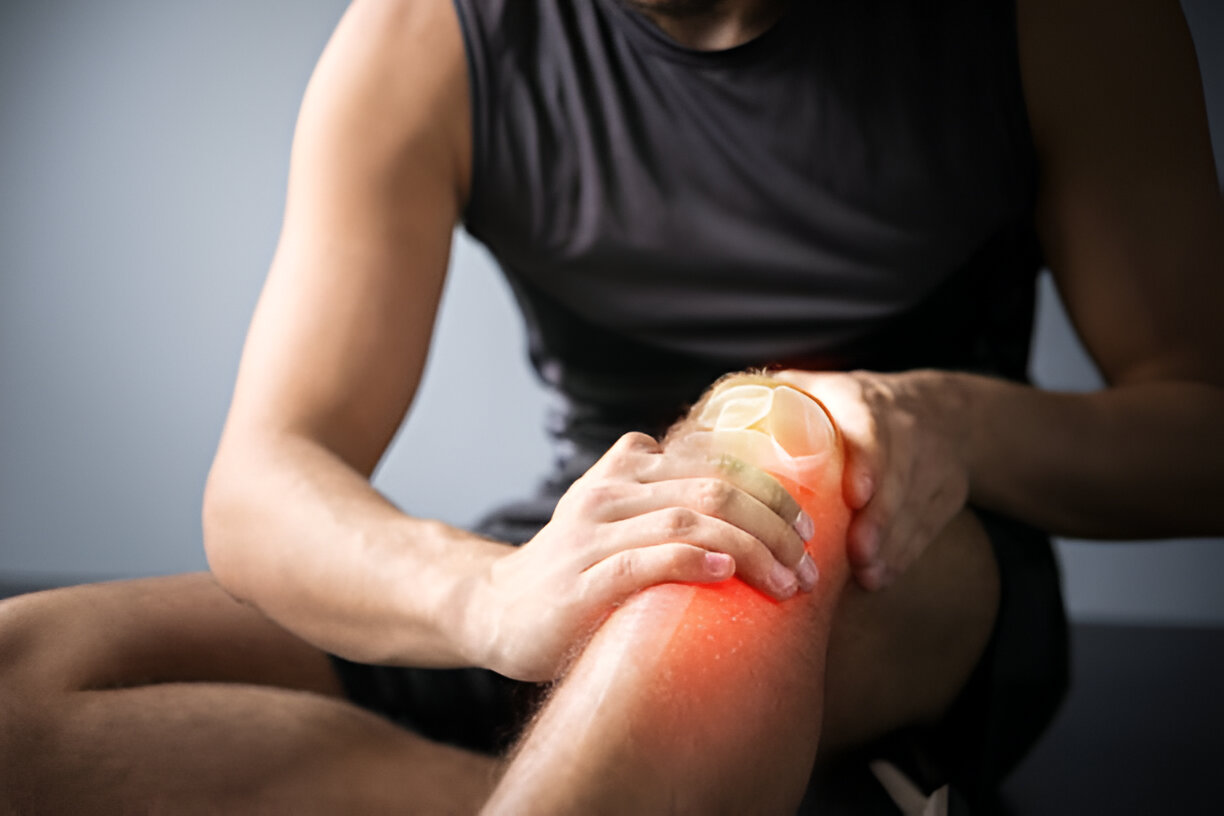
An ankle sprain is a stretch, partial tear or complete tear of the ligaments that support the ankle joint.[1] It is one of the most common musculoskeletal injuries, and most sprains involve the lateral (outer) ligaments, especially the anterior talofibular ligament.[1, 2]
Common symptoms
An acute sprain triggers an inflammatory response that causes pain, swelling and a sense that the joint is unstable.[1] Bruising and tenderness over the injured ligament are common, and walking may hurt.
Symptoms that last beyond the first weeks are not unusual. Up to 40% of sprains lead to chronic symptoms such as pain, swelling, instability or repeat sprains lasting at least 12 months, and about 20% develop into chronic ankle instability.[3]
Causes and risk factors
A sprain happens when the ankle is forced past what its ligaments can handle, most often by rolling the foot inward.[1] Poor balance and position sense, a previous sprain, loose ligaments and leg alignment are intrinsic risk factors, while warm-up, footwear, uneven ground and sports with jumping or sudden direction changes are external ones.[1]
A review of prospective studies found a higher rate in females than males and in indoor and court sports.[2]
How it is diagnosed and treated conventionally
A sprain is diagnosed from the history of the injury and a physical examination of the bones and ligaments, and imaging is used when a fracture or more severe injury is suspected.[1, 4]
Current treatment follows the POLICE approach: protection, optimal loading, ice, compression and elevation. Early supervised movement is preferred over long immobilization, and bracing, taping and balance training are used for recovery and to prevent repeat sprains.[1] An overview of systematic reviews found strong evidence for anti-inflammatory drugs and early mobilization, moderate evidence for exercise and manual therapy, and strong evidence for bracing in preventing recurrence.[5] Exercise-based rehabilitation reduced the chance of a repeat sprain over 12 months.[6] Surgery is kept for chronic instability or treatment that has failed.[1]
Why Ankle Sprain calls for a whole-person approach
A sprain is a local injury, but how well it recovers depends on more than the ligament. Balance and position sense, the first days of swelling, and whether the ankle is retrained afterward all matter.[1, 3]
Care that looks at these factors alongside rehabilitation is a reasonable addition. It does not replace the exercises and bracing that conventional treatment relies on.
Inflammation and swelling
A sprain triggers inflammation, which brings pain and swelling in the first days.[1] This is one reason people look for ways to ease pain and swelling while they stay active.
Balance and position sense
Poor position sense (proprioception) before an injury raises the risk of a sprain, and the impairment after one is thought to make repeat sprains more likely.[1, 3] This is why balance and neuromuscular training is part of standard care.[5]
Repeat sprains and chronic symptoms
Ankle problems that last often combine mechanical looseness with changes in how the nervous system controls the joint, so a thorough early assessment looks for both.[4]
Return to activity
Rehabilitation, bracing and a gradual return to sport lower the risk of another sprain.[5, 6] Pain relief that lets you do your exercises is useful, but it should not tempt you to go back to full activity too soon.
Acupuncture for Ankle Sprain
What the research shows
The evidence for acupuncture in acute ankle sprain is limited, and the reviews that have looked at it rate most trials as low quality. A Cochrane review of 20 trials with 2012 participants, 17 of them in China, found that all had a high risk of bias and rated the evidence for the main reported outcome, the rate of symptom resolution, as very low certainty. It concluded that the evidence did not provide reliable support for the effectiveness or the safety of acupuncture.[7]
A meta-analysis of 17 trials with 1,820 participants found more people reported improvement with acupuncture than without, but called this probably an overestimate. Trial quality was generally poor, and the authors judged the evidence insufficient to recommend acupuncture as an evidence-based option.[8] An overview of systematic reviews described the evidence on acupuncture for acute sprain as conflicting.[5]
One later trial of 80 patients with acute sprains compared a micro-needle-knife technique with conventional acupuncture. Pain and function improved in both groups. The micro-needle-knife group did better right after treatment, and the groups did not differ at one month.[9] The trial had no untreated or sham group, so it says little about whether acupuncture itself helps.
How acupuncture may work
How acupuncture might help a sprained ankle is not established, and none of the studies above tested a mechanism. In traditional Chinese medicine, an acute sprain is described as injury with local stagnation of qi and blood, which causes pain and swelling, and needles are placed to move this stagnation. This is a traditional framework, not a proven explanation.
What treatment involves
Treatment uses fine, sterile, single-use needles placed at points around the ankle, lower leg and sometimes the hand or other regions, usually left in place for about 20 to 40 minutes. We plan a short course of visits and reassess whether it is helping. The trials in the reviews varied widely in how many sessions they gave.[7]
Serious problems from acupuncture are rare. In prospective studies, about 9 in 100 patients had a minor reaction such as bleeding, pain or redness at a needle site, and serious events occurred in about 1 in 10,000 patients.[10] Tell the practitioner first if you have a bleeding disorder, take blood thinners, are pregnant, or have a pacemaker (relevant to electroacupuncture). An injury that has not been assessed by a physician should be seen by one first.
Ayurvedic medicine for Ankle Sprain
The Ayurvedic view
Ayurveda has no classical diagnosis that equals a sprain. Injury-related pain and swelling are traditionally described as arising from trauma (abhighata), with Vata and sometimes Pitta and Kapha involved, depending on whether the area is stiff, hot or swollen. These are traditional categories used to plan care, not biomedical diagnoses.
Therapies that may be used
Care is chosen for the individual and traditionally combines:
- Protection of the injured ankle and a gradual return to movement, in line with your physician's advice and standard sprain care[1]
- Gentle, warm oil massage around, not over, an acutely swollen joint once the first days of swelling have passed
- Herbs traditionally used for pain and swelling, such as turmeric and ginger, which need review if you take blood thinners, since ginger has been reported with bleeding in people taking warfarin[11]
- Diet and daily routine intended to calm the aggravated dosha
Panchakarma, the traditional cleansing program, is not appropriate for a sprain, and is also unsuitable during pregnancy, acute illness or frailty.
What the research shows
There is no clinical research on Ayurveda for ankle sprain. A PubMed search found no clinical trials of Ayurvedic treatment, Ayurvedic herbs or oil therapies for ankle sprain or similar soft tissue injuries. The treatments above are traditional practice, and we cannot point to evidence that they speed recovery.
Herbal medicine for Ankle Sprain
Herbs and formulas that have been studied
Herbal treatment of acute sprains has been studied mostly in East Asia. Chinese herbal medicine taken by mouth and herbal patches applied to the skin were among the comparison treatments in acupuncture trials.[7] A Korean herbal extract called Dangguixu-san, used for pain and swelling after sprains, has been tested in a placebo-controlled trial.[12] A herbal preparation applied to the skin falls under the clinic's transdermal medication therapy, but we found no trial of it for sprains.
What the research shows
The evidence is limited. In a double-blind trial of 48 people with acute lateral ankle sprains, everyone received acupuncture once a day for 5 days, and half also took Dangguixu-san while half took placebo. The herbal group had a larger reduction in pain and better symptom scores between week 1 and week 5, with no adverse events reported. The trial was small and tested the herb on top of acupuncture, and it was done in Korea.[12]
We found no other placebo-controlled herbal trials in ankle sprain. Evidence for anti-inflammatory herbs such as turmeric, ginger or Boswellia in sprains was not found.
Safety and herb-drug interactions
Herbs are active substances and can interact with medicines. Case reports describe serious problems such as bleeding and hematomas when warfarin was combined with herbs including dan shen (Salvia miltiorrhiza), dang gui (Angelica sinensis), ginger and Boswellia.[11] A broader review found that herb-drug interactions can have serious clinical consequences.[13] People who take blood thinners or anti-inflammatory drugs, or who have a bleeding problem, need a practitioner's review before using herbs.
In the Cochrane review, only one trial reported adverse events: three participants in a comparison group had skin problems from over-the-counter Chinese herbal patches.[7] Skin preparations should not be applied to broken skin. In another study, about one fifth of Ayurvedic products bought online contained detectable lead, mercury or arsenic.[14] Herbs should come from tested sources and be prescribed individually. Tell us if you are pregnant or breastfeeding, have liver or kidney disease, or have surgery planned.
Translating traditional medicine into modern biological language
The links drawn here are interpretation, not equivalence. Chinese medicine describes an acute sprain as stagnation of qi and blood at the injury. Biomedicine describes a stretched or torn ligament with local inflammation, swelling and pain.[1] Whether acupuncture or herbs influence any of these processes in people with sprains has not been shown.
Ayurveda's description of trauma with aggravated Vata, pain and swelling covers a similar picture in different words. No study has shown that a dosha or a qi pattern corresponds to a specific biological process in the ankle.
How this care fits with your medical care
Integrative care for ankle sprain is complementary. Keep your physician, physical therapist or sports medicine doctor, and continue the bracing, loading and balance exercises they prescribe, because these are the best-supported parts of recovery.[5, 6] Do not stop or change prescribed medicines without your prescriber.
We do not diagnose the extent of an ankle injury, so a new sprain should be assessed by a clinician, especially when you cannot walk on it. Please bring your diagnosis, any x-ray or MRI reports, a full list of medicines and supplements, and your rehabilitation plan.
When to seek urgent medical care
Some ankle injuries are fractures or severe ligament injuries and need an examination and often imaging.[4]
- Being unable to bear weight on the foot, or to take four steps, right after the injury
- Severe pain or tenderness over the bone at the ankle or the base of the foot
- Obvious deformity of the ankle or foot
- Numbness, a cold or pale foot, or a blue color in the toes
- Redness, warmth and fever, or a calf that is swollen and painful without a clear cause
- No improvement after the first week or two, or a repeatedly giving-way ankle
If any severe symptom occurs after a serious fall or accident, call 911 or go to the nearest emergency department.
Frequently asked questions
What is ankle sprain?
An ankle sprain is an injury to the ligaments that hold the ankle joint together, usually from rolling the foot inward. It causes pain, swelling, bruising and sometimes a feeling that the ankle is unstable. Most sprains involve the outer ligaments. Many improve with early movement and rehabilitation, but some lead to lasting symptoms or repeat sprains.
Can acupuncture help with ankle sprain?
It may, but the evidence is limited. A Cochrane review of 20 trials found all had a high risk of bias and rated the evidence as very low certainty, so it could not confirm benefit or safety. A meta-analysis found more improvement with acupuncture but called it probably overestimated. Acupuncture is used alongside rehabilitation and bracing, not in place of them.
Does Ayurvedic or herbal medicine work for ankle sprain?
The evidence is thin. We found no studies of Ayurvedic treatment for ankle sprain. One small Korean trial of 48 people found an herbal extract added to acupuncture reduced pain more than placebo, but one trial is not enough to be sure. Herbs should be prescribed individually and checked against your medicines.
Can I skip bracing, exercises or pain medicine if I have acupuncture?
No. Early movement, exercise-based rehabilitation and bracing have the strongest evidence for recovery and for preventing another sprain. Acupuncture, Ayurveda and herbal medicine are complementary care. Do not stop or change prescribed medicines without talking to your prescriber. If you cannot put weight on the foot, see a doctor first.
How soon might I notice a change with acupuncture?
It differs from person to person and no result can be promised. Many sprains also improve on their own with time and rehabilitation, which makes it hard to tell what caused a change. We reassess after a short course of visits to see whether treatment is helping.
Does insurance cover acupuncture for ankle sprain?
It may. Netra Integrative Health Clinic accepts most major insurance plans that include out-of-network acupuncture benefits, for example Aetna, Blue Cross Blue Shield, Cigna and UnitedHealthcare, and offers a free benefits check. HSA and FSA cards and CareCredit are also accepted. Call (908) 402-7301 to ask about your plan.
References
- Bergman R, Li D, Shuman VL. Acute Ankle Sprain. StatPearls [Internet]. 2025. PMID 29083595. StatPearls chapter on acute ankle sprain covering ligament anatomy, inflammation, risk factors, POLICE treatment, early rehabilitation, bracing and surgery.
- Doherty C, Delahunt E, Caulfield B, et al. The incidence and prevalence of ankle sprain injury: a systematic review and meta-analysis of prospective epidemiological studies. Sports Med. 2014;44(1):123-40. PMID 24105612. Meta-analysis of 181 prospective studies on ankle sprain incidence, finding higher rates in females and court sports and lateral sprains most common.
- Mugno AT, Constant D. Recurrent Ankle Sprain. StatPearls [Internet]. 2023. PMID 32809454. StatPearls chapter on recurrent ankle sprain: up to 40% develop chronic symptoms, about 20% chronic instability, with impaired proprioception implicated.
- Delahunt E, Bleakley CM, Bossard DS, et al. Clinical assessment of acute lateral ankle sprain injuries (ROAST): 2019 consensus statement and recommendations of the International Ankle Consortium. Br J Sports Med. 2018;52(20):1304-1310. PMID 29886432. International Ankle Consortium consensus statement on assessing acute lateral ankle sprain, including history, bone and ligament examination and risk of chronic instability.
- Doherty C, Bleakley C, Delahunt E, et al. Treatment and prevention of acute and recurrent ankle sprain: an overview of systematic reviews with meta-analysis. Br J Sports Med. 2017;51(2):113-125. PMID 28053200. Overview of 46 systematic reviews: strong evidence for NSAIDs, early mobilization and bracing; conflicting evidence for acupuncture and surgery.
- Wagemans J, Bleakley C, Taeymans J, et al. Exercise-based rehabilitation reduces reinjury following acute lateral ankle sprain: A systematic review update with meta-analysis. PLoS One. 2022;17(2):e0262023. PMID 35134061. Meta-analysis of 14 trials (2,182 participants) finding exercise-based rehabilitation reduced reinjury after acute lateral ankle sprain at 12 months.
- Kim TH, Lee MS, Kim KH, et al. Acupuncture for treating acute ankle sprains in adults. Cochrane Database Syst Rev. 2014;2014(6):CD009065. PMID 24953665. Cochrane review of 20 mostly Chinese, high-risk-of-bias trials of acupuncture for acute ankle sprain; very low certainty and no reliable support for benefit or safety.
- Park J, Hahn S, Park JY, et al. Acupuncture for ankle sprain: systematic review and meta-analysis. BMC Complement Altern Med. 2013;13:55. PMID 23496981. Meta-analysis of 17 poor-quality trials (1,820 participants) in which acupuncture improved global symptoms, with evidence judged insufficient to recommend it.
- Lu SW, Lang BX, Liu JN, et al. Comparative Efficacy of Micro-Needle-Knife Therapy and Acupuncture in Acute Ankle Sprains: A Randomized Controlled Trial. Med Sci Monit. 2024;30:e944157. PMID 38794788. Randomized trial of 80 acute sprain patients comparing micro-needle-knife therapy with acupuncture; both improved and groups were similar at one month.
- Bäumler P, Zhang W, Stübinger T, et al. Acupuncture-related adverse events: systematic review and meta-analyses of prospective clinical studies. BMJ Open. 2021;11(9):e045961. PMID 34489268. Systematic review of 21 prospective studies finding minor acupuncture reactions in about 9 percent of patients and serious events in about 1 per 10,000.
- Milić N, Milosević N, Golocorbin Kon S, et al. Warfarin interactions with medicinal herbs. Nat Prod Commun. 2014;9(8):1211-6. PMID 25233607. Review of reported interactions between warfarin and medicinal herbs, with case reports of serious bleeding events involving herbs including dan shen, dang gui, ginger and Boswellia.
- Kim JH, Lee CK, Lee EY, et al. Effects of Dangguixu-san in patients with acute lateral ankle sprain: a randomized controlled trial. Trials. 2021;22(1):184. PMID 33663582. Double-blind placebo-controlled trial of 48 patients finding the herbal extract Dangguixu-san plus acupuncture reduced pain more than acupuncture alone at 5 weeks.
- Hu Z, Yang X, Ho PC, et al. Herb-drug interactions: a literature review. Drugs. 2005;65(9):1239-82. PMID 15916450. Literature review of herb-drug interactions, many from case reports, concluding that interactions can have serious clinical consequences.
- Saper RB, Phillips RS, Sehgal A, et al. Lead, mercury, and arsenic in US- and Indian-manufactured Ayurvedic medicines sold via the Internet. JAMA. 2008;300(8):915-23. PMID 18728265. JAMA study finding detectable lead, mercury or arsenic in about one fifth of Ayurvedic medicines purchased over the Internet.
This page is for general education and is not medical advice. Acupuncture, Ayurvedic medicine and herbal medicine are complementary therapies; they do not replace diagnosis or treatment by your physician. Do not stop or change prescribed treatment without talking to your prescriber. In an emergency call 911.