


















- What it is: Inflammation of the heart muscle in which the immune system plays a central role, whether triggered by a virus, a systemic autoimmune disease, a drug or another cause.
- Common symptoms: Chest pain, shortness of breath, tiredness, palpitations, and in some people swelling, fainting or heart failure.
- Conventional care: Hospital-based assessment, heart failure and rhythm treatment, and in selected cases corticosteroids or other immune-suppressing medicines.
- How integrative care fits: Supportive care for symptoms such as stress, sleep and fatigue, only once you are under a physician's care and your treating team knows about it.
- Evidence at a glance: None found for acupuncture or Ayurveda in myocarditis itself; limited, low-quality trials of Chinese herbal formulas in viral myocarditis, mostly from China.
What is Autoimmune Myocarditis?
Autoimmune myocarditis is inflammation of the heart muscle (the myocardium) in which an abnormal immune response against the heart plays a central role. It can occur on its own, alongside a systemic autoimmune disease such as lupus, or after a trigger such as a viral infection or a cancer immunotherapy drug.[1, 2] It is a condition that needs medical care, and some forms are emergencies.
Common symptoms
Symptoms range from mild to life-threatening and often overlap with other heart problems. Chest pain is the most common sign in adults, and some people also have shortness of breath, fainting, palpitations or fatigue.[2, 3] Severe cases can bring heart failure, dangerous heart rhythms, cardiogenic shock or sudden death.[4]
Causes and risk factors
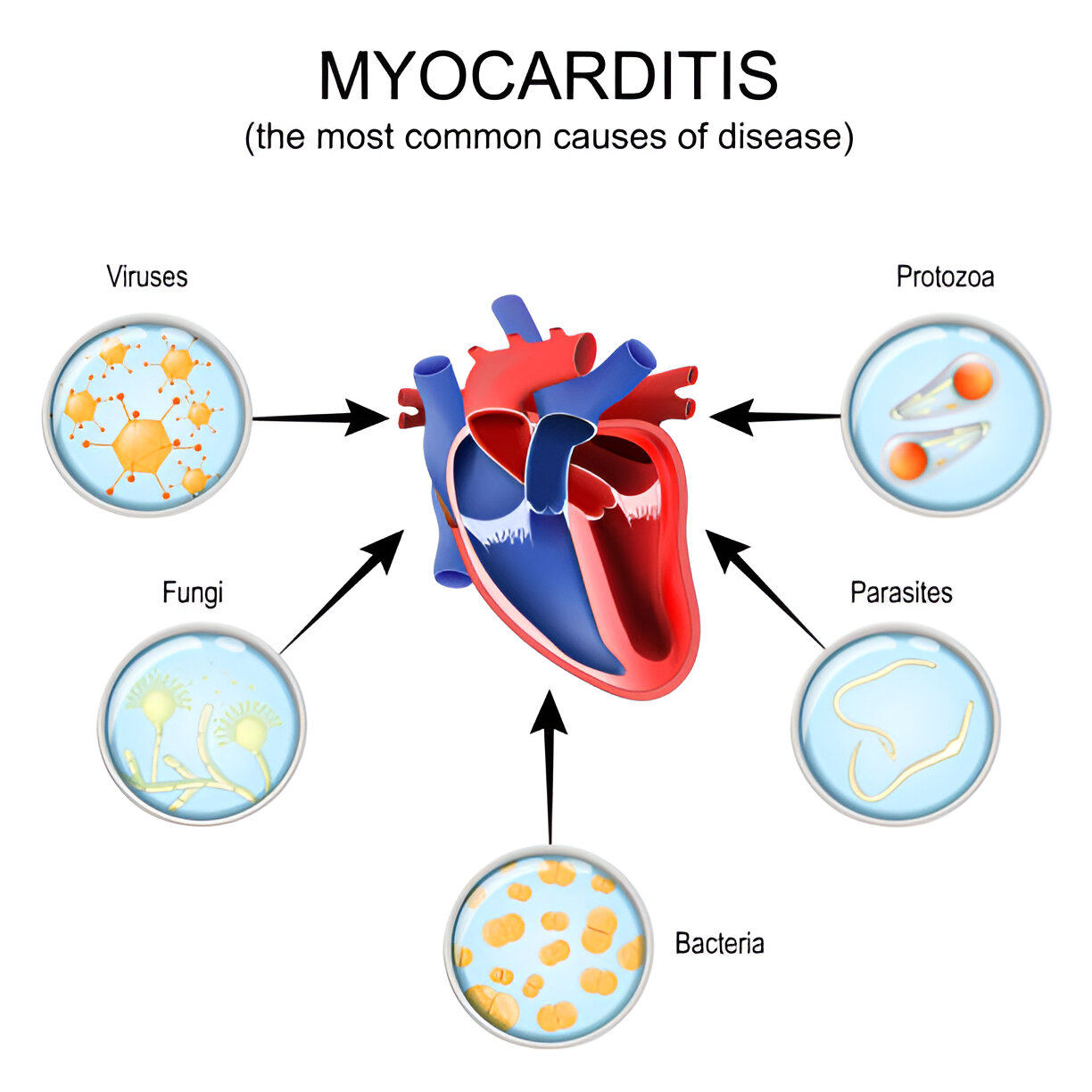
Viral infections are the most common cause of acute myocarditis overall. Other causes include systemic autoimmune disorders such as lupus, drugs such as immune checkpoint inhibitors, and vaccines, including smallpox and mRNA COVID-19 vaccines.[2] Researchers have found that immune T cells reacting to a heart muscle protein can drive autoimmune forms, but the exact targets and pathways are still not fully understood.[1]
How it is diagnosed and treated conventionally
Diagnosis is suggested by symptoms, raised troponin levels, ECG changes and heart ultrasound findings. Cardiac MRI or a heart tissue biopsy is needed to confirm it.[2]
Treatment depends on how severe the illness is and what caused it. Supportive treatment for heart failure and rhythm problems is the foundation, and corticosteroids or other immune-suppressing drugs are used for particular forms, such as those linked to systemic autoimmune disease. This practice rests mostly on limited evidence, and trials are still needed.[2, 4] Many people recover fully, but a minority develop long-term heart muscle weakness.[4]
Why Autoimmune Myocarditis calls for a whole-person approach
Several factors act together in autoimmune myocarditis: the immune response, the trigger or underlying disease, the strain on the heart, and how the person is coping. Medical teams focus on the first three, and symptoms such as stress, poor sleep and fatigue are often left to the patient.
Supportive care can reasonably address those everyday effects. It cannot treat the inflammation in the heart muscle.
Immune activity
Immune dysregulation is central. Even in myocarditis that starts with a virus, an overactive immune response contributes to the damage.[1] This is why some patients take immune-suppressing medicines, and why any herb said to "stimulate" or "modulate" immunity needs your cardiologist's review.
The underlying disease or trigger
Myocarditis is more frequent in people with systemic autoimmune disorders such as lupus and polymyositis.[1] Treating the underlying disease or removing the trigger is part of medical care.[2]
Heart rhythm and heart failure symptoms
Myocarditis can cause palpitations, arrhythmias and heart failure.[4] These need monitoring by a cardiologist. Questions about activity, including sports, should also go to your cardiology team.
Stress, sleep and fatigue
A systematic review of 24 trials in people with heart failure found small-to-moderate benefits from mind-body approaches such as tai chi, yoga and relaxation on quality of life, exercise capacity, anxiety, depression and fatigue. It reported that most studies were small.[5] This evidence is for heart failure, not for myocarditis, but it suggests that stress and fatigue can be addressed alongside heart treatment.
Acupuncture as supportive care in Autoimmune Myocarditis
What the research shows
A PubMed search found no clinical trials of acupuncture for autoimmune myocarditis, and none for viral myocarditis. Nothing is known about whether acupuncture affects the course of the disease.
Some studies look at related heart problems. A systematic review of 7 trials of acupuncture in heart failure, most with considerable methodological flaws, found reports of better exercise capacity and quality of life but called the evidence inconclusive.[6] An overview of 10 systematic reviews of acupuncture for arrhythmias found improvements in several rhythm measures, but rated the methodological quality as very low and the evidence as mostly low or very low quality.[7] A separate review of 9 trials noted that only one had a low risk of bias and that no robust conclusion could be reached.[8] These results are for other heart conditions and cannot be assumed to apply to myocarditis.
How acupuncture may work
For myocarditis, there is no mechanism research in people. In heart failure studies, researchers have reported changes in heart rate variability, a measure of the balance between the nervous system's two arms, after acupuncture.[6] This is a proposed explanation from a different condition, not an established mechanism.
What treatment involves
We offer acupuncture only after your condition is under medical management and your treating team knows you are receiving complementary care. Sessions use fine, sterile, single-use needles, usually left in place for about 20 to 40 minutes, with reassessment after a short course of visits.
Serious problems are rare. In prospective studies, about 9 in 100 patients had a minor reaction such as bleeding, soreness or redness at a needle site, and serious events occurred in about 1 in 10,000 patients.[9] Tell the practitioner first if you take blood thinners, have a bleeding disorder, are pregnant, or have a pacemaker or implanted defibrillator, since electroacupuncture may not be suitable.
Ayurvedic medicine as supportive care in Autoimmune Myocarditis
The Ayurvedic view
Ayurveda has no classical diagnosis that matches autoimmune myocarditis. Heart conditions were traditionally grouped under disorders of the heart (hridroga), described in terms of imbalances of the doshas and of digestion and metabolism. These are traditional frameworks, not biomedical diagnoses, and they do not guide treatment of myocarditis.
Therapies that may be used
Supportive Ayurvedic care is limited to gentle measures chosen for the individual:
- Regular meals, sleep and daily routine, and stress-reducing practices such as breathing exercises, as long as your cardiologist agrees
- Gentle oil massage for relaxation
- Herbs, only after review of your medicines by a qualified practitioner and your physician
Panchakarma procedures are not appropriate during acute illness, in frailty, in pregnancy, or while heart function is unstable. They are not a part of care for active myocarditis.
What the research shows
No clinical trials of Ayurvedic treatment for myocarditis were found. Laboratory work exists: curcumin, from turmeric, reduced heart inflammation and improved heart function in rats with experimental autoimmune myocarditis. This animal finding has not been tested in patients.[10]
Arjuna (Terminalia arjuna) is a traditional heart herb. A very small crossover trial of 12 patients with severe heart failure, with two weeks on each treatment, reported symptom and heart function improvements compared with placebo.[11] A systematic review of Terminalia arjuna in stable angina, based on poorly designed studies, found the evidence insufficient to support or reject benefit.[12] Neither addresses myocarditis.
Herbal medicine as supportive care in Autoimmune Myocarditis
Herbs and formulas that have been studied
Almost all clinical research is on viral myocarditis in China. It covers astragalus (Astragalus membranaceus, huangqi), often given as an injection, and Shengmai San, a formula traditionally used to support qi and yin.[13, 14] Astragalus injection is a hospital-type product, and the studies do not tell us how oral herbs would compare.
What the research shows
The evidence is limited and low in quality. An overview of 6 systematic reviews covering 67 trials in adults with viral myocarditis found that Chinese herbal medicine combined with Western medicine had positive effects on rhythm, ejection fraction, heart muscle enzymes and symptoms. The authors rated study quality as modest and called for larger, better trials.[15]
A meta-analysis of 44 trials of Shengmai San reported better recovery from palpitations, dyspnea and chest pain, and lower troponin, but described the overall quality as low and noted no placebo-controlled trials.[14] A meta-analysis of 19 trials, all in China, reported lower inflammatory markers with astragalus injection and cautioned about large differences between studies.[13]
These trials studied viral myocarditis, not autoimmune myocarditis specifically, and the benefits cannot be assumed to carry over.
Safety and herb-drug interactions
Herbs can interact with heart and immune-suppressing medicines. Reviews describe bleeding when danshen, ginkgo or ginger was combined with warfarin, and raised digoxin levels with Siberian ginseng.[16, 17] St. John's wort lowered blood levels of ciclosporin and tacrolimus, with organ rejection reported in some cases.[16] Tell us if you take steroids, azathioprine, methotrexate, blood thinners, beta-blockers, diuretics, ACE inhibitors or digoxin. Herbal products that claim to affect immunity should be avoided unless your cardiologist agrees.
Herbal and dietary supplements account for about 20% of drug-induced liver injury cases in the United States, and the product causing the harm is often hard to identify.[18] In one study, about one fifth of Ayurvedic products bought online contained detectable lead, mercury or arsenic.[19] Herbs should come from tested sources and be prescribed individually. Tell us if you are pregnant or breastfeeding, or have liver or kidney disease.
Translating traditional medicine into modern biological language
This section is interpretation, not equivalence. Chinese medicine would describe some people with myocarditis as having deficiency of qi and yin, and Shengmai San is traditionally used to supplement these. Researchers study such formulas by measuring inflammatory signals, heart enzymes, rhythm and heart function.[13, 14]
Ayurveda's concepts of weak digestion and metabolism or aggravated doshas have no tested biological counterpart in this condition. Neither framework replaces the immunology and cardiology that guide treatment.[1]
How this care fits with your medical care
Supportive care is complementary and begins only after myocarditis is under medical management. For a condition like this, we ask that you are under a physician's care for it and that your treating team knows you are receiving complementary care. Do not stop or change any prescribed medicine, and follow your cardiologist's advice on activity.
We do not diagnose or manage the disease. Please bring your diagnosis, recent test and imaging reports, and a full list of medicines and supplements.
When to seek urgent medical care
Myocarditis can worsen quickly, and some of its complications are emergencies.[4]
- Chest pain or pressure, especially new or worsening
- Shortness of breath at rest or when lying flat
- Fainting or near-fainting
- A racing, pounding or very irregular heartbeat
- Rapid swelling of the legs, ankles or abdomen, or sudden weight gain
- Fever with chest symptoms after a viral illness
If any of these occur, call 911 or go to the nearest emergency department.
Frequently asked questions
What is autoimmune myocarditis?
Autoimmune myocarditis is inflammation of the heart muscle in which the immune system plays a central role. It may occur with a systemic autoimmune disease, after a virus, or as a reaction to a drug. Symptoms include chest pain, shortness of breath, tiredness and palpitations. Severe cases can cause heart failure or dangerous rhythms. It needs diagnosis and treatment by a physician.
Can acupuncture help people with autoimmune myocarditis?
No trials have tested acupuncture for myocarditis, so we cannot say it helps the condition itself. Studies in heart failure and arrhythmia suggest possible benefits, but they are small and low in quality. At most, acupuncture is a supportive option for symptoms such as stress or poor sleep, after your cardiology team knows about it.
Do Ayurvedic or herbal medicines work for autoimmune myocarditis?
Ayurveda has not been tested in myocarditis. Chinese herbal formulas have been studied in viral myocarditis, mainly in China, with some reported benefit, but study quality is low and the results may not apply to autoimmune forms. Some herbs interact with heart and immune-suppressing drugs, so they must be reviewed against your medicines.
Can I stop my medicines if I have complementary care?
No. Complementary care is not an alternative to your medicines or your cardiologist’s plan. Do not stop or change prescribed treatment, including steroids or other immune-suppressing drugs, without your prescriber. Tell your physicians about any herbs or supplements you use.
What should I bring to a first visit?
Bring your diagnosis, recent heart test results such as ECG, echocardiogram or MRI reports, and a full list of your medicines and supplements. Also bring the name of your cardiologist or treating physician. We ask that your treating team knows you are receiving complementary care.
Does insurance cover acupuncture for autoimmune myocarditis?
It may. Netra Integrative Health Clinic is in-network with Blue Cross Blue Shield, Cigna and UnitedHealthcare. Other plans may be covered through out-of-network benefits, and we offer a free benefits check. HSA and FSA cards and CareCredit are also accepted. Call (908) 402-7301 to ask about your plan.
References
- Won T, Song EJ, Kalinoski HM, et al. Autoimmune Myocarditis, Old Dogs and New Tricks. Circ Res. 2024;134(12):1767-1790. PMID 38843292. Circulation Research review of autoimmune mechanisms in myocarditis, including autoreactive T cells, autoimmune disease associations and checkpoint inhibitor myocarditis.
- Ammirati E, Moslehi JJ. Diagnosis and Treatment of Acute Myocarditis: A Review. JAMA. 2023;329(13):1098-1113. PMID 37014337. JAMA review of acute myocarditis covering causes, symptoms, diagnosis, treatment including corticosteroids for selected forms, and outcomes.
- Kang M, Chippa V, An J. Viral Myocarditis. StatPearls [Internet]. 2023. PMID 29083732. StatPearls chapter on viral myocarditis describing fatigue, chest pain, heart failure and arrhythmias as presentations, and diagnosis by clinical picture and biopsy.
- Shams P, Collier SA. Acute Myocarditis. StatPearls [Internet]. 2025. PMID 28722877. StatPearls chapter on acute myocarditis covering its forms, causes, variable presentation, supportive treatment and the range from full recovery to chronic complications.
- Gok Metin Z, Ejem D, Dionne-Odom JN, et al. Mind-Body Interventions for Individuals With Heart Failure: A Systematic Review of Randomized Trials. J Card Fail. 2018;24(3):186-201. PMID 28939458. Systematic review of 24 trials of mind-body interventions in heart failure reporting small-to-moderate benefits on quality of life, fatigue, anxiety and depression.
- Lee H, Kim TH, Leem J. Acupuncture for heart failure: A systematic review of clinical studies. Int J Cardiol. 2016;222:321-331. PMID 27500758. Systematic review of 7 trials of acupuncture for heart failure, with considerable methodological flaws and inconclusive effectiveness.
- Ci W, Yawen C, Jiaying W, et al. Efficacy and safety of acupuncture for arrythmias: an overview of systematic reviews and Meta-analyses. J Tradit Chin Med. 2025;45(6):1178-1190. PMID 41376212. Overview of 10 systematic reviews of acupuncture for arrhythmias reporting benefits on rhythm measures but very low methodological quality.
- Liu J, Li SN, Liu L, et al. Conventional Acupuncture for Cardiac Arrhythmia: A Systematic Review of Randomized Controlled Trials. Chin J Integr Med. 2018;24(3):218-226. PMID 28432528. Systematic review of 9 trials of acupuncture for cardiac arrhythmia, with low overall quality and no robust conclusion.
- Bäumler P, Zhang W, Stübinger T, et al. Acupuncture-related adverse events: systematic review and meta-analyses of prospective clinical studies. BMJ Open. 2021;11(9):e045961. PMID 34489268. Systematic review of 21 prospective studies finding minor acupuncture reactions in about 9 percent of patients and serious events in about 1 per 10,000.
- Mito S, Watanabe K, Harima M, et al. Curcumin ameliorates cardiac inflammation in rats with autoimmune myocarditis. Biol Pharm Bull. 2011;34(7):974-9. PMID 21720000. Rat study of experimental autoimmune myocarditis in which curcumin reduced cardiac inflammation and improved heart function.
- Bharani A, Ganguly A, Bhargava KD. Salutary effect of Terminalia Arjuna in patients with severe refractory heart failure. Int J Cardiol. 1995;49(3):191-9. PMID 7649665. Small double-blind crossover trial of Terminalia arjuna bark extract in 12 patients with severe heart failure, reporting symptom and heart function improvements.
- Kaur N, Shafiq N, Negi H, et al. Terminalia arjuna in Chronic Stable Angina: Systematic Review and Meta-Analysis. Cardiol Res Pract. 2014;2014:281483. PMID 24600529. Systematic review of Terminalia arjuna in chronic stable angina finding poor-quality studies and insufficient evidence for or against benefit.
- Guo J, Zhao N, Jin P, et al. Effect of Astragalus injection on inflammatory mediators in patients with viral myocarditis: A systematic review and meta-analysis. Phytomedicine. 2022;107:154436. PMID 36115170. Meta-analysis of 19 Chinese trials of Astragalus injection in viral myocarditis finding lower inflammatory markers, with high heterogeneity and a call for larger trials.
- Zhang BR, Liu XH, Ling YT, et al. Effectiveness and Safety of Shengmai San for Viral Myocarditis: A Systematic Review and Meta-Analysis of Randomized Controlled Trials. Cardiovasc Ther. 2024;2024:2127018. PMID 39742019. Meta-analysis of 44 trials (4,298 participants) of Shengmai San for viral myocarditis, reporting symptom and marker improvements but low quality and no placebo-controlled trials.
- Hui XS, Wang SQ, Lu SC, et al. Chinese Herbal Medicine for the Treatment of Adult Viral Myocarditis: An Overview of Systematic Reviews and Meta-analyses of Randomized Controlled Trials. Clin Ther. 2023;45(10):991-1003. PMID 37690913. Overview of 6 systematic reviews (67 trials) of Chinese herbal medicine added to Western medicine in adult viral myocarditis, with modest methodological quality.
- Hu Z, Yang X, Ho PC, et al. Herb-drug interactions: a literature review. Drugs. 2005;65(9):1239-82. PMID 15916450. Literature review of herb-drug interactions, including danshen, ginkgo, ginseng and St. John's wort with warfarin, digoxin, ciclosporin and tacrolimus.
- Tan CSS, Lee SWH. Warfarin and food, herbal or dietary supplement interactions: A systematic review. Br J Clin Pharmacol. 2021;87(2):352-374. PMID 32478963. Systematic review of warfarin interactions with foods, herbs and supplements, noting increased bleeding risk with several herbs including ginger.
- Navarro VJ, Khan I, Björnsson E, et al. Liver injury from herbal and dietary supplements. Hepatology. 2017;65(1):363-373. PMID 27677775. Hepatology review of liver injury from herbal and dietary supplements, which account for about 20 percent of drug-induced liver injury in the United States.
- Saper RB, Phillips RS, Sehgal A, et al. Lead, mercury, and arsenic in US- and Indian-manufactured Ayurvedic medicines sold via the Internet. JAMA. 2008;300(8):915-23. PMID 18728265. JAMA study finding detectable lead, mercury or arsenic in about one fifth of Ayurvedic medicines purchased over the Internet.
This page is for general education and is not medical advice. Acupuncture, Ayurvedic medicine and herbal medicine are complementary therapies; they do not replace diagnosis or treatment by your physician. Do not stop or change prescribed treatment without talking to your prescriber. In an emergency call 911.