
















- What it is: The ability of a couple to conceive; infertility is the failure to become pregnant after 12 months of regular unprotected intercourse.
- Common symptoms: Fertility problems often have no symptoms, but irregular or absent periods, painful periods, and abnormal semen results can be signs.
- Conventional care: Testing of both partners, treatment of the cause, ovulation-inducing medicines, intrauterine insemination, and in vitro fertilization (IVF).
- How integrative care fits: Acupuncture, Ayurvedic care and individually prescribed herbs are offered for stress and general wellbeing while you work with your fertility doctors.
- Evidence at a glance: Limited and mixed. The largest trial and a Cochrane review found no live-birth benefit from acupuncture during IVF; smaller, lower-quality studies are more positive. Herbal and Ayurvedic evidence is limited.
Understanding Fertility
Fertility is the ability to conceive and carry a pregnancy, and infertility is defined as not becoming pregnant after 12 months of regular, unprotected intercourse.[1] Infertility affects roughly 8% to 12% of couples of reproductive age worldwide.[2] A male factor is the sole cause in 20% to 30% of cases and contributes to about half overall.[2]
Common symptoms
Many fertility problems cause no symptoms, and the first sign is simply that pregnancy does not happen. Irregular or absent periods can point to a problem with ovulation, and painful periods may suggest a condition such as endometriosis.[1, 2] In men, an abnormal semen analysis is the usual sign, and pain or swelling in the genital area should be checked.
Causes and risk factors
The most common causes are ovulation problems, male factor infertility and blocked or damaged fallopian tubes, and about 15% of couples have no identifiable cause.[1] About 70% of women who do not ovulate have polycystic ovary syndrome (PCOS).[1] Endometriosis, uterine fibroids and premature ovarian insufficiency can also play a role.[2]
Age matters. In women, fertility starts to decline around age 25 to 30, and more steeply with age, and smoking and obesity can lower fertility.[1, 2]
How it is diagnosed and treated conventionally
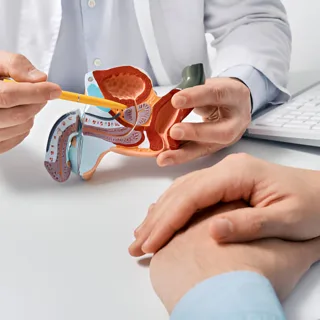
Evaluation usually looks at ovulation, the fallopian tubes and uterus, and semen quality, and about 85% of couples have an identifiable cause.[1] Treatment depends on the cause and the woman's age.
Clomiphene, letrozole or gonadotropins induce ovulation, and for unexplained infertility, endometriosis or mild male factor infertility, a few cycles of ovarian stimulation may be tried before IVF.[1] IVF is considered sooner for women over about 38 to 40 and is indicated for severe male factor infertility or untreated blocked tubes on both sides.[1] Gonadotropins can cause multiple pregnancy and ovarian hyperstimulation syndrome, which your fertility specialist will monitor.[1]
Why Fertility calls for a whole-person approach
Fertility depends on more than one organ. Hormones, ovulation, sperm quality, the uterus and tubes, age and general health all contribute, and either partner can be involved.[1, 2]
Care that addresses stress, sleep, weight, smoking and overall health is therefore a reasonable complement to the medical work-up, though none of it replaces it.
Hormones and ovulation
Ovulation problems account for about 25% of infertility diagnoses.[1] Hormonal conditions such as hypogonadotropic hypogonadism and high prolactin can affect fertility in both women and men, and PCOS is another cause in women. These conditions need medical testing.[2]
Weight, smoking and lifestyle
Smoking and obesity can lower fertility.[1] Lifestyle factors and chronic diseases are among the factors affecting the fertility of both men and women.[2]
Stress and emotional strain
Fertility treatment itself is stressful. A review of eight trials found IVF patients have high levels of state anxiety around embryo transfer and egg retrieval.[3] Researchers have also proposed that psychological stress could affect the ovary through oxidative stress, although this is a hypothesis and not proven in people.[4]
Male factors
Men contribute to about half of all infertility, so a semen analysis is an early test for couples trying to conceive.[2]
Acupuncture for Fertility
What the research shows
Acupuncture has not been shown to raise live birth rates in IVF, and its role in other situations is uncertain. The strongest evidence is negative. A randomized trial of 848 women having IVF in Australia and New Zealand found live births in 18.3% with acupuncture and 17.8% with sham acupuncture, a difference that was not statistically significant.[5] A Cochrane review of 20 trials also found no evidence that acupuncture improved live birth or pregnancy rates in assisted conception, with low-quality evidence.[6]
Results are more positive outside IVF, but the studies are weaker. A meta-analysis of trials in infertile women not having assisted reproduction found higher pregnancy rates with acupuncture or acupuncture plus other treatment than with Western medicine alone. The authors noted that all trials had unclear risk of bias and that publication bias may be present.[7] A scoping review reported that most research focuses on PCOS and ovulation disorders and that studies of other causes were insufficient.[8] In anovulatory infertility, a meta-analysis of nine trials found no added benefit when acupuncture was used with clomiphene, though acupuncture alone was associated with a higher pregnancy rate than clomiphene alone, and the authors urged caution in interpreting the results.[9]
For PCOS, a Cochrane review of eight trials found that live birth, ovulation and pregnancy did not clearly differ between real and sham acupuncture, and that adverse events were probably more common with real acupuncture.[10] For men, a meta-analysis of seven small trials found that the evidence does not support acupuncture as an effective treatment for low sperm count or poor motility.[11]
Acupuncture may help with the stress of treatment. A meta-analysis of eight trials found a small reduction in IVF-related anxiety with acupuncture compared with controls, although the certainty of the evidence was very low.[3]
How acupuncture may work
A proposed mechanism is that acupuncture changes beta-endorphin production, which could affect the hormone that triggers ovulation, but this has not been shown to improve fertility outcomes in trials.[10] We do not claim that acupuncture improves egg quality, sperm quality or implantation.
What treatment involves
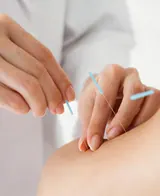
Treatment uses fine, sterile, single-use needles, usually left in place for about 20 to 40 minutes, over a series of visits with reassessment. Some trials gave acupuncture during ovarian stimulation and before and after embryo transfer.[5] If you are having IVF, tell your fertility clinic that you are receiving acupuncture.
Serious problems from acupuncture are rare. In prospective studies, about 9 in 100 patients had a minor reaction such as brief bleeding, soreness or redness at a needle site, and serious events occurred in about 1 in 10,000 patients.[12] Tell the practitioner first if you are or might be pregnant, have a bleeding disorder, take blood thinners, or have a pacemaker (relevant to electroacupuncture).
Ayurvedic medicine for Fertility
The Ayurvedic view
In Ayurveda, reproductive health depends on healthy reproductive tissue (shukra and artava dhatu), regular digestion and a calm mind, and traditional care often follows a preparation phase before conception. These are traditional ideas used to choose treatment, not biomedical findings.
Therapies that may be used
Care is individualized and traditionally combines:
- Diet and daily routine, such as regular meals, steady sleep and stress-reducing practices
- Herbs such as shatavari and ashwagandha, which are traditionally used for reproductive health
- Warm oil massage and relaxation practices
Panchakarma, a set of cleansing procedures, is not appropriate during pregnancy, and we would not use it while someone is actively trying to conceive or having fertility treatment, or during acute illness or frailty. Transdermal medication therapy, in which an herbal preparation is applied to the skin, may be discussed, but no evidence for it in fertility was found.
What the research shows
The research is limited. A literature review of Ayurvedic herbs in female reproductive health, covering tulsi, ashwagandha, ginger, turmeric and shatavari, concluded that further rigorous trials are needed.[13] A review on shatavari, a traditional Ayurvedic tonic, proposes it may act by lowering oxidative stress, but notes that its action on the ovary remains poorly understood.[4]
For men, a systematic review of 14 trials in idiopathic male infertility reported positive results for several herbal products, including Withania somnifera (ashwagandha) root and some Ayurvedic powders. Its abstract did not report live birth or pregnancy outcomes, so it cannot show that these products help couples conceive.[14] No clinical trials of Panchakarma for fertility were found.
Herbal medicine for Fertility
Herbs and formulas that have been studied
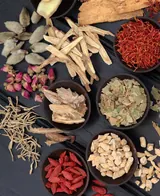
Chinese herbal medicine is the most studied herbal approach for female infertility. A review of trials found the most commonly used herbs were Cuscuta chinensis (tusizi), Angelica (danggui) and Cyperus rotundus (xiangfuzi), used mainly for patterns described as kidney deficiency, sometimes with blood stasis or phlegm-dampness.[15] Practitioners choose and adjust formulas for each person.
What the research shows
The evidence is limited and of low quality. A meta-analysis of 18 trials with 2,662 women found that herbal medicine increased pregnancy rates compared with placebo. The authors judged the reporting quality of the trials as poor, although risk of bias was generally low, and called for better-designed studies.[15]
For PCOS-related subfertility, a Cochrane review of eight trials with 609 women concluded that there is insufficient evidence to support Chinese herbal medicine. It found only low-certainty evidence that adding herbs to clomiphene may raise pregnancy rates, and no data on live birth.[16] For male subfertility, a Cochrane review found low to very low certainty evidence that oral antioxidant supplements may raise pregnancy and live birth rates. The result for live birth was not seen when high-risk-of-bias studies were removed.[17]
Safety and herb-drug interactions
Herbs are active substances and can interact with medicines. Reviews describe interactions such as extra bleeding with warfarin and danshen or ginkgo, and lowered levels of other drugs with St. John's wort.[18] Herbs and supplements account for about 20% of drug-induced liver injury in the United States, and multi-ingredient products are the most common cause.[19] About one fifth of Ayurvedic medicines bought online contained detectable lead, mercury or arsenic.[20]
If you are trying to conceive or already pregnant, many herbs are not suitable, and the Cochrane review of Chinese herbs in PCOS found too little safety information to say whether they are safe.[16] Please tell us about every medicine and fertility drug you take, and whether you are in an active treatment cycle.
Translating traditional medicine into modern biological language
This is interpretation, not equivalence. Chinese medicine often describes fertility problems as kidney deficiency, blood stasis, qi stagnation or phlegm-dampness.[15] Researchers study ideas that loosely parallel these, such as ovulation and hormone signaling, blood flow to the uterus, oxidative stress and the body's response to stress.[4, 10]
Ayurveda's emphasis on tissue nourishment, digestion and a calm mind is similarly interpreted as general health, nutrition and stress. No study has shown that a dosha or pattern corresponds to a specific biological process in fertility.
How this care fits with your medical care
Complementary care is used alongside your physicians, not in place of them. Keep your gynecologist, reproductive endocrinologist or urologist involved, and do not stop or change fertility medicines, or delay testing or treatment, on the basis of complementary care. Age affects fertility, so delays can matter.[2]
We do not diagnose the cause of infertility. Please bring your test results, such as semen analysis, hormone levels, imaging and any treatment plan, together with a full list of medicines and supplements. Tell your fertility clinic if you start acupuncture or herbs.
When to seek urgent medical care
Some symptoms in someone who is trying to conceive or having fertility treatment need immediate attention.
- Sudden or severe pelvic or abdominal pain, especially with dizziness or fainting, which can signal an ectopic pregnancy or a ruptured cyst
- Vaginal bleeding that soaks a pad every hour, or bleeding with a positive pregnancy test
- Rapid weight gain, a swollen belly, nausea and vomiting, or trouble breathing during or after ovarian stimulation, which can signal ovarian hyperstimulation syndrome[1]
- Severe pain or swelling in the testicle
- Fever with pelvic pain or unusual discharge
If any of these occur, call 911 or go to the nearest emergency department.
Frequently asked questions
What is fertility, and when is it called infertility?
Fertility is the ability to conceive and carry a pregnancy. It depends on ovulation, healthy sperm, open fallopian tubes, a healthy uterus and hormones in balance. Infertility is defined as not becoming pregnant after 12 months of regular, unprotected intercourse, and both partners can contribute. A doctor can look for the cause.
Can acupuncture help with fertility?
Evidence does not show that acupuncture raises live birth rates. A large sham-controlled trial of 848 women having IVF found no difference in live births, and a Cochrane review agreed. Smaller, lower-quality studies outside IVF are more positive. Acupuncture may ease treatment-related anxiety. It is used alongside medical care and cannot promise a pregnancy.
Does Ayurvedic or herbal medicine work for fertility?
The evidence is limited. Some trials of Chinese herbs report higher pregnancy rates, but their reporting quality is poor, and a Cochrane review found too little evidence in PCOS. Ayurvedic herbs have limited research, and reviews call for more rigorous trials. Herbs can interact with medicines and may not be suitable when trying to conceive.
Can I skip fertility testing or treatment if I use complementary care?
No. Acupuncture, Ayurveda and herbal medicine are complementary care. Do not delay testing or stop prescribed medicines, and follow your fertility specialist’s plan. Age affects fertility, so waiting can matter. Tell your fertility clinic about any complementary care you use.
Is it safe to have acupuncture or herbs during IVF or pregnancy?
Serious problems from acupuncture are rare, but tell your practitioner if you are or might be pregnant or in a treatment cycle. Many herbs and Panchakarma are not suitable when trying to conceive or during pregnancy. We would coordinate with your fertility clinic, so bring your medication list and treatment calendar.
Does insurance cover acupuncture for fertility?
It may. Netra Integrative Health Clinic is in-network with Blue Cross Blue Shield, Cigna and UnitedHealthcare. Other plans may be covered through out-of-network benefits, and we offer a free benefits check. HSA and FSA cards and CareCredit are also accepted. Call (908) 402-7301 to ask about your plan.
References
- Carson SA, Kallen AN. Diagnosis and Management of Infertility: A Review. JAMA. 2021;326(1):65-76. PMID 34228062. JAMA review of infertility diagnosis and management covering definition, causes, lifestyle factors, ovulation induction, gonadotropin risks and when IVF is used.
- Vander Borght M, Wyns C. Fertility and infertility: Definition and epidemiology. Clin Biochem. 2018;62:2-10. PMID 29555319. Review of fertility and infertility definitions and epidemiology, including prevalence, male contribution, age effects and conditions affecting fertility.
- Hullender Rubin LE, Smith CA, Schnyer RN, et al. Effect of acupuncture on IVF-related anxiety: a systematic review and meta-analysis. Reprod Biomed Online. 2022;45(1):69-80. PMID 35570176. Meta-analysis of 8 trials finding a small reduction in IVF-related anxiety with acupuncture, based on very low-certainty evidence.
- Pandey AK, Gupta A, Tiwari M, et al. Impact of stress on female reproductive health disorders: Possible beneficial effects of shatavari (Asparagus racemosus). Biomed Pharmacother. 2018;103:46-49. PMID 29635127. Review proposing that stress harms female reproductive health through oxidative stress and that shatavari may help, with the mechanism still poorly understood.
- Smith CA, de Lacey S, Chapman M, et al. Effect of Acupuncture vs Sham Acupuncture on Live Births Among Women Undergoing In Vitro Fertilization: A Randomized Clinical Trial. JAMA. 2018;319(19):1990-1998. PMID 29800212. JAMA trial of 848 women having IVF finding no significant difference in live births between acupuncture and sham acupuncture.
- Cheong YC, Dix S, Hung Yu Ng E, et al. Acupuncture and assisted reproductive technology. Cochrane Database Syst Rev. 2013;2013(7):CD006920. PMID 23888428. Cochrane review of 20 trials finding no evidence that acupuncture improved live birth or pregnancy rates in assisted reproduction, with low-quality evidence.
- Yun L, Liqun W, Shuqi Y, et al. Acupuncture for infertile women without undergoing assisted reproductive techniques (ART): A systematic review and meta-analysis. Medicine (Baltimore). 2019;98(29):e16463. PMID 31335705. Meta-analysis of acupuncture in infertile women not using assisted reproduction, finding higher pregnancy rates but unclear risk of bias in all trials and possible publication bias.
- Tian Z, Zhang C, Liao X, et al. Trends in acupuncture for infertility: a scoping review with bibliometric and visual analysis. Front Endocrinol (Lausanne). 2024;15:1351281. PMID 38894745. Scoping review of acupuncture for infertility with natural conception, showing research concentrated on PCOS and ovulation disorders and insufficient data for other causes.
- Gao R, Guo B, Bai J, et al. Acupuncture and clomiphene citrate for anovulatory infertility: a systematic review and meta-analysis. Acupunct Med. 2020;38(1):25-36. PMID 31581787. Meta-analysis of 9 trials (1,441 women) on acupuncture and clomiphene for anovulatory infertility, with mixed results and a call for cautious interpretation.
- Lim CED, Ng RWC, Cheng NCL, et al. Acupuncture for polycystic ovarian syndrome. Cochrane Database Syst Rev. 2019;7(7):CD007689. PMID 31264709. Cochrane review of 8 trials of acupuncture for PCOS finding no clear difference in live birth or ovulation versus sham, with low-quality evidence.
- Jia W, Wang C, Yin Y. Acupuncture for oligospermia and asthenozoospermia: A systematic review and meta-analysis. Medicine (Baltimore). 2021;100(48):e27816. PMID 35049183. Meta-analysis of 7 small trials finding current evidence does not support acupuncture for low sperm count or poor sperm motility, with high risk of bias.
- Bäumler P, Zhang W, Stübinger T, et al. Acupuncture-related adverse events: systematic review and meta-analyses of prospective clinical studies. BMJ Open. 2021;11(9):e045961. PMID 34489268. Systematic review of 21 prospective studies finding minor acupuncture reactions in about 9 percent of patients and serious events in about 1 per 10,000.
- Patibandla S, Gallagher JJ, Patibandla L, et al. Ayurvedic Herbal Medicines: A Literature Review of Their Applications in Female Reproductive Health. Cureus. 2024;16(2):e55240. PMID 38558676. Literature review of Ayurvedic herbs in female reproductive health concluding that rigorous clinical trials are still needed.
- Ahmadian M, Salari R, Noras MR, et al. Herbal Medicines for Idiopathic Male Infertility: A Systematic Review. Curr Drug Discov Technol. 2022;19(6):e200822207800. PMID 35993457. Systematic review of 14 trials of herbal medicines in idiopathic male infertility, reporting positive results for several products including ashwagandha root, without serious side effects.
- Hyun JY, Jung HS, Park JY. Herbal therapeutics for female infertility: A systematic review and meta-analysis. J Ethnopharmacol. 2024;319(Pt 2):117258. PMID 37778518. Meta-analysis of 18 trials (2,662 women) finding herbal medicine raised pregnancy rates versus placebo, with poor reporting quality and common herbs and patterns listed.
- Zhou K, Zhang J, Xu L, et al. Chinese herbal medicine for subfertile women with polycystic ovarian syndrome. Cochrane Database Syst Rev. 2021;6(6):CD007535. PMID 34085287. Cochrane review of 8 trials (609 women) finding insufficient evidence for Chinese herbal medicine in PCOS-related subfertility, with very low-certainty evidence.
- de Ligny W, Smits RM, Mackenzie-Proctor R, et al. Antioxidants for male subfertility. Cochrane Database Syst Rev. 2022;5(5):CD007411. PMID 35506389. Cochrane review of 90 trials of oral antioxidants for male subfertility, finding low to very low certainty evidence of higher pregnancy rates.
- Hu Z, Yang X, Ho PC, et al. Herb-drug interactions: a literature review. Drugs. 2005;65(9):1239-82. PMID 15916450. Literature review of herb-drug interactions, including bleeding with warfarin and reduced drug levels with St. John's wort.
- Navarro VJ, Khan I, Björnsson E, et al. Liver injury from herbal and dietary supplements. Hepatology. 2017;65(1):363-373. PMID 27677775. Hepatology review of liver injury from herbal and dietary supplements, which account for about 20 percent of drug-induced liver injury cases in the United States.
- Saper RB, Phillips RS, Sehgal A, et al. Lead, mercury, and arsenic in US- and Indian-manufactured Ayurvedic medicines sold via the Internet. JAMA. 2008;300(8):915-23. PMID 18728265. JAMA study finding detectable lead, mercury or arsenic in about one fifth of Ayurvedic medicines purchased over the Internet.
This page is for general education and is not medical advice. Acupuncture, Ayurvedic medicine and herbal medicine are complementary therapies; they do not replace diagnosis or treatment by your physician. Do not stop or change prescribed treatment without talking to your prescriber. In an emergency call 911.