



















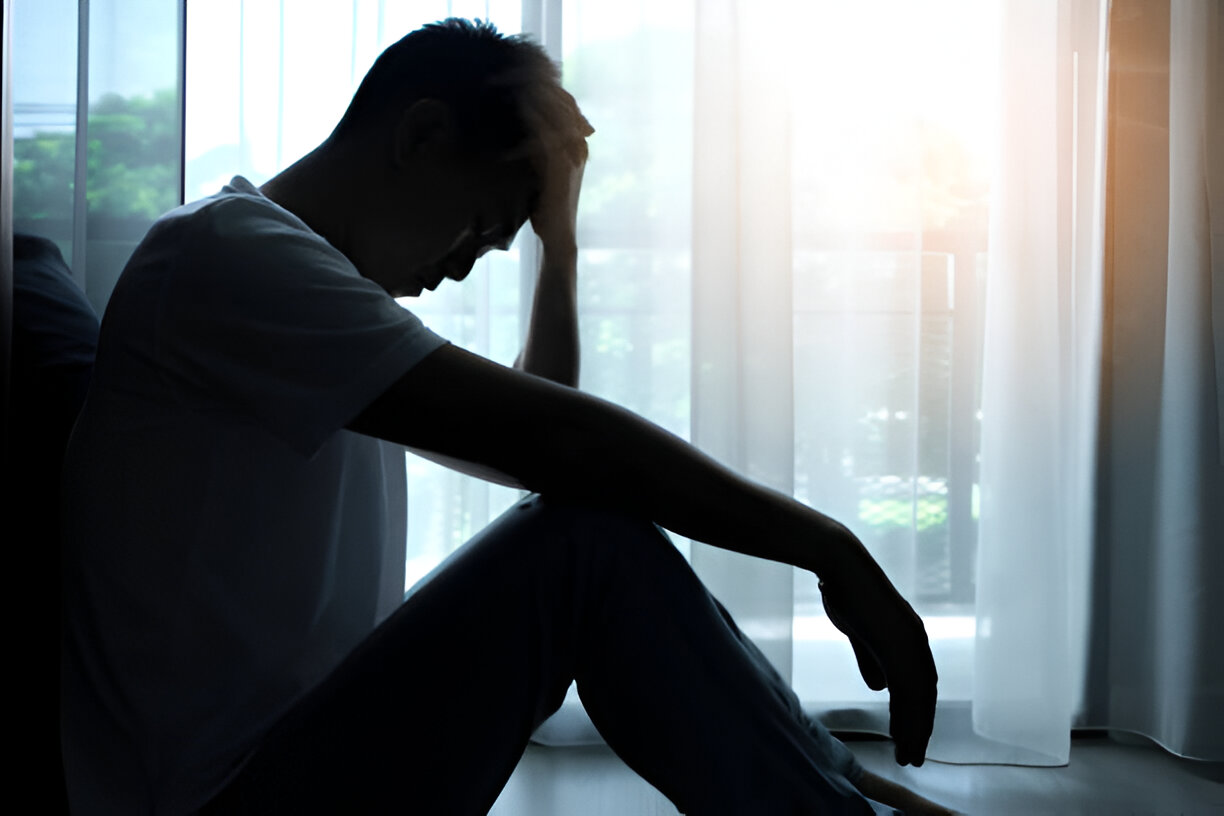
- What it is: The emotional, physical and social response to loss, most often a death. It is a process, and for most people it eases over time.
- Common symptoms: Sadness, tearfulness, yearning for the person, trouble sleeping, poor concentration, and in some people a prolonged, disabling form lasting beyond a year.
- Conventional care: Time and social support for most people; grief-focused psychotherapy for prolonged grief disorder; treatment of any depression or anxiety.
- How integrative care fits: Acupuncture, Ayurvedic therapies and individually prescribed herbs are used as supportive care for sleep, stress and low mood, alongside counseling and medical care.
- Evidence at a glance: No trials of acupuncture, Ayurveda or herbs in grief itself; indirect, mostly low-certainty evidence exists for related symptoms such as insomnia, depression and stress.
Understanding Grief
Grief is a person's emotional response to loss, and it is a natural and universal one. It is a process, not a fixed state, and most people recover adequately within a year after a loss.[1] For some people grief persists as prolonged grief disorder, a recognized mental health condition that needs professional care.[2]
Common symptoms
Acute grief often involves sadness, tearfulness and sometimes insomnia, and it typically requires no treatment.[1] Grief can also bring poor concentration, anger, guilt and physical tiredness. These reactions vary widely, and there is no single correct way to grieve.
Prolonged grief disorder is different. Its core symptoms are yearning for the person who died, constant preoccupation with them, or both, along with emotional pain, a disturbed sense of identity, loss of meaning and difficulty functioning.[2] It usually appears 6 to 12 months after the death.[2]
Causes and risk factors
Grief is caused by loss. Loss is most often the death of a loved one, but it can also be a terminal diagnosis, the loss of a pet, a perinatal loss or other losses that are not openly acknowledged.[1]
Pooled studies suggest that about 1 in 10 bereaved adults develops prolonged grief disorder, although the studies are varied.[3] A meta-analysis of 120 studies found the strongest links with grief symptoms before the loss and with depression, with smaller links to a sudden or violent death, the death of a child or partner, anxious attachment, low income and female gender.[4]
How it is diagnosed and treated conventionally
Normal grief is not treated as an illness. Prolonged grief disorder is diagnosed by a clinician using criteria in current diagnostic manuals, and psychotherapy is its main treatment.[2, 5] Some researchers warn that the line between prolonged grief disorder and normal grief is not yet well established, and that grief should not be medicalized.[6]
In a randomized trial of 100 adults with prolonged grief disorder, grief-focused cognitive behavioral therapy reduced symptoms more than mindfulness-based cognitive therapy six months later, and both were considered possible options.[7]
Why Grief calls for a whole-person approach
Grief affects sleep, mood, the body and a person's sense of meaning at the same time. For that reason, care that looks only at emotions can miss part of the picture, and care that looks only at the body can miss the loss.[1, 2]
Supportive care addresses some of those surrounding effects. It does not remove or shorten grief, and it does not replace counseling or medical care.
Sleep
Insomnia is common in acute grief.[1] Poor sleep can make low mood and exhaustion worse, so sleep is a practical target for supportive care.
Low mood and anxiety
Depression is among the strongest risk factors for prolonged grief symptoms.[4] Prolonged grief disorder is also associated with higher rates of suicidality.[2] A persistent low mood, hopelessness or thoughts of death should be assessed by a physician or mental health clinician.
Physical health and stress
Bereavement is described as one of life's greatest stressors, and prolonged grief disorder has been linked with negative health outcomes such as high blood pressure.[2, 5] Keeping regular medical checkups is part of caring for yourself during grief.
Meaning and connection
Grief models describe adjusting to loss as an active process that includes making meaning, moving between facing the loss and rebuilding daily life, and finding support from other people.[1] Counseling, support groups and rituals that matter to you are central to this, and supportive care is not a substitute.
Acupuncture as supportive care in Grief
What the research shows
No clinical trial of acupuncture for grief was found in our search. Any benefit we describe is for related symptoms such as depression and insomnia, and it cannot be assumed to apply to grief.
A Cochrane review of 64 trials in people with depression found low-quality evidence that acupuncture may reduce depression severity compared with no treatment, and a small reduction compared with sham acupuncture. The authors called for higher-quality trials.[8] A 2025 review of 60 trials in mild to moderate major depression reported that acupuncture may reduce depression and insomnia compared with antidepressants, but rated the certainty as low to very low.[9]
For sleep, a review of 13 trials that compared acupuncture with sham acupuncture found a better (lower) sleep-quality score with acupuncture, though two trials in people with major depression showed no significant reduction and the review advised that people with insomnia and major depression should not rely on acupuncture alone.[10] A review of 24 trials included 15 that compared acupuncture with medication; in those, sleep quality scores were better with acupuncture after three to four weeks but not after one or two, with wide variation between trials.[11]
How acupuncture may work
The way acupuncture might affect grief has not been studied. For insomnia, the mechanism is described as unclear.[10] In Chinese medicine, grief is traditionally linked to the lungs and to qi becoming constrained, which guides point selection. This is a traditional explanation, not proven biology.
What treatment involves
Treatment uses fine, sterile, single-use needles placed at selected points, usually left in place for about 20 to 40 minutes. A course is several visits, with reassessment along the way. We keep the focus on sleep, tension and relaxation.
Serious problems are rare. In prospective studies, about 9 in 100 patients had a minor reaction such as brief bleeding, soreness or redness at a needle site, and serious events occurred in about 1 in 10,000 patients.[12] Tell the practitioner first if you have a bleeding disorder, take blood thinners, are pregnant, or have a pacemaker (relevant to electroacupuncture).
Ayurvedic medicine as supportive care in Grief
The Ayurvedic view
Ayurveda recognizes grief, called shoka in classical language, as a strong emotional state that can disturb the mind and body. It is often described as aggravating Vata, the principle said to govern movement and the nervous system, which is linked in this tradition with restlessness, poor sleep and anxiety. These are traditional categories, not medical diagnoses.
Therapies that may be used
Care is chosen for the individual and is usually gentle during bereavement.
- Regular meals, steady sleep and wake times, and a calming evening routine
- Warm oil massage and breathing or relaxation practices
- Herbs traditionally used for stress and the nervous system, such as ashwagandha (Withania somnifera), prescribed individually by a qualified practitioner
Panchakarma, the traditional cleansing program, is not appropriate during pregnancy, acute illness or frailty, and we do not use it as a way to treat grief. Where an herbal preparation applied to the skin is relevant, transdermal medication therapy is available, but we make no efficacy claim for it in grief.
What the research shows
There is no research on Ayurvedic treatment of grief. The nearest evidence is for ashwagandha in stress and anxiety. A meta-analysis of 12 randomized trials with 1,002 adults found lower stress and anxiety than placebo, but rated the certainty as low and noted large differences between trials.[13] Another of nine trials reported lower perceived stress and cortisol, with mild to moderate adverse events in four trials, and said long-term safety needs further study.[14] Their abstracts describe trials of stress and anxiety, not grief.
Herbal medicine as supportive care in Grief
Herbs and formulas that have been studied
No herb has been tested as a treatment for grief in the studies we found. Herbs studied for related mood symptoms include St. John's wort, saffron, curcumin and lavender for depression, and ashwagandha and lavender for anxiety.[15] Chinese medicine practice also uses formulas chosen by pattern, such as those aimed at calming the spirit, but we found no trials of them in grief.
What the research shows
Herbal medicine has not been shown to help grief. An international guideline on nutraceuticals and phytoceuticals graded evidence for several herbs in depression and anxiety, not grief. It stressed that such products should mainly be used alongside standard medical care, and that product quality and standardization limit confidence in the evidence.[15]
Safety and herb-drug interactions
Herbs are active substances and can interact with prescribed medicines. A literature review of herb-drug interactions reports that St. John's wort lowered blood levels of many medicines and caused serotonin syndrome when combined with SSRI antidepressants.[16] Tell us about any antidepressant, anti-anxiety medicine, sleep medicine, blood thinner or other prescription you take.
In one study, about one fifth of Ayurvedic medicines bought online contained detectable lead, mercury or arsenic.[17] Herbs should come from tested sources and be prescribed individually. Tell us if you are pregnant or breastfeeding or have liver or kidney disease.
Translating traditional medicine into modern biological language
The following links are interpretation, not equivalence. Chinese medicine's picture of grief as constrained qi in the lungs, and Ayurveda's picture of aggravated Vata, both describe tension, poor sleep and exhaustion. Researchers studying bereavement measure these in terms of stress responses, sleep disturbance and blood pressure.[2, 5]
No study has shown that a pattern or dosha corresponds to a specific biological process in grief. These frameworks should not be used to judge how a person is grieving or how long it should last.
How this care fits with your medical care
Supportive care during grief is complementary. Keep your physician, counselor or therapist, and do not stop or change prescribed medicines without your prescriber. We do not diagnose or treat prolonged grief disorder or depression. For a condition like this, we ask that you are under a physician's care for it and that your treating team knows you are receiving complementary care.
Please bring a list of your medicines and supplements and tell us about any recent changes in sleep, appetite or mood. If grief has lasted more than a year and still prevents you from functioning, ask a clinician about prolonged grief disorder, since psychotherapy is its main treatment.[2]
When to seek urgent medical care
Intense grief can sometimes become dangerous, and prolonged grief disorder is associated with higher rates of suicidality.[2]
- Thoughts of suicide, of wanting to die or join the person who died, or of harming yourself. Call or text 988, the Suicide and Crisis Lifeline, at any time.
- Not eating, sleeping or caring for yourself for days
- Severe hopelessness or inability to function at home or work
- Using alcohol or drugs to cope, or losing control of that use
- Chest pain, fainting or severe shortness of breath
For an emergency, call 911 or go to the nearest emergency department.
Frequently asked questions
What is grief?
Grief is the emotional response to loss, most often the death of someone close. It can bring sadness, tearfulness, poor sleep and trouble concentrating. It is a natural process, and most people adapt within a year. For some, it becomes prolonged grief disorder, which is a treatable mental health condition that needs professional care.
Can acupuncture help people with grief?
Acupuncture has not been tested in grief, so we cannot say it helps grief itself. Reviews suggest it may help related problems such as insomnia and low mood, but the evidence is mostly low certainty. We offer it only as supportive care for sleep and tension, alongside counseling and medical care.
Do Ayurvedic or herbal medicines work for grief?
There is no research on them for grief. Ashwagandha has some low-certainty evidence for stress and anxiety in other groups, and some herbs have been studied for depression. Herbs can interact with antidepressants and other medicines, so any herb we suggest is prescribed individually and checked against your medicines.
Can I stop my antidepressant or other medicine if I have this care?
No. Supportive care is not an alternative to medication or counseling. Do not stop or change prescribed medicines without talking to your prescriber. If you have thoughts of suicide, call or text 988 or go to the nearest emergency department.
How long does grief last, and when should I get help?
There is no set timeline, and most people adapt within about a year. Seek help from a physician or counselor if grief keeps you from functioning, if it feels unchanged after a year, or sooner if you have depression or thoughts of death. Psychotherapy is the main treatment for prolonged grief disorder.
Does insurance cover acupuncture for grief?
It may. Netra Integrative Health Clinic is in-network with Blue Cross Blue Shield, Cigna and UnitedHealthcare. Other plans may be covered through out-of-network benefits, and we offer a free benefits check. HSA and FSA cards and CareCredit are also accepted. Call (908) 402-7301 to ask about your plan.
References
- Schoo C, Azhar Y, Mughal S, et al. Grief and Prolonged Grief Disorder. StatPearls [Internet]. 2025. PMID 29939609. StatPearls chapter on grief and prolonged grief disorder covering definitions, acute grief, grief models and prolonged grief disorder.
- Killikelly C, Smith KV, Zhou N, et al. Prolonged grief disorder. Lancet. 2025;405(10489):1621-1632. PMID 40254022. Lancet review of prolonged grief disorder describing core symptoms, onset, health outcomes, suicidality and psychotherapy as the main treatment.
- Lundorff M, Holmgren H, Zachariae R, et al. Prevalence of prolonged grief disorder in adult bereavement: A systematic review and meta-analysis. J Affect Disord. 2017;212:138-149. PMID 28167398. Meta-analysis of 14 studies estimating prolonged grief disorder in about one in ten bereaved adults, with cautions about heterogeneity.
- Buur C, Zachariae R, Komischke-Konnerup KB, et al. Risk factors for prolonged grief symptoms: A systematic review and meta-analysis. Clin Psychol Rev. 2024;107:102375. PMID 38181586. Meta-analysis of 120 studies finding pre-loss grief and depression the strongest risk factors for prolonged grief symptoms.
- Szuhany KL, Malgaroli M, Miron CD, et al. Prolonged Grief Disorder: Course, Diagnosis, Assessment, and Treatment. Focus (Am Psychiatr Publ). 2021;19(2):161-172. PMID 34690579. Review of prolonged grief disorder covering course, diagnosis, assessment, psychotherapy, and its status as a major life stressor.
- Eisma MC. Prolonged grief disorder in ICD-11 and DSM-5-TR: Challenges and controversies. Aust N Z J Psychiatry. 2023;57(7):944-951. PMID 36748103. Review discussing controversies around prolonged grief disorder, including the unclear boundary with normal grief and risks of medicalization.
- Bryant RA, Azevedo S, Yadav S, et al. Cognitive Behavior Therapy vs Mindfulness in Treatment of Prolonged Grief Disorder: A Randomized Clinical Trial. JAMA Psychiatry. 2024;81(7):646-654. PMID 38656428. Randomized trial of 100 adults finding grief-focused cognitive behavioral therapy more effective than mindfulness-based cognitive therapy for prolonged grief disorder.
- Smith CA, Armour M, Lee MS, et al. Acupuncture for depression. Cochrane Database Syst Rev. 2018;3(3):CD004046. PMID 29502347. Cochrane review of 64 trials of acupuncture for depression finding low or very low quality evidence of benefit and calling for better trials.
- Kuang HJ, Yang HS, Feng YX, et al. Efficacy and safety of acupuncture therapies for adult patients with mild and moderate major depressive disorder: A systematic review and meta-analysis. J Integr Med. 2025;23(5):471-491. PMID 40744847. 2025 meta-analysis of 60 trials of acupuncture for mild to moderate major depression and insomnia, with low to very low certainty evidence.
- Liu C, Xi H, Wu W, et al. Placebo effect of acupuncture on insomnia: a systematic review and meta-analysis. Ann Palliat Med. 2020;9(1):19-29. PMID 32005059. Meta-analysis of 13 sham-controlled trials of acupuncture for insomnia finding better sleep scores, with a caution for people with major depression.
- Kim SA, Lee SH, Kim JH, et al. Efficacy of Acupuncture for Insomnia: A Systematic Review and Meta-Analysis. Am J Chin Med. 2021;49(5):1135-1150. PMID 34049475. Meta-analysis of 24 randomized trials of acupuncture for insomnia; 15 compared with medication showed better sleep quality scores from week three, with high heterogeneity.
- Bäumler P, Zhang W, Stübinger T, et al. Acupuncture-related adverse events: systematic review and meta-analyses of prospective clinical studies. BMJ Open. 2021;11(9):e045961. PMID 34489268. Systematic review of 21 prospective studies finding minor acupuncture reactions in about 9 percent of patients and serious events in about 1 per 10,000.
- Akhgarjand C, Asoudeh F, Bagheri A, et al. Does Ashwagandha supplementation have a beneficial effect on the management of anxiety and stress? A systematic review and meta-analysis of randomized controlled trials. Phytother Res. 2022;36(11):4115-4124. PMID 36017529. Meta-analysis of 12 randomized trials (1,002 adults) finding ashwagandha reduced stress and anxiety versus placebo, with low-certainty evidence.
- Arumugam V, Vijayakumar V, Balakrishnan A, et al. Effects of Ashwagandha (Withania Somnifera) on stress and anxiety: A systematic review and meta-analysis. Explore (NY). 2024;20(6):103062. PMID 39348746. Meta-analysis of nine randomized trials (558 patients) finding ashwagandha lowered perceived stress, anxiety scores and cortisol, with mild to moderate adverse events.
- Sarris J, Ravindran A, Yatham LN, et al. Clinician guidelines for the treatment of psychiatric disorders with nutraceuticals and phytoceuticals: The World Federation of Societies of Biological Psychiatry (WFSBP) and Canadian Network for Mood and Anxiety Treatments (CANMAT) Taskforce. World J Biol Psychiatry. 2022;23(6):424-455. PMID 35311615. WFSBP and CANMAT guideline on nutraceuticals and phytoceuticals in psychiatric disorders, grading herbs for depression and anxiety and advising use alongside standard care.
- Hu Z, Yang X, Ho PC, et al. Herb-drug interactions: a literature review. Drugs. 2005;65(9):1239-82. PMID 15916450. Literature review of herb-drug interactions with clinical significance, including St. John's wort with SSRIs and other medicines.
- Saper RB, Phillips RS, Sehgal A, et al. Lead, mercury, and arsenic in US- and Indian-manufactured Ayurvedic medicines sold via the Internet. JAMA. 2008;300(8):915-23. PMID 18728265. JAMA study finding detectable lead, mercury or arsenic in about one fifth of Ayurvedic medicines purchased over the Internet.
This page is for general education and is not medical advice. Acupuncture, Ayurvedic medicine and herbal medicine are complementary therapies; they do not replace diagnosis or treatment by your physician. Do not stop or change prescribed treatment without talking to your prescriber. In an emergency call 911.