

















- What it is: Menstrual bleeding that is excessive or heavy enough to interfere with your physical, social or emotional life.
- Common symptoms: Soaking through pads or tampons quickly, passing large clots, bleeding for many days, and tiredness from low iron.
- Conventional care: A medical evaluation for causes such as fibroids or hormone problems, then medicines such as a hormonal IUD, tranexamic acid or anti-inflammatories, or procedures and surgery.
- How integrative care fits: Herbal, Ayurvedic and acupuncture care may be used alongside medical care and iron treatment, after the cause has been evaluated.
- Evidence at a glance: Limited for herbal medicine, with a few small trials; very limited for Ayurveda; none found for acupuncture for heavy bleeding itself.
What is Heavy Periods?
Heavy periods, or heavy menstrual bleeding, is bleeding of more than about 80 milliliters (roughly 5 tablespoons) per period or bleeding heavy enough to interfere with your quality of life.[1] It is common, affecting roughly 2 to 5 in 10 women of reproductive age.[2]
Common symptoms
The main symptom is bleeding that is heavier or longer than you consider normal. Because blood loss is hard to measure at home, doctors often rely on how it affects you, such as having to change products very often or limiting your activities.[1]
Heavy bleeding can lead to iron deficiency and, in more severe cases, iron deficiency anemia. Both can cause fatigue and reduced quality of life, and they are often overlooked.[3]
Causes and risk factors
Doctors group the causes of abnormal uterine bleeding as structural (polyps, adenomyosis, fibroids, and precancerous or cancerous changes) and nonstructural (bleeding disorders, ovulation problems, problems of the uterine lining, and medicines).[1, 4] Fibroids and adenomyosis are two common structural causes.[5, 6]
Bleeding is most likely to be irregular around the start of periods and around perimenopause.[1] In many women no cause is found, and the condition is called idiopathic heavy menstrual bleeding.[7]
How it is diagnosed and treated conventionally
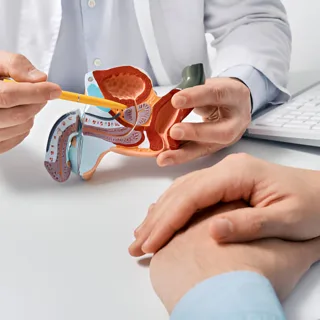
Evaluation starts with a detailed history and physical examination. It may include blood tests, imaging, and sampling of the uterine lining when indicated.[1] Treatment aims at the cause, and the choice depends on your age, whether you want a pregnancy, and your preferences.[2]
A Cochrane overview found that a levonorgestrel-releasing intrauterine system reduced menstrual blood loss the most among first-line treatments. Antifibrinolytic medicines such as tranexamic acid probably reduce blood loss, as do long-cycle progestogens, and anti-inflammatory drugs reduce it slightly. For those who need more, endometrial ablation and hysterectomy are among the second-line options.[2] Tranexamic acid was more effective than placebo, and than the herbal preparations compared with it, in a Cochrane review.[8] Iron deficiency should also be treated.[3]
Why Heavy Periods calls for a whole-person approach
Heavy bleeding has more than one possible cause, and more than one effect. The cause may be in the uterus itself, in hormones, or in blood clotting, and the effects reach energy, mood, work and school.[1, 3]
Complementary care can support general health and comfort while the cause is being treated. It does not take the place of finding out why the bleeding is heavy.
Structural causes
Fibroids are the most common benign growths of the uterus. They are driven mainly by estrogen and often cause heavy bleeding, pelvic pressure and anemia.[5] In adenomyosis, tissue like the uterine lining grows within the muscle wall, and heavy bleeding and painful periods are its most common symptoms.[6]
Hormones and ovulation
When ovulation does not occur regularly, the lining of the uterus can build up and shed unpredictably. Ovulation problems are one of the nonstructural causes doctors look for.[1]
Blood clotting
Bleeding disorders are another recognized cause and are looked for in the evaluation.[1] This matters for herbal care, since some herbs affect bleeding.
Iron stores and fatigue
Iron deficiency is a major consequence of heavy periods, and it affects quality of life every day, not only during bleeding.[3] Checking and replacing iron is part of good medical care.
Acupuncture for Heavy Periods
What the research shows
We found no clinical trials of acupuncture for heavy menstrual bleeding. A systematic review of controlled trials of acupuncture for women's reproductive health found none in menorrhagia that met its inclusion criteria.[9] A later overview found that acupuncture for menstrual complaints other than period pain and menopause symptoms is under-studied, and that evidence on those is often based on single studies.[10]
Acupuncture for uterine fibroids, a common cause, also lacks trials. A Cochrane review found no eligible randomized controlled trials and concluded that its effectiveness remains uncertain.[11]
For period pain, which often goes along with heavy periods, small studies suggest acupuncture may help, but the trials were few and of variable quality.[9]
How acupuncture may work
We found no research on how acupuncture would act on heavy menstrual bleeding. Claims that it regulates the uterine lining or hormones have not been tested in trials for this condition.
What treatment involves
Acupuncture uses fine, sterile, single-use needles placed at points on the body, usually left in place for about 20 to 40 minutes. A course of several visits is followed by reassessment. If used, it is for general support such as comfort and stress, not to stop bleeding.
In prospective studies, about 9 in 100 patients had a minor reaction such as bleeding, soreness or a flare at the needle site, and serious events occurred in about 1 in 10,000 patients.[12] Tell the practitioner first if you have a bleeding disorder, take blood thinners, are pregnant, or have a pacemaker (relevant to electroacupuncture).
Ayurvedic medicine for Heavy Periods
The Ayurvedic view
In Ayurveda, heavy menstrual bleeding is described under the name Asrigdara.[13] Traditionally it is linked to aggravated Pitta, the principle associated with heat, sometimes with Vata or Kapha involvement, and treatment is chosen for the individual. These are traditional categories, not biomedical diagnoses.
Therapies that may be used
Care traditionally combines:
- Diet and routine intended to cool and calm Pitta, such as regular meals and enough rest
- Herbs such as Ashoka (Saraca asoca) and formulas that contain it, prescribed individually[13]
- Stress-reducing practices such as gentle yoga and breathing exercises
Panchakarma is not appropriate during pregnancy, acute illness, frailty, anemia, or while bleeding is heavy. Heavy bleeding needs a medical evaluation before any Ayurvedic care.
What the research shows
The research on Ayurveda for heavy periods is very limited. We found one open-label study of an Ashoka-based syrup in 228 women with heavy bleeding. It reported lower blood loss scores after 90 days, but it had no placebo or comparison group, so it cannot show that the syrup caused the change.[13] We found no placebo-controlled trials or systematic reviews of Ayurvedic treatment for the condition.
Herbal medicine for Heavy Periods
Herbs and formulas that have been studied
Several herbs have been tested in small trials for heavy periods. They include ginger, myrtle fruit syrup, pomegranate (Punica granatum) flower, shepherd's purse (Capsella bursa-pastoris) and frankincense (Boswellia).[7, 14, 15, 16] Chinese herbal formulas have also been studied for dysfunctional uterine bleeding, an older term for bleeding without a structural cause.[17]
What the research shows
The evidence is limited. A systematic review found only three randomized trials of herbal medicine for idiopathic heavy bleeding. Ginger capsules and myrtle fruit syrup reduced blood loss more than placebo, and pomegranate flower capsules performed about as well as tranexamic acid. The authors called for better trials.[7]
In a placebo-controlled trial of 92 young women, ginger lowered blood loss more than placebo.[14] In a trial of 84 women, shepherd's purse added to mefenamic acid reduced bleeding more than mefenamic acid with placebo.[15] In 102 women taking ibuprofen, adding ginger or frankincense shortened the bleeding, but the amount of bleeding fell in all groups, including placebo, with no difference between them.[16]
These trials were small and short. A Cochrane review also found that tranexamic acid worked better than the two herbal preparations it was compared with.[8] A meta-analysis of four trials of Chinese herbs for dysfunctional uterine bleeding found poor method quality in most and could not judge efficacy because none compared the herbs with placebo or no treatment.[17] For fibroids, a Cochrane review of 21 trials found the evidence neither supported nor refuted herbal preparations.[18]
Safety and herb-drug interactions
Herbs are active substances and are prescribed individually by a qualified practitioner. Because the condition involves bleeding, this matters. Case reports describe bleeding or bruising when warfarin was combined with herbs including dang gui (Angelica sinensis), dan shen, ginger, ginkgo, garlic and Boswellia.[19] Tell us if you take blood thinners, hormonal treatments, tranexamic acid or any other medicine.
Herbs traditionally used to move blood are not appropriate during heavy bleeding or pregnancy. In one study, about one fifth of Ayurvedic products bought online contained detectable lead, mercury or arsenic, so herbs should come from tested sources.[20] Tell us if you have liver or kidney disease or surgery planned.
Transdermal medication therapy, an herbal preparation applied to the skin, is also offered, but we found no studies of it for heavy periods.
Translating traditional medicine into modern biological language
The comparisons here are interpretation, not equivalence. Chinese medicine describes heavy bleeding with patterns such as qi failing to hold the blood, heat in the blood, and blood stasis, and Ayurveda describes aggravated Pitta in Asrigdara. Researchers studying the same problem instead look at structural causes, ovulation, the uterine lining, clotting and iron status.[1]
The trials we reviewed did not test how the herbs studied for heavy periods might act on bleeding. No study has shown that a pattern or dosha corresponds to a specific biological process.
How this care fits with your medical care
Complementary care for heavy periods works alongside your gynecologist or primary care physician. Keep your medical team, continue your prescribed treatment such as tranexamic acid, hormonal therapy or iron, and do not stop or change any medicine without your prescriber. We do not diagnose the cause of heavy bleeding, so new or worsening bleeding should be medically evaluated first.
Please bring your diagnosis, ultrasound and blood test results including hemoglobin and iron, a full list of medicines and supplements, and notes on your bleeding pattern.
When to seek urgent medical care
Heavy bleeding can sometimes become an emergency, so know the warning signs.
- Soaking through a pad or tampon every hour for two or more hours in a row
- Dizziness, fainting, a racing heart or shortness of breath
- Heavy bleeding during pregnancy or after menopause
- Severe pelvic pain or fever with heavy bleeding
- Passing very large clots repeatedly
- Pale skin, new weakness or marked tiredness suggesting anemia
For emergencies, call 911 or go to the nearest emergency department.
Frequently asked questions
What are heavy periods?
Heavy periods, also called menorrhagia or heavy menstrual bleeding, means menstrual bleeding that is excessive or heavy enough to interfere with daily life. A common medical definition is more than about 80 milliliters of blood per period. It affects many women, can cause iron deficiency and anemia, and has causes such as fibroids, adenomyosis and hormone problems that need evaluation.
Can acupuncture help with heavy periods?
We found no clinical trials testing acupuncture for heavy menstrual bleeding, so there is no evidence it reduces blood loss. Small studies suggest it may help period pain, and some people use it for general comfort and stress. It is not a treatment for the cause of heavy bleeding and is used only alongside your medical care.
Do Ayurvedic or herbal medicines work for heavy periods?
The evidence is limited. A few small trials of herbs such as ginger, shepherd’s purse and pomegranate flower reported less bleeding, but they were small and tranexamic acid worked better in comparison. Ayurvedic research is limited to uncontrolled studies. Herbs can raise bleeding risk with blood thinners and must be chosen individually.
Can I stop my medicine or avoid a procedure if I use herbs or acupuncture?
No. Medicines such as a hormonal IUD or tranexamic acid, iron treatment, and procedures have the strongest evidence for heavy periods. Complementary care does not replace them. Do not stop or change prescribed treatment without talking to your prescriber, and get heavy or worsening bleeding evaluated.
What should I bring to my first visit?
Bring your diagnosis, ultrasound reports, blood test results including hemoglobin and iron levels, a list of all medicines and supplements, and notes or a chart of your bleeding. Tell us if you could be pregnant or take blood thinners. Results cannot be promised, and we reassess after a short course of visits.
Does insurance cover acupuncture for heavy periods?
It may. Netra Integrative Health Clinic is in-network with Blue Cross Blue Shield, Cigna and UnitedHealthcare. Other plans may be covered through out-of-network benefits, and we offer a free benefits check. HSA and FSA cards and CareCredit are also accepted. Call (908) 402-7301 to ask about your plan.
References
- Mikes BA, Vadakekut ES, Sparzak PB. Abnormal Uterine Bleeding. StatPearls [Internet]. 2025. PMID 30422508. StatPearls chapter on abnormal uterine bleeding covering definitions of heavy menstrual bleeding, PALM-COEIN causes, evaluation and management based on cause.
- Bofill Rodriguez M, Dias S, Jordan V, et al. Interventions for heavy menstrual bleeding; overview of Cochrane reviews and network meta-analysis. Cochrane Database Syst Rev. 2022;5(5):CD013180. PMID 35638592. Cochrane overview and network meta-analysis ranking treatments for heavy menstrual bleeding, finding the hormonal IUD best first-line, then tranexamic acid and long-cycle progestogens.
- Munro MG, Mast AE, Powers JM, et al. The relationship between heavy menstrual bleeding, iron deficiency, and iron deficiency anemia. Am J Obstet Gynecol. 2023;229(1):1-9. PMID 36706856. Review of how heavy menstrual bleeding drives iron deficiency and anemia, their effects on quality of life, and the need for better screening and management.
- Walker MH, Coffey W, Borger J. Menorrhagia (Archived). StatPearls [Internet]. 2023. PMID 30725595. StatPearls chapter on menorrhagia describing the PALM-COEIN classification of abnormal uterine bleeding and noting that at least 30 percent of US hysterectomies are for heavy bleeding.
- Barjon K, Kahn J, Singh M. Uterine Leiomyomata. StatPearls [Internet]. 2025. PMID 31536286. StatPearls chapter on uterine fibroids, a common benign tumor that often causes heavy bleeding, pain and anemia.
- Consoli RJ, Carlson K. Adenomyosis. StatPearls [Internet]. 2026. PMID 30969690. StatPearls chapter on adenomyosis, a condition in which heavy bleeding and painful periods are the most common symptoms.
- Javan R, Yousefi M, Nazari SM, et al. Herbal Medicines in Idiopathic Heavy Menstrual Bleeding: A Systematic Review. Phytother Res. 2016;30(10):1584-1591. PMID 27397554. Systematic review of 3 randomized trials of herbs for idiopathic heavy menstrual bleeding, with ginger, myrtle and pomegranate flower reducing bleeding.
- Bryant-Smith AC, Lethaby A, Farquhar C, et al. Antifibrinolytics for heavy menstrual bleeding. Cochrane Database Syst Rev. 2018;4(4):CD000249. PMID 29656433. Cochrane review of 13 trials finding antifibrinolytics such as tranexamic acid reduce heavy menstrual bleeding and outperform placebo, NSAIDs and the herbal preparations compared.
- White AR. A review of controlled trials of acupuncture for women's reproductive health care. J Fam Plann Reprod Health Care. 2003;29(4):233-6. PMID 14662058. Systematic review of controlled acupuncture trials in women's health finding none for menorrhagia and suggesting a possible effect on period pain from few studies.
- Smith CA, Carmady B. Acupuncture to treat common reproductive health complaints: An overview of the evidence. Auton Neurosci. 2010;157(1-2):52-6. PMID 20483671. Overview of acupuncture for reproductive health complaints finding the evidence unclear or based on single studies for menstrual conditions other than period pain and menopause.
- Zhang Y, Peng W, Clarke J, et al. Acupuncture for uterine fibroids. Cochrane Database Syst Rev. 2010;2010(1):CD007221. PMID 20091625. Cochrane review of acupuncture for uterine fibroids that found no eligible trials and concluded that effectiveness remains uncertain.
- Bäumler P, Zhang W, Stübinger T, et al. Acupuncture-related adverse events: systematic review and meta-analyses of prospective clinical studies. BMJ Open. 2021;11(9):e045961. PMID 34489268. Systematic review of 21 prospective studies finding minor acupuncture reactions in about 9 percent of patients and serious events in about 1 per 10,000.
- Dhiman K, Prajapati PK, Gopal D, et al. Efficacy and safety of an Ayurvedic Menohelp syrup in the management of heavy menstrual bleeding (menorrhagia): an open-label clinical study. Drugs Context. 2026;15. PMID 42741735. Open-label study of 228 women with heavy bleeding given an Ashoka-based Ayurvedic syrup for 90 days, reporting lower blood loss scores without a control group.
- Kashefi F, Khajehei M, Alavinia M, et al. Effect of ginger (Zingiber officinale) on heavy menstrual bleeding: a placebo-controlled, randomized clinical trial. Phytother Res. 2015;29(1):114-9. PMID 25298352. Placebo-controlled trial of 92 young women finding ginger capsules reduced heavy menstrual blood loss more than placebo.
- Naafe M, Kariman N, Keshavarz Z, et al. Effect of Hydroalcoholic Extracts of Capsella Bursa-Pastoris on Heavy Menstrual Bleeding: A Randomized Clinical Trial. J Altern Complement Med. 2018;24(7):694-700. PMID 29641247. Triple-blind trial of 84 women finding shepherd's purse extract added to mefenamic acid reduced bleeding more than mefenamic acid alone.
- Eshaghian R, Mazaheri M, Ghanadian M, et al. The effect of frankincense (Boswellia serrata, oleoresin) and ginger (Zingiber officinale, rhizoma) on heavy menstrual bleeding: A randomized, placebo-controlled, clinical trial. Complement Ther Med. 2019;42:42-47. PMID 30670277. Placebo-controlled trial of 102 women on ibuprofen finding ginger or frankincense shortened bleeding and improved quality of life, with no difference in bleeding amount.
- Tu X, Huang G, Tan S. Chinese Herbal Medicine for Dysfunctional Uterine Bleeding: a Meta-analysis. Evid Based Complement Alternat Med. 2009;6(1):99-105. PMID 18955223. Meta-analysis of 4 trials (525 women) of Chinese herbal medicine for dysfunctional uterine bleeding, with poor study quality and no placebo comparisons.
- Liu JP, Yang H, Xia Y, et al. Herbal preparations for uterine fibroids. Cochrane Database Syst Rev. 2013;2013(4):CD005292. PMID 23633329. Cochrane review of 21 trials (2,222 women) of herbal preparations for uterine fibroids finding the evidence neither supports nor refutes their use.
- Milić N, Milosević N, Golocorbin Kon S, et al. Warfarin interactions with medicinal herbs. Nat Prod Commun. 2014;9(8):1211-6. PMID 25233607. Review of reported bleeding and other interactions between warfarin and medicinal herbs, including dang gui, dan shen, ginger, ginkgo, garlic and Boswellia.
- Saper RB, Phillips RS, Sehgal A, et al. Lead, mercury, and arsenic in US- and Indian-manufactured Ayurvedic medicines sold via the Internet. JAMA. 2008;300(8):915-23. PMID 18728265. JAMA study finding detectable lead, mercury or arsenic in about one fifth of Ayurvedic medicines purchased over the Internet.
This page is for general education and is not medical advice. Acupuncture, Ayurvedic medicine and herbal medicine are complementary therapies; they do not replace diagnosis or treatment by your physician. Do not stop or change prescribed treatment without talking to your prescriber. In an emergency call 911.