


















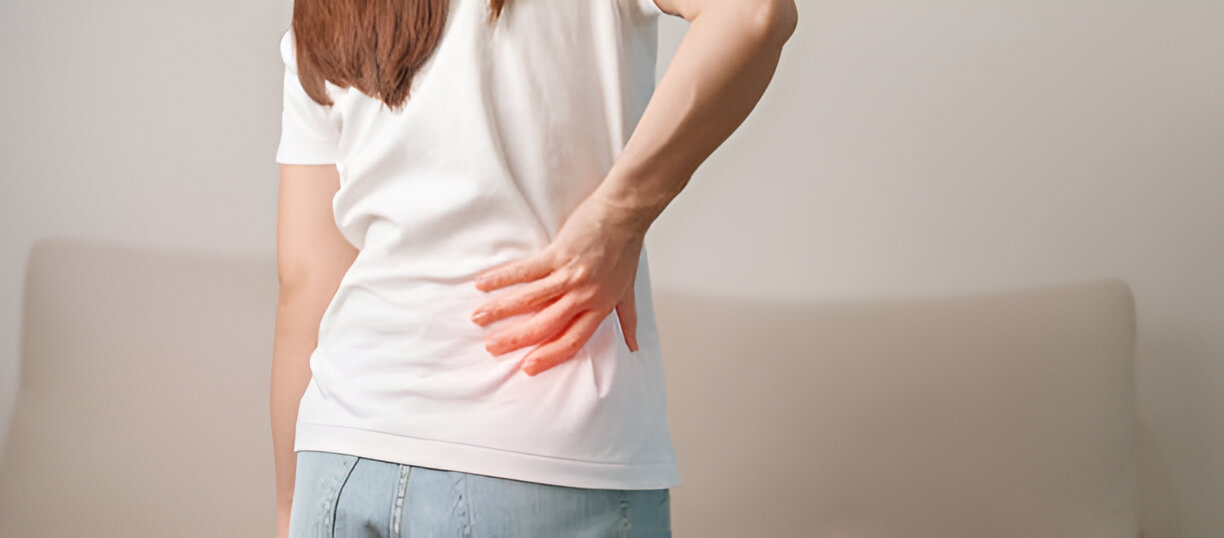
- What it is: Pain in or around the hip, with causes that include osteoarthritis, greater trochanteric pain syndrome, labral tears, impingement and pain referred from the back.
- Common symptoms: Groin or front-of-hip pain, outer hip pain that is worse lying on that side or climbing stairs, stiffness, and buttock or back-of-hip pain that may come from the spine.
- Conventional care: Exercise and physical therapy, anti-inflammatory medicines, injections, and surgery such as hip replacement when other treatment fails.
- How integrative care fits: Acupuncture, Ayurvedic therapies and individually prescribed herbs are used alongside medical care to help with pain and function.
- Evidence at a glance: Limited for acupuncture, with a Cochrane review finding probably little or no effect over sham in hip osteoarthritis; limited for herbs; very limited for Ayurveda.
What is Hip Pain?
Hip pain is pain felt in or around the hip, and where you feel it helps point to the cause. Pain at the front of the hip or groin often comes from the joint itself, pain on the outer side often comes from the tendons and bursae there, and pain at the back can be referred from the lower spine or from nerves.[1]
Common symptoms
In the joint, osteoarthritis causes stiffness and pain with weight-bearing, and labral tears and impingement cause pain that is often felt deep in the groin.[1, 2] Outer hip pain, called greater trochanteric pain syndrome, is often worse when lying on that side, sitting for a long time, climbing stairs or after high-impact exercise.[3]
Hip pain that feels like it starts in the buttock or travels down the back of the leg can come from the lower spine or from a nerve in the deep buttock.[1]
Causes and risk factors
In younger adults, intra-articular hip pain is often caused by a labral tear or femoroacetabular impingement, and in older adults by osteoarthritis. Greater trochanteric pain syndrome is the most common cause of lateral hip pain and includes gluteal tendon problems and bursitis.[1] The hip bears 6 to 8 times body weight in daily activity, and repetitive stress or injury commonly triggers the lateral pain.[3]
Researchers have proposed that abnormal hip shape such as impingement contributes to hip osteoarthritis.[2]
How it is diagnosed and treated conventionally
Diagnosis rests on your history and examination. Radiography of the hip and pelvis is the usual first imaging test, and ultrasound or MRI may be added.[1]
Treatment depends on the cause. For lateral hip pain, standard care is anti-inflammatory medicines, physical therapy and stretching, with surgery reserved for cases that do not respond.[3] For hip and knee osteoarthritis, a large network meta-analysis found that some oral and topical anti-inflammatory drugs reduced pain, but that opioids did not give a benefit that outweighed their harms.[4] Hip pain from a labral tear, impingement or a tendon tear often has good surgical results, so early referral may help.[1]
Why Hip Pain calls for a whole-person approach
Hip pain rarely comes from one thing. The joint, the muscles and tendons around it, the spine and pelvis above, and the way the nervous system processes pain all play a part, and they differ from person to person.
Care that looks at more than the painful spot can therefore be a reasonable addition to treatment aimed at the hip. The factors below are the ones the research literature most often describes.
Load and shape of the joint
The hip carries 6 to 8 times body weight during everyday activity, which makes it vulnerable to wear and tear.[3] Differences in hip shape, such as femoroacetabular impingement, are thought to contribute to osteoarthritis.[2]
Tendons, bursae and surrounding muscles
Lateral hip pain often involves the gluteal tendons and the bursa over the greater trochanter, which cushion the movement of the hip muscles.[1, 3] In a network meta-analysis of trials for lateral hip pain, structured exercise gave the best short-term improvement in function.[5]
Referred pain from the spine and nerves
Back problems and nerve entrapment in the deep buttock can produce pain that feels like it comes from the hip.[1] A careful examination of the spine as well as the hip is part of a sound diagnosis.
Inflammation and pain processing
Trochanteric bursitis involves inflammation of the bursa, commonly triggered by repetitive stress.[3] Laboratory studies describe how inflammatory pain involves both nerve endings in the tissue and pain processing in the spinal cord and brain, which are also the pathways acupuncture research studies.[6]
Acupuncture for Hip Pain
What the research shows
The research suggests acupuncture may add little beyond sham for hip osteoarthritis, although it may help some people when added to routine care. A Cochrane review of 6 trials with 413 participants found moderate-quality evidence that acupuncture probably has little or no effect on pain or function compared with sham acupuncture. The two sham-controlled trials were small, so the result does not rule out a moderate benefit.[7]
The same review found low-quality evidence that adding acupuncture to routine physician care brought clinically relevant improvement in pain and function in one unblinded trial. The authors cautioned that this was likely due at least partly to higher expectations of benefit.[7] A large trial of knee or hip osteoarthritis, in which 357 people were randomized to up to 15 acupuncture sessions over three months, found better WOMAC scores than in a group receiving routine care only. The control group received no sham treatment, and the trial did not separate hip from knee in its summary results.[8]
For outer hip pain and other hip problems, research is thinner. A systematic review of seven randomized trials of trigger point dry needling, a related technique that uses needles at muscle trigger points, included hip osteoarthritis, greater trochanteric pain syndrome and piriformis syndrome. It found that dry needling may relieve pain and improve function, but strong evidence was lacking and the trials were small with short follow-up.[9] A network meta-analysis of 13 trials for greater trochanteric pain syndrome found that platelet-rich plasma and shockwave therapy gave short-term pain relief and structured exercise improved short-term function, while no treatment significantly outperformed the no-treatment group for pain at 6 to 12 months.[5]
How acupuncture may work
Researchers propose that acupuncture acts on pain at several levels. A review of inflammatory pain studies describes effects on immune cells and nerve endings in the tissue, on opioid and cannabinoid signaling, and on pain processing in the spinal cord and brain.[6] These explanations come mostly from animal and laboratory work. The sham-controlled hip trials suggest that part of any benefit may come from non-specific effects such as expectation.[7]
What treatment involves
Treatment uses fine, sterile, single-use needles placed at points around the hip, buttock, thigh and elsewhere on the body, usually left in place for about 20 to 40 minutes. The hip osteoarthritis trials in the Cochrane review measured results 4 to 9 weeks after randomization.[7] We reassess after a short course of visits.
Serious problems from acupuncture are rare. In prospective studies, about 9 in 100 patients had a minor reaction such as bleeding, pain or redness at a needle site, and serious events occurred in about 1 in 10,000 patients.[10] Tell the practitioner first if you have a bleeding disorder, take blood thinners, are pregnant, or have a pacemaker (relevant to electroacupuncture).
Ayurvedic medicine for Hip Pain
The Ayurvedic view
Ayurveda describes degenerative joint pain as Sandhigata Vata, a disorder of Vata, the principle said to govern movement, settling in a joint.[11, 12] Hip pain from the back or from the nerves would be described differently. These are traditional categories for choosing treatment, not biomedical diagnoses.
Therapies that may be used
Care is chosen for the individual and traditionally combines:
- Diet and daily routine intended to calm Vata, such as warm, regular meals and steady sleep hours
- Warm oil massage and local heat over the hip and thigh
- Herbs such as Boswellia (shallaki), guggulu-based formulas and ashwagandha, which have been used in studies of Ayurvedic joint care[11, 12]
- Basti, a medicated enema therapy from Panchakarma, which has been included in multimodal Ayurvedic programs for osteoarthritis[12]
- Transdermal medication therapy, in which an herbal preparation is applied to the skin
Panchakarma procedures are not appropriate during pregnancy, acute illness or frailty, or before red-flag symptoms have been medically assessed.
What the research shows
The research on Ayurveda for hip pain is very limited. A PubMed search found no studies specific to the hip, so the evidence below comes from osteoarthritis in general, including the knee.
A study of 56 patients with Sandhigata Vata given Boswellia resin reported symptom improvement but had no placebo group.[11] A 50-patient study of a multimodal program including oil therapy, sweating, a mild laxative, small oil enemas, leech therapy and oral herbs reported improvement in most patients, also without a control group.[12] An 80-patient double-blind trial in India found that a polyherbal Ayurvedic capsule was not inferior to the anti-inflammatory drug diclofenac over 12 weeks, though both groups were small and the trial was reported from two hospitals.[13]
Studies without a comparison group cannot show that the treatment caused the change.
Herbal medicine for Hip Pain
Herbs and formulas that have been studied
No trials of herbal medicine specific to hip pain turned up in our search, so the research is drawn from osteoarthritis in general. Boswellia (Boswellia serrata) is the most studied herb, and turmeric and curcumin have been studied in joint pain as well.[14, 15]
What the research shows
The evidence is limited and is not specific to the hip. A meta-analysis of seven trials with 545 patients found that Boswellia extract may reduce pain and stiffness and improve function in osteoarthritis compared with control treatments, though the review did not separate hip from knee.[16] A Cochrane review of 49 trials of oral herbal products found high-quality evidence from two small studies that an enriched Boswellia extract reduced pain compared with placebo over 90 days, and described trends toward benefit for other products that warrant more study.[14]
A meta-analysis of supplements for hand, hip or knee osteoarthritis found that several, including Curcuma longa extract, curcumin and Boswellia extract, had large short-term effects on pain, but the quality of evidence was very low and no supplement had clinically important effects on pain at the long term.[15]
Safety and herb-drug interactions
Herbs are active substances and can interact with medicines. Case reports describe serious bleeding or clotting problems when warfarin was combined with herbs including dang gui (Angelica sinensis), dan shen (Salvia miltiorrhiza), ginger, ginseng and Boswellia.[17] People taking blood thinners or anti-inflammatory medicines need a practitioner's review before using herbs for pain.
In one study, about one fifth of Ayurvedic products bought online contained detectable lead, mercury or arsenic.[18] Herbs should come from tested sources and be prescribed individually. Tell us if you are pregnant or breastfeeding, have liver or kidney disease, or have surgery planned.
Translating traditional medicine into modern biological language
The links drawn here are interpretation, not equivalence. Chinese medicine describes hip pain as blocked flow of qi and blood in the channels of the hip and leg, sometimes with cold, dampness or weakness of the kidney system. Researchers studying acupuncture measure things that loosely parallel the first idea: local tissue effects, nerve signaling and the way the nervous system amplifies pain.[6]
Ayurveda's aggravated Vata describes dry, stiff, aching joints that worsen with cold and movement. No study has shown that a dosha corresponds to a specific biological process. The best-supported biological view of hip pain depends on the cause: joint wear and shape in osteoarthritis, and overloaded tendons and bursae in lateral hip pain.[2, 3]
How this care fits with your medical care
Integrative care for hip pain is complementary. Keep your physician, orthopedic specialist or physical therapist, and do not stop or change prescribed medicines without your prescriber. We do not diagnose the cause of hip pain, so new or worsening pain should be medically evaluated.
Please bring your diagnosis, any X-ray or MRI reports, a full list of medicines and supplements, and details of any injections, hip surgery or planned replacement.
When to seek urgent medical care
Some hip pain needs urgent assessment because it can signal a fracture, joint infection or another serious cause.[1]
- Sudden severe hip pain after a fall or injury, or being unable to put weight on the leg
- A hot, red, swollen hip or a painful hip with fever
- Severe hip pain with no clear cause, especially with a history of cancer or unexplained weight loss
- New numbness in the groin or inner thighs, or new trouble passing urine or controlling the bowels
- A leg that looks shortened or turned out after an injury
- Hip pain with swelling, redness or pain in the calf, especially after surgery or long travel
If any of these occur, call 911 or go to the nearest emergency department.
Frequently asked questions
What is hip pain?
Hip pain is pain in or around the hip joint. It may be felt in the groin, the outer side of the hip, the buttock or the thigh. Common causes include osteoarthritis, greater trochanteric pain syndrome, labral tears, impingement and pain referred from the lower back. Where you feel it helps point to the cause, which a physician needs to assess.
Can acupuncture help with hip pain?
The evidence is mixed. A Cochrane review found moderate-quality evidence that acupuncture probably has little or no effect on hip osteoarthritis pain compared with sham acupuncture, though the trials were small. Other trials found benefit when acupuncture was added to routine care, but expectation may explain part of this. Acupuncture is used alongside medical care, not in place of it.
Does Ayurvedic or herbal medicine work for hip pain?
We do not know for the hip specifically. Ayurvedic care for joint pain has been described in small studies without placebo groups. Boswellia, the most studied herb, has shown some benefit in osteoarthritis trials that were not specific to the hip, but the quality of evidence is limited. Herbs should be prescribed individually and checked against your medicines.
Can I stop my pain medicine or avoid hip surgery if I have acupuncture?
No. Acupuncture, Ayurveda and herbal medicine are complementary care. Do not stop or change prescribed medicines without talking to your prescriber, and follow your physician’s advice about injections, physical therapy or surgery. New or worsening hip pain, or pain after a fall, needs prompt medical assessment.
What should I bring to my first visit?
Please bring your diagnosis, any X-ray or MRI reports, a list of all medicines and supplements, and details of any injections or hip surgery, past or planned. It also helps to note which activities, positions or times of day make the pain better or worse.
Does insurance cover acupuncture for hip pain?
It may. Netra Integrative Health Clinic is in-network with Blue Cross Blue Shield, Cigna and UnitedHealthcare. Other plans may be covered through out-of-network benefits, and we offer a free benefits check. HSA and FSA cards and CareCredit are also accepted. Call (908) 402-7301 to ask about your plan.
References
- Chamberlain R. Hip Pain in Adults: Evaluation and Differential Diagnosis. Am Fam Physician. 2021;103(2):81-89. PMID 33448767. Family physician review of hip pain in adults covering anterior, lateral and posterior causes, referred pain, and imaging, with surgical referral for labral and tendon problems.
- Murphy NJ, Eyles JP, Hunter DJ. Hip Osteoarthritis: Etiopathogenesis and Implications for Management. Adv Ther. 2016;33(11):1921-1946. PMID 27671326. Narrative review of hip osteoarthritis causes, including femoroacetabular impingement, and implications for management, noting that guidelines are often extrapolated from knee research.
- Pumarejo Gomez L, Li D, Childress JM. Greater Trochanteric Pain Syndrome (Greater Trochanteric Bursitis). StatPearls [Internet]. 2024. PMID 32491365. StatPearls chapter on greater trochanteric pain syndrome covering lateral hip pain, bursitis, repetitive stress, hip loading, and standard treatment with anti-inflammatory drugs and physical therapy.
- da Costa BR, Pereira TV, Saadat P, et al. Effectiveness and safety of non-steroidal anti-inflammatory drugs and opioid treatment for knee and hip osteoarthritis: network meta-analysis. BMJ. 2021;375:n2321. PMID 34642179. BMJ network meta-analysis of 192 trials of anti-inflammatory drugs and opioids for knee and hip osteoarthritis, finding some drugs effective and opioid benefit not outweighing harm.
- Gazendam A, Ekhtiari S, Axelrod D, et al. Comparative Efficacy of Nonoperative Treatments for Greater Trochanteric Pain Syndrome: A Systematic Review and Network Meta-Analysis of Randomized Controlled Trials. Clin J Sport Med. 2022;32(4):427-432. PMID 34009798. Network meta-analysis of 13 trials for greater trochanteric pain syndrome finding short-term benefit from platelet-rich plasma, shockwave and exercise, but not at 6 to 12 months.
- Zhang Q, Zhou M, Huo M, et al. Mechanisms of acupuncture-electroacupuncture on inflammatory pain. Mol Pain. 2023;19:17448069231202882. PMID 37678839. Review of laboratory studies on how acupuncture and electroacupuncture relieve inflammatory pain through peripheral and central pathways.
- Manheimer E, Cheng K, Wieland LS, et al. Acupuncture for hip osteoarthritis. Cochrane Database Syst Rev. 2018;5(5):CD013010. PMID 29729027. Cochrane review of 6 trials (413 participants) finding acupuncture probably has little or no effect on hip osteoarthritis pain versus sham, with low-quality evidence for add-on benefit.
- Witt CM, Jena S, Brinkhaus B, et al. Acupuncture in patients with osteoarthritis of the knee or hip: a randomized, controlled trial with an additional nonrandomized arm. Arthritis Rheum. 2006;54(11):3485-93. PMID 17075849. Large trial of knee or hip osteoarthritis finding up to 15 acupuncture sessions plus routine care improved WOMAC scores more than routine care alone at 3 months.
- Forogh B, Ghaseminejad Raeini A, Jebeli Fard R, et al. Efficacy of trigger point dry needling on pain and function of the hip joint: a systematic review of randomized clinical trials. Acupunct Med. 2024;42(2):63-75. PMID 38149616. Systematic review of seven randomized trials (273 patients) of trigger point dry needling for hip pain, finding possible benefit but lacking strong evidence.
- Bäumler P, Zhang W, Stübinger T, et al. Acupuncture-related adverse events: systematic review and meta-analyses of prospective clinical studies. BMJ Open. 2021;11(9):e045961. PMID 34489268. Systematic review of 21 prospective studies finding minor acupuncture reactions in about 9 percent of patients and serious events in about 1 per 10,000.
- Gupta PK, Samarakoon SM, Chandola HM, et al. Clinical evaluation of Boswellia serrata (Shallaki) resin in the management of Sandhivata (osteoarthritis). Ayu. 2011;32(4):478-82. PMID 22661840. Study of 56 patients with Sandhigata Vata given Boswellia resin, reporting symptom improvement without a placebo group.
- Sharma MR, Mehta CS, Shukla DJ, et al. Multimodal Ayurvedic management for Sandhigatavata (Osteoarthritis of knee joints). Ayu. 2013;34(1):49-55. PMID 24049405. Study of 50 patients with knee Sandhigatavata given a multimodal Ayurvedic program, reporting improvement without a control group.
- Modak MD, Barde MP. Efficacy of an Ayurvedic Formulation for Mild-to-moderate Osteoarthritis: A Phase 3, Randomized Controlled Study. Altern Ther Health Med. 2017;23(1):26-33. PMID 28160761. Double-blind trial of 80 outpatients with osteoarthritis finding an Ayurvedic polyherbal capsule not inferior to diclofenac over 12 weeks.
- Cameron M, Chrubasik S. Oral herbal therapies for treating osteoarthritis. Cochrane Database Syst Rev. 2014;2014(5):CD002947. PMID 24848732. Cochrane review of 49 trials of oral herbal products for osteoarthritis finding high-quality evidence of pain relief from enriched Boswellia serrata extract in two small studies.
- Liu X, Machado GC, Eyles JP, et al. Dietary supplements for treating osteoarthritis: a systematic review and meta-analysis. Br J Sports Med. 2018;52(3):167-175. PMID 29018060. Meta-analysis of 69 studies of supplements for hand, hip or knee osteoarthritis finding short-term pain benefit from several, including curcumin and Boswellia, with very low-quality evidence.
- Yu G, Xiang W, Zhang T, et al. Effectiveness of Boswellia and Boswellia extract for osteoarthritis patients: a systematic review and meta-analysis. BMC Complement Med Ther. 2020;20(1):225. PMID 32680575. Meta-analysis of seven trials (545 patients) finding Boswellia extract may reduce pain and stiffness and improve function in osteoarthritis.
- Milić N, Milosević N, Golocorbin Kon S, et al. Warfarin interactions with medicinal herbs. Nat Prod Commun. 2014;9(8):1211-6. PMID 25233607. Review of reported interactions between warfarin and medicinal herbs, including bleeding events with dang gui, dan shen, ginger, ginseng and Boswellia.
- Saper RB, Phillips RS, Sehgal A, et al. Lead, mercury, and arsenic in US- and Indian-manufactured Ayurvedic medicines sold via the Internet. JAMA. 2008;300(8):915-23. PMID 18728265. JAMA study finding detectable lead, mercury or arsenic in about one fifth of Ayurvedic medicines purchased over the Internet.
This page is for general education and is not medical advice. Acupuncture, Ayurvedic medicine and herbal medicine are complementary therapies; they do not replace diagnosis or treatment by your physician. Do not stop or change prescribed treatment without talking to your prescriber. In an emergency call 911.