







- What it is: Sudden, short episodes of warmth in the chest, neck and face followed by sweating, most common around menopause.
- Common symptoms: Heat, flushing and sweating, sometimes with a racing heart, anxiety, chills afterward and night sweats that disturb sleep.
- Conventional care: Hormone therapy is the most effective treatment; nonhormonal options include certain antidepressants, gabapentin, cognitive behavioral therapy, hypnosis and fezolinetant.
- How integrative care fits: Acupuncture, Ayurvedic care and individually prescribed herbs may be used alongside medical care for symptoms and quality of life.
- Evidence at a glance: Limited and mixed for acupuncture and herbal medicine; very limited for Ayurveda, with no hot-flash results reported; the best sham-controlled acupuncture trials found no clear advantage for hot flashes.
What is Hot Flashes?
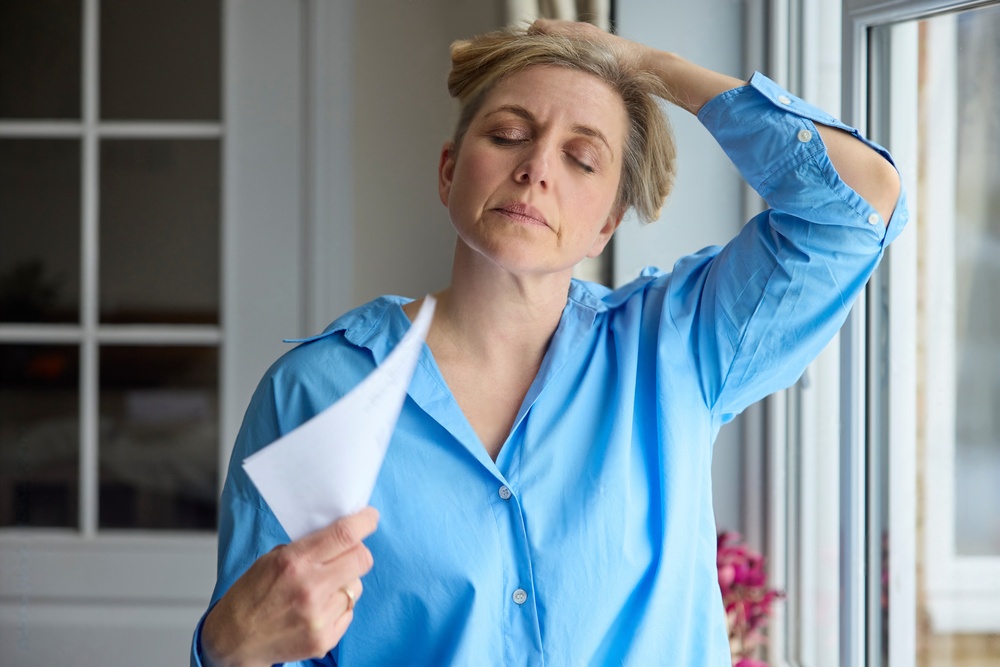
Hot flashes are sudden, spontaneous, short episodes of warmth, usually felt on the chest, neck and face, followed by sweating. They are the most common reason women seek care during the perimenopausal period.[1]
Common symptoms
During an episode you may feel heat and flushing, then sweating. Some people also have a racing heart, headache, weakness, anxiety, or a chill afterward.[1] Most episodes last less than 5 minutes, and the number varies from several a week to about 10 a day.[1]
Hot flashes at night are called night sweats and can disturb sleep. Warm rooms, hot drinks and emotional stress can trigger an episode.[1]
Causes and risk factors
Hot flashes are most often caused by the hormonal changes of the menopause transition. The exact cause is not known, but the leading idea is that a falling or changing estrogen level affects the temperature-control center in the hypothalamus.[2]
Risk factors include smoking, higher body weight early in the transition, anxiety, depression, hysterectomy or removal of the ovaries, and breast cancer treatments.[3] They can also follow medicines that lower hormone levels. Hot flashes often last for years, and they tend to last longer when they begin early in the transition.[3]
How it is diagnosed and treated conventionally
Hot flashes are usually recognized from your symptoms and age. A provider may check for other causes if symptoms are unusual, such as thyroid disease, medicines or an earlier-than-expected menopause.[1]
Hormone therapy remains the most effective treatment and is generally considered for women within 10 years of their final period. For women who cannot or prefer not to use it, evidence-supported nonhormonal options include cognitive behavioral therapy, clinical hypnosis, certain antidepressants, gabapentin and fezolinetant.[4]
Why Hot Flashes calls for a whole-person approach
Hot flashes reflect more than one system. Hormones, the brain's temperature control, stress, sleep and general health all play a part, and they differ from woman to woman.[2, 3]
Care that looks at several of these factors can be a reasonable addition to medical treatment, particularly for women who cannot take hormones.
Hormone changes
The rate of change in estrogen, more than the absolute level, appears to influence temperature control in the hypothalamus.[2] This fits with the relief many women get from hormone therapy.
Narrowed comfort zone for temperature
One proposed explanation is that the range of body temperatures the brain tolerates without sweating or shivering becomes narrower. Small rises then trigger a heat-loss response.[5]
Stress, mood and sleep
Anxiety and depression are associated with more hot flashes, and heat or emotional stress can set off an episode.[1, 3] Night sweats and poor sleep feed each other.
Medical treatments and conditions
Breast cancer treatments, surgery that removes the ovaries and some medicines can cause hot flashes.[3] In these groups, the choice of treatment needs your oncology or gynecology team.
Acupuncture for Hot Flashes
What the research shows
The research is mixed and the evidence is limited. Acupuncture often looks helpful when compared with no treatment, but the effect mostly disappears when compared with sham acupuncture.
A Cochrane review of 16 trials with 1,155 women found no significant difference in hot flash frequency between acupuncture and sham acupuncture, and a small difference in severity in very low-quality evidence. Acupuncture reduced flashes more than no treatment, but those trials had no sham comparison, and acupuncture was less effective than hormone therapy. The authors judged the overall evidence insufficient.[6] An umbrella review found acupuncture beat no acupuncture for symptoms and quality of life, but with smaller or non-significant differences versus sham, so some of the benefit may be due to non-specific effects.[7]
Two well-run trials reflect this. In an Australian trial of 327 women with moderately severe hot flashes, a standardized Chinese medicine acupuncture course was not better than a non-penetrating sham.[8] A Chinese trial of 360 women found that electroacupuncture gave only a small advantage over sham for overall menopausal symptoms and hot flash scores, below the level considered clinically important, though quality of life scores improved more.[9]
For women treated for breast cancer, the evidence is thinner. One trial in 120 survivors found electroacupuncture produced the largest reduction in hot flash scores, ahead of sham acupuncture, gabapentin and placebo pills, but the authors called the findings preliminary.[10]
The North American Menopause Society's 2023 position statement did not recommend acupuncture for hot flashes, citing limited or inconsistent evidence.[4]
How acupuncture may work
One hypothesis is that acupuncture could act on the narrowed temperature comfort zone by raising estrogen, endorphin or serotonin levels or lowering noradrenaline. A review of the trials concluded that results support needling relieving flashes in general, but not a point-specific effect.[5] Placebo effects are strong in hot flash trials, and these mechanisms are unproven.
What treatment involves
Treatment uses fine, sterile, single-use needles at points on the body, usually left in place for about 20 to 40 minutes. The large trials gave about 10 treatments over 8 weeks, or more in the Chinese trial.[8, 9] We reassess after a short course of visits.
In prospective studies, about 9 in 100 patients had a minor reaction such as bleeding, soreness or a flare at the needle site, and serious events occurred in about 1 in 10,000 patients.[11] Tell the practitioner first if you have a bleeding disorder, take blood thinners, are pregnant, or have a pacemaker (relevant to electroacupuncture).
Ayurvedic medicine for Hot Flashes
The Ayurvedic view
In Ayurveda, the years around menopause are described as a time when Vata rises, and the heat and sweating of hot flashes are attributed to aggravated Pitta, the principle linked to heat. These are traditional categories used to choose care, not biomedical diagnoses.
Therapies that may be used
Care is individualized and traditionally combines:
- Cooling diet and routines, regular meals and enough sleep
- Herbs such as shatavari (Asparagus racemosus) and ashwagandha (Withania somnifera), prescribed individually[12, 13]
- Stress-reducing practices such as gentle yoga and breathing exercises
- Oil massage for relaxation
Panchakarma is not appropriate during pregnancy, acute illness or frailty, and its use needs care in women with cancer or other serious illness.
What the research shows
The research is very limited and was done on menopausal symptoms in general, not on hot flashes alone. In a placebo-controlled trial of 100 perimenopausal women, an ashwagandha root extract was followed by lower overall menopause symptom scores and better quality of life than placebo over 8 weeks, with changes in some hormone levels.[13]
In a trial of 135 women, shatavari root extract combined with ashwagandha improved overall symptom scores compared with placebo and with shatavari alone. Hot flashes were a secondary outcome and the abstract does not report their result.[12] These trials were small and short, and no systematic review of Ayurveda for hot flashes was found.
Herbal medicine for Hot Flashes
Herbs and formulas that have been studied
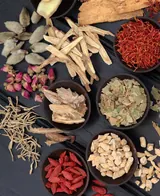
Herbs studied for hot flashes include Chinese herbal formulas, black cohosh, and plant estrogens (phytoestrogens) such as soy isoflavones.[14, 15, 16] The most often prescribed herb in Chinese formula trials was bai shao (white peony).[17]
What the research shows
The evidence is limited and inconsistent. A Cochrane review of 22 trials of Chinese herbal medicine found insufficient evidence that it was better or worse than placebo or hormone therapy for hot flashes, and noted that the evidence was very low to moderate in quality.[14] A later meta-analysis of 19 trials found that Chinese herbal formulas reduced hot flash severity compared with placebo and performed similarly to hormone therapy on some measures.[17]
A meta-analysis of 22 trials found that black cohosh extracts were linked to fewer hot flashes than placebo, with a modest effect.[15] A JAMA review of 62 trials found that phytoestrogens modestly reduced hot flash frequency and several herbal remedies, but not Chinese herbs, helped overall. It described most trials as having a high risk of bias.[16]
The North American Menopause Society did not recommend supplements or herbal remedies for hot flashes in 2023.[4]
Safety and herb-drug interactions
Herbs are active substances and are chosen individually by a qualified practitioner. Black cohosh products have been linked to clinically apparent liver injury, some severe.[18] Report any dark urine, yellow skin or eyes, or upper abdominal pain right away.
Herbs can interact with medicines. For example, St John's wort has been reported to cause serotonin syndrome with SSRI antidepressants, which are sometimes prescribed for hot flashes.[19] Tell us about all medicines and supplements, including tamoxifen, aromatase inhibitors, blood thinners and thyroid medicine. Herbs with estrogen-like activity need an oncologist's approval for anyone with a history of hormone-sensitive cancer.
In one study, about one fifth of Ayurvedic products bought online contained detectable lead, mercury or arsenic, so herbs should come from tested sources.[20] Tell us if you are pregnant, breastfeeding, or have liver or kidney disease.
Transdermal medication therapy, an herbal preparation applied to the skin, is also offered. We found no studies of it for hot flashes.
Translating traditional medicine into modern biological language
The comparisons here are interpretation, not equivalence. Chinese medicine often describes hot flashes as kidney yin deficiency with heat. The Australian acupuncture trial used that diagnosis to select its participants.[8] Ayurveda describes aggravated Pitta during a Vata stage of life.
Researchers studying the same symptom look at estrogen change and a narrowed temperature comfort zone in the hypothalamus, along with endorphin, serotonin and noradrenaline signaling.[2, 5] These ideas overlap loosely with the traditional pictures, but no study has shown that a pattern or dosha corresponds to a specific biological process.
How this care fits with your medical care
Complementary care for hot flashes works alongside your physician. Keep your gynecologist, primary care physician or oncology team, and do not start, stop or change hormone therapy, antidepressants or other prescribed medicines without your prescriber. We do not diagnose the cause of hot flashes, so new or unusual symptoms should be medically evaluated.
Please bring your diagnosis, a full list of medicines and supplements, any cancer treatment history, and recent test results.
When to seek urgent medical care
Hot flashes are usually harmless, but some symptoms need medical attention.
- Chest pain, pressure, or shortness of breath with a racing or irregular heartbeat
- Fainting or severe dizziness
- Vaginal bleeding after menopause, or very heavy or irregular bleeding
- Drenching night sweats with fever, unexplained weight loss or swollen glands
- Hot flashes starting before age 40, which need evaluation for early ovarian failure
- Thoughts of harming yourself; call or text 988, the Suicide and Crisis Lifeline
For emergencies, call 911 or go to the nearest emergency department.
Frequently asked questions
What are hot flashes?
Hot flashes are sudden, brief waves of heat, usually over the chest, neck and face, followed by sweating. They are the most common symptom of the menopause transition, and most episodes last less than five minutes. They can disturb sleep when they happen at night. They often continue for several years and then fade.
Can acupuncture help with hot flashes?
It may help some people, but the evidence is mixed. A Cochrane review found no significant difference from sham acupuncture in hot flash frequency, and two large sham-controlled trials found little or no advantage. Acupuncture did better than no treatment, so part of the benefit may come from non-specific effects. It is used alongside your medical care.
Do Ayurvedic or herbal treatments work for hot flashes?
The evidence is limited and inconsistent for herbs and very limited for Ayurveda. Small trials of ashwagandha and shatavari looked at menopausal symptoms generally. Reviews of black cohosh and Chinese herbal formulas show modest benefit, though Cochrane found insufficient evidence for Chinese herbs. Herbs can interact with medicines and some, such as black cohosh, have been linked to liver injury, so they are chosen individually.
Can I stop hormone therapy or other medicine if I try acupuncture or herbs?
No. Hormone therapy is the most effective treatment for hot flashes, and prescribed treatments are your physician’s decision. Acupuncture, Ayurveda and herbal medicine are complementary and do not replace them. Do not stop or change prescribed medicines without talking to your prescriber.
How soon might I notice a change with acupuncture?
It varies, and no result can be promised. In the large trials, treatment lasted about 8 weeks or more, and the sham-controlled comparison was assessed after the course ended. We reassess after a short course of visits to see whether it is helping.
Does insurance cover acupuncture for hot flashes?
It may. Netra Integrative Health Clinic is in-network with Blue Cross Blue Shield, Cigna and UnitedHealthcare. Other plans may be covered through out-of-network benefits, and we offer a free benefits check. HSA and FSA cards and CareCredit are also accepted. Call (908) 402-7301 to ask about your plan.
References
- Lugo T, Tetrokalashvili M. Hot Flashes. StatPearls [Internet]. 2022. PMID 30969649. StatPearls chapter on hot flashes describing the sudden warmth and sweating, associated symptoms, triggers, usual duration and course.
- Andrikoula M, Prelevic G. Menopausal hot flushes revisited. Climacteric. 2009;12(1):3-15. PMID 19061056. Review of menopausal hot flushes proposing that the rate of change in estrogen affects hypothalamic temperature control, with the exact cause unknown.
- Avis NE, Crawford SL, Green R. Vasomotor Symptoms Across the Menopause Transition: Differences Among Women. Obstet Gynecol Clin North Am. 2018;45(4):629-640. PMID 30401547. Review of vasomotor symptoms across the menopause transition covering how common they are, their duration and risk factors such as smoking, anxiety and breast cancer treatment.
- New Collective Author. The 2023 nonhormone therapy position statement of The North American Menopause Society. Menopause. 2023;30(6):573-590. PMID 37252752. 2023 North American Menopause Society position statement ranking nonhormone options; hormone therapy is most effective, and acupuncture and supplements or herbs were not recommended.
- Borud E, Grimsgaard S, White A. Menopausal problems and acupuncture. Auton Neurosci. 2010;157(1-2):57-62. PMID 20447875. Review of 16 acupuncture trials for hot flushes proposing a narrowed thermoneutral zone mechanism and finding little support for point-specific effects.
- Dodin S, Blanchet C, Marc I, et al. Acupuncture for menopausal hot flushes. Cochrane Database Syst Rev. 2013;2013(7):CD007410. PMID 23897589. Cochrane review of 16 trials (1,155 women) finding no significant difference from sham in flush frequency and judging the evidence insufficient overall.
- Befus D, Coeytaux RR, Goldstein KM, et al. Management of Menopause Symptoms with Acupuncture: An Umbrella Systematic Review and Meta-Analysis. J Altern Complement Med. 2018;24(4):314-323. PMID 29298078. Umbrella review of acupuncture for menopausal symptoms finding benefit versus no acupuncture but smaller or non-significant differences versus sham.
- Ee C, Xue C, Chondros P, et al. Acupuncture for Menopausal Hot Flashes: A Randomized Trial. Ann Intern Med. 2016;164(3):146-54. PMID 26784863. Sham-controlled trial of 327 women finding Chinese medicine acupuncture not superior to non-penetrating sham for moderate-to-severe hot flashes.
- Liu Z, Ai Y, Wang W, et al. Acupuncture for symptoms in menopause transition: a randomized controlled trial. Am J Obstet Gynecol. 2018;219(4):373.e1-373.e10. PMID 30125529. Sham-controlled trial of 360 women finding electroacupuncture gave only small, below-threshold benefit for menopausal symptoms and hot flash scores while quality of life improved.
- Mao JJ, Bowman MA, Xie SX, et al. Electroacupuncture Versus Gabapentin for Hot Flashes Among Breast Cancer Survivors: A Randomized Placebo-Controlled Trial. J Clin Oncol. 2015;33(31):3615-20. PMID 26304905. Trial of 120 breast cancer survivors in which electroacupuncture, sham acupuncture, gabapentin and placebo all reduced hot flashes, with electroacupuncture most; findings preliminary.
- Bäumler P, Zhang W, Stübinger T, et al. Acupuncture-related adverse events: systematic review and meta-analyses of prospective clinical studies. BMJ Open. 2021;11(9):e045961. PMID 34489268. Systematic review of 21 prospective studies finding minor acupuncture reactions in about 9 percent of patients and serious events in about 1 per 10,000.
- Ademola J, Ajgaonkar A, Debnath T, et al. Efficacy and safety of Shatavari root extract (Asparagus racemosus) for menopausal symptoms: a randomized, double-blind, three-arm, placebo-controlled study. Front Reprod Health. 2025;7:1654503. PMID 41394012. Placebo-controlled trial of 135 women testing shatavari alone and with ashwagandha; the combination improved overall menopause symptom scores.
- Gopal S, Ajgaonkar A, Kanchi P, et al. Effect of an ashwagandha (Withania Somnifera) root extract on climacteric symptoms in women during perimenopause: A randomized, double-blind, placebo-controlled study. J Obstet Gynaecol Res. 2021;47(12):4414-4425. PMID 34553463. Placebo-controlled trial of 100 perimenopausal women finding ashwagandha root extract lowered menopause symptom scores and improved quality of life over 8 weeks.
- Zhu X, Liew Y, Liu ZL. Chinese herbal medicine for menopausal symptoms. Cochrane Database Syst Rev. 2016;3(3):CD009023. PMID 26976671. Cochrane review of 22 trials (2,902 women) of Chinese herbal medicine for menopausal symptoms finding insufficient evidence versus placebo or hormone therapy.
- Sadahiro R, Matsuoka LN, Zeng BS, et al. Black cohosh extracts in women with menopausal symptoms: an updated pairwise meta-analysis. Menopause. 2023;30(7):766-773. PMID 37192826. Meta-analysis of 22 trials (2,310 women) finding black cohosh extracts improved menopausal symptoms and hot flashes compared with placebo.
- Franco OH, Chowdhury R, Troup J, et al. Use of Plant-Based Therapies and Menopausal Symptoms: A Systematic Review and Meta-analysis. JAMA. 2016;315(23):2554-63. PMID 27327802. JAMA meta-analysis of 62 trials finding phytoestrogens modestly reduced hot flashes, with high risk of bias in most trials and no benefit seen for Chinese herbs.
- Li M, Hung A, Lenon GB, et al. Chinese herbal formulae for the treatment of menopausal hot flushes: A systematic review and meta-analysis. PLoS One. 2019;14(9):e0222383. PMID 31536531. Meta-analysis of 19 trials (2,469 women) of Chinese herbal formulae for hot flushes reporting reduced severity versus placebo and mostly mild adverse events.
- Black Cohosh. LiverTox: Clinical and Research Information on Drug-Induced Liver Injury. 2025. PMID 31643322. LiverTox entry on black cohosh noting cases of clinically apparent acute liver injury, some severe.
- Hu Z, Yang X, Ho PC, et al. Herb-drug interactions: a literature review. Drugs. 2005;65(9):1239-82. PMID 15916450. Literature review of herb-drug interactions, including serotonin syndrome when St John's wort was combined with SSRI antidepressants.
- Saper RB, Phillips RS, Sehgal A, et al. Lead, mercury, and arsenic in US- and Indian-manufactured Ayurvedic medicines sold via the Internet. JAMA. 2008;300(8):915-23. PMID 18728265. JAMA study finding detectable lead, mercury or arsenic in about one fifth of Ayurvedic medicines purchased over the Internet.
This page is for general education and is not medical advice. Acupuncture, Ayurvedic medicine and herbal medicine are complementary therapies; they do not replace diagnosis or treatment by your physician. Do not stop or change prescribed treatment without talking to your prescriber. In an emergency call 911.