












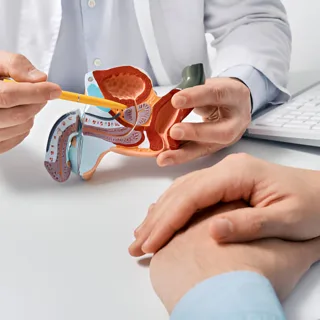








- What it is: Preparing the body and mind for childbirth, including learning how labor works, planning for pain relief, and building coping skills.
- Common symptoms: Not a disease. Late pregnancy often brings anxiety about birth, poor sleep, back and pelvic discomfort, and questions about induction.
- Conventional care: Prenatal visits with an obstetrician or midwife, childbirth education, a birth plan, and medical methods of induction or pain relief when needed.
- How integrative care fits: Acupuncture, Ayurvedic therapies and individually prescribed herbs are used as supportive care for comfort and stress, with your birth provider informed.
- Evidence at a glance: Acupuncture for labor pain and induction has mixed, low-certainty evidence. Ayurveda has no clinical trials for labor preparation, and herbal evidence is weak.
Understanding Labor Preparation
Labor preparation is the work of getting ready for childbirth, which is a normal physiologic process in which regular uterine contractions open the cervix and deliver the baby in three stages.[1] Your obstetrician or midwife directs your prenatal care and the birth itself. This page describes only the supportive care we can offer in the weeks beforehand.
Common symptoms
Labor preparation is not a disease, so there are no symptoms of its own. Many women in late pregnancy feel anxious about birth, worry about pain, and have trouble sleeping or coping with physical discomfort.[2]
Causes and risk factors
Labor begins when the body is ready, usually near the end of pregnancy, and the exact trigger is not fully understood. Medical conditions or complications in the mother or baby can change the plan, and more intensive care is often needed in those cases.[1]
How it is diagnosed and treated conventionally
Healthy women with uncomplicated pregnancies receive support at each stage of labor and monitoring from the care team, with the aim of avoiding unnecessary interventions.[1] Pain relief ranges from non-drug comfort measures to inhaled analgesia and epidural analgesia, and a large overview of Cochrane reviews found that epidural and inhaled analgesia relieved labor pain effectively but could have adverse effects.[3]
When labor needs to be started, medical methods include prostaglandins such as misoprostol, oxytocin, balloon catheters and membrane stripping.[4] Continuous one-to-one support during labor, for example from a doula, was linked in a Cochrane review of 26 trials to more spontaneous vaginal births and fewer cesarean births, although the evidence was low quality.[5]
Why Labor Preparation calls for a whole-person approach
Birth is a physical event, and how a woman feels about it also matters. Anxiety, sleep, physical comfort and the support around her all affect how she copes, and none of these replaces the medical care of labor.
Our supportive care focuses on the person preparing for birth, not on changing how labor works.
Anxiety about birth
Anxiety is common in pregnancy and labor. A systematic review of 21 studies found that the most effective ways to lower anxiety were used during pregnancy or after birth rather than during labor, and included cognitive behavioral therapy, yoga, music and relaxation.[2] Preparation in the weeks before labor is therefore the most useful time for these skills.
Pain and coping
Fear of pain and the wish to avoid drugs lead many women to look at complementary methods.[6] Cochrane reviews of relaxation, yoga, music and massage found they may reduce pain or improve satisfaction, but the evidence was low to very low quality.[7, 8]
Support from other people
Continuous support during labor from a trained companion was associated with better outcomes and fewer negative feelings about the birth in a large Cochrane review, with no evidence of harm.[5]
Acupuncture as supportive care in Labor Preparation
What the research shows
Acupuncture has been studied for labor pain and for starting labor, with mixed and mostly low-certainty results. For labor pain, a Cochrane review of 28 trials of acupuncture or acupressure found that acupuncture may make little or no difference to pain intensity compared with sham acupuncture, but may improve satisfaction with pain relief and probably reduces the use of drug pain relief. Many comparisons were rated very low certainty, and no trial had low risk of bias throughout.[6] An earlier meta-analysis of 10 trials concluded that the evidence did not support acupuncture for controlling labor pain, noting that most trials were not blinded and were often flawed.[9]
Acupressure, which uses finger pressure rather than needles, has also been studied. A meta-analysis of 13 trials reported less pain and shorter labor compared with untreated groups, but called for higher-quality trials.[10]
For starting labor, a Cochrane review of 22 trials in 3,456 women found no clear benefit of acupuncture or acupressure for reducing cesarean births. Acupuncture showed some benefit for cervical readiness in single trials, and the authors called for better-designed studies.[11] A 2024 expert review of induction methods noted that complementary methods, including acupuncture and herbal medicine, are rarely used in hospitals because there is little data on their efficacy and safety.[4]
How acupuncture may work
The trials do not establish how acupuncture might work in late pregnancy or labor. The one signal of a physical effect is a better cervical readiness score after acupuncture in a single trial of 125 women, which is a lead and not a conclusion.[11]
What treatment involves
Treatment uses fine, sterile, single-use needles placed at points on the body, usually left in place for about 20 to 40 minutes. A short course of visits in late pregnancy is followed by reassessment. Acupuncture is not a substitute for medical induction of labor.
Serious problems from acupuncture are rare. In prospective studies, about 9 in 100 patients had a minor reaction such as bleeding, soreness or redness at a needle site, and serious events occurred in about 1 in 10,000 patients.[12] Tell your practitioner about your pregnancy, your due date, and any pregnancy complications, bleeding disorders or blood thinners before any treatment.
Ayurvedic medicine as supportive care in Labor Preparation
The Ayurvedic view
Ayurveda describes pregnancy care in terms of diet, daily routine and emotional calm through the months before birth, and describes labor as a Vata-governed downward movement. These are traditional frameworks for choosing supportive care, not biomedical explanations.
Therapies that may be used
Care traditionally combines warm, regular meals, steady sleep hours, gentle oil massage, and breathing and relaxation practices chosen for the individual. Relaxation, yoga, music and massage, which overlap with these practices, have been tested for labor pain with low-quality evidence of benefit.[7, 8] Panchakarma procedures are not appropriate during pregnancy. Herbs are not appropriate in late pregnancy unless your birth provider agrees.
What the research shows
We found no clinical trials of Ayurvedic medicine for labor preparation, so there is no evidence on whether it affects labor or its outcome. What we can say comes from research on the supportive elements: relaxation, yoga, music and massage have been studied for labor pain and may help, with low-quality evidence.[7, 8]
Herbal medicine as supportive care in Labor Preparation
Herbs and formulas that have been studied
Date fruit is a traditional food that studies have tested in late pregnancy, usually eaten in the last weeks.[13] Castor oil is a traditional herbal method that has been studied for starting labor.[14]
What the research shows
The evidence is weak. A 2024 meta-analysis of 48 studies found that dates eaten in late pregnancy were linked to a shorter gestation and labor, less need for induction, and higher cervical dilatation on admission, but the authors rated the overall quality as unacceptable, risk of bias as high, and safety was recorded in only four trials.[13] An earlier meta-analysis of four studies reached a similar finding with weak study quality.[15]
A systematic review of herbal remedies in pregnancy found that castor oil for induction showed a tendency toward more cesarean sections and meconium-stained fluid, and called for research into its safety.[14]
Safety and herb-drug interactions
Herbs are not automatically safe in pregnancy. A review of medicinal plants concluded that some can be embryotoxic, can stimulate uterine contractions, or can cause miscarriage, and listed many herbs to avoid in pregnancy.[16] For that reason herbs to induce labor are not appropriate, and any herb in pregnancy should be discussed with your birth provider first.
Herbs can also interact with medicines, including blood thinners.[17] About one fifth of Ayurvedic products bought online contained detectable lead, mercury or arsenic in one study.[18] Women with gestational diabetes should talk to their provider before eating dates in quantity.
Translating traditional medicine into modern biological language
This section is interpretation, not equivalence. Chinese medicine describes late pregnancy in terms of qi and blood flow and the readiness of the body for birth, and Ayurveda describes labor as governed by Vata. These ideas do not map directly onto biology.
Researchers studying acupuncture in labor have looked at pain relief and cervical readiness, but the trial results are inconsistent.[6, 11] The relaxation, routine and sleep emphasis in Ayurvedic care loosely parallels the anxiety-reduction approaches that have been studied in pregnancy.[2]
How this care fits with your medical care
Our care is supportive and complementary. Keep all prenatal visits and follow your obstetrician's or midwife's advice about induction, monitoring, pain relief and where to give birth. We do not diagnose pregnancy complications, plan your birth or decide when labor should be induced.
For a condition like this, we ask that you are under a physician's care for it and that your treating team knows you are receiving complementary care. Please bring your due date, any pregnancy complications, a list of medicines, vitamins and herbs, and your birth plan if you have one.
When to seek urgent medical care
Some signs in late pregnancy and labor need immediate medical attention, and you should call your obstetrician or midwife right away.
- Vaginal bleeding, or a gush or steady leak of fluid
- Contractions that are regular and getting stronger and closer together before 37 weeks
- Decreased or absent baby movement
- Severe headache, vision changes, or sudden swelling of the face or hands
- Severe abdominal pain, fever, or chest pain
- Thoughts of harming yourself or your baby (call or text 988, the Suicide and Crisis Lifeline)
If any of these occur, call 911 or go to the nearest emergency department.
Frequently asked questions
What is labor preparation?
Labor preparation is the work of getting ready for childbirth physically and emotionally. It includes learning how labor progresses, planning for pain relief, building coping skills and arranging support. Your obstetrician or midwife manages the medical side of pregnancy and birth. Our role is limited to supportive care for comfort and stress before labor begins.
Can acupuncture help people with labor preparation?
Evidence is mixed. A Cochrane review found acupuncture may improve satisfaction with pain relief and reduce the use of drug pain relief compared with sham, but may make little difference to pain intensity, and the evidence was of low certainty. It has not been shown to reliably start labor. We offer it as supportive care only, with your birth provider informed.
Does Ayurvedic or herbal medicine help prepare for labor?
We found no clinical trials of Ayurvedic medicine for labor preparation. Herbal evidence is weak, and some herbs can be unsafe in pregnancy. Eating dates in late pregnancy has been studied, with low-quality evidence of shorter labor. Herbs to induce labor are not appropriate, and any herb should be discussed with your birth provider first.
Can this care replace my prenatal care or help me avoid medical pain relief or induction?
No. Acupuncture, Ayurveda and herbal medicine are complementary and do not replace prenatal care, monitoring or medical pain relief. Follow your obstetrician’s or midwife’s advice about induction, epidural analgesia and where to give birth. Do not stop or change prescribed medicines or skip appointments because of anything we suggest.
What should I bring to my first visit?
Bring your due date, the name of your obstetrician or midwife, any pregnancy complications or diagnoses, a list of medicines, vitamins and herbs, and your birth plan if you have one. Tell us about bleeding disorders or blood thinners. Please also tell us if anything about your pregnancy changes, so you can check with your care team.
Does insurance cover acupuncture in pregnancy?
It may. Netra Integrative Health Clinic is in-network with Blue Cross Blue Shield, Cigna and UnitedHealthcare. Other plans may be covered through out-of-network benefits, and we offer a free benefits check. HSA and FSA cards and CareCredit are also accepted. Call (908) 402-7301 to ask about your plan.
References
- Hutchison J, Mahdy H, Jenkins SM, et al. Normal Labor: Physiology, Evaluation, and Management. StatPearls [Internet]. 2025. PMID 31335010. StatPearls chapter on normal labor describing its three stages, evaluation, supportive management, and the need for more intensive care in complicated pregnancies.
- Domínguez-Solís E, Lima-Serrano M, Lima-Rodríguez JS. Non-pharmacological interventions to reduce anxiety in pregnancy, labour and postpartum: A systematic review. Midwifery. 2021;102:103126. PMID 34464836. Systematic review of 21 studies on non-drug interventions for anxiety in pregnancy, labour and postpartum, finding the most effective were used before or after birth.
- Jones L, Othman M, Dowswell T, et al. Pain management for women in labour: an overview of systematic reviews. Cochrane Database Syst Rev. 2012;2012(3):CD009234. PMID 22419342. Cochrane overview of pain management in labour finding epidural and inhaled analgesia effective, and some non-drug methods possibly helpful but with limited evidence.
- Sanchez-Ramos L, Levine LD, Sciscione AC, et al. Methods for the induction of labor: efficacy and safety. Am J Obstet Gynecol. 2024;230(3S):S669-S695. PMID 38462252. Review of induction methods covering medical and mechanical options and noting that complementary methods are rarely used in hospitals for lack of efficacy and safety data.
- Bohren MA, Hofmeyr GJ, Sakala C, et al. Continuous support for women during childbirth. Cochrane Database Syst Rev. 2017;7(7):CD003766. PMID 28681500. Cochrane review of 26 trials (15,858 women) finding continuous labour support linked to more spontaneous vaginal births, fewer cesareans and no evidence of harm, with low-quality evidence.
- Smith CA, Collins CT, Levett KM, et al. Acupuncture or acupressure for pain management during labour. Cochrane Database Syst Rev. 2020;2(2):CD009232. PMID 32032444. Cochrane review of 28 trials (3,960 women) on acupuncture and acupressure for labour pain, finding mostly low to very low certainty evidence and mixed benefits.
- Smith CA, Levett KM, Collins CT, et al. Relaxation techniques for pain management in labour. Cochrane Database Syst Rev. 2018;3(3):CD009514. PMID 29589650. Cochrane review of relaxation, yoga and music for labour pain, finding possible benefits with low to very low quality evidence.
- Smith CA, Levett KM, Collins CT, et al. Massage, reflexology and other manual methods for pain management in labour. Cochrane Database Syst Rev. 2018;3(3):CD009290. PMID 29589380. Cochrane review of massage and manual methods for labour pain, finding possible benefits for pain and sense of control with low to very low quality evidence.
- Cho SH, Lee H, Ernst E. Acupuncture for pain relief in labour: a systematic review and meta-analysis. BJOG. 2010;117(8):907-20. PMID 20438555. Meta-analysis of 10 trials (2,038 women) concluding that evidence did not support acupuncture for labour pain, with mostly unblinded and flawed trials.
- Chen Y, Xiang XY, Chin KHR, et al. Acupressure for labor pain management: a systematic review and meta-analysis of randomized controlled trials. Acupunct Med. 2021;39(4):243-252. PMID 32811182. Meta-analysis of 13 trials (1,586 women) finding acupressure reduced labour pain and duration, with a call for higher-quality trials.
- Smith CA, Armour M, Dahlen HG. Acupuncture or acupressure for induction of labour. Cochrane Database Syst Rev. 2017;10(10):CD002962. PMID 29036756. Cochrane review of 22 trials (3,456 women) finding no clear benefit of acupuncture or acupressure for cesarean rates, with some benefit for cervical readiness.
- Bäumler P, Zhang W, Stübinger T, et al. Acupuncture-related adverse events: systematic review and meta-analyses of prospective clinical studies. BMJ Open. 2021;11(9):e045961. PMID 34489268. Systematic review of 21 prospective studies finding minor acupuncture reactions in about 9 percent of patients and serious events in about 1 per 10,000.
- Salajegheh Z, Nasiri M, Imanipour M, et al. Is oral consumption of dates (Phoenix dactylifera L. fruit) in the peripartum period effective and safe integrative care to facilitate childbirth and improve perinatal outcomes: a comprehensive revised systematic review and dose-response meta-analysis. BMC Pregnancy Childbirth. 2024;24(1):12. PMID 38166785. Meta-analysis of 48 studies of date fruit in the peripartum period, finding shorter gestation and labour but high risk of bias and little safety data.
- Boltman-Binkowski H. A systematic review: Are herbal and homeopathic remedies used during pregnancy safe?. Curationis. 2016;39(1):1514. PMID 27246791. Systematic review of herbal and homeopathic remedies in pregnancy, finding ginger safe for nausea and a tendency toward more complications with castor oil for induction.
- Sagi-Dain L, Sagi S. The effect of late pregnancy date fruit consumption on delivery progress - A meta-analysis. Explore (NY). 2021;17(6):569-573. PMID 32563673. Meta-analysis of four studies finding date fruit in late pregnancy linked to greater cervical dilatation and less induction, with weak study quality.
- Bernstein N, Akram M, Yaniv-Bachrach Z, et al. Is it safe to consume traditional medicinal plants during pregnancy?. Phytother Res. 2021;35(4):1908-1924. PMID 33164294. Review of traditional medicinal plants in pregnancy, describing embryotoxic, uterine-stimulating and abortifacient risks and listing herbs to avoid.
- Hu Z, Yang X, Ho PC, et al. Herb-drug interactions: a literature review. Drugs. 2005;65(9):1239-82. PMID 15916450. Literature review of herb-drug interactions, including increased bleeding with some herbs combined with warfarin or aspirin.
- Saper RB, Phillips RS, Sehgal A, et al. Lead, mercury, and arsenic in US- and Indian-manufactured Ayurvedic medicines sold via the Internet. JAMA. 2008;300(8):915-23. PMID 18728265. JAMA study finding detectable lead, mercury or arsenic in about one fifth of Ayurvedic medicines purchased over the Internet.
This page is for general education and is not medical advice. Acupuncture, Ayurvedic medicine and herbal medicine are complementary therapies; they do not replace diagnosis or treatment by your physician. Do not stop or change prescribed treatment without talking to your prescriber. In an emergency call 911.