






- What it is: Blood pressure below normal values, commonly under 90/60 mm Hg, which may cause no symptoms or may cause dizziness and fainting.
- Common symptoms: Lightheadedness, especially on standing, blurred vision, fatigue, nausea, and in some people fainting or falls.
- Conventional care: Finding and treating the cause, reviewing medicines, fluids and salt where a physician advises, compression garments, and medicines in selected cases.
- How integrative care fits: Acupuncture, Ayurvedic therapies and individually prescribed herbs may be used alongside medical care for overall wellbeing and symptoms such as fatigue, after the cause has been assessed.
- Evidence at a glance: Limited for acupuncture, based on small trials in specific settings such as dialysis and elderly orthostatic hypotension; none found for Ayurveda; limited for herbal medicine, with one small pilot of an herbal acupoint patch in dialysis patients.
What is Low Blood Pressure?
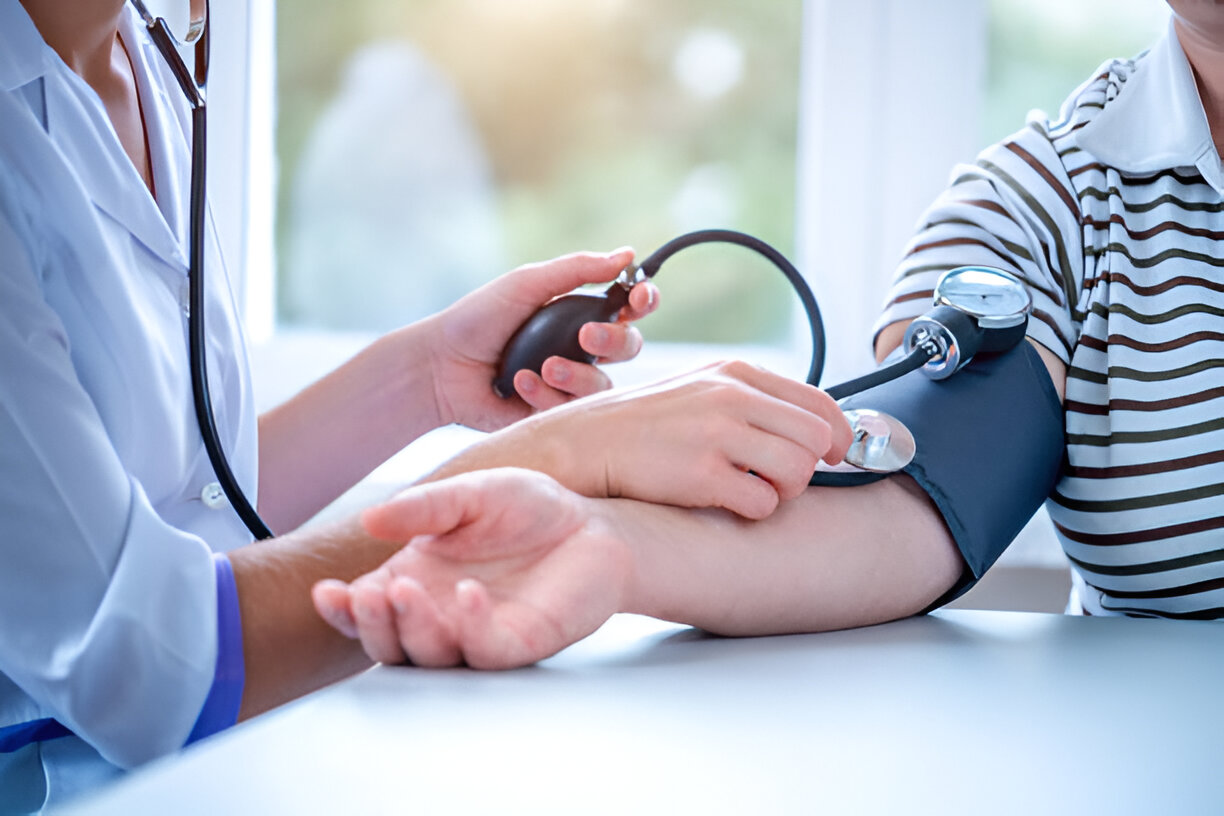
Low blood pressure, or hypotension, is a blood pressure below normal values, usually taken as under 90/60 mm Hg. Many people with low readings have no symptoms and never need treatment, so the number alone matters less than whether the pressure is causing problems or has a treatable cause.[1]
Common symptoms
Most people with hypotension have no symptoms. Symptoms appear when too little blood reaches the brain and other organs, and they often relate to lightheadedness and reduced blood flow to the brain.[1, 2]
- Dizziness or lightheadedness, often on standing up
- Blurred vision or feeling faint
- Fatigue and trouble concentrating
- Nausea
- Fainting and falls in some people
Causes and risk factors
A common form is orthostatic (postural) hypotension, a drop in pressure within 3 minutes of standing, defined as a fall of at least 20 mm Hg in systolic or 10 mm Hg in diastolic pressure. It is typically caused by failure of the body's automatic reflexes, loss of body fluid, heart disease, nerve damage or medication effects.[2] About 1 in 5 people aged 60 or older is affected.[2]
Medicines are a frequent contributor. In a meta-analysis of 69 placebo-controlled trials, beta-blockers and tricyclic antidepressants were linked to the largest increase in the odds of orthostatic hypotension, and alpha-blockers, antipsychotics and SGLT-2 inhibitors to smaller ones.[3] Low pressure after meals, called postprandial hypotension, is also common in older adults and in people with autonomic failure.[2]
How it is diagnosed and treated conventionally
Diagnosis relies on a careful history, physical examination and blood pressure measured lying down and standing.[4] When symptoms are present, the cause should be identified and addressed directly.[1] A key question is whether the problem is neurogenic, meaning due to nerve or autonomic damage, as this affects management and outlook.[4]
Treatment is stepwise and mainly non-drug: stopping or adjusting blood pressure-lowering drugs, counterpressure maneuvers and other lifestyle measures, with medicines added in selected cases.[4, 5] Abdominal binders and compression stockings are commonly used. One review gave abdominal binders a strong recommendation for neurogenic orthostatic hypotension, while another rated the evidence for compression in older people as very low quality.[6, 7] A review of 36 trials concluded that many commonly recommended treatments for orthostatic hypotension have a limited evidence base.[8] Decisions about medicines belong to your physician.
Why Low Blood Pressure calls for a whole-person approach
Low blood pressure is a finding with many possible causes, not one disease, so more than one factor usually needs attention. Fluid balance, medicines, the nervous system and other health conditions can all contribute, and they may differ from person to person.[2, 4]
Looking at these factors together is why a medical evaluation comes first. Complementary care, when used, is added around that evaluation and does not replace it.
Medicines and polypharmacy
Taking several medicines may add up. The meta-analysis of drug-induced orthostatic hypotension noted that drugs acting on several parts of the blood pressure reflex may carry cumulative risk, and that people on many medicines could benefit from checking blood pressure when standing.[3] Any change to medicines must come from your prescriber.
The autonomic nervous system
Neurogenic orthostatic hypotension reflects impaired reflex constriction of blood vessels when a person stands, caused by damage or dysfunction in the nervous system pathway that controls it.[5] It can be an early sign of Parkinson's disease and related conditions.[4]
Falls and safety
Orthostatic hypotension is linked to falls in older adults. A meta-analysis of 50 studies found an odds ratio of 1.73 for falls in people with orthostatic hypotension.[9] This is one reason low blood pressure with symptoms deserves a physician's attention.
Eating and fluids
Blood pressure can drop after meals in older adults and people with autonomic failure.[2] Fluid loss is also a recognized cause of orthostatic hypotension.[2] Dietary advice about fluids and salt should come from your physician, particularly if you have heart or kidney disease.
Acupuncture for Low Blood Pressure
What the research shows
The research is limited. We found no systematic reviews and no large sham-controlled trials of acupuncture for chronic low blood pressure or orthostatic hypotension in general. What exists are small trials in specific settings, mostly from single centers.
A 2024 trial of 60 older adults in China with orthostatic hypotension compared the drug midodrine alone with midodrine plus heat-sensitive moxibustion. The moxibustion group had higher blood pressure and a smaller drop on standing after 4 weeks, but there was no sham treatment, and the report is a short, single-center trial.[10]
Another trial of 135 people with low blood pressure during hemodialysis used electrical stimulation at the Neiguan (P6) point, compared with an inactive device. Blood pressure was higher in the treated group, and fatigue and pain scores fell.[11]
Two small trials looked at low blood pressure after spinal anesthesia for cesarean birth, a hospital setting unlike ordinary outpatient care. Stimulation at the PC-5 and PC-6 points reduced the severity of low blood pressure in a 36-patient trial, and high-frequency stimulation at PC6 reduced it in a 90-patient trial.[12, 13] These results should not be extended to everyday low blood pressure.
How acupuncture may work
Laboratory research suggests acupuncture can change autonomic nervous system activity, and that the effect on blood pressure may depend on whether the starting pressure is high or low. This work comes largely from laboratory research, and it is a proposed explanation, not a proven mechanism in people with low blood pressure.[14]
What treatment involves
Treatment uses fine, sterile, single-use needles placed at points on the arms, legs, back or head, usually left in place for about 20 to 40 minutes. A course is typically several visits, with reassessment to see whether it is helping. Moxibustion, the warming of points with burning herb, is a related technique that was used in one of the trials above.
Serious problems from acupuncture are rare. In prospective studies, about 9 in 100 patients had a minor reaction, and half of the reactions were bleeding, pain or flare at the needle site; serious events occurred in about 1 in 10,000 patients.[15] Because people with low blood pressure may feel faint, treatment is usually given lying down, and you should tell the practitioner first if you have a bleeding disorder, take blood thinners, are pregnant or have a pacemaker.
Ayurvedic medicine for Low Blood Pressure
The Ayurvedic view
Ayurveda does not have an exact match for low blood pressure. Dizziness, weakness and fatigue may be described in traditional terms as a depletion or imbalance of Vata, or as weak digestive fire (agni) with low vitality (ojas). These are traditional frameworks that guide care, not biomedical diagnoses, and because low readings can have medical causes, the cause is checked first.[1]
Therapies that may be used
Care is individualized and traditionally may combine:
- Regular, warm, nourishing meals and steady sleep hours
- Gentle warm oil massage
- Herbs chosen for the person by the practitioner, from tested sources, because about one fifth of Ayurvedic medicines bought online contained detectable lead, mercury or arsenic[16]
- Calming practices such as breathing exercises
Panchakarma, the classical cleansing program, is not appropriate during pregnancy, acute illness or frailty, and its fluid shifts make it a poor fit for anyone with symptomatic low blood pressure or a tendency to faint.
What the research shows
We found no clinical trials of Ayurvedic treatment or Panchakarma for low blood pressure. The evidence is therefore none for the condition itself. Any benefit for related complaints such as stress or poor sleep has not been shown specifically for people with hypotension.
Herbal medicine for Low Blood Pressure
Herbs and formulas that have been studied
In Chinese medicine, low blood pressure with fatigue and dizziness is traditionally linked to qi and yang deficiency, and tonic herbs such as ginseng and astragalus are classically used for such patterns. In Ayurveda, tonic herbs such as ashwagandha are traditionally used for low vitality. Their use here is traditional, not evidence-based.
What the research shows
We found no clinical trials of Chinese herbal formulas or Ayurvedic herbs taken by mouth in people with chronic or orthostatic low blood pressure. One small randomized pilot study of 32 hemodialysis patients (27 completed it) tested an herbal preparation applied to acupoints for low blood pressure during dialysis. Episodes of low blood pressure were fewer than with sham treatment, and the authors called for larger studies.[17] The clinic's transdermal medication therapy also uses herbal preparations applied to the skin, but that pilot tested one specific patch in dialysis patients, and it is not enough to say that any such product works for low blood pressure.
Safety and herb-drug interactions
Herbs can raise or lower blood pressure and can interact with medicines. Licorice is a particular concern. A meta-analysis of 18 studies found that regular licorice intake raised blood pressure and lowered potassium, so it should not be self-prescribed.[18] People with heart disease, kidney disease or high blood pressure should not use it without medical advice.
Reviews describe herb-drug interactions affecting blood thinners, blood pressure and other medicines.[19] Tell us about all prescribed medicines and supplements, and about pregnancy or breastfeeding, liver or kidney disease. In one study, about one fifth of Ayurvedic medicines bought online contained detectable lead, mercury or arsenic, so herbs should come from tested sources.[16]
Translating traditional medicine into modern biological language
This is interpretation, not equivalence. In Chinese medicine, the dizziness, tiredness and cold limbs that can accompany low blood pressure are often described as deficiency of qi, yang or blood. Researchers studying acupuncture look at related ideas such as autonomic nervous system activity and the control of blood vessel tone, mainly in laboratory work.[14]
In Ayurveda, a weak or unsteady Vata or reduced ojas describes weakness and instability. No study has shown that these terms correspond to a specific measurable process such as baroreflex function.
How this care fits with your medical care
Complementary care for low blood pressure works alongside your physician and does not replace them. We do not diagnose the cause of low blood pressure or manage the underlying disease, and we do not prescribe or change prescription drugs. Do not stop or change prescribed medicines, including blood pressure and heart medicines, without your prescriber.
Please bring your diagnosis if you have one, your recent blood pressure readings including standing and lying measurements, a full list of medicines and supplements, and recent test results. For a condition like this, we ask that you are under a physician's care for it and that your treating team knows you are receiving complementary care.
When to seek urgent medical care
Low blood pressure can be a sign of a serious problem such as bleeding, infection or a heart problem, and it needs prompt assessment in these situations.[1]
- Fainting or near-fainting, especially with a fall or head injury
- Chest pain, shortness of breath or a very fast or irregular heartbeat
- Confusion, or cold, clammy, pale skin with a weak, rapid pulse
- Black or bloody stools, vomiting blood, or other signs of bleeding
- Fever with dizziness or weakness, or severe dehydration from vomiting or diarrhea
If any of these occur, call 911 or go to the nearest emergency department.
Frequently asked questions
What is low blood pressure?
Low blood pressure, or hypotension, is a blood pressure below normal values, usually under 90/60 mm Hg. Many people have no symptoms. When symptoms occur, they include dizziness, lightheadedness, blurred vision, fatigue and fainting. A common type is orthostatic hypotension, a drop in pressure on standing. The cause should be found by a physician, since it ranges from dehydration and medicines to nerve or heart problems.
Can acupuncture help with low blood pressure?
The evidence is limited. A small trial in older adults with orthostatic hypotension found moxibustion added to medicine raised blood pressure more than medicine alone, and a trial in dialysis patients found benefit from stimulation at one acupuncture point. There are no large sham-controlled trials for everyday low blood pressure, so benefit is uncertain. Acupuncture is used alongside medical care.
Does Ayurvedic or herbal medicine work for low blood pressure?
We did not find clinical trials of Ayurvedic treatment or of Chinese or Ayurvedic herbs taken by mouth for low blood pressure, and only one small pilot of an herbal acupoint patch in dialysis patients, so it is not known whether they help. These therapies are traditionally used for weakness and low vitality. Some herbs, such as licorice, can raise blood pressure and cause low potassium, and herbs can interact with medicines, so they are only used when prescribed individually and checked against your medicines.
Can I stop or lower my blood pressure medicines if I have acupuncture?
No. Acupuncture, Ayurveda and herbal medicine are complementary care. Do not stop or change any prescribed medicine without talking to your prescriber. Some medicines can lower blood pressure, and only your physician can decide whether a dose should change. If you faint or feel faint often, you need a medical evaluation.
What should I bring to my first visit?
Bring your diagnosis or the reason low blood pressure was noted, recent blood pressure readings if you have them, a full list of medicines and supplements, and recent test results. Tell us about any fainting, falls, bleeding disorders, pregnancy, or pacemaker. This helps us coordinate with your treating physician. We do not diagnose the cause of low blood pressure.
Does insurance cover acupuncture for low blood pressure?
It may. Netra Integrative Health Clinic is in-network with Blue Cross Blue Shield, Cigna and UnitedHealthcare. Other plans may be covered through out-of-network benefits, and we offer a free benefits check. HSA and FSA cards and CareCredit are also accepted. Call (908) 402-7301 to ask about your plan.
References
- Chen RJ, Sharma S, Bhattacharya PT. Hypotension. StatPearls [Internet]. 2025. PMID 29763136. StatPearls chapter on hypotension covering definitions below 90/60 mm Hg, frequent absence of symptoms, and the need to identify the cause in symptomatic people.
- Ringer M, Hashmi MF, Lappin SL. Orthostatic Hypotension. StatPearls [Internet]. 2025. PMID 28846238. StatPearls chapter on orthostatic hypotension covering its definition, causes, prevalence in people over 60, symptoms and link to falls and postprandial hypotension.
- Bhanu C, Nimmons D, Petersen I, et al. Drug-induced orthostatic hypotension: A systematic review and meta-analysis of randomised controlled trials. PLoS Med. 2021;18(11):e1003821. PMID 34752479. Meta-analysis of 69 placebo-controlled trials (27,079 participants) linking beta-blockers, tricyclic antidepressants and other drugs to increased odds of orthostatic hypotension.
- Wieling W, Kaufmann H, Claydon VE, et al. Diagnosis and treatment of orthostatic hypotension. Lancet Neurol. 2022;21(8):735-746. PMID 35841911. Lancet Neurology review on diagnosis and treatment of orthostatic hypotension, favoring a stepwise, mainly non-pharmacological approach and distinguishing neurogenic from non-neurogenic forms.
- Freeman R, Abuzinadah AR, Gibbons C, et al. Orthostatic Hypotension: JACC State-of-the-Art Review. J Am Coll Cardiol. 2018;72(11):1294-1309. PMID 30190008. JACC state-of-the-art review of orthostatic hypotension describing reduced baroreflex vasoconstriction in autonomic failure and stepwise non-drug and drug management.
- Eschlböck S, Wenning G, Fanciulli A. Evidence-based treatment of neurogenic orthostatic hypotension and related symptoms. J Neural Transm (Vienna). 2017;124(12):1567-1605. PMID 29058089. Systematic review with GRADE recommendations for neurogenic orthostatic hypotension, supporting patient education, abdominal binders and selected medicines.
- Subbarayan S, Myint PK, Martin KR, et al. Nonpharmacologic Management of Orthostatic Hypotension in Older People: A Systematic Review. The SENATOR ONTOP Series. J Am Med Dir Assoc. 2019;20(9):1065-1073.e3. PMID 31109911. Systematic review of non-drug treatments for orthostatic hypotension in older people finding very low-quality evidence for compression and no high-quality evidence for any measure.
- Logan IC, Witham MD. Efficacy of treatments for orthostatic hypotension: a systematic review. Age Ageing. 2012;41(5):587-94. PMID 22591985. Systematic review of 36 trials of orthostatic hypotension treatments, mostly poor quality, concluding that many commonly recommended treatments have limited evidence.
- Mol A, Bui Hoang PTS, Sharmin S, et al. Orthostatic Hypotension and Falls in Older Adults: A Systematic Review and Meta-analysis. J Am Med Dir Assoc. 2019;20(5):589-597.e5. PMID 30583909. Meta-analysis of 50 studies finding orthostatic hypotension associated with falls in older adults, with an odds ratio of 1.73.
- Chen Z, Liu M, Xiong J, et al. [Heat-sensitive moxibustion combined with medication for orthostatic hypotension of yang-qi deficiency in the elderly: a randomized controlled trial]. Zhongguo Zhen Jiu. 2024;44(11):1245-8. PMID 39532439. Randomized trial of 60 elderly Chinese patients with orthostatic hypotension finding heat-sensitive moxibustion plus midodrine raised blood pressure more than midodrine alone.
- Biçer S, Taşci S. The Effect of Body Acupressure on Blood Pressure and Fatigue Levels in Individuals Suffering From Hypotension During Hemodialysis: A Randomized Controlled Trial. Altern Ther Health Med. 2022;28(2):6-16. PMID 33711814. Randomized trial of 135 hemodialysis patients finding electrical stimulation at P6 raised blood pressure and reduced pain and fatigue versus an inactive device.
- Arai YC, Kato N, Matsura M, et al. Transcutaneous electrical nerve stimulation at the PC-5 and PC-6 acupoints reduced the severity of hypotension after spinal anaesthesia in patients undergoing Caesarean section. Br J Anaesth. 2008;100(1):78-81. PMID 17959591. Randomized trial of 36 cesarean patients finding electrical stimulation at PC-5 and PC-6 reduced the severity and frequency of hypotension after spinal anesthesia.
- Liu X, Gao Z, Jiang Y, et al. Comparison of Low-Frequency or High-Frequency Electrical Acupoint Stimulation on Hypotension After Spinal Anesthesia in Parturients: A Prospective Randomized Controlled Clinical Trial. J Integr Complement Med. 2024;30(8):770-775. PMID 38546428. Randomized trial of 90 cesarean patients finding high-frequency, but not low-frequency, electrical stimulation at PC6 reduced hypotension after spinal anesthesia.
- Longhurst JC, Tjen-A-Looi S. Acupuncture regulation of blood pressure: two decades of research. Int Rev Neurobiol. 2013;111:257-71. PMID 24215927. Review of two decades of laboratory research on how acupuncture influences blood pressure through the nervous system, depending on starting pressure.
- Bäumler P, Zhang W, Stübinger T, et al. Acupuncture-related adverse events: systematic review and meta-analyses of prospective clinical studies. BMJ Open. 2021;11(9):e045961. PMID 34489268. Systematic review of 21 prospective studies finding minor acupuncture reactions in about 9 percent of patients and serious events in about 1 per 10,000.
- Saper RB, Phillips RS, Sehgal A, et al. Lead, mercury, and arsenic in US- and Indian-manufactured Ayurvedic medicines sold via the Internet. JAMA. 2008;300(8):915-23. PMID 18728265. JAMA study finding detectable lead, mercury or arsenic in about one fifth of Ayurvedic medicines purchased over the Internet.
- Tsai MY, Wu CH, Huang YC, et al. Treatment of intradialytic hypotension with an herbal acupoint therapy in hemodialysis patients: A randomized pilot study. Complement Ther Med. 2018;38:67-73. PMID 29857882. Randomized pilot study of 32 hemodialysis patients finding herbal acupoint therapy reduced episodes of low blood pressure during dialysis versus sham, calling for larger studies.
- Penninkilampi R, Eslick EM, Eslick GD. The association between consistent licorice ingestion, hypertension and hypokalaemia: a systematic review and meta-analysis. J Hum Hypertens. 2017;31(11):699-707. PMID 28660884. Meta-analysis of 18 studies finding chronic licorice intake raised blood pressure and lowered potassium, aldosterone and renin activity.
- Hu Z, Yang X, Ho PC, et al. Herb-drug interactions: a literature review. Drugs. 2005;65(9):1239-82. PMID 15916450. Literature review of clinically significant herb-drug interactions, including bleeding with warfarin and blood pressure effects with diuretics.
This page is for general education and is not medical advice. Acupuncture, Ayurvedic medicine and herbal medicine are complementary therapies; they do not replace diagnosis or treatment by your physician. Do not stop or change prescribed treatment without talking to your prescriber. In an emergency call 911.