












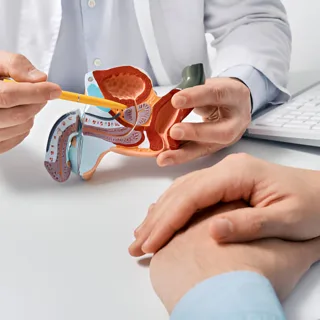



- What it is: The inability of a man to impregnate a fertile partner after at least a year of regular unprotected intercourse, with male factors involved in about half of couples with infertility.
- Common symptoms: Often none besides not conceiving; some men notice low sex drive, erection or ejaculation problems, testicular pain or swelling, or signs of a hormone problem.
- Conventional care: Evaluation of both partners with semen analysis, treating reversible causes, lifestyle changes, medicines, surgery in selected cases, and assisted reproductive techniques.
- How integrative care fits: Acupuncture, Ayurvedic therapies and individually prescribed herbs are used alongside medical care, with attention to lifestyle, stress and general health.
- Evidence at a glance: Limited for acupuncture, with low-quality trials and mixed results; limited for Ayurveda, mostly ashwagandha studies with few controlled trials; limited for herbal medicine, with mixed results.
What is Male Infertility?
Male infertility is the inability of a man to impregnate a fertile woman after at least 1 year of regular unprotected intercourse.[1] A male factor is the sole cause in about 20% of infertile couples and contributes in another 30% to 40%, so both partners should be evaluated.[1]
Common symptoms
Many men have no symptoms other than not conceiving, and the problem is often found through a semen analysis.[1, 2] Some men have signs of an underlying problem, such as low sex drive, erection or ejaculation difficulty, or testicular pain, swelling or a lump, and these should be assessed by a physician.
Causes and risk factors
Causes include testicular dysfunction, hormone disorders, blocked or absent sperm ducts, lifestyle factors such as tobacco use and obesity, exposure to gonad-toxic substances, and aging.[3] Age, medicines, surgical history, environmental toxins, genetic problems and systemic diseases can also play a part.[1] In many men no cause is found.[2]
How it is diagnosed and treated conventionally
Evaluation starts with a detailed history, a focused physical examination, and selected laboratory tests including a semen analysis.[2, 3] Up to 6% of men evaluated for infertility are found to have a more serious underlying condition, such as cancer, which is one reason to see a physician.[1]
Treatment can include lifestyle changes, medical therapy aimed at a cause, and surgery, and assisted reproductive techniques have greatly expanded the options for couples.[2, 3] Current professional guidance on evaluating and managing the male partner is set out in the AUA/ASRM guideline.[4]
Why Male Infertility calls for a whole-person approach
Sperm production depends on hormones, the testes, general metabolic health and the environment, so more than one factor is often involved.[1, 3] Care that looks at weight, lifestyle, oxidative stress and general health can sit alongside medical treatment of the cause.
Oxidative stress
Between 25% and 87% of male subfertility is thought to involve oxidative stress, which damages sperm.[5] A Cochrane review of 90 trials of oral antioxidants in subfertile men found very low-certainty evidence that they may raise live birth rates, but the result disappeared when studies at high risk of bias were removed, so the evidence is inconclusive.[5]
Weight and metabolic health
A systematic review found that obesity, diabetes and metabolic syndrome have a negative effect on male fertility, from semen quality to sperm DNA integrity. Exercise generally appeared to improve fertility markers, although the type and amount of exercise may matter.[6]
Lifestyle and exposures
Tobacco and exposure to certain toxins are recognized risk factors.[1, 3] A Cochrane review of preconception lifestyle advice in infertility found low-quality evidence of little to no difference in live births, and only one of its trials included male partners.[7] The effect of lifestyle advice on a couple's chance of conceiving is therefore unclear.
Hormones
Hormone disorders are among the recognized causes of male infertility, and a physician can check for them with blood tests.[3]
Acupuncture for Male Infertility
What the research shows
The research on acupuncture for male infertility is limited and does not show a clear benefit. A 2021 meta-analysis of 7 trials with 527 men with low sperm count or reduced motility found acupuncture alone was not clearly better than sham acupuncture for sperm motility, concentration or semen volume. It concluded the evidence did not support acupuncture as an effective treatment, while noting the trials had a high risk of bias. Acupuncture added to medication may have improved results, but the studies varied too much for firm conclusions.[8]
An earlier meta-analysis of 4 trials found improvements in sperm concentration and in the share of fast-moving sperm, but no difference in pregnancy rates. The authors judged the evidence insufficient.[9] A review of 12 trials with 1,088 men reported improved semen quality in the narrative analysis but described the studies as mostly low quality and the evidence as inadequate for a solid conclusion.[10] A network meta-analysis found acupuncture improved sperm concentration and motility compared with placebo, but it pooled many different interventions.[11] A randomized trial of 14 men with varicocele reported better sperm motility and shape when electroacupuncture was added to herbal treatment, but it was very small.[12]
None of these studies showed that acupuncture raises the chance of a pregnancy or live birth.
How acupuncture may work
How acupuncture might affect sperm production is not established, and the reviews above did not test mechanisms. Any proposed explanations, such as effects on blood flow, hormones or stress, remain hypotheses.
What treatment involves
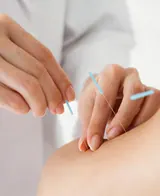
Treatment uses fine, sterile, single-use needles placed on the lower abdomen, lower back and legs, usually left in place for about 20 to 40 minutes. We reassess after a short course of visits.
Serious problems from acupuncture are rare. In prospective studies, about 9 in 100 patients had a minor reaction such as bleeding, soreness or redness at a needle site, and serious events occurred in about 1 in 10,000 patients.[13] Tell the practitioner first if you have a bleeding disorder, take blood thinners, or have a pacemaker (relevant to electroacupuncture).
Ayurvedic medicine for Male Infertility
The Ayurvedic view
Ayurveda describes male fertility under Vajikarana, the branch concerned with reproductive health, and traditionally links low semen quality to depleted shukra (the reproductive tissue), disturbed Vata and Pitta, stress and poor digestion. These are traditional categories, not biomedical diagnoses.
Therapies that may be used
Care is chosen for the individual and traditionally combines:
- Diet, sleep and daily routine intended to support vitality
- Stress-calming practices such as gentle yoga and breathing exercises
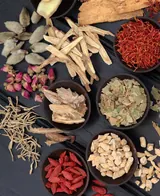
- Herbs traditionally used for fertility and vitality, such as ashwagandha (Withania somnifera), shatavari and gokshura, prescribed individually
- Warm oil massage
Panchakarma cleansing therapies are not appropriate during acute illness or in frailty, and are only considered once a physician has evaluated the cause of infertility.
What the research shows
The research on Ayurveda for male infertility is limited. Most of it concerns ashwagandha. A systematic review found only four clinical trials, with one randomized trial and the rest observational. They reported improved sperm concentration, volume and motility after 90 days, but the authors called the data too limited for robust conclusions and asked for larger randomized trials.[14] A broader review of 30 human studies of ashwagandha found 6 in male infertility and described the findings as promising, while also asking for properly designed trials.[15]
A pilot trial of 36 men with low sperm counts compared a polyherbal Ayurvedic-style formulation with placebo for 90 days and reported rises from baseline in sperm count, volume and motility in the treated men, with better hormone levels than the placebo group.[16] The trial was small, and the abstract does not say how much of the change was due to the formulation compared with placebo. We found no trials showing that Ayurvedic treatment raises pregnancy rates.
Herbal medicine for Male Infertility
Herbs and formulas that have been studied
Chinese herbal capsules, ashwagandha, Tribulus terrestris and polyherbal formulas have been studied in men with low semen quality.[14, 16, 17, 18]
What the research shows
The evidence is limited, and the results are mixed. A meta-analysis of 14 trials with 1,488 men found that Chinese herbal medicine combined with vitamins improved sperm concentration, motility and pregnancy rate more than vitamins E and C alone, with no increase in side effects. The authors called for longer, multicenter, double-blind trials.[17] That design cannot show whether the herbs themselves, rather than the extra treatment, caused the difference.
For Tribulus, a randomized trial of 30 men with unexplained infertility found no change in testosterone or semen parameters after three months, and concluded the herb was ineffective for idiopathic infertility.[18]
Safety and herb-drug interactions
Herbs are active substances and can interact with medicines. A review of herb-drug interactions describes bleeding with ginkgo and warfarin or aspirin, and reduced warfarin levels with ginseng.[19] A review of ashwagandha trials reported mostly mild side effects, such as sleepiness and stomach upset, and a rise in thyroxine levels in some studies, so people with thyroid disease or on thyroid medicine need review.[15]
In one study, about one fifth of Ayurvedic products bought online contained detectable lead, mercury or arsenic.[20] Herbs should come from tested sources and be prescribed individually. Tell us about all medicines and supplements, especially blood thinners, thyroid medicines, diabetes medicines or any testosterone or fertility medicines, and if you have liver or kidney disease.
Translating traditional medicine into modern biological language
The links drawn here are interpretation, not equivalence. Chinese medicine often describes male infertility in terms of kidney essence deficiency, with damp-heat or blood stasis in the lower body. Researchers studying infertility measure things that loosely parallel this picture: hormone levels, testicular function and oxidative stress.[3, 5]
Ayurveda's idea of depleted shukra and disturbed Vata and Pitta describes poor vitality alongside stress and poor general health. Researchers examine related factors, such as oxidative stress and hormone balance, in studies of ashwagandha.[14] No study has shown that a dosha or traditional pattern corresponds to a specific biological process.
How this care fits with your medical care
Integrative care for male infertility is complementary. Keep your physician, urologist or fertility specialist, and do not stop or change prescribed medicines or fertility treatment without talking to your prescriber. We do not diagnose the cause of infertility, so a medical evaluation of both partners, including a semen analysis, should come first.[1]
Please bring your diagnosis, semen analysis and hormone results, a full list of medicines and supplements, and details of any surgery, planned or past.
When to seek urgent medical care
Some symptoms need prompt medical assessment, because infertility evaluation can uncover a serious underlying condition.[1]
- Sudden, severe pain in a testicle, with or without nausea or vomiting
- A hard lump, or new swelling or heaviness in a testicle
- Fever with a red, swollen or painful scrotum
- Chest pain, shortness of breath or severe headache after starting a supplement or herb
- Low mood or hopelessness related to infertility, with thoughts of self-harm; the 988 Suicide and Crisis Lifeline (call or text 988) is available
If any of these occur, call 911 or go to the nearest emergency department.
Frequently asked questions
What is male infertility?
Male infertility is the inability of a man to help his partner conceive after at least a year of regular unprotected intercourse. A male factor is involved in about half of couples with infertility. Causes include problems with sperm production, hormones, blockages, lifestyle factors and age, and sometimes no cause is found. Both partners should be evaluated by a physician.
Can acupuncture help with male infertility?
The evidence is limited. A 2021 meta-analysis of 7 trials found acupuncture alone was not clearly better than sham acupuncture for sperm concentration, motility or volume, and other reviews found mostly low-quality studies. No study has shown that acupuncture raises pregnancy or live birth rates. It is used alongside medical care, not in place of it.
Does Ayurvedic or herbal medicine work for male infertility?
The evidence is limited. Ashwagandha has been studied most, with promising but small and mostly uncontrolled studies. A meta-analysis found Chinese herbs plus vitamins improved semen measures and pregnancy rate more than vitamins alone, though the authors called for longer, better-designed trials. A Tribulus trial found no benefit. Herbs can interact with medicines and should be prescribed individually.
Can I skip fertility treatment or stop my medicines if I use acupuncture or herbs?
No. Acupuncture, Ayurveda and herbal medicine are complementary care. Do not stop or change prescribed medicines or delay fertility evaluation or treatment without talking to your physician. Because evaluation can uncover serious conditions, a medical work-up should come first.
How soon might I notice a change with acupuncture?
It differs from person to person and no result can be promised. Sperm take about three months to develop, so any change in a semen analysis would not be expected right away. We reassess after a short course of visits and ask that you keep working with your fertility physician.
Does insurance cover acupuncture for male infertility?
It may. Netra Integrative Health Clinic is in-network with Blue Cross Blue Shield, Cigna and UnitedHealthcare. Other plans may be covered through out-of-network benefits, and we offer a free benefits check. HSA and FSA cards and CareCredit are also accepted. Call (908) 402-7301 to ask about your plan.
References
- Leslie SW, Soon-Sutton TL, Khan MAB. Male Infertility. StatPearls [Internet]. 2026. PMID 32965929. StatPearls chapter on male infertility covering definition, prevalence, male contribution, causes, evaluation and the finding of serious underlying disease in up to 6 percent of men.
- Agarwal A, Baskaran S, Parekh N, et al. Male infertility. Lancet. 2021;397(10271):319-333. PMID 33308486. Lancet seminar on male infertility covering prevalence, causes, evaluation by semen analysis and the role of assisted reproductive techniques.
- Eisenberg ML, Esteves SC, Lamb DJ, et al. Male infertility. Nat Rev Dis Primers. 2023;9(1):49. PMID 37709866. Nature Reviews Disease Primers overview of male infertility covering causes, lifestyle factors, evaluation, and lifestyle, medical and surgical treatment.
- Brannigan RE, Hermanson L, Kaczmarek J, et al. Updates to Male Infertility: AUA/ASRM Guideline (2024). J Urol. 2024;212(6):789-799. PMID 39145501. 2024 AUA/ASRM guideline amendment on evaluation and management of the male partner in an infertile couple.
- de Ligny W, Smits RM, Mackenzie-Proctor R, et al. Antioxidants for male subfertility. Cochrane Database Syst Rev. 2022;5(5):CD007411. PMID 35506389. Cochrane review of 90 trials of antioxidants for male subfertility, with very low-certainty evidence of higher live birth that did not hold after removing high-risk-of-bias studies.
- Service CA, Puri D, Al Azzawi S, et al. The impact of obesity and metabolic health on male fertility: a systematic review. Fertil Steril. 2023;120(6):1098-1111. PMID 37839720. Systematic review finding that obesity, diabetes and metabolic syndrome harm male fertility and that exercise generally improves fertility markers.
- Boedt T, Vanhove AC, Vercoe MA, et al. Preconception lifestyle advice for people with infertility. Cochrane Database Syst Rev. 2021;4(4):CD008189. PMID 33914901. Cochrane review of 7 trials of preconception lifestyle advice in infertility, finding low-quality evidence of little to no difference in live births.
- Jia W, Wang C, Yin Y. Acupuncture for oligospermia and asthenozoospermia: A systematic review and meta-analysis. Medicine (Baltimore). 2021;100(48):e27816. PMID 35049183. Meta-analysis of 7 trials (527 men) finding acupuncture not clearly better than sham for sperm motility, concentration or volume, with high risk of bias.
- Jerng UM, Jo JY, Lee S, et al. The effectiveness and safety of acupuncture for poor semen quality in infertile males: a systematic review and meta-analysis. Asian J Androl. 2014;16(6):884-91. PMID 25038176. Meta-analysis of 4 trials finding improved sperm concentration and motility with acupuncture but no pregnancy-rate difference, and insufficient evidence.
- You F, Ruan L, Zeng L, et al. Efficacy and safety of acupuncture for the treatment of oligoasthenozoospermia: A systematic review. Andrologia. 2020;52(1):e13415. PMID 31670423. Systematic review of 12 trials (1,088 men) of acupuncture for oligoasthenozoospermia, reporting improved semen quality with low study quality and inadequate evidence.
- Chen Z, Hong Z, Wang S, et al. Effectiveness of non-pharmaceutical intervention on sperm quality: a systematic review and network meta-analysis. Aging (Albany NY). 2023;15(10):4253-4268. PMID 37199654. Network meta-analysis of non-drug interventions for sperm quality in which acupuncture improved sperm concentration and motility versus placebo.
- Budihastuti UR, Murti B, Prakosa T, et al. Effectiveness of electroacupuncture in improving sperm motility and morphology in men with varicocele. Afr J Reprod Health. 2026;30(1):37-43. PMID 41537313. Single-blind trial of 14 men with varicocele finding better sperm motility and morphology when electroacupuncture was added to herbal treatment.
- Bäumler P, Zhang W, Stübinger T, et al. Acupuncture-related adverse events: systematic review and meta-analyses of prospective clinical studies. BMJ Open. 2021;11(9):e045961. PMID 34489268. Systematic review of 21 prospective studies finding minor acupuncture reactions in about 9 percent of patients and serious events in about 1 per 10,000.
- Durg S, Shivaram SB, Bavage S. Withania somnifera (Indian ginseng) in male infertility: An evidence-based systematic review and meta-analysis. Phytomedicine. 2018;50:247-256. PMID 30466985. Systematic review of 4 ashwagandha studies in infertile men reporting improved semen parameters, with too little data for robust conclusions.
- Tandon N, Yadav SS. Safety and clinical effectiveness of Withania Somnifera (Linn.) Dunal root in human ailments. J Ethnopharmacol. 2020;255:112768. PMID 32201301. Systematic review of ashwagandha safety and efficacy across 30 human studies including 6 in male infertility, reporting mild adverse events and a possible rise in thyroxine.
- Hussain SA, Hameed A, Nasir F, et al. Evaluation of the Spermatogenic Activity of Polyherbal Formulation in Oligospermic Males. Biomed Res Int. 2018;2018:2070895. PMID 30148161. Pilot randomized trial of 36 oligospermic men comparing a polyherbal formulation with placebo, reporting improved sperm count, volume and motility.
- Wang M, Wang Q, Du Y, et al. Vitamins combined with traditional Chinese medicine for male infertility: A systematic review and meta-analysis. Andrology. 2020;8(5):1038-1050. PMID 32170803. Meta-analysis of 14 trials (1,488 men) finding Chinese herbal medicine plus vitamins improved semen measures and pregnancy rate versus vitamins alone.
- Roaiah MF, Elkhayat YI, Abd El Salam MA, et al. Prospective Analysis on the Effect of Botanical Medicine (Tribulus terrestris) on Serum Testosterone Level and Semen Parameters in Males with Unexplained Infertility. J Diet Suppl. 2017;14(1):25-31. PMID 27337519. Randomized trial of 30 men with unexplained infertility finding Tribulus terrestris did not change testosterone or semen parameters.
- Hu Z, Yang X, Ho PC, et al. Herb-drug interactions: a literature review. Drugs. 2005;65(9):1239-82. PMID 15916450. Literature review of herb-drug interactions including ginkgo with warfarin or aspirin and ginseng with warfarin.
- Saper RB, Phillips RS, Sehgal A, et al. Lead, mercury, and arsenic in US- and Indian-manufactured Ayurvedic medicines sold via the Internet. JAMA. 2008;300(8):915-23. PMID 18728265. JAMA study finding detectable lead, mercury or arsenic in about one fifth of Ayurvedic medicines purchased over the Internet.
This page is for general education and is not medical advice. Acupuncture, Ayurvedic medicine and herbal medicine are complementary therapies; they do not replace diagnosis or treatment by your physician. Do not stop or change prescribed treatment without talking to your prescriber. In an emergency call 911.