














- What it is: A rare inflammatory skin disease, also called pityriasis lichenoides et varioliformis acuta (PLEVA), with crops of red-brown papules that can blister and ulcerate.
- Common symptoms: Many red-brown spots at different stages, some with a mica-like scale, sometimes crusting or ulcers, with itching or burning.
- Conventional care: Dermatologist-led treatment such as topical steroids, narrowband UVB light, oral erythromycin or methotrexate, and observation, since it often relapses and remits.
- How integrative care fits: Supportive care for itch, stress and sleep after the diagnosis is made and treatment is under way, with your dermatologist's knowledge.
- Evidence at a glance: None found for the disease itself. Evidence for itch and stress in other conditions is limited and cannot be assumed to apply here.
What is Mucha-Habermann Disease?
Mucha-Habermann disease, also called pityriasis lichenoides et varioliformis acuta (PLEVA), is an uncommon inflammatory skin rash with red-brown papules in various stages and a mica-like scale on older lesions.[1] It belongs to a group called pityriasis lichenoides, which also includes a milder chronic form, and a rare severe variant called febrile ulceronecrotic Mucha-Habermann disease.[2]
Common symptoms
The rash usually appears as many small papules that can turn into blisters, pustules and ulcers. It favors the trunk and the upper parts of the arms and legs, and the spots can itch or burn.[1] The rash tends to relapse and remit, sometimes for years.[1]
Healed lesions can leave scars or color changes. The rare febrile ulceronecrotic form begins suddenly with high fever and ulcers that join together, and it can involve other organs.[3]
Causes and risk factors
The cause is not known. Proposed triggers include infections, medicines and vaccines, and some researchers view the disease as a reaction of the immune system or a benign disorder of T cells.[4, 5] It is often grouped among rashes that look like a response to a viral infection, although no virus can be found in the skin.[6] It occurs in children and adults.[4]
How it is diagnosed and treated conventionally
Diagnosis is made by a physician from the look of the rash and usually a skin biopsy, because several other conditions can look similar.[2] Because rare cases are linked with a type of lymphoma of the skin, long-term follow-up with a dermatologist is advised.[4, 5]
No standard treatment exists, and most studies are small and uncontrolled. Reviews of the literature point to narrowband UVB phototherapy as a first choice, with oral erythromycin, topical corticosteroids and low-dose methotrexate as other options.[7, 8] The disease can also clear by itself, which makes it hard to tell what a treatment did.[7] The severe febrile form is treated with oral corticosteroids, immunosuppressive drugs such as methotrexate, and hospital-level supportive care.[3]
Why Mucha-Habermann Disease calls for a whole-person approach
Mucha-Habermann disease is a skin disease driven by the immune system, and its cause is not fully understood. Skin symptoms such as itch, sleep loss and worry can affect daily life even when the medical treatment is working.
The sections below describe factors that may matter alongside the rash. None of them has been studied specifically in this disease, so they are general points about skin and the immune system.
Immune activity in the skin
Treatments that calm the immune system are the mainstay of care for the severe form, which suggests immune activity is central.[3] Whether any complementary therapy can influence this has not been tested.
Stress and the skin
Psychological stress is linked to flares and worse symptoms in several inflammatory skin diseases, through effects on the nervous, hormone and immune systems. Skin disease can in turn add to stress, forming a cycle.[9] This was reviewed for other skin conditions such as psoriasis and eczema, not for Mucha-Habermann disease.
Itch and sleep
Itch and burning are common symptoms.[1] Itch can disturb sleep, and sleep problems are one of the symptoms that supportive care often targets.[10]
Medicine side effects and infection risk
Methotrexate and corticosteroids lower immune defenses, and ulcerated skin can become infected.[3, 7] Any complementary care needs to take your treatment and any open skin into account.
Acupuncture as supportive care in Mucha-Habermann Disease
What the research shows
No clinical trials of acupuncture for Mucha-Habermann disease or any form of pityriasis lichenoides were found in PubMed. Acupuncture cannot be said to treat this disease.
Some research exists on itch from other causes. A meta-analysis of three randomized trials found acupuncture relieved itch better than sham acupuncture or no treatment, and its authors called for more studies.[11] A review of 24 studies of acupuncture in skin conditions found that most reported better outcomes than comparison groups, with a call for better designed studies.[12] A 2024 meta-analysis of 8 trials in atopic dermatitis found less itch and better quality of life, but the trials were few and of limited quality.[13] These findings concern other skin conditions and cannot be assumed to apply to Mucha-Habermann disease.
For sleep, a systematic review of 24 trials of acupuncture for insomnia included a meta-analysis of 15 trials that found better insomnia scores than with medication, with a clear difference only from about three weeks of treatment. The studies varied a lot in results.[10]
How acupuncture may work
How acupuncture might affect itch is not established. The reviews we found do not explain a mechanism, and we are not aware of any research on this for Mucha-Habermann disease.
What treatment involves
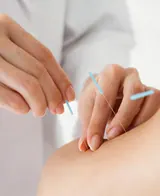
Sessions use fine, sterile, single-use needles, usually left in for about 20 to 40 minutes, and a short course of visits is followed by reassessment. Needles are placed away from broken, ulcerated or infected skin.
In prospective studies, about 9 in 100 patients had a minor reaction such as soreness or bleeding at a needle site, and serious events occurred in about 1 in 10,000 patients.[14] Tell the practitioner first if you take immunosuppressive medicines such as methotrexate or corticosteroids, have open or infected skin, have a bleeding disorder, take blood thinners, or are pregnant.
Ayurvedic medicine as supportive care in Mucha-Habermann Disease
The Ayurvedic view
Ayurveda does not have a classical name for pityriasis lichenoides. Skin eruptions with itching and discharge are traditionally grouped under Kushta or related skin disorders, and are described as involving imbalance of Pitta and Kapha with disturbed blood tissue. This is a traditional framework, not a medical diagnosis.
Therapies that may be used
Care is individual and may include diet and daily routine advice, calming practices for stress and sleep, and gentle skin care with herbal preparations chosen by the practitioner. Transdermal medication therapy, an herbal preparation applied to the skin, would be avoided on broken or ulcerated skin.
Panchakarma cleansing procedures are not appropriate during acute illness, with widespread ulcerated skin, during pregnancy, or with frailty, and are not suitable for the febrile ulceronecrotic form.
What the research shows
No studies of Ayurvedic treatment for Mucha-Habermann disease or pityriasis lichenoides were found, and the reviews of treatments for this disease do not list any.[7, 8] The evidence is therefore none. A search for Ayurvedic approaches to skin disease also found no systematic review we could rely on for this condition.
One safety study found detectable lead, mercury or arsenic in about one fifth of Ayurvedic medicines bought over the internet, and more often in products that combine herbs with metals or minerals.[15]
Herbal medicine as supportive care in Mucha-Habermann Disease
Herbs and formulas that have been studied
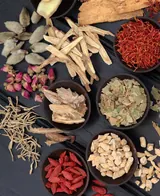
No herbs or formulas have been studied for Mucha-Habermann disease. Research on Chinese herbal medicine exists for chronic itch from various causes, and traditional practice would match formulas to the individual's pattern.
What the research shows
A systematic review of 24 randomized trials of Chinese herbal medicine for chronic itch found less itch and better quality-of-life scores than conventional treatment. Most of the evidence was low to moderate quality, and the authors said high-quality studies are needed.[16] It covered itch from many causes, not this disease, and it cannot show benefit for Mucha-Habermann disease.
Safety and herb-drug interactions
Herbs can interact with prescribed medicines. A review of herb-drug interactions describes reports of altered drug levels, including with ciclosporin and tacrolimus, and of bleeding with warfarin.[17] Several herbs have been reported to affect warfarin.[18, 19] If you take methotrexate, corticosteroids or other immunosuppressants, your dermatologist should review any herb before you start it.
Herbal and dietary supplements are a recognized cause of liver injury, and methotrexate also affects the liver, so liver disease needs careful discussion.[20] Tell us about pregnancy, breastfeeding, and kidney or liver disease. Herbs should come from tested sources, and any herb is prescribed individually by a qualified practitioner.
Translating traditional medicine into modern biological language
This section is interpretation, not equivalence. Chinese medicine would typically describe an itchy, red, blistering rash as heat or damp-heat in the blood, and Ayurveda as aggravated Pitta in the skin and blood. These ideas roughly parallel what researchers study as inflammation of the skin, immune activation and the nervous system pathways of itch.[9]
No research has tested whether these traditional patterns correspond to anything in Mucha-Habermann disease, and the page does not claim that they do.
How this care fits with your medical care
Mucha-Habermann disease needs a physician's diagnosis and treatment. For a condition like this, we ask that you are under a physician's care for it and that your treating team knows you are receiving complementary care. Our role is supportive: helping with itch, stress and sleep. We do not diagnose or manage the disease itself, and we do not prescribe or change prescription drugs.
Do not stop or change your prescribed treatment, including phototherapy and medicines. Please bring your diagnosis, biopsy and test results, a list of all medicines and supplements, and the name of your dermatologist.
When to seek urgent medical care
Mucha-Habermann disease can become severe, and the febrile ulceronecrotic form can involve other organs.[3]
- Sudden high fever with a rapidly spreading rash
- Skin lesions that join into large painful ulcers
- Signs of skin infection, such as spreading redness, warmth, pus or increasing pain
- Shortness of breath, chest pain, confusion, severe belly pain or black stools
- Fever or new symptoms while taking methotrexate or other immune-lowering medicine
If you have any of these, call 911 or go to the nearest emergency department.
Frequently asked questions
What is Mucha-Habermann disease?
Mucha-Habermann disease, also called PLEVA, is a rare inflammatory skin disease. It causes many red-brown papules in different stages that can blister, crust and ulcerate, with itching or burning. It often relapses and remits, and a rare severe form causes fever. A physician, usually a dermatologist, diagnoses it, often with a skin biopsy.
Can acupuncture help people with Mucha-Habermann disease?
No studies have tested acupuncture for this disease, so it cannot be said to treat it. Research in other skin conditions suggests acupuncture may ease itch, though the studies are small and of limited quality. We offer it only as supportive care for symptoms such as itch, stress and sleep, alongside your dermatologist’s treatment.
Is there Ayurvedic or herbal treatment for Mucha-Habermann disease?
No studies of Ayurvedic or herbal treatment for this disease were found. Chinese herbal medicine has been studied for chronic itch from other causes, with low to moderate quality evidence. Herbs can interact with methotrexate, corticosteroids and other medicines, so they should only be used with your treating physician’s knowledge.
Can I stop my prescribed treatment if I use complementary care?
No. Complementary care does not replace your dermatologist’s treatment. Do not stop or change phototherapy or any medicine without talking to your prescriber. Fever, spreading ulcers or signs of infection need urgent medical care.
What should I bring to the first visit?
Bring your diagnosis and biopsy report, a list of all medicines and supplements including methotrexate or steroids if you take them, and your dermatologist’s name. Let us know about any open or infected skin, since needles are not placed there.
Does insurance cover acupuncture for Mucha-Habermann disease?
It may. Netra Integrative Health Clinic is in-network with Blue Cross Blue Shield, Cigna and UnitedHealthcare. Other plans may be covered through out-of-network benefits, and we offer a free benefits check. HSA and FSA cards and CareCredit are also accepted. Call (908) 402-7301 to ask about your plan.
References
- Teklehaimanot F, Gade A, Rubenstein R. Pityriasis Lichenoides Et Varioliformis Acuta (PLEVA). StatPearls [Internet]. 2023. PMID 36256784. StatPearls chapter on PLEVA (Mucha-Habermann disease) describing the rash, favored sites, itch or burning, and its relapsing and remitting course.
- Bowers S, Warshaw EM. Pityriasis lichenoides and its subtypes. J Am Acad Dermatol. 2006;55(4):557-72; quiz 573-6. PMID 17010734. Dermatology review of pityriasis lichenoides and its subtypes, including the febrile ulceronecrotic form and the chronic form.
- Moutinho-Pereira S, Beires F, Santos JD, et al. Febrile ulceronecrotic Mucha-Habermann disease - a case and treatment review. Dermatol Online J. 2024;30(2). PMID 38959922. Review and case report on febrile ulceronecrotic Mucha-Habermann disease, a severe variant treated with corticosteroids, methotrexate and supportive care.
- Geller L, Antonov NK, Lauren CT, et al. Pityriasis Lichenoides in Childhood: Review of Clinical Presentation and Treatment Options. Pediatr Dermatol. 2015;32(5):579-92. PMID 25816855. Review of childhood pityriasis lichenoides covering proposed causes, treatment options and generally benign course, with advice on long-term follow-up.
- Lam J, Pope E. Pediatric pityriasis lichenoides and cutaneous T-cell lymphoma. Curr Opin Pediatr. 2007;19(4):441-5. PMID 17630609. Review describing pityriasis lichenoides as a benign lymphoproliferative spectrum and its relationship with cutaneous T-cell lymphoma.
- Fölster-Holst R, Zawar V, Chuh A. [Paraviral exanthems]. Hautarzt. 2017;68(3):211-216. PMID 28194482. Review of paraviral exanthems, rashes thought to reflect an immune response to infection, including pityriasis lichenoides.
- Bellinato F, Maurelli M, Gisondi P, et al. A systematic review of treatments for pityriasis lichenoides. J Eur Acad Dermatol Venereol. 2019;33(11):2039-2049. PMID 31318465. Systematic review of treatments for pityriasis lichenoides finding mainly small uncontrolled studies, with narrowband UVB, erythromycin and methotrexate most studied.
- Jung F, Sibbald C, Bohdanowicz M, et al. Systematic review of the efficacies and adverse effects of treatments for pityriasis lichenoides. Br J Dermatol. 2020;183(6):1026-1032. PMID 32112390. Systematic review of 27 articles on pityriasis lichenoides treatments finding almost entirely uncontrolled studies, with phototherapy giving the highest remission rates.
- Zhang H, Wang M, Zhao X, et al. Role of stress in skin diseases: A neuroendocrine-immune interaction view. Brain Behav Immun. 2024;116:286-302. PMID 38128623. 2024 review of how psychological stress affects skin immune function and worsens inflammatory skin diseases.
- Kim SA, Lee SH, Kim JH, et al. Efficacy of Acupuncture for Insomnia: A Systematic Review and Meta-Analysis. Am J Chin Med. 2021;49(5):1135-1150. PMID 34049475. Systematic review of 24 trials of acupuncture for insomnia; a meta-analysis of 15 trials found better sleep scores than medication after about three weeks, with high heterogeneity.
- Yu C, Zhang P, Lv ZT, et al. Efficacy of Acupuncture in Itch: A Systematic Review and Meta-Analysis of Clinical Randomized Controlled Trials. Evid Based Complement Alternat Med. 2015;2015:208690. PMID 26064156. Meta-analysis of three randomized trials finding acupuncture reduced itch compared with sham or no treatment, with a call for more studies.
- Ma C, Sivamani RK. Acupuncture as a Treatment Modality in Dermatology: A Systematic Review. J Altern Complement Med. 2015;21(9):520-9. PMID 26115180. Systematic review of 24 studies of acupuncture in dermatology, most showing improved outcomes, with a call for better-designed studies.
- Liang S, Huang KY, Zhang L, et al. Acupuncture for atopic dermatitis: a systematic review and meta-analysis. BMJ Open. 2024;14(12):e084788. PMID 39638592. 2024 meta-analysis of 8 trials of acupuncture for atopic dermatitis finding lower itch and symptom scores, limited by few and low-quality studies.
- Bäumler P, Zhang W, Stübinger T, et al. Acupuncture-related adverse events: systematic review and meta-analyses of prospective clinical studies. BMJ Open. 2021;11(9):e045961. PMID 34489268. Systematic review of 21 prospective studies finding minor acupuncture reactions in about 9 percent of patients and serious events in about 1 per 10,000.
- Saper RB, Phillips RS, Sehgal A, et al. Lead, mercury, and arsenic in US- and Indian-manufactured Ayurvedic medicines sold via the Internet. JAMA. 2008;300(8):915-23. PMID 18728265. JAMA study finding detectable lead, mercury or arsenic in about one fifth of Ayurvedic medicines purchased over the internet.
- Wang J, Chen Y, Yang X, et al. Efficacy and safety of Chinese herbal medicine in the treatment of chronic pruritus: A systematic review and meta-analysis of randomized controlled trials. Front Pharmacol. 2022;13:1029949. PMID 36712693. Systematic review of 24 trials of Chinese herbal medicine for chronic itch, finding benefit mostly in low to moderate quality evidence.
- Hu Z, Yang X, Ho PC, et al. Herb-drug interactions: a literature review. Drugs. 2005;65(9):1239-82. PMID 15916450. Literature review of herb-drug interactions, including effects on ciclosporin, tacrolimus and warfarin.
- Tan CSS, Lee SWH. Warfarin and food, herbal or dietary supplement interactions: A systematic review. Br J Clin Pharmacol. 2021;87(2):352-374. PMID 32478963. Systematic review of food, herb and supplement interactions with warfarin, including several herbs that raise bleeding risk.
- Milić N, Milosević N, Golocorbin Kon S, et al. Warfarin interactions with medicinal herbs. Nat Prod Commun. 2014;9(8):1211-6. PMID 25233607. Review of reported warfarin-herb interactions with bleeding case reports.
- Navarro VJ, Khan I, Björnsson E, et al. Liver injury from herbal and dietary supplements. Hepatology. 2017;65(1):363-373. PMID 27677775. Hepatology review of liver injury from herbal and dietary supplements.
This page is for general education and is not medical advice. Acupuncture, Ayurvedic medicine and herbal medicine are complementary therapies; they do not replace diagnosis or treatment by your physician. Do not stop or change prescribed treatment without talking to your prescriber. In an emergency call 911.