

















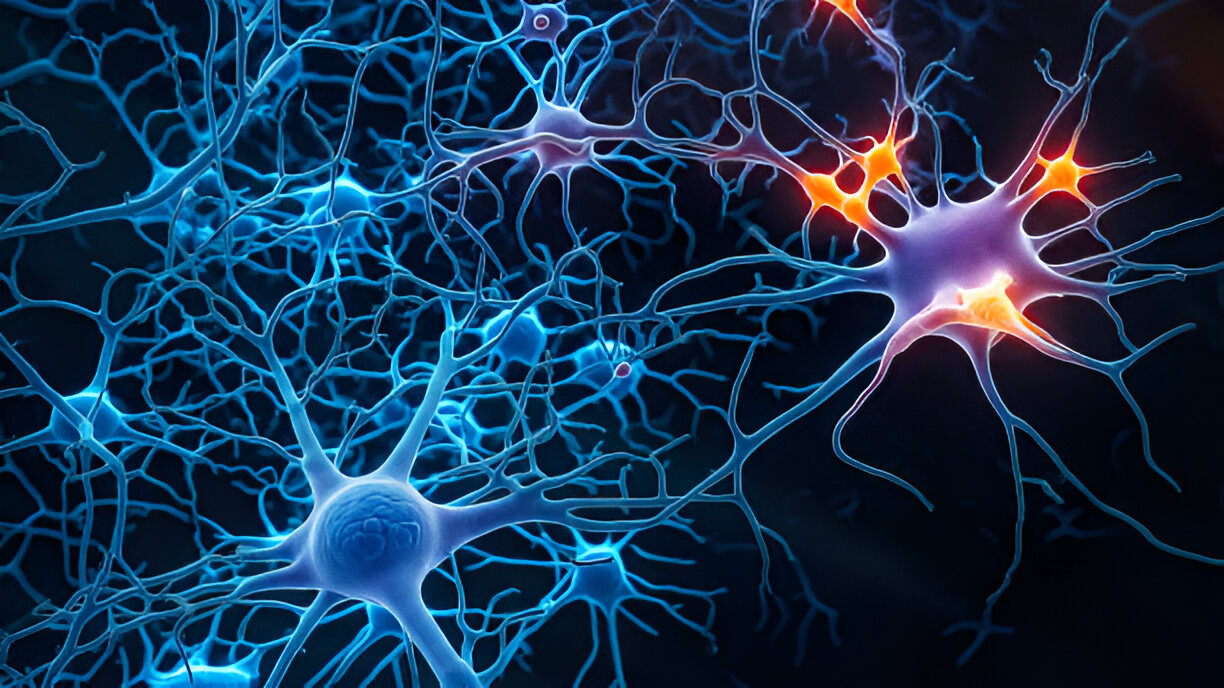
- What it is: A chronic autoimmune disease of the central nervous system in which inflammation damages myelin, the insulation around nerve fibers.
- Common symptoms: Fatigue, numbness or weakness, vision problems, balance and walking trouble, stiffness, bladder and bowel problems, pain and thinking difficulties.
- Conventional care: Disease-modifying medicines, steroids for relapses, rehabilitation, and medicines for symptoms such as spasticity, pain, bladder problems and depression.
- How integrative care fits: Supportive care for symptoms such as fatigue, pain, sleep and stress, always alongside your neurologist's treatment and with your team's knowledge.
- Evidence at a glance: Small and mostly low-quality trials suggest acupuncture may ease fatigue, and Chinese herbal trials are limited by quality. No Ayurvedic clinical trials in MS were found.
What is Multiple Sclerosis?
Multiple sclerosis (MS) is a chronic autoimmune disease of the central nervous system marked by inflammation, loss of myelin (demyelination) and nerve cell damage.[1] It usually begins in young adults, and the symptoms depend on where the damage occurs.[1, 2]
MS has several courses. Relapsing-remitting MS, with attacks followed by recovery, is the most common at the start. Primary progressive MS worsens gradually from the beginning, and secondary progressive MS follows an earlier relapsing phase.[1]
Common symptoms
Symptoms vary from person to person and over time. Common ones include:[1]
- Fatigue, one of the most common and disabling symptoms
- Numbness, tingling or weakness in the limbs
- Vision problems, including optic neuritis
- Balance, coordination and walking difficulty
- Muscle stiffness or spasms (spasticity)
- Bladder and bowel problems
- Pain, sleep problems, low mood and thinking or memory difficulty
Relapses often recover partly or fully over weeks or months, but incomplete recovery can build up over time as disability.[1]
Causes and risk factors
The exact cause is unknown. MS is thought to arise from an interaction between genes and environment.[2] Low vitamin D levels, cigarette smoking and obesity are among the recognized environmental factors.[3] It is more common in women than in men.
How it is diagnosed and treated conventionally
Diagnosis relies on the history, a neurological examination and MRI, sometimes with spinal fluid testing and other tests to rule out look-alike conditions. Typically, evidence of damage in more than one place and at more than one time is required.[1, 2]
Early treatment with disease-modifying medicines aims to reduce relapses and MRI activity and to limit permanent disability. Care also includes steroids for relapses, rehabilitation, and treatment of symptoms such as bladder trouble, depression, cognitive difficulty, fatigue and sleep problems.[1, 3]
Why Multiple Sclerosis calls for a whole-person approach
MS is an immune disease treated by neurologists, and no integrative therapy has been shown to slow it. At the same time, symptoms such as fatigue, pain, poor sleep and stress affect daily life in ways that disease-modifying medicines do not fully address. A comprehensive management program that includes lifestyle, wellness and management of other health problems is advised for everyone with MS.[3]
The factors below are where supportive care has most often been studied. Much of the research is early or of low quality.
Fatigue
More than 65 percent of people with MS experience fatigue.[4] It has many causes, including the disease itself, poor sleep, mood and some medicines, so more than one approach is often needed.
Sleep, mood and stress
Sleep disturbance is a recognized part of MS and is addressed as part of care.[1] In one trial in relapsing-remitting MS, real acupuncture was associated with better sleep and lower scores for depression and some other psychological symptoms than sham needling.[5]
Pain and stiffness
Pain and muscle stiffness are common. In one small trial, electroacupuncture was associated with less pain and depression and better quality of life than sham treatment.[6]
Medicines and their side effects
Disease-modifying medicines and steroids have side effects and can affect immune defenses, which is why herbs and supplements must be reviewed by your treating team.[3]
Acupuncture as supportive care in Multiple Sclerosis
What the research shows
Acupuncture may help with some MS symptoms, but the evidence is limited by small trials and a high risk of bias. A 2024 meta-analysis of six studies (four randomized trials) found less fatigue and better quality of life with acupuncture, and the authors noted the risk of bias and need for larger studies.[7] A 2025 meta-analysis of 11 trials with 574 patients found better disability scores and quality of life when acupuncture was added to medicine, and rated the evidence generally low because the studies differed so much. Acupuncture-related adverse events were rare and mild.[8]
A 2026 network meta-analysis of 23 trials with 1,384 patients compared acupoint stimulation methods for fatigue, disability and daily activity. It suggested possible benefit with standard treatment but called the findings exploratory because of methodological limitations.[9]
Individual trials point in different directions. In 60 people with relapsing-remitting MS, adding 10 acupuncture sessions over 4 weeks to usual treatment reduced fatigue more than usual treatment alone, although there was no sham group.[4] A 12-week sham-controlled trial of 62 people reported better cognitive scores, less fatigue and better sleep with real acupuncture.[5] A trial of 31 patients with sham electroacupuncture reported improved quality of life, less pain and less depression.[6]
Other trials were less encouraging. A sham-controlled trial of 66 people found no measurable effect of 4 weeks of acupuncture on blood inflammatory markers or quality of life.[10] In a 14-person trial in secondary progressive MS, a minimal acupuncture comparison group improved more on one psychological score than the Chinese acupuncture group, and the authors called the results inconclusive.[11]
How acupuncture may work
The mechanism in MS is not established. In a mouse model of MS, electroacupuncture reduced demyelination and inflammatory cell infiltration, an animal finding that may not translate to people.[12] Whether effects on sleep, stress or pain play a part in the symptom benefits seen in some trials has not been tested.
What treatment involves
Treatment uses fine, sterile, single-use needles, usually left in place for about 20 to 40 minutes. Trials in MS gave 10 sessions over 4 weeks in one case and twice-weekly sessions for 12 weeks in another, and we reassess after a short course of visits.[4, 5]
Serious problems are rare. In prospective studies, about 9 in 100 patients had a minor reaction such as brief bleeding, soreness or redness at a needle site, and serious events occurred in about 1 in 10,000 patients.[13] Tell your practitioner first if you have a bleeding disorder, take blood thinners, are pregnant, have a pacemaker (relevant to electroacupuncture), or take medicines that lower your immune defenses. Heat sensitivity is common in MS, so tell us if warmth, as in moxibustion, worsens your symptoms.
Ayurvedic medicine as supportive care in Multiple Sclerosis
The Ayurvedic view
Ayurveda has no classical condition that corresponds exactly to MS. In this traditional framework, numbness, weakness, stiffness and tremor are generally described as disorders of Vata, the principle said to govern movement and the nervous system, sometimes with other doshas involved. This is a traditional way to organize care, not a biomedical explanation.
Therapies that may be used
Care is chosen for the individual and, once your neurologist confirms your condition is stable, may include:
- Diet and daily routine intended to calm Vata, such as regular meals, rest and steady sleep hours
- Gentle oil massage for comfort and relaxation
- Breathing, relaxation and gentle movement practices; yoga has been studied for MS symptoms[14]
- Herbs prescribed individually by a qualified practitioner, after review of your medicines, such as turmeric, which has been tested in MS[15]
Panchakarma, the traditional cleansing program, is not appropriate during pregnancy, acute illness or a relapse, in frailty, or while on strong immune-suppressing treatment unless your physician agrees. Heat-based therapies need extra caution because heat can worsen MS symptoms. We do not use Panchakarma to treat MS.
What the research shows
No clinical trials of Ayurvedic medicine as a system were found for MS. A meta-analysis of seven randomized trials of yoga in MS found short-term benefit for fatigue and mood compared with usual care, but the results were not robust against bias, and the authors made no recommendation for routine use.[14]
A review of curcumin, the main compound of turmeric, in autoimmune disease found only two MS trials, at least one of which reported improvement in clinical outcomes, and called for larger trials. The number of patients was too small for a pooled analysis.[15]
Herbal medicine as supportive care in Multiple Sclerosis
Herbs and formulas that have been studied
Chinese herbal formulas have been tested alongside conventional treatment in MS. The herbs most often used in relapse trials included Angelica sinensis (dang gui), licorice, red peony and prepared rehmannia.[16] Transdermal medication therapy, meaning herbal preparations applied to the skin, may be discussed where relevant, but no study has tested it in MS.
What the research shows
The evidence is limited. A 2025 meta-analysis of 28 randomized trials with 1,971 people found that Chinese herbal medicine added to conventional treatment was associated with lower disability scores, fewer relapses and less fatigue, but the methodological quality of the trials was suboptimal. No serious adverse effects were reported.[17] An earlier review of 20 trials in acute relapse reached a similar conclusion and judged the evidence insufficient to recommend routine use because of poor quality and variation between trials.[16]
All of this research tested herbs added to conventional treatment, and none of it shows that herbs can replace disease-modifying medicine.
Safety and herb-drug interactions
Herbs are active substances and can interact with medicines. Reports describe St John's wort lowering blood levels of ciclosporin and tacrolimus, and ginkgo or danshen increasing bleeding risk with blood thinners.[18] Herbs claimed to act on the immune system should not be combined with disease-modifying medicines without your neurologist's agreement.
About one fifth of Ayurvedic products bought online contained detectable lead, mercury or arsenic in one study.[19] Herbal and dietary supplements are a recognized cause of liver injury, which matters because some MS medicines also affect the liver.[20] Tell us if you are pregnant or breastfeeding, have liver or kidney disease, or have surgery planned.
Translating traditional medicine into modern biological language
This section is interpretation, not equivalence. Chinese medicine often describes MS-type weakness and numbness as deficiency of kidney, liver or spleen qi, or as blocked flow of qi and blood in the channels. Researchers instead measure inflammatory signaling, myelin damage and nervous system function, in part in animal models.[12]
Ayurveda's aggravated Vata describes movement, sensation and nerve symptoms. No study has shown that a dosha corresponds to a specific biological process, and no trial has tested these ideas in MS.
How this care fits with your medical care
MS needs ongoing care from a neurologist. For a condition like this, we ask that you are under a physician's care for it and that your treating team knows you are receiving complementary care. We do not diagnose MS, interpret MRI results, adjust medicines or replace your physicians.
Do not stop or change disease-modifying medicines, steroids or symptom medicines because of anything on this page. Please bring your diagnosis, recent MRI reports, a full list of medicines and supplements, and your neurologist's contact details. Tell us if you have recently had a relapse or an infusion.
When to seek urgent medical care
New or worsening neurological symptoms can be a relapse that needs prompt medical assessment.[1]
- Sudden vision loss or pain with eye movement
- New weakness, numbness or loss of balance that comes on over hours or days
- New trouble passing urine or controlling the bowels
- Trouble speaking or swallowing, or sudden confusion
- Fever, burning with urination or other signs of infection, which can worsen MS symptoms
- Thoughts of harming yourself, in which case call or text 988
If any of these are severe or sudden, call 911 or go to the nearest emergency department.
Frequently asked questions
What is multiple sclerosis?
Multiple sclerosis is a long-term autoimmune disease in which the immune system damages myelin, the coating that insulates nerve fibers in the brain, optic nerves and spinal cord. It can cause fatigue, numbness, weakness, vision and balance problems, and bladder trouble. Many people have relapses followed by recovery. It is managed by a neurologist.
Can acupuncture help people with multiple sclerosis?
It may help some symptoms, mainly fatigue and quality of life, but the evidence is limited. Meta-analyses of small trials found benefit and noted high risk of bias, and one sham-controlled trial found no effect on quality of life. Acupuncture does not treat the underlying disease and is used only alongside your neurologist’s treatment.
Does Ayurvedic or herbal medicine work for multiple sclerosis?
No clinical trials of Ayurvedic medicine as a system were found in MS. Chinese herbal formulas reduced disability scores in a meta-analysis of 28 trials, but the trial quality was low. Herbs can interact with disease-modifying and immune-suppressing medicines, so any herb must be reviewed with your neurologist first.
Can I stop my disease-modifying medicine if I have acupuncture?
No. Acupuncture, Ayurveda and herbal medicine do not replace treatment for MS. Do not stop or change prescribed medicines without talking to your neurologist. New vision loss, weakness or bladder changes need prompt medical assessment, not complementary care.
What should I bring to a first visit?
Bring your diagnosis, recent MRI reports, a full list of medicines and supplements, and your neurologist’s contact details. Tell us about recent relapses and whether warmth worsens your symptoms. We ask that your treating team knows you are receiving complementary care.
Does insurance cover acupuncture for multiple sclerosis?
It may. Netra Integrative Health Clinic is in-network with Blue Cross Blue Shield, Cigna and UnitedHealthcare. Other plans may be covered through out-of-network benefits, and we offer a free benefits check. HSA and FSA cards and CareCredit are also accepted. Call (908) 402-7301 to ask about your plan.
References
- Tafti D, Ehsan M, Xixis KL. Multiple Sclerosis. StatPearls [Internet]. 2024. PMID 29763024. StatPearls chapter on multiple sclerosis covering demyelination, disease courses, symptoms, diagnosis, disease-modifying treatment and symptom management.
- Jakimovski D, Bittner S, Zivadinov R, et al. Multiple sclerosis. Lancet. 2024;403(10422):183-202. PMID 37949093. 2024 Lancet review of MS covering gene-environment causes, diagnosis, early immunomodulatory treatment, and lifestyle and cognitive interventions.
- Thompson AJ, Baranzini SE, Geurts J, et al. Multiple sclerosis. Lancet. 2018;391(10130):1622-1636. PMID 29576504. 2018 Lancet review of MS describing risk factors such as low vitamin D, smoking and obesity, treatment choice, and comprehensive management.
- Khodaie F, Naser Moghadasi A, Kazemi AH, et al. Effectiveness of acupuncture for fatigue in patients with relapsing-remitting multiple sclerosis: a randomized controlled trial. Acupunct Med. 2023;41(4):199-205. PMID 36722418. Randomized trial of 60 people with relapsing-remitting MS showing acupuncture plus usual care reduced fatigue more than usual care alone over 4 weeks.
- Khodaie F, Saeedi R, Soleimany G, et al. Effects of Acupuncture on Cognitive Functions in Patients with Relapsing-Remitting Multiple Sclerosis: A Randomized Controlled Trial. Chin J Integr Med. 2025;31(10):928-936. PMID 39762502. Sham-controlled trial of 62 people with relapsing-remitting MS; 12 weeks of acupuncture improved some cognitive scores, fatigue and sleep.
- Quispe-Cabanillas JG, Damasceno A, von Glehn F, et al. Impact of electroacupuncture on quality of life for patients with Relapsing-Remitting Multiple Sclerosis under treatment with immunomodulators: a randomized study. BMC Complement Altern Med. 2012;12:209. PMID 23126260. Sham-controlled trial of 31 people with relapsing-remitting MS where electroacupuncture improved quality of life and reduced pain and depression.
- Haider S, Fatmi W, Shoaib N, et al. Assessment of acupuncture's effectiveness in mitigating fatigue among patients afflicted with multiple sclerosis: A systematic review and meta-analysis. Complement Ther Clin Pract. 2024;57:101902. PMID 39260078. 2024 meta-analysis of six studies of acupuncture for MS fatigue, finding reduced fatigue and better quality of life with high risk of bias.
- Chen Y, Cui Y, Zhou X, et al. Clinical evidence on acupuncture for symptom improvement in multiple sclerosis. Complement Ther Med. 2025;95:103276. PMID 41161577. 2025 meta-analysis of 11 randomized trials (574 patients) of acupuncture in MS with better disability and quality of life, low-certainty evidence, rare mild adverse events.
- Chen R, Li H, Ben Y, et al. A network meta-analysis of the performance of acupoint stimulation therapy in improving fatigue, neurological function, and activities of daily living in patients with multiple sclerosis. Front Neurol. 2026;17:1796876. PMID 42273038. 2026 network meta-analysis of 23 trials (1,384 patients) of acupoint stimulation in MS, called exploratory because of methodological limitations.
- Lynning M, Hanehøj K, Westergaard K, et al. Effect of Acupuncture on Cytokine Levels in Persons with Multiple Sclerosis: A Randomized Controlled Trial. J Altern Complement Med. 2021;27(10):832-840. PMID 34265224. Three-arm trial of 66 people with MS; 4 weeks of acupuncture showed no measurable effect on blood cytokines or quality of life versus sham.
- Donnellan CP, Shanley J. Comparison of the effect of two types of acupuncture on quality of life in secondary progressive multiple sclerosis: a preliminary single-blind randomized controlled trial. Clin Rehabil. 2008;22(3):195-205. PMID 18285429. Preliminary trial of 14 people with secondary progressive MS comparing two acupuncture types, with inconclusive results and no major adverse events.
- Chen X, Wang Y, Ji J, et al. Electroacupuncture at ST36 acupoint regulates stem cells during experimental autoimmune encephalomyelitis. Int Immunopharmacol. 2023;124(Pt A):110856. PMID 37647680. Mouse study in which electroacupuncture reduced demyelination and inflammatory cell infiltration in an animal model of multiple sclerosis.
- Bäumler P, Zhang W, Stübinger T, et al. Acupuncture-related adverse events: systematic review and meta-analyses of prospective clinical studies. BMJ Open. 2021;11(9):e045961. PMID 34489268. Systematic review of 21 prospective studies finding minor acupuncture reactions in about 9 percent of patients and serious events in about 1 per 10,000.
- Cramer H, Lauche R, Azizi H, et al. Yoga for multiple sclerosis: a systematic review and meta-analysis. PLoS One. 2014;9(11):e112414. PMID 25390344. Meta-analysis of seven randomized trials of yoga in MS with short-term benefit for fatigue and mood that was not robust against bias.
- Zeng L, Yang T, Yang K, et al. Curcumin and Curcuma longa Extract in the Treatment of 10 Types of Autoimmune Diseases: A Systematic Review and Meta-Analysis of 31 Randomized Controlled Trials. Front Immunol. 2022;13:896476. PMID 35979355. Meta-analysis of curcumin in autoimmune diseases that found only two multiple sclerosis trials, too few for pooled analysis.
- Song L, Zhou QH, Wang HL, et al. Chinese herbal medicine adjunct therapy in patients with acute relapse of multiple sclerosis: A systematic review and meta-analysis. Complement Ther Med. 2017;31:71-81. PMID 28434474. Meta-analysis of 20 trials of Chinese herbal medicine for acute MS relapse, listing commonly used herbs and calling the evidence limited by poor quality.
- Guan X, Wu Y, Jia Q, et al. Efficacy and safety of Chinese herbal medicine for multiple sclerosis: a systematic review and meta-analysis of randomized controlled trials. Front Pharmacol. 2025;16:1635833. PMID 41059199. 2025 meta-analysis of 28 randomized trials (1,971 people) of Chinese herbal medicine added to conventional MS treatment, with suboptimal trial quality.
- Hu Z, Yang X, Ho PC, et al. Herb-drug interactions: a literature review. Drugs. 2005;65(9):1239-82. PMID 15916450. Literature review of herb-drug interactions, including St John's wort with ciclosporin and tacrolimus, and bleeding with ginkgo or danshen plus warfarin.
- Saper RB, Phillips RS, Sehgal A, et al. Lead, mercury, and arsenic in US- and Indian-manufactured Ayurvedic medicines sold via the Internet. JAMA. 2008;300(8):915-23. PMID 18728265. JAMA study finding detectable lead, mercury or arsenic in about one fifth of Ayurvedic medicines purchased over the Internet.
- Navarro VJ, Khan I, Björnsson E, et al. Liver injury from herbal and dietary supplements. Hepatology. 2017;65(1):363-373. PMID 27677775. Hepatology review of liver injury from herbal and dietary supplements, including difficulty identifying the culprit in multi-ingredient products.
This page is for general education and is not medical advice. Acupuncture, Ayurvedic medicine and herbal medicine are complementary therapies; they do not replace diagnosis or treatment by your physician. Do not stop or change prescribed treatment without talking to your prescriber. In an emergency call 911.