













- What it is: An awareness of the heartbeat, felt as racing, fluttering, pounding or skipped beats, sometimes in the chest, throat or neck.
- Common symptoms: A pounding or fluttering heart, skipped beats, a racing pulse, and sometimes lightheadedness or anxiety.
- Conventional care: A history, exam and ECG to find the cause, trigger avoidance, reassurance, treatment of the underlying condition, and medicines or ablation for some arrhythmias.
- How integrative care fits: Acupuncture, Ayurvedic therapies and individually prescribed herbs may be used alongside your cardiac care, after the cause has been medically evaluated.
- Evidence at a glance: Limited for acupuncture, mostly from trials of premature beats and atrial fibrillation; none found for Ayurveda; limited for herbal medicine, mostly from Chinese trials of specific patent formulas.
What is Heart Palpitations?
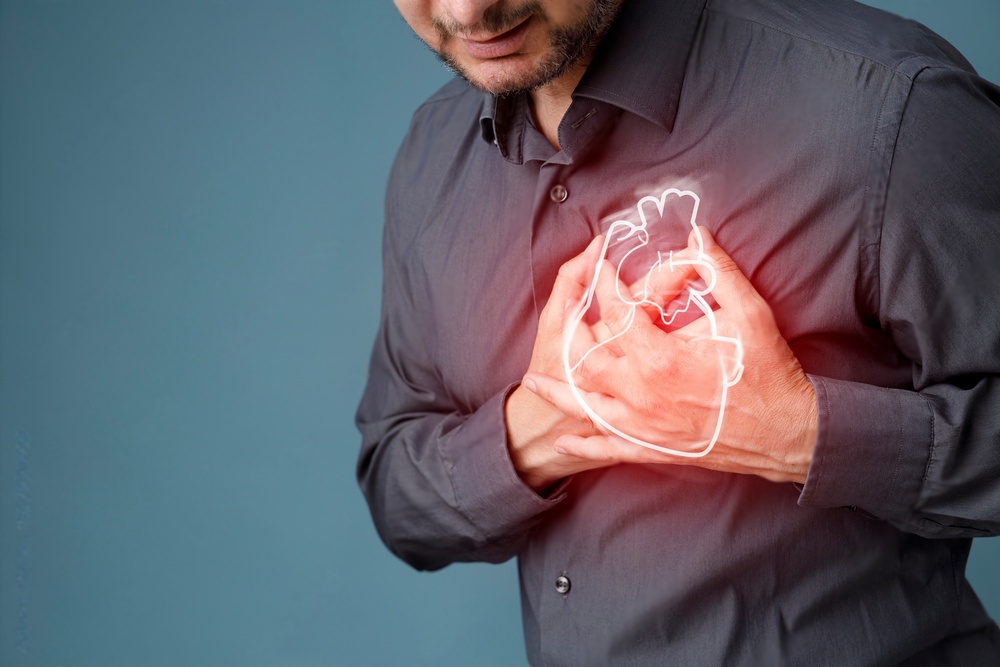
Palpitations are a feeling that the heart is racing, fluttering, pounding or skipping beats, and some people feel a pounding sensation in the neck. They are common, and the death rate associated with them is low, but recurring palpitations can lower quality of life and increase use of health care.[1]
Common symptoms
People describe palpitations in different ways, and they may last seconds or longer.[1]
- A racing or fluttering heart
- A pounding chest or neck
- Skipped or irregular beats
- Fatigue or fainting with the palpitations, which may point to an arrhythmia and should be reported to a physician[2]
Causes and risk factors
Common triggers include heart rhythm disorders and other cardiac conditions, endocrine and metabolic problems, medicines or drugs, and psychological causes.[1] An overactive thyroid is one example: palpitations are among its common symptoms, and untreated hyperthyroidism can cause arrhythmias.[3] Anxiety disorders are also associated with physical symptoms such as palpitations.[4]
Atrial fibrillation and atrial flutter are among the most common heart rhythm disorders that can cause palpitations.[2] Palpitations are also common in the menopause transition.[5]
How it is diagnosed and treated conventionally
Everyone with palpitations should have a detailed history, physical examination and an electrocardiogram (ECG), which alone can often point to a probable cause.[6] Further tests may include blood tests, ambulatory ECG monitoring, echocardiography, stress testing or referral to a cardiologist.[1, 6]
Treatment depends on the cause. It may include reassurance, education and trigger avoidance, or medicines that slow conduction through the heart, and some fast rhythms may need cardiac ablation. People with no heart disease and no rhythm problem are reassured, and screening for psychological causes may be considered.[1]
Why Heart Palpitations calls for a whole-person approach
Palpitations are a symptom with many possible sources, so more than one factor often matters. The heart, the thyroid, medicines, stress and anxiety, and hormones can each play a part.[1]
Because of this, a physician's evaluation comes first, and complementary care is added around it. Care that addresses stress, sleep and general health can be a reasonable addition once serious causes have been ruled out.
The heart rhythm itself
Rhythm disorders such as atrial fibrillation or flutter are common causes, and a physician looks for them with an ECG and sometimes a monitor.[2, 6]
Thyroid and other medical conditions
Endocrine and metabolic disorders, including an overactive thyroid, are recognized triggers and are checked with blood tests.[1, 3]
Stress and anxiety
Anxiety disorders commonly include palpitations among their physical symptoms, and when no arrhythmia is found, screening for psychosomatic causes may be considered.[1, 4]
Hormonal change
Palpitations are reported by many women during the menopause transition, but a systematic review found few treatments studied specifically for them.[5]
Medicines and substances
Medication or drug use is a common trigger, so a review of everything you take, including supplements, is part of a proper evaluation.[1]
Acupuncture for Heart Palpitations
What the research shows
The research is limited. Most studies look at specific rhythm problems such as premature beats and atrial fibrillation, not palpitations as a general symptom, and they do not replace a cardiology evaluation.
A 2022 systematic review of 9 trials (847 participants) of acupuncture for premature ventricular complexes in people without structural heart disease pooled two sham-controlled trials with low risk of bias and found that acupuncture significantly reduced the number of premature beats. Acupuncture added to standard treatment also did better than standard treatment alone. The authors rated the certainty of the sham-controlled evidence as moderate and called for better outcome measures.[7]
For atrial fibrillation, a 2024 meta-analysis of 15 trials (1,960 patients) reported more conversion to sinus rhythm and a lower ventricular rate with acupuncture, but noted that a limited number of studies may affect how far the findings apply.[8] A small sham-controlled trial of 80 patients found fewer recurrences after cardioversion with acupuncture than with sham.[9] Another trial of 85 patients found that acupuncture at the Neiguan point added to amiodarone lowered early recurrence after ablation.[10]
Broader reviews are more cautious. A 2018 review of 9 trials (638 patients) found only one with low risk of bias and said no robust conclusion was possible.[11] An overview of 10 systematic reviews rated their methodological quality as very low and most evidence as low or very low quality, while concluding that acupuncture is clinically effective as an adjunct.[12] A meta-analysis of 11 trials found acupuncture plus Chinese herbal medicine did better than the herbal medicine alone, with no clear rise in adverse events.[13]
How acupuncture may work
For premature beats, experiments in animals found that electroacupuncture reduced sympathetic nerve activity.[7] In one trial, acupuncture after ablation was linked with lower levels of inflammatory markers.[10] These are proposed explanations from animal and small clinical studies, not established mechanisms in people.
What treatment involves
Treatment uses fine, sterile, single-use needles placed at points on the wrists, forearms, hands, chest and legs, usually left in place for about 20 to 40 minutes. The trials in premature beats mostly used a 4-week course with needles retained for 15 to 30 minutes.[7] We reassess after a short course of visits.
Serious problems from acupuncture are rare. In prospective studies, about 9 in 100 patients had a minor reaction such as bleeding, pain or redness at a needle site, and serious events occurred in about 1 in 10,000 patients.[14] Tell the practitioner first if you have a bleeding disorder, take blood thinners, are pregnant, or have a pacemaker or other implanted heart device (relevant to electroacupuncture).
Ayurvedic medicine for Heart Palpitations
The Ayurvedic view
In Ayurveda, a fluttering or racing heartbeat is traditionally described as a Vata disturbance affecting the heart, sometimes with Pitta or with anxiety and poor sleep. The heart is considered a seat of vitality, and the word hridaya is used for it. These are traditional frameworks used to choose care, not biomedical diagnoses.
Therapies that may be used
Care is individualized and traditionally may combine:
- Regular meals, steady sleep, and reducing stimulants such as caffeine, which fits with the trigger avoidance used in conventional care[1]
- Gentle warm oil massage
- Breathing and relaxation practices
- Herbs selected by the practitioner, from tested sources
Panchakarma procedures are not appropriate during pregnancy, acute illness or frailty, and should not be started until the cause of palpitations has been medically assessed.
What the research shows
We found no clinical trials of Ayurvedic medicine or Panchakarma for palpitations or arrhythmia, so the evidence for the condition is none. Mind-body practices such as yoga have been studied in arrhythmia, but they are not part of Ayurvedic treatment as such, and we do not cite them as evidence for it. Because about one fifth of Ayurvedic medicines bought online contained detectable lead, mercury or arsenic in one study, product quality matters.[15]
Herbal medicine for Heart Palpitations
Herbs and formulas that have been studied
Most research is on Chinese patent formulas used for arrhythmia in China, mainly Wenxin Keli for premature ventricular beats and Shensong Yangxin capsule for atrial fibrillation.[16, 17, 18] These are standardized commercial products and are not the same as an individually prescribed formula.
What the research shows
The evidence is limited. A systematic review of 10 trials found that Wenxin Keli might work better than placebo for premature ventricular beats and might add to amiodarone, but the trials were generally of low quality, small and short, and showed signs of publication bias.[16]
A systematic review of 22 trials of Shensong Yangxin capsule in paroxysmal atrial fibrillation found some benefit when added to routine treatment, but quality was generally poor and no firm conclusion was possible.[17] A 2024 placebo-controlled trial of 920 patients with persistent atrial fibrillation in China found fewer recurrent atrial tachyarrhythmias over 12 months with Shensong Yangxin after catheter ablation, with no significant difference in serious adverse events.[18] It was conducted only in China and in people who had had an ablation, so it does not show that herbs help everyday palpitations.
Safety and herb-drug interactions
Herbs are active substances and can affect the heart. Aconite roots, used in Chinese medicine only after processing, contain cardiotoxic alkaloids, and poisoning from inadequate processing or excess dose can cause serious arrhythmias.[19] Reviews also describe interactions between herbs and prescribed drugs, including blood thinners and heart medicines.[20]
If you take anti-arrhythmic drugs, beta-blockers, digoxin or blood thinners, we need to know before any herb is considered. Tell us if you are pregnant or breastfeeding, or have liver or kidney disease. Herbs should come from tested sources, because some Ayurvedic products contain lead, mercury or arsenic.[15]
Translating traditional medicine into modern biological language
This is interpretation, not equivalence. In Chinese medicine, palpitations are classically linked to the heart losing its nourishment or calm, described as heart qi, blood or yin deficiency, or as disturbance of the spirit. Acupuncture at the Neiguan (PC6) point is traditionally used for it.[9] Researchers studying acupuncture look at related measurable ideas such as sympathetic nerve activity and inflammation.[7, 10]
Ayurveda's aggravated Vata, the principle of movement, loosely parallels the erratic rhythm and the nervous system arousal that can accompany palpitations, but no study has shown that a dosha corresponds to a specific biological process.
How this care fits with your medical care
Complementary care for palpitations works alongside your physician or cardiologist and does not replace them. We do not diagnose the cause of palpitations or manage heart rhythm disorders, and we do not prescribe or change prescription drugs. Do not stop or change heart medicines, blood thinners or other prescriptions without your prescriber.
Please bring your diagnosis, recent ECG or monitor results, thyroid and blood test results, a full list of medicines and supplements, and a note of your caffeine and alcohol use. For a condition like this, we ask that you are under a physician's care for it and that your treating team knows you are receiving complementary care.
When to seek urgent medical care
Palpitations are usually not dangerous, but some symptoms with them need immediate attention.
- Chest pain or pressure
- Fainting or near-fainting
- Severe shortness of breath
- A very fast, pounding heartbeat that does not settle
- Palpitations with confusion, weakness on one side, or trouble speaking
- Palpitations in someone with known heart disease that are new or worse
If any of these occur, call 911 or go to the nearest emergency department.
Frequently asked questions
What are heart palpitations?
Palpitations are the awareness of your heartbeat, felt as racing, fluttering, pounding or skipped beats, sometimes in the neck. They are common and often harmless, but they can come from a rhythm disorder, an overactive thyroid, medicines, caffeine, stress or anxiety. An ECG and medical evaluation are the way to find the cause.
Can acupuncture help with heart palpitations?
It may help in some situations, but the evidence is limited. A systematic review found that acupuncture reduced premature ventricular beats in sham-controlled trials, and other reviews report benefit in atrial fibrillation, but study quality is often low. Acupuncture is used alongside a cardiac evaluation and treatment, not in place of them.
Does Ayurvedic or herbal medicine work for palpitations?
We found no clinical trials of Ayurvedic treatment for palpitations. For herbs, studies are mostly of Chinese patent formulas for premature beats and atrial fibrillation, with low-quality evidence overall and one large placebo-controlled trial after ablation. Herbs can affect the heart and interact with medicines, so they are only used when prescribed individually and checked against your medicines.
Can I stop my heart medicine if I have acupuncture?
No. Acupuncture, Ayurveda and herbal medicine are complementary care. Do not stop or change any prescribed medicine, including anti-arrhythmic drugs, beta-blockers and blood thinners, without talking to your prescriber. Palpitations with chest pain, fainting or severe shortness of breath need emergency care.
What should I bring to my first visit?
Bring your diagnosis, recent ECG, monitor and blood test results including thyroid tests, a full list of medicines and supplements, and a note of how often palpitations occur and what seems to trigger them. Tell us about any implanted heart device. This helps us coordinate with your treating physician. We do not diagnose the cause of palpitations.
Does insurance cover acupuncture for palpitations?
It may. Netra Integrative Health Clinic is in-network with Blue Cross Blue Shield, Cigna and UnitedHealthcare. Other plans may be covered through out-of-network benefits, and we offer a free benefits check. HSA and FSA cards and CareCredit are also accepted. Call (908) 402-7301 to ask about your plan.
References
- Gauer RL, Thomas MF, McNutt RA. Palpitations: Evaluation, Management, and Wearable Smart Devices. Am Fam Physician. 2024;110(3):259-269. PMID 39283849. American Family Physician review of palpitations covering definition, triggers, evaluation, management and the low associated mortality.
- Rodriguez Ziccardi M, Goyal A, Maani CV. Atrial Flutter. StatPearls [Internet]. 2022. PMID 31082029. StatPearls chapter on atrial flutter describing it as a common arrhythmia that can cause palpitations, fatigue and syncope.
- Lee SY, Pearce EN. Hyperthyroidism: A Review. JAMA. 2023;330(15):1472-1483. PMID 37847271. JAMA review of hyperthyroidism noting palpitations as a common symptom and arrhythmias as a complication of untreated disease.
- Szuhany KL, Simon NM. Anxiety Disorders: A Review. JAMA. 2022;328(24):2431-2445. PMID 36573969. JAMA review of anxiety disorders noting associated physical symptoms such as palpitations and first-line treatments.
- Sheng Y, Carpenter JS, Elomba CD, et al. Effect of menopausal symptom treatment options on palpitations: a systematic review. Climacteric. 2022;25(2):128-140. PMID 34346265. Systematic review of treatments for palpitations in the menopause transition, finding few well-studied options.
- Weinstock C, Wagner H, Snuckel M, et al. Evidence-Based Approach to Palpitations. Med Clin North Am. 2021;105(1):93-106. PMID 33246525. Review of evidence-based evaluation of palpitations in primary care, recommending history, examination and ECG, with further testing as needed.
- Cai Y, Zhang CS, Liu S, et al. Acupuncture for premature ventricular complexes without ischemic or structural heart diseases: A systematic review and meta-analysis of clinical and pre-clinical evidence. Front Med (Lausanne). 2022;9:1019051. PMID 36569126. Systematic review of 9 trials (847 participants) of acupuncture for premature ventricular complexes, finding moderate-certainty sham-controlled evidence of fewer premature beats.
- Liu Y, Pang X, Wang Y, et al. Evaluation of the efficacy and safety of acupuncture assisted treatment for atrial fibrillation: A systematic review and meta-analysis based on randomized controlled trials. Medicine (Baltimore). 2024;103(48):e40474. PMID 39612438. Meta-analysis of 15 trials (1,960 patients) of acupuncture for atrial fibrillation reporting higher conversion to sinus rhythm and lower ventricular rate, with limited generalizability.
- Lomuscio A, Belletti S, Battezzati PM, et al. Efficacy of acupuncture in preventing atrial fibrillation recurrences after electrical cardioversion. J Cardiovasc Electrophysiol. 2011;22(3):241-7. PMID 20807278. Randomized trial of 80 patients finding acupuncture reduced atrial fibrillation recurrence after cardioversion compared with sham or no treatment.
- Yin J, Yang M, Yu S, et al. Effect of acupuncture at Neiguan point combined with amiodarone therapy on early recurrence after pulmonary vein electrical isolation in patients with persistent atrial fibrillation. J Cardiovasc Electrophysiol. 2019;30(6):910-917. PMID 30907035. Randomized trial of 85 patients finding Neiguan acupuncture plus amiodarone lowered early recurrence of atrial fibrillation after ablation and lowered inflammatory markers.
- Liu J, Li SN, Liu L, et al. Conventional Acupuncture for Cardiac Arrhythmia: A Systematic Review of Randomized Controlled Trials. Chin J Integr Med. 2018;24(3):218-226. PMID 28432528. Systematic review of 9 trials (638 patients) of acupuncture for arrhythmia, with low overall quality and no robust conclusion.
- Ci W, Yawen C, Jiaying W, et al. Efficacy and safety of acupuncture for arrythmias: an overview of systematic reviews and Meta-analyses. J Tradit Chin Med. 2025;45(6):1178-1190. PMID 41376212. Overview of 10 systematic reviews of acupuncture for arrhythmias, rating methodological quality as very low and evidence quality mostly low.
- Ning S, Yan L, Li Y, et al. Efficacy of acupuncture combined with oral Chinese medicine in the treatment of arrhythmia: A meta-analysis. Medicine (Baltimore). 2023;102(12):e33174. PMID 36961199. Meta-analysis of 11 trials (804 patients) finding acupuncture plus Chinese herbal medicine outperformed the herbs alone for arrhythmia without more adverse events.
- Bäumler P, Zhang W, Stübinger T, et al. Acupuncture-related adverse events: systematic review and meta-analyses of prospective clinical studies. BMJ Open. 2021;11(9):e045961. PMID 34489268. Systematic review of 21 prospective studies finding minor acupuncture reactions in about 9 percent of patients and serious events in about 1 per 10,000.
- Saper RB, Phillips RS, Sehgal A, et al. Lead, mercury, and arsenic in US- and Indian-manufactured Ayurvedic medicines sold via the Internet. JAMA. 2008;300(8):915-23. PMID 18728265. JAMA study finding detectable lead, mercury or arsenic in about one fifth of Ayurvedic medicines purchased over the Internet.
- He M, Lv Z, Yang ZW, et al. Efficacy and safety of Chinese herbal medicine Wenxin Keli for ventricular premature be ats: A systematic review. Complement Ther Med. 2016;29:181-189. PMID 27912945. Systematic review of 10 trials of Wenxin Keli for ventricular premature beats, with low overall methodological quality and publication bias.
- Chen G, Wei B, Wang J, et al. Shensongyangxin Capsules for Paroxysmal Atrial Fibrillation: A Systematic Review of Randomized Clinical Trials. PLoS One. 2016;11(3):e0151880. PMID 26999010. Systematic review of 22 trials (2,347 patients) of Shensongyangxin capsules for paroxysmal atrial fibrillation, with poor study quality and no firm conclusion.
- Huang H, Liu Y, Shuai W, et al. Atrial tachyarrhythmia prevention by Shensong Yangxin after catheter ablation for persistent atrial fibrillation: the SS-AFRF trial. Eur Heart J. 2024;45(40):4305-4314. PMID 39178138. Placebo-controlled trial of 920 patients in China finding Shensong Yangxin reduced recurrent atrial tachyarrhythmias 12 months after ablation for persistent atrial fibrillation.
- Chan TY. Aconite poisoning. Clin Toxicol (Phila). 2009;47(4):279-85. PMID 19514874. Toxicology review of aconite poisoning describing cardiotoxic alkaloids, arrhythmias and the risk of inadequate processing in traditional medicine.
- Hu Z, Yang X, Ho PC, et al. Herb-drug interactions: a literature review. Drugs. 2005;65(9):1239-82. PMID 15916450. Literature review of clinically significant herb-drug interactions, including effects with blood thinners and other drugs.
This page is for general education and is not medical advice. Acupuncture, Ayurvedic medicine and herbal medicine are complementary therapies; they do not replace diagnosis or treatment by your physician. Do not stop or change prescribed treatment without talking to your prescriber. In an emergency call 911.