















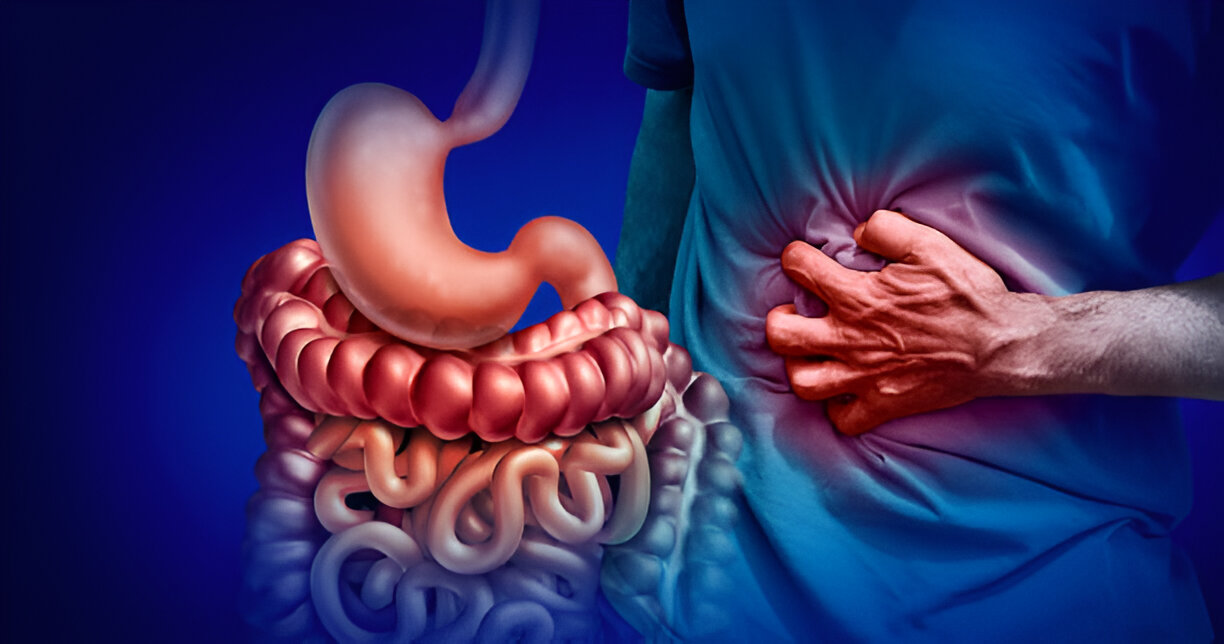
- What it is: Irritable bowel syndrome that starts after an episode of infectious gastroenteritis, such as food poisoning or traveler's diarrhea.
- Common symptoms: Recurring abdominal pain with diarrhea or other changes in bowel habits, often with bloating and urgency.
- Conventional care: Ruling out other causes, diet and lifestyle changes, and medicines matched to symptoms such as antidiarrheals, antispasmodics and low-dose antidepressants.
- How integrative care fits: Acupuncture, Ayurvedic therapies and individually prescribed herbs are used alongside medical care to help with symptoms and stress.
- Evidence at a glance: No trials in post-infectious IBS itself. For IBS with diarrhea, limited and mixed for acupuncture and herbs, and none for Ayurveda.
What is Post-Infectious IBS?
Post-infectious IBS (PI-IBS) is irritable bowel syndrome that develops after an episode of infectious gastroenteritis, with persistent abdominal pain and diarrhea.[1] It is now considered a well-defined functional bowel disorder, although no treatment has been designed specifically for it.[2]
Common symptoms
The main symptoms are recurrent abdominal pain and altered bowel habits, most often diarrhea. Bloating is common but not required for the diagnosis.[1, 3]
Causes and risk factors
PI-IBS follows a gut infection. In a meta-analysis of 45 studies, about 10 percent of people had IBS 12 months after infectious enteritis, and the risk was about four times higher than in people who had not had an infection.[4] The same analysis found higher risk with:
- Being a woman
- Antibiotic exposure during the illness
- A more severe infection
- Anxiety, depression or a tendency to focus on physical symptoms[4]
Infections caused by protozoa or parasites led to IBS more often than bacterial infections.[4] Reported rates of PI-IBS range from 4 to 36 percent of people with infectious gastroenteritis.[2]
How it is diagnosed and treated conventionally
IBS is diagnosed from symptoms using the Rome IV criteria, together with a targeted evaluation to rule out conditions that look similar, not by excluding everything else.[3] Management includes lifestyle and diet changes, medicines matched to the subtype and psychological therapies where useful.[3]
For PI-IBS, relief usually comes from antidiarrheals, antispasmodics, 5-HT3 antagonists, mesalamine, probiotics and low-dose antidepressants. Prognosis is generally good, though symptoms and inflammation can persist for a long time.[1]
Why Post-Infectious IBS calls for a whole-person approach
Post-infectious IBS has more than one driver. The infection may start it, but immune activity, gut sensitivity, gut bacteria and the brain-gut connection are all thought to keep it going.[1, 5]
For that reason, care that addresses several of these at once is a reasonable addition to medical care.
Immune activation and low-grade inflammation
PI-IBS appears to involve disordered immune reactions and the release of inflammatory signaling molecules, with resulting gut inflammation and dysfunction.[1] Doctors may treat this with medicines such as mesalamine in some difficult cases.[1]
Gut sensitivity and the brain-gut axis
IBS is linked to visceral hypersensitivity (an intestine that reacts strongly to normal stretching), changes in gut movement and disruption of brain-gut signaling.[3, 5] This helps explain why pain and bowel changes can persist even after the infection has cleared.
Gut bacteria and antibiotics
Changes in the gut microbiota are part of the picture in IBS.[5] In the meta-analysis above, antibiotic use during the infection was linked to a higher risk of later IBS.[4]
Stress, mood and the nervous system
Anxiety and depression raised the risk of IBS after enteritis, and a tendency toward physical symptom focus had the strongest association (odds ratio 4.1).[4] Stress and psychosocial factors also play a role in how IBS develops and is managed in general.[3]
Acupuncture for Post-Infectious IBS
What the research shows
We found no clinical trials of acupuncture specifically in post-infectious IBS, so the evidence comes from IBS in general, especially IBS with diarrhea (IBS-D). That evidence is mixed. An earlier meta-analysis of 17 trials (1,806 participants) found no benefit over sham acupuncture for symptom severity or quality of life in the four sham-controlled trials, although acupuncture did better than drugs and no treatment in trials without a sham group.[6] An umbrella review of 15 systematic reviews found that most suggested a benefit, but rated their methods as low or very low quality and the evidence as low or very low certainty.[7]
Newer sham-controlled trials in China are more encouraging. In a 2025 trial of 280 adults with IBS-D, 57.9 percent of the acupuncture group met the response target at week 6, versus 41.4 percent with sham needles. The difference lasted through most of the 18 weeks of follow-up.[8] A 2024 trial of 170 people with refractory IBS also found larger symptom score improvements with real acupuncture than with sham, in addition to usual treatment.[9] A smaller 2022 pilot with 90 patients found improvements in all groups, with no significant difference from sham.[10]
A meta-analysis of 16 trials in IBS-D with anxiety or depression found acupuncture outperformed oral medicines for symptoms and mood scores, though these were not sham-controlled comparisons.[11] Most of this research was done in China, and the results may not apply everywhere.
How acupuncture may work
The mechanism evidence for PI-IBS comes from a mouse study. In mice with post-infectious visceral hypersensitivity, electroacupuncture increased gut bacterial diversity and reduced pain sensitivity in the gut, possibly through a nerve growth-related signaling pathway.[12] This is animal work and a proposed explanation, not proof of how acupuncture works in people.
What treatment involves
Treatment uses fine, sterile, single-use needles placed at points on the abdomen, legs, arms and back, usually left in place for about 20 to 40 minutes. The recent sham-controlled trials gave 12 to 15 sessions over 4 to 6 weeks.[8, 9] We reassess after a short course of visits.
Serious problems from acupuncture are rare. In prospective studies, about 9 in 100 patients had a minor reaction such as bleeding, soreness or redness at a needle site, and serious events occurred in about 1 in 10,000 patients.[13] Tell the practitioner first if you have a bleeding disorder, take blood thinners, are pregnant, or have a pacemaker (relevant to electroacupuncture).
Ayurvedic medicine for Post-Infectious IBS
The Ayurvedic view
Ayurveda describes chronic loose stools with abdominal pain as Grahani, a disorder of agni (digestive fire) with aggravated Vata or Pitta. When it follows an infection, ama (undigested residue) is traditionally considered to remain in the gut. These are traditional categories, not biomedical diagnoses.
Therapies that may be used
Care is chosen for the individual and traditionally combines:
- Warm, cooked, easy-to-digest foods, regular meal times and avoiding cold or very oily foods
- Herbs and spices traditionally used for digestion, prescribed individually
- Stress-reducing routines and steady sleep hours
Panchakarma procedures, particularly purging therapies, are not appropriate for people with active diarrhea or weight loss, during pregnancy, acute illness or frailty, or before a physician has assessed the symptoms.
What the research shows
We found no clinical trials of Ayurvedic treatment for post-infectious IBS. Turmeric (curcumin), widely used in Ayurveda, was reviewed in 26 studies of digestive disorders. The authors judged most to have a high risk of bias, saw possible benefit in IBS, and concluded the efficacy remains unclear.[14] A combination of curcumin and fennel oil did better than placebo in one rigorously designed IBS trial, but it has not been replicated and was not a test of an Ayurvedic treatment plan.[15]
Herbal medicine for Post-Infectious IBS
Herbs and formulas that have been studied
Research covers IBS in general. Peppermint oil is the best-studied Western herb. Other preparations tested in IBS include aloe vera, asafoetida, aniseed oil and a curcumin and fennel oil combination.[15] The Chinese herbal formula Tongxie has been tested in a large trial.[16]
What the research shows
The evidence is limited. A meta-analysis of 10 trials (1,030 patients) found peppermint oil more effective than placebo for global IBS symptoms and abdominal pain, but side effects were more frequent and the quality of evidence was very low.[17] A systematic review of 33 double-blind placebo-controlled trials of Western herbs found peppermint oil, aloe vera and asafoetida effective in meta-analyses, while most other positive trials had not been replicated.[15]
In a trial of 1,044 adults with IBS in China, 4 weeks of Tongxie reduced symptoms more than placebo and improved stool consistency and frequency more than the antispasmodic pinaverium, though pinaverium reduced pain more.[16] None of these studies were in post-infectious IBS specifically.
Safety and herb-drug interactions
Herbs are active substances and can interact with medicines. Reports describe extra bleeding when warfarin or aspirin was combined with herbs including dan shen, garlic and ginkgo.[18] Peppermint oil was linked to more adverse events than placebo in the meta-analysis above.[17]
Some herbal products can injure the liver, and about one fifth of Ayurvedic products bought online contained detectable lead, mercury or arsenic.[19, 20] Herbs should come from tested sources and be prescribed individually. Tell us if you are pregnant or breastfeeding, or have liver or kidney disease. A herbal preparation applied to the skin (transdermal medication therapy) is also available, but we are not aware of trials of it for IBS.
Translating traditional medicine into modern biological language
The links drawn here are interpretation, not equivalence. Chinese medicine often describes IBS with diarrhea as spleen deficiency with liver qi stagnation, in which stress disturbs digestion. Researchers studying this care look at things that loosely parallel the picture: gut sensitivity, gut bacteria and brain-gut signaling.[5, 12]
Ayurveda's weak agni and ama after infection describe lingering digestive disturbance. No study has shown that agni or ama corresponds to a specific biological process.
How this care fits with your medical care
Integrative care for post-infectious IBS is complementary. Keep your physician or gastroenterologist, and do not stop or change prescribed medicines without your prescriber. We do not diagnose IBS or rule out other bowel conditions, and new or changing symptoms should be medically evaluated.
Please bring your diagnosis, details of the infection that started your symptoms, any stool or blood tests and colonoscopy results, and a full list of medicines and supplements.
When to seek urgent medical care
Some symptoms point to a condition other than IBS, and these need prompt evaluation.[3]
- Blood in the stool or black, tarry stools
- Unintended weight loss
- Fever with ongoing diarrhea
- Diarrhea that wakes you from sleep or causes dehydration
- Severe or worsening abdominal pain
- New symptoms after age 50, or a family history of bowel cancer or inflammatory bowel disease
If any of these occur, call 911 or go to the nearest emergency department.
Frequently asked questions
What is post-infectious IBS?
Post-infectious IBS is irritable bowel syndrome that begins after an infection such as food poisoning or traveler’s diarrhea. People have ongoing abdominal pain and usually diarrhea after the infection has cleared. About 10 percent of people with infectious enteritis develop IBS within a year. Many improve over time, though symptoms can last for years.
Can acupuncture help with post-infectious IBS?
There are no trials in post-infectious IBS itself. In IBS with diarrhea, some sham-controlled trials in China found real acupuncture helped more than sham, while an earlier meta-analysis and a small pilot found no benefit over sham. Evidence quality is low. Acupuncture is used alongside medical care and does not treat the original infection.
Do Ayurvedic or herbal medicines work for post-infectious IBS?
Evidence is thin. We found no trials of Ayurveda for it. In IBS in general, peppermint oil and a Chinese formula called Tongxie did better than placebo in trials, but study quality is limited and side effects occur. Herbs should be prescribed individually and checked against your medicines.
Can I stop my IBS medicine if I have acupuncture or herbs?
No. Acupuncture, Ayurveda and herbal medicine are complementary care. Do not stop or change prescribed medicines without talking to your prescriber. Blood in the stool, weight loss, fever or severe pain need prompt medical assessment.
How soon might I notice a change with acupuncture?
It differs from person to person and no result can be promised. In recent IBS trials, patients had 12 to 15 sessions over 4 to 6 weeks, and differences from sham needles appeared from about week 3 in the largest trial. We reassess after a short course of visits to see whether treatment is helping.
Does insurance cover acupuncture for post-infectious IBS?
It may. Netra Integrative Health Clinic is in-network with Blue Cross Blue Shield, Cigna and UnitedHealthcare. Other plans may be covered through out-of-network benefits, and we offer a free benefits check. HSA and FSA cards and CareCredit are also accepted. Call (908) 402-7301 to ask about your plan.
References
- Lee YY, Annamalai C, Rao SSC. Post-Infectious Irritable Bowel Syndrome. Curr Gastroenterol Rep. 2017;19(11):56. PMID 28948467. Review of post-infectious IBS covering immune activation, brain-gut-microbiota interactions, risk factors, prognosis and symptom-directed treatments.
- Sadeghi A, Biglari M, Nasseri Moghaddam S. Post-infectious Irritable Bowel Syndrome: A Narrative Review. Middle East J Dig Dis. 2019;11(2):69-75. PMID 31380002. Narrative review of PI-IBS reporting prevalence of 4 to 36 percent after infectious gastroenteritis and no specific treatment.
- Nathani RR, Sodhani S, Goosenberg E. Irritable Bowel Syndrome. StatPearls [Internet]. 2025. PMID 30521231. StatPearls chapter on irritable bowel syndrome covering Rome IV diagnosis, gut-brain mechanisms, and diet, drug and psychological management.
- Klem F, Wadhwa A, Prokop LJ, et al. Prevalence, Risk Factors, and Outcomes of Irritable Bowel Syndrome After Infectious Enteritis: A Systematic Review and Meta-analysis. Gastroenterology. 2017;152(5):1042-1054.e1. PMID 28069350. Meta-analysis of 45 studies finding about 10 percent develop IBS after infectious enteritis, with higher risk in women, antibiotic users and people with anxiety or depression.
- Tang HY, Jiang AJ, Wang XY, et al. Uncovering the pathophysiology of irritable bowel syndrome by exploring the gut-brain axis: a narrative review. Ann Transl Med. 2021;9(14):1187. PMID 34430628. Narrative review of IBS pathophysiology via the gut-brain axis, including visceral hypersensitivity, microbiota, post-infectious reactivity and a brief look at acupuncture.
- Manheimer E, Wieland LS, Cheng K, et al. Acupuncture for irritable bowel syndrome: systematic review and meta-analysis. Am J Gastroenterol. 2012;107(6):835-47; quiz 848. PMID 22488079. Meta-analysis of 17 acupuncture trials (1,806 participants) in IBS finding no benefit over sham but better results than drugs in non-sham trials.
- Ma YY, Hao Z, Chen ZY, et al. Acupuncture and moxibustion for irritable bowel syndrome: An umbrella systematic review. J Integr Med. 2024;22(1):22-31. PMID 38199885. Umbrella review of 15 systematic reviews of acupuncture and moxibustion for IBS, with low or very low methodological quality and evidence certainty.
- Yang JW, Qi LY, Yan SY, et al. Efficacy of ACupuncTure in Irritable bOwel syNdrome (ACTION): A Multicenter Randomized Controlled Trial. Gastroenterology. 2025;169(5):958-969.e5. PMID 40441496. 2025 multicenter sham-controlled trial of 280 adults with IBS-D finding acupuncture improved pain and diarrhea more than sham over 18 weeks.
- Zhao J, Zheng H, Wang X, et al. Efficacy of acupuncture in refractory irritable bowel syndrome patients: a randomized controlled trial. Front Med. 2024;18(4):678-689. PMID 38958923. Sham-controlled trial of 170 patients with refractory IBS finding larger symptom score reductions with acupuncture alongside usual treatment.
- Qi LY, Yang JW, Yan SY, et al. Acupuncture for the Treatment of Diarrhea-Predominant Irritable Bowel Syndrome: A Pilot Randomized Clinical Trial. JAMA Netw Open. 2022;5(12):e2248817. PMID 36580333. Pilot sham-controlled trial of 90 IBS-D patients finding improvement in all groups with no significant difference from sham acupuncture.
- Wang Z, Hou Y, Sun H, et al. Efficacy of acupuncture treatment for diarrhea-predominant irritable bowel syndrome with comorbid anxiety and depression: A meta-analysis and systematic review. Medicine (Baltimore). 2024;103(46):e40207. PMID 39560589. Meta-analysis of 16 trials (1,305 patients) finding acupuncture beat oral medicines for IBS-D with comorbid anxiety and depression.
- Jiang S, Pei L, Chen L, et al. Mechanisms of Electroacupuncture in Alleviating Visceral Hypersensitivity in Post-Infectious Irritable Bowel Syndrome Mice: The Role of GDNF Signaling Pathway and Gut Microbiota. Microb Physiol. 2024;34(1):255-263. PMID 39396501. Mouse study finding electroacupuncture reduced visceral hypersensitivity and increased gut bacterial diversity in a post-infectious IBS model.
- Bäumler P, Zhang W, Stübinger T, et al. Acupuncture-related adverse events: systematic review and meta-analyses of prospective clinical studies. BMJ Open. 2021;11(9):e045961. PMID 34489268. Systematic review of 21 prospective studies finding minor acupuncture reactions in about 9 percent of patients and serious events in about 1 per 10,000.
- Thavorn K, Wolfe D, Faust L, et al. A systematic review of the efficacy and safety of turmeric in the treatment of digestive disorders. Phytother Res. 2024;38(6):2687-2706. PMID 38503513. Systematic review of 26 studies of turmeric in digestive disorders, mostly at high risk of bias, with possible benefit in IBS and unclear efficacy.
- Hawrelak JA, Wohlmuth H, Pattinson M, et al. Western herbal medicines in the treatment of irritable bowel syndrome: A systematic review and meta-analysis. Complement Ther Med. 2020;48:102233. PMID 31987249. Systematic review of 33 placebo-controlled trials of Western herbs in IBS, supporting peppermint oil, aloe vera and asafoetida, with limited replication.
- Fan H, Zheng L, Lai Y, et al. Tongxie Formula Reduces Symptoms of Irritable Bowel Syndrome. Clin Gastroenterol Hepatol. 2017;15(11):1724-1732. PMID 28634136. Randomized trial of 1,044 Chinese adults with IBS finding the herbal formula Tongxie beat placebo and improved stool outcomes versus pinaverium.
- Ingrosso MR, Ianiro G, Nee J, et al. Systematic review and meta-analysis: efficacy of peppermint oil in irritable bowel syndrome. Aliment Pharmacol Ther. 2022;56(6):932-941. PMID 35942669. Meta-analysis of 10 trials (1,030 patients) finding peppermint oil beat placebo in IBS, with more adverse events and very low quality evidence.
- Hu Z, Yang X, Ho PC, et al. Herb-drug interactions: a literature review. Drugs. 2005;65(9):1239-82. PMID 15916450. Literature review of herb-drug interactions, including bleeding with warfarin or aspirin combined with dan shen, garlic and ginkgo.
- Navarro VJ, Khan I, Björnsson E, et al. Liver injury from herbal and dietary supplements. Hepatology. 2017;65(1):363-373. PMID 27677775. Hepatology review of liver injury from herbal and dietary supplements, which account for about 20 percent of hepatotoxicity cases in the US.
- Saper RB, Phillips RS, Sehgal A, et al. Lead, mercury, and arsenic in US- and Indian-manufactured Ayurvedic medicines sold via the Internet. JAMA. 2008;300(8):915-23. PMID 18728265. JAMA study finding detectable lead, mercury or arsenic in about one fifth of Ayurvedic medicines purchased over the Internet.
This page is for general education and is not medical advice. Acupuncture, Ayurvedic medicine and herbal medicine are complementary therapies; they do not replace diagnosis or treatment by your physician. Do not stop or change prescribed treatment without talking to your prescriber. In an emergency call 911.