


















- What it is: Pain arising from the sacroiliac joints that link the base of the spine to the pelvis, one of several possible sources of low back pain.
- Common symptoms: Pain on one side of the low back or buttock, sometimes spreading into the groin or leg, often worse with standing up, climbing stairs or turning in bed.
- Conventional care: Physical therapy and exercise, anti-inflammatory medicines, sometimes joint injections or radiofrequency treatment, and surgery only in selected severe cases.
- How integrative care fits: Acupuncture, Ayurvedic therapies and individually prescribed herbs are used alongside medical care to help with pain, muscle tension and movement.
- Evidence at a glance: Limited for acupuncture, with a few low-quality studies on this joint and more evidence from general low back pain; none found for Ayurveda or herbs in this condition.
What is Sacroiliac Joint Pain?
Sacroiliac joint pain is pain that comes from the sacroiliac (SI) joints, the two joints that connect the sacrum at the base of the spine to the pelvis on each side. It is one potential cause of axial low back pain, and it is estimated to account for about a quarter of low back pain cases.[1] It is hard to confirm, because no single test or scan reliably identifies the joint as the source.[2]
Common symptoms
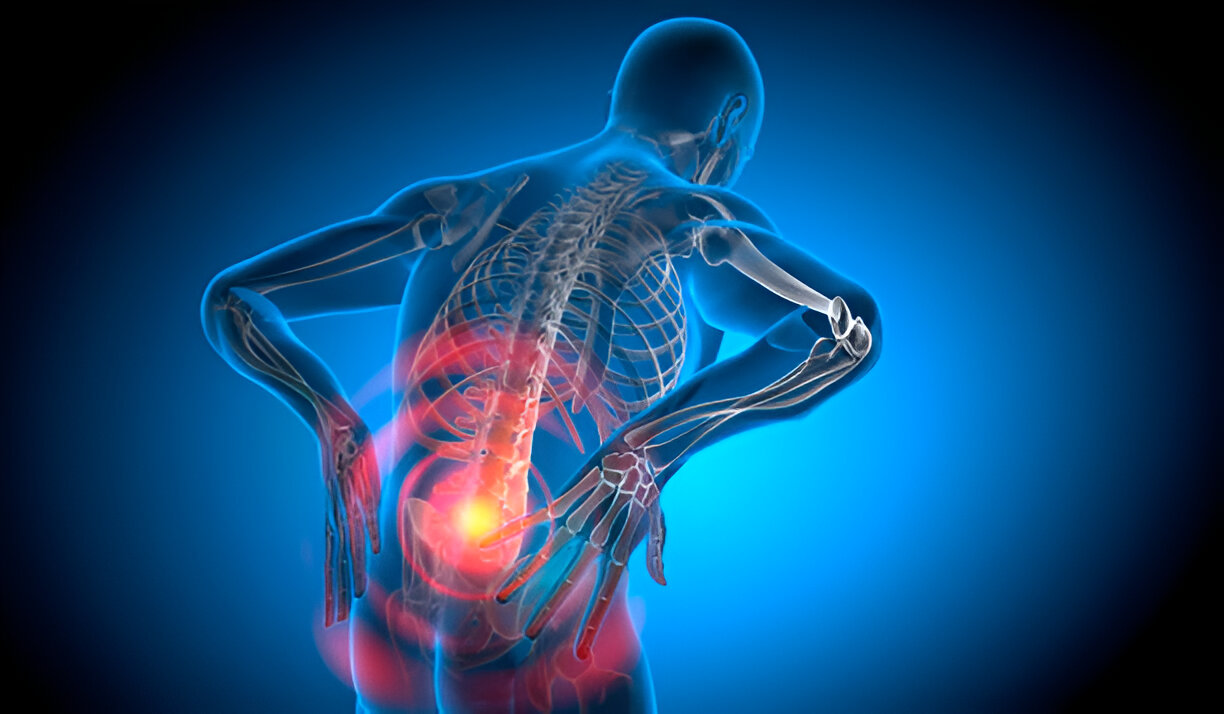
SI joint pain is typically felt on one side, below the waistline in the low back and buttock. Its referral pattern is variable, and pain may reach the groin, thigh or whole leg.[2, 3]
- Pain on one side of the lower back or buttock
- Pain that spreads into the groin, hip or thigh
- Stiffness, or pain when standing up from a chair, climbing stairs or rolling over in bed
Causes and risk factors
SI joint pain can follow trauma, pregnancy, repetitive stress, sports and spinal surgery.[1] Other predisposing factors include a leg length difference, older age and inflammatory arthritis.[3] Some people with persistent pain on one side of the low back after a fall or a car accident are found to have SI joint pain.[2]
How it is diagnosed and treated conventionally
There is no single history, exam finding or imaging study that proves SI joint pain. Clinicians usually combine several pain provocation tests, and when three or more are positive a diagnostic injection of numbing medicine into the joint may be considered.[2] A review found that a positive cluster of provocation tests gives only modest certainty that the joint is the source, while a negative cluster makes it much less likely.[4]
Treatment generally moves from conservative to more invasive: physical therapy, lifestyle changes and anti-inflammatory medicines first, then injections or radiofrequency denervation, with surgical fusion reserved for severe cases that do not respond.[5] The evidence behind these options is limited and inconsistent. A review of therapeutic joint injections rated the evidence as fair.[6]
Why Sacroiliac Joint Pain calls for a whole-person approach
SI joint pain rarely has one cause. The joint is supported by ligaments and muscles of the pelvis, hip and low back, and strain, injury and altered movement elsewhere can all load it.[3]
Care that also addresses muscle tension, movement, general health and recovery after pregnancy or injury is therefore a reasonable addition to treatment aimed at the joint.
Mechanical load and movement
SI joint pain is considered a mechanical pain, and repeated stress on the joint from sports, a leg length difference or surgery higher in the spine can contribute.[1, 3] Physical therapy interventions such as exercise, mobilization and muscle energy technique each improved pain in a meta-analysis of randomized trials of SI joint dysfunction.[7]
Pregnancy and the postpartum period
Pregnancy is a recognized trigger for SI joint pain.[1] Pregnant women with pelvic girdle pain should be managed by their obstetric care provider, and any complementary care should be agreed with that provider first.
Inflammatory joint disease
Inflammatory arthritis can involve the sacroiliac joints and is a recognized risk factor for SI joint pain.[3] Morning stiffness lasting more than half an hour, or pain that eases with movement, should prompt a medical evaluation for inflammatory arthritis.
Muscle tension and pain sensitivity
Pain in a joint region is often accompanied by muscle guarding in the buttock and low back. Laboratory research on acupuncture looks at how needling may change pain-processing pathways in the spinal cord and brain.[8]
Acupuncture for Sacroiliac Joint Pain
What the research shows
Research on acupuncture for SI joint pain itself is limited, with studies of low quality. A meta-analysis of 10 randomized trials with 1019 participants studied acupuncture and related needle techniques for "sacroiliac joint malposition", a diagnosis common in Chinese clinical practice. It found higher response rates and lower pain and disability scores than control treatments, but the authors rated the methodological quality as not high and noted possible publication bias.[9]
A trial of 120 patients with sacroiliac joint injury in China found that adding oblique needling to tuina (a Chinese massage method) lowered pain and disability more than tuina alone over three weeks.[10] Because both groups received treatment, this shows an added effect only in that setting.
Evidence from related conditions is better studied but only indirect. For chronic nonspecific low back pain, a Cochrane review of 33 studies found low-certainty evidence that acupuncture relieves pain slightly more than sham right after treatment, though not by a clinically important amount, and moderate-certainty evidence that it relieves pain more than no treatment, with limitations from bias and small studies.[11] A separate meta-analysis of 14 sham-controlled trials found moderate evidence of pain reduction right after treatment, but no difference in function.[12] In pregnancy-related pelvic girdle pain, a trial of 113 women found that acupuncture and TENS (a skin-surface electrical stimulation device) gave similar results, with less pain in both groups.[13]
How acupuncture may work
Researchers propose that acupuncture acts through the nervous system. Laboratory studies suggest it can quiet pain-amplifying glial cells in the spinal cord, lower inflammatory molecules and activate the descending pain-control pathways of the brain, which involve endogenous opioids.[8] These are proposed mechanisms from mostly animal research, not established explanations for SI joint pain.
What treatment involves
Treatment uses fine, sterile, single-use needles placed in the low back, buttock, hip and leg, usually left in place for about 20 to 40 minutes. We reassess after a short course of visits. A trial of acupuncture in pelvic girdle pain used two sessions a week for five weeks.[13]
In prospective studies, about 9 in 100 patients had a minor reaction such as bleeding, soreness or redness at a needle site, and serious events occurred in about 1 in 10,000 patients.[14] Tell the practitioner first if you have a bleeding disorder, take blood thinners, are pregnant, or have a pacemaker (relevant to electroacupuncture).
Ayurvedic medicine for Sacroiliac Joint Pain
The Ayurvedic view
Ayurveda has no separate classical name for the sacroiliac joint. Pain in the low back, hip and buttock is described in terms of Vata, the principle said to govern movement, sometimes together with Kapha when there is heaviness and stiffness, as in the Vata-related back conditions often called Kati Graha. These are traditional categories for choosing care, not biomedical diagnoses.
Therapies that may be used
Care is chosen for the individual and traditionally combines:
- Diet and daily routine intended to calm Vata, such as warm, regular meals and steady sleep hours
- Warm oil massage and local heat over the low back and buttock
- Herbs traditionally used for joint and muscle pain, prescribed individually by a qualified practitioner; Ayurvedic products vary in quality, and about one fifth of those bought online contained detectable lead, mercury or arsenic[15]
- Basti, a medicated enema therapy from Panchakarma, where traditionally appropriate
Panchakarma procedures are not appropriate during pregnancy, acute illness or frailty, or before red-flag symptoms have been medically assessed.
What the research shows
We found no clinical trials of Ayurvedic treatment for sacroiliac joint pain, so the evidence for this condition is none. A systematic review of 113 studies from India's traditional medicine systems for lumbar and cervical spondylosis, about a third of them in Ayurveda, did not report effect sizes in its abstract and found that only about one in eight studies reported any adverse event, which suggests possible under-reporting.[16] These studies are of a different condition, so they cannot show that Ayurvedic care helps SI joint pain.
Herbal medicine for Sacroiliac Joint Pain
Herbs and formulas that have been studied
No herbs or formulas have been tested in trials for SI joint pain itself. The nearest research is on herbal medicine for non-specific low back pain, which includes capsicum (cayenne) cream or plaster applied to the skin, devil's claw and white willow bark.[17]
What the research shows
The evidence for this condition is none; the evidence for low back pain is limited. A Cochrane review of 14 trials of low back pain found moderate-quality evidence that capsicum cream or plaster reduces chronic pain more than placebo, and low to moderate-quality evidence for short-term pain relief with devil's claw and white willow bark.[17] The authors noted poor reporting in many trials, and it is unknown whether the results carry over to pain that comes from the SI joint.
Safety and herb-drug interactions
Herbs are active substances and can interact with medicines. Case reports describe serious bleeding or clotting problems when warfarin was combined with herbs including dang gui (Angelica sinensis), dan shen (Salvia miltiorrhiza), ginger, ginseng and Boswellia.[18] People taking blood thinners need a practitioner's review before using herbs for pain.
In one study, about one fifth of Ayurvedic products bought online contained detectable lead, mercury or arsenic.[15] Herbs should come from tested sources and be prescribed individually. White willow bark contains a salicylate related to aspirin, so tell us if you take aspirin or other blood thinners. Tell us if you are pregnant or breastfeeding, or have liver or kidney disease.
Translating traditional medicine into modern biological language
The links drawn here are interpretation, not equivalence. Chinese medicine describes low back and buttock pain as blocked flow of qi and blood, or as cold and dampness, in the channels of the lumbosacral region. Researchers studying acupuncture measure things that loosely parallel this picture: local tissue response, muscle tension, inflammatory signaling and the way the nervous system amplifies pain.[8]
Ayurveda's aggravated Vata describes sharp, mobile pain that limits movement. No study has shown that a dosha corresponds to a specific biological process.
How this care fits with your medical care
Integrative care for SI joint pain is complementary. Keep your physician, physical therapist or spine specialist, and do not stop or change prescribed medicines, injections or exercise plans without your prescriber. We do not diagnose the source of low back or pelvic pain, so new or worsening pain should be medically evaluated.
Please bring your diagnosis, any imaging reports, results of diagnostic injections, a full list of medicines and supplements, and details of any procedures or spine surgery, planned or past. We ask that you are under a physician's care for this condition and that your treating team knows you are receiving complementary care.
When to seek urgent medical care
Some symptoms point to nerve compression, infection or another serious cause rather than a joint problem.
- New trouble passing urine, or loss of bladder or bowel control
- Numbness in the groin, genitals or inner thighs (the "saddle" area)
- New or worsening leg weakness, or severe pain in both legs
- Back or pelvic pain with fever, chills or unexplained weight loss
- Severe pain after a fall, accident or other injury
- Pain in a person with a history of cancer, or severe pain that is worse at night and does not ease with rest
If any of these occur, call 911 or go to the nearest emergency department.
Frequently asked questions
What is sacroiliac joint pain?
Sacroiliac joint pain is pain from the joints that connect the base of the spine to the pelvis. It is usually felt on one side of the low back and buttock and can spread into the groin or thigh. It is estimated to be behind about a quarter of low back pain cases, and it can be hard to confirm because no single test is definitive.
Can acupuncture help with sacroiliac joint pain?
It may, but the evidence is limited. A few studies of low quality, mostly from China, found less pain with acupuncture for sacroiliac joint problems. Better-studied research on chronic low back pain suggests slight pain relief right after treatment compared with sham, with low-certainty evidence. Acupuncture is used alongside medical care, not in place of it.
Does Ayurvedic or herbal medicine work for sacroiliac joint pain?
We found no clinical trials of Ayurvedic or herbal treatment for sacroiliac joint pain, so benefit is unknown. For general low back pain, a Cochrane review found some evidence for capsicum cream, devil’s claw and white willow bark, but study quality was low to moderate. Herbs should be prescribed individually and checked against your medicines.
Can I stop my pain medicine or avoid injections if I have acupuncture?
No. Acupuncture, Ayurveda and herbal medicine are complementary care. Do not stop or change prescribed medicines without talking to your prescriber, and follow your physician’s advice about injections, therapy or surgery. If you have weakness, bladder or bowel changes, or pain that keeps getting worse, you need prompt medical assessment.
How soon might I notice a change with acupuncture?
It differs from person to person and no result can be promised. In a trial of pelvic girdle pain, treatment was given twice a week for five weeks. We reassess after a short course of visits to see whether treatment is helping, and continue only if it appears to be.
Does insurance cover acupuncture for sacroiliac joint pain?
It may. Netra Integrative Health Clinic is in-network with Blue Cross Blue Shield, Cigna and UnitedHealthcare. Other plans may be covered through out-of-network benefits, and we offer a free benefits check. HSA and FSA cards and CareCredit are also accepted. Call (908) 402-7301 to ask about your plan.
References
- Raj MA, Ampat G, Varacallo MA. Sacroiliac Joint Pain. StatPearls [Internet]. 2023. PMID 29261980. StatPearls chapter on sacroiliac joint pain: about a quarter of low back pain, with causes including trauma, pregnancy, repetitive stress, sports and spinal surgery.
- Thawrani DP, Agabegi SS, Asghar F. Diagnosing Sacroiliac Joint Pain. J Am Acad Orthop Surg. 2019;27(3):85-93. PMID 30278010. Orthopedic review of diagnosing SI joint pain: causes, variable presentation, provocation tests and diagnostic injection to confirm the joint as the source.
- Cohen SP, Chen Y, Neufeld NJ. Sacroiliac joint pain: a comprehensive review of epidemiology, diagnosis and treatment. Expert Rev Neurother. 2013;13(1):99-116. PMID 23253394. Review of SI joint pain epidemiology, diagnosis and treatment: predisposing factors, variable referral patterns, provocation test batteries, injections and radiofrequency denervation.
- Saueressig T, Owen PJ, Diemer F, et al. Diagnostic Accuracy of Clusters of Pain Provocation Tests for Detecting Sacroiliac Joint Pain: Systematic Review With Meta-analysis. J Orthop Sports Phys Ther. 2021;51(9):422-431. PMID 34210160. Meta-analysis of five studies finding pain provocation test clusters only modestly useful to confirm SI joint pain but better at ruling it out; very low certainty.
- Migliorini F, Lucenti L, Bardazzi T, et al. Management of sacroiliac joint pain: current concepts. Eur J Orthop Surg Traumatol. 2025;35(1):208. PMID 40397173. Systematic review of 38 clinical studies on managing SI joint pain, describing a stepwise approach from physical therapy to injections, denervation and fusion, and limited evidence.
- Janapala RN, Knezevic E, Knezevic NN, et al. Systematic Review and Meta-Analysis of Effectiveness of Therapeutic Sacroiliac Joint Injections. Pain Physician. 2023;26(5):E413-E435. PMID 37774179. Systematic review of therapeutic SI joint injections including 11 randomized trials, rating the evidence for pain relief as Level III or fair.
- Jangra P, Kaur J, Malik M, et al. A systematic review and meta-analysis of randomized controlled trials on the effect of various therapeutic interventions on sacroiliac joint dysfunction. J Bodyw Mov Ther. 2025;45:627-638. PMID 41316629. Meta-analysis of randomized trials of physiotherapy for SI joint dysfunction finding pain improvement with muscle energy technique, mobilization and exercise.
- Chen T, Zhang WW, Chu YX, et al. Acupuncture for Pain Management: Molecular Mechanisms of Action. Am J Chin Med. 2020;48(4):793-811. PMID 32420752. Review of molecular mechanisms of acupuncture analgesia, including glial cells, inflammatory molecules and descending pain pathways involving endogenous opioids.
- Liu L, Pan L, Tian M, et al. Comparison of Efficacy between Acupuncture Therapies in Improving Sacroiliac Joint Malposition: A Systematic Review and Meta-Analysis. Biomed Res Int. 2022;2022:9485056. PMID 35059467. Meta-analysis of 10 randomized trials (1019 participants) of acupuncture for SI joint malposition, finding improved response rates and pain but low methodological quality.
- Kuang JY, Li YX, He YF, et al. [Clinical Therapeutic Effect of Oblique Needling with Tuina in Relieving Sacroiliac Joint Injury]. Zhen Ci Yan Jiu. 2016;41(2):169-74. PMID 27323447. Randomized trial of 120 patients with SI joint injury finding oblique needling plus tuina reduced pain and disability more than tuina alone.
- Mu J, Furlan AD, Lam WY, et al. Acupuncture for chronic nonspecific low back pain. Cochrane Database Syst Rev. 2020;12(12):CD013814. PMID 33306198. Cochrane review of 33 acupuncture studies in chronic low back pain: low-certainty small pain benefit versus sham and larger benefit versus no treatment.
- Xiang Y, He JY, Tian HH, et al. Evidence of efficacy of acupuncture in the management of low back pain: a systematic review and meta-analysis of randomised placebo- or sham-controlled trials. Acupunct Med. 2020;38(1):15-24. PMID 31526013. Meta-analysis of 14 sham-controlled trials in non-specific low back pain finding moderate evidence of pain reduction after treatment but no improvement in function.
- Svahn Ekdahl A, Fagevik Olsén M, Jendman T, et al. Maintenance of physical activity level, functioning and health after non-pharmacological treatment of pelvic girdle pain with either transcutaneous electrical nerve stimulation or acupuncture: a randomised controlled trial. BMJ Open. 2021;11(10):e046314. PMID 34598980. Randomized trial of 113 pregnant women with pelvic girdle pain finding acupuncture and TENS gave similar results, with pain and concern about pain reduced in both groups.
- Bäumler P, Zhang W, Stübinger T, et al. Acupuncture-related adverse events: systematic review and meta-analyses of prospective clinical studies. BMJ Open. 2021;11(9):e045961. PMID 34489268. Systematic review of 21 prospective studies finding minor acupuncture reactions in about 9 percent of patients and serious events in about 1 per 10,000.
- Saper RB, Phillips RS, Sehgal A, et al. Lead, mercury, and arsenic in US- and Indian-manufactured Ayurvedic medicines sold via the Internet. JAMA. 2008;300(8):915-23. PMID 18728265. JAMA study finding detectable lead, mercury or arsenic in about one fifth of Ayurvedic medicines purchased over the Internet.
- Ponnaiah M, Elumalai R, Muthappan S, et al. Adverse events in India's Ayush interventions for cervical and lumbar spondylosis: a systematic review. Eur J Med Res. 2024;29(1):396. PMID 39085970. Systematic review of 113 Ayush studies (about a third Ayurveda) for lumbar and cervical spondylosis, finding only about one in eight reported adverse events.
- Oltean H, Robbins C, van Tulder MW, et al. Herbal medicine for low-back pain. Cochrane Database Syst Rev. 2014;2014(12):CD004504. PMID 25536022. Cochrane review of 14 trials of herbal medicine for non-specific low back pain, covering capsicum, devil's claw and white willow bark.
- Milić N, Milosević N, Golocorbin Kon S, et al. Warfarin interactions with medicinal herbs. Nat Prod Commun. 2014;9(8):1211-6. PMID 25233607. Review of reported interactions between warfarin and medicinal herbs, including bleeding events with dang gui, dan shen, ginger, ginseng and Boswellia.
This page is for general education and is not medical advice. Acupuncture, Ayurvedic medicine and herbal medicine are complementary therapies; they do not replace diagnosis or treatment by your physician. Do not stop or change prescribed treatment without talking to your prescriber. In an emergency call 911.