



















- What it is: Pain from the shoulder joint and its surrounding tendons and muscles, most often the rotator cuff, ranging from irritation and tendinopathy to partial or full tears.
- Common symptoms: Aching or sharp pain with reaching or lifting overhead, pain at night when lying on the shoulder, weakness and stiffness.
- Conventional care: Activity changes, exercise-based physical therapy and pain medicines for most people, sometimes injections, and surgery for selected tears or lasting symptoms.
- How integrative care fits: Acupuncture, Ayurvedic therapies and individually prescribed herbs are used alongside medical care and rehabilitation to help with pain and movement.
- Evidence at a glance: Moderate for acupuncture, from small trials and meta-analyses that have limitations; limited for herbal medicine; very limited for Ayurveda.
What is Shoulder Pain?
Shoulder pain is pain felt in or around the shoulder, and it is a common reason for visits to primary care and orthopedic clinics. Shoulder complaints affect an estimated 7% to 34% of people, and subacromial impingement, a pinching of cuff tendons under the bony roof of the shoulder, has been reported in about 44% to 65% of them.[1] Rotator cuff injuries range from tendinopathy (a painful, irritated tendon) to partial and full-thickness tears.[2]
Common symptoms
Typical symptoms are pain with reaching or lifting overhead and aching at the outer shoulder or upper arm. Many people also have pain at night, stiffness and weakness.[1, 2]
- Pain when lifting the arm or reaching behind the back
- Trouble sleeping on the affected side
- Weakness, or a sense of the arm tiring or giving way
- Clicking or catching with movement
Causes and risk factors
Most rotator cuff problems are degenerative, beginning as changes within the tendon, but some tears are caused by an injury.[2] Overuse, repetitive overhead activity and age are common contributors. Shoulder pain can also come from the neck, the joint itself, or from frozen shoulder.[1, 3]
How it is diagnosed and treated conventionally
A clinician assesses shoulder pain with a history and physical examination and sometimes imaging. Because the differential diagnosis is broad and varies with age, patients with acute injuries or red-flag findings should be referred urgently to a specialist.[3]
Most people can be treated without surgery, usually with exercise-based physical therapy, activity changes and medicines.[2, 4] A Cochrane review of 60 trials found the evidence for manual therapy and exercise alone was mostly of low or very low quality, and that mild, short-lived pain after treatment was the main adverse effect.[5] Not all tears are symptomatic or progress, and surgery is considered for selected tears and for people who have not improved with non-operative care.[2, 3]
Why Shoulder Pain calls for a whole-person approach
Shoulder pain is not only a tendon problem. The tendon, muscle, bone and nervous system interact, and several of these can be involved at once.[2]
Care that also addresses muscle tension, posture, sleep and general health is therefore a reasonable addition to treatment aimed at the shoulder itself.
Tendon and muscle health
Rotator cuff tears start as degenerative changes in the tendon, with disorganized tissue and inflammation, and muscle quality (size and fatty change) influences symptoms and surgical outcomes.[2]
Movement and exercise
Exercise-based approaches are central to the management of rotator cuff tendinopathy in current guidelines.[4] A network meta-analysis of 33 trials in shoulder impingement found that treatments combining exercise with another therapy tended to give better pain results than single treatments, and its authors listed acupuncture among the therapies suited to early-stage impingement.[6]
Persistent pain
Shoulder pain often lasts. In one cohort, 54% of patients with shoulder pain still had symptoms at 3 years.[1] Long-lasting pain can involve changes in pain processing in the nervous system, which is one reason acupuncture is studied for chronic pain.[7]
Neck and surrounding structures
Chronic shoulder pain has a broad differential that includes problems arising from the neck and other regions.[3] This is why an accurate medical diagnosis comes before any complementary care.
Acupuncture for Shoulder Pain
What the research shows
Research suggests acupuncture may reduce shoulder pain and improve function, though the evidence is limited by small trials. A 2024 meta-analysis of 5 randomized trials of manual acupuncture for shoulder impingement found less pain and better function and disability than control treatments, and the authors called for more research because of small numbers and differences between trials.[8]
Shoulder pain was one of the conditions in an individual patient data meta-analysis of 39 high-quality trials. It found acupuncture better than both sham and no acupuncture for chronic pain, with a modest difference from sham of about 0.2 standard deviations, and effects that lasted about a year.[9] The authors said the results cannot be explained by placebo alone, and also that factors beyond needle placement contribute to the effect.
Results are less clear for dry needling, a related needling technique. A sham-controlled trial of 121 people with subacromial pain syndrome found that adding dry needling to physical therapy did not significantly change shoulder disability scores at 1 year, although some secondary outcomes favored it.[10] A smaller sham-controlled trial of 46 patients after rotator cuff repair found no significant difference in pain at 4 weeks.[11]
For frozen shoulder, a meta-analysis of 13 studies found that acupuncture combined with physical therapy reduced pain and improved range of motion more than physical therapy alone, but the studies varied widely.[12]
How acupuncture may work
Researchers propose that acupuncture acts on the nervous system. Laboratory studies suggest it can quiet pain-amplifying glial cells in the spinal cord, lower inflammatory molecules and activate descending pain-control pathways involving endogenous opioids.[7] These are proposed explanations from mostly animal studies, not settled facts for shoulder pain.
What treatment involves
Treatment uses fine, sterile, single-use needles placed at points around the shoulder, neck, upper back and arm, usually left in place for about 20 to 40 minutes. We reassess after a short course of visits, and acupuncture can be used alongside your physical therapy exercises.
In prospective studies, about 9 in 100 patients had a minor reaction such as bleeding, soreness or redness at a needle site, and serious events occurred in about 1 in 10,000 patients.[13] Tell the practitioner first if you have a bleeding disorder, take blood thinners, are pregnant, have had recent shoulder or breast surgery or lymph node removal on the same side, or have a pacemaker (relevant to electroacupuncture).
Ayurvedic medicine for Shoulder Pain
The Ayurvedic view
Ayurveda describes a stiff, painful shoulder as Apabahuka (frozen shoulder) or Amsa shosha, and regards it as a disorder of Vata, the principle said to govern movement, with dryness of the lubricating substance of the joint.[14] These are traditional categories for choosing care, not biomedical diagnoses, and rotator cuff tears have no distinct classical name.
Therapies that may be used
Care is chosen for the individual and traditionally combines:
- Diet and daily routine intended to calm Vata, such as warm, regular meals and steady sleep hours
- Warm oil massage and local heat over the shoulder and neck
- Nasya, the application of medicated oil through the nose, which a small study has tested in frozen shoulder[14]
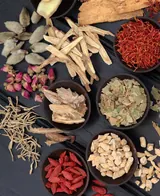
- Herbs traditionally used for joint and muscle pain, prescribed individually by a qualified practitioner
Panchakarma procedures are not appropriate during pregnancy, acute illness or frailty, or before red-flag symptoms have been medically assessed.
What the research shows
The research on Ayurveda for shoulder pain is very limited. We found no systematic reviews and no controlled trials of Ayurvedic treatment for rotator cuff problems. One uncontrolled study of 15 people with frozen shoulder treated with medicated oil nasya for seven days reported improvement in most, but it had no comparison group, so it cannot show that the treatment caused the change.[14]
Ayurvedic products also vary in quality: about one fifth of those bought online in one study contained detectable lead, mercury or arsenic.[15]
Herbal medicine for Shoulder Pain
Herbs and formulas that have been studied
Herbal research for the shoulder is sparse. A 2023 traditional Chinese medicine guideline for frozen shoulder made recommendations on acupuncture, manual therapy, needle knife and two herbal plasters applied to the skin, most of them weak or consensus-based.[16] A supplement containing Boswellia serrata and turmeric (Curcuma longa) has been tested around rotator cuff repair surgery.[17] A cream containing devil's claw, Boswellia, ginger and escin has been tested for neck and shoulder muscle strain.[18]
What the research shows
The evidence is limited. In a placebo-controlled trial of patients having arthroscopic rotator cuff repair, those given the Boswellia and turmeric supplement had lower pain at one week, with no significant difference at later points.[17] The cream study was a supplement registry in people with neck and shoulder muscle strain that compared groups without a placebo and reported less pain, stiffness and rescue medicine use, and it was not designed to show cause.[18] Most of the Chinese guideline's recommendations were weak or based on consensus.[16]
Safety and herb-drug interactions
Herbs are active substances and can interact with medicines. Case reports describe serious bleeding or clotting problems when warfarin was combined with herbs including dang gui (Angelica sinensis), dan shen (Salvia miltiorrhiza), ginger, ginseng and Boswellia.[19] People taking blood thinners need a practitioner's review before using herbs for pain, and your surgeon should know about any herbs before an operation.
Herbs should come from tested sources and be prescribed individually. Tell us if you are pregnant or breastfeeding, have liver or kidney disease, or have surgery planned. Herbal preparations applied to the skin can irritate it and should not be put on broken skin.
Translating traditional medicine into modern biological language
The links drawn here are interpretation, not equivalence. Chinese medicine describes shoulder pain as obstruction of qi and blood in the channels of the shoulder, often attributed to wind, cold or dampness, or to poor nourishment of the tendons. Researchers studying acupuncture measure things that loosely parallel this picture: local tissue response, muscle tension, inflammatory signaling and the way the nervous system amplifies pain.[7]
Ayurveda's aggravated Vata describes dry, stiff, painful joints with limited movement.[14] No study has shown that a dosha corresponds to a specific biological process.
How this care fits with your medical care
Integrative care for shoulder pain is complementary. Keep your physician, physical therapist or orthopedic specialist, and do not stop or change prescribed medicines, injections or exercise programs without your prescriber. We do not diagnose the cause of shoulder pain, so new or worsening shoulder pain, or a suspected tear, should be medically evaluated.
Please bring your diagnosis, any imaging reports, a full list of medicines and supplements, and details of any injections or surgery, planned or past. We ask that you are under a physician's care for this condition and that your treating team knows you are receiving complementary care.
When to seek urgent medical care
Some shoulder symptoms come from a heart problem, infection or a serious injury rather than the shoulder itself.[3]
- Shoulder, arm, jaw or chest pain with shortness of breath, sweating or nausea
- A hot, red, swollen shoulder, especially with fever
- Sudden inability to lift the arm, or a visible deformity, after a fall or injury
- New numbness, tingling or weakness in the arm or hand
- Severe pain at night that does not ease with rest, or shoulder pain with unexplained weight loss or a history of cancer
If any of these occur, call 911 or go to the nearest emergency department.
Frequently asked questions
What is shoulder pain?
Shoulder pain is pain in or around the shoulder joint. It is most often caused by the rotator cuff, the muscles and tendons that steady the joint, which can be irritated, degenerated or torn. It typically hurts with reaching or lifting overhead and at night. Most people can be treated without surgery, usually with exercise-based physical therapy.
Can acupuncture help with shoulder pain?
It may help. A meta-analysis of five randomized trials found less pain and better function with manual acupuncture in shoulder impingement, and shoulder pain was included in a larger analysis of acupuncture for chronic pain. Trials are small and some dry needling studies found no clear benefit. Acupuncture is used alongside medical care and rehabilitation, not in place of them.
Does Ayurvedic or herbal medicine work for shoulder pain?
The evidence is thin. We found no controlled trials of Ayurvedic treatment for rotator cuff problems, only a small uncontrolled study in frozen shoulder. A Boswellia and turmeric supplement lowered pain at one week in one trial after rotator cuff surgery. Herbs should be prescribed individually and checked against your medicines.
Can I stop my pain medicine or avoid surgery if I have acupuncture?
No. Acupuncture, Ayurveda and herbal medicine are complementary care. Do not stop or change prescribed medicines without talking to your prescriber, and follow your physician’s advice about physical therapy, injections or surgery. If you have a sudden loss of strength, a fall or injury, or signs of infection, you need prompt medical assessment.
How soon might I notice a change with acupuncture?
It differs from person to person and no result can be promised. In the meta-analysis of shoulder impingement trials, short courses of four weeks or less showed a benefit. We reassess after a short course of visits to see whether treatment is helping, and continue only if it appears to be.
Does insurance cover acupuncture for shoulder pain?
It may. Netra Integrative Health Clinic is in-network with Blue Cross Blue Shield, Cigna and UnitedHealthcare. Other plans may be covered through out-of-network benefits, and we offer a free benefits check. HSA and FSA cards and CareCredit are also accepted. Call (908) 402-7301 to ask about your plan.
References
- Creech JA, Busse A, Li D, et al. Shoulder Impingement Syndrome. StatPearls [Internet]. 2026. PMID 32119405. StatPearls chapter on shoulder impingement syndrome: how common shoulder pain is, the share due to subacromial impingement, and persistent symptoms in 54% at three years.
- Bedi A, Bishop J, Keener J, et al. Rotator cuff tears. Nat Rev Dis Primers. 2024;10(1):8. PMID 38332156. Nature Reviews review of rotator cuff tears: mostly degenerative origin, tendon and muscle changes, and non-operative care sufficient for most patients.
- Crookes T, Wall C, Byrnes J, et al. Chronic shoulder pain. Aust J Gen Pract. 2023;52(11):753-758. PMID 37935145. Review of chronic shoulder pain in general practice covering differential diagnosis, assessment, non-surgical and surgical options, and when to refer.
- Desmeules F, Roy JS, Lafrance S, et al. Rotator Cuff Tendinopathy Diagnosis, Nonsurgical Medical Care, and Rehabilitation: A Clinical Practice Guideline. J Orthop Sports Phys Ther. 2025;55(4):235-274. PMID 40165544. Clinical practice guideline on diagnosis, nonsurgical care and rehabilitation of rotator cuff tendinopathy, including partial-thickness tears.
- Page MJ, Green S, McBain B, et al. Manual therapy and exercise for rotator cuff disease. Cochrane Database Syst Rev. 2016;2016(6):CD012224. PMID 27283590. Cochrane review of 60 trials of manual therapy and exercise for rotator cuff disease, with mostly low-quality evidence and mild adverse events.
- Dong W, Goost H, Lin XB, et al. Treatments for shoulder impingement syndrome: a PRISMA systematic review and network meta-analysis. Medicine (Baltimore). 2015;94(10):e510. PMID 25761173. Network meta-analysis of 33 trials of treatments for shoulder impingement; exercise-based combinations did well and acupuncture was listed among suitable early treatments.
- Chen T, Zhang WW, Chu YX, et al. Acupuncture for Pain Management: Molecular Mechanisms of Action. Am J Chin Med. 2020;48(4):793-811. PMID 32420752. Review of molecular mechanisms of acupuncture analgesia, including glial cells, inflammatory molecules and descending pain pathways involving endogenous opioids.
- An SJ, Shin WC, Joo S, et al. Effects of acupuncture on shoulder impingement syndrome: A systematic review and meta-analysis. Medicine (Baltimore). 2024;103(37):e39696. PMID 39287298. 2024 meta-analysis of 5 randomized trials finding manual acupuncture reduced pain and improved function in shoulder impingement, with limited patient numbers and heterogeneity.
- Vickers AJ, Vertosick EA, Lewith G, et al. Acupuncture for Chronic Pain: Update of an Individual Patient Data Meta-Analysis. J Pain. 2018;19(5):455-474. PMID 29198932. Individual patient data meta-analysis of 39 trials including shoulder pain, finding acupuncture better than sham and no acupuncture, with effects lasting a year.
- Hando BR, Rhon DI, Barker D, et al. Dry Needling Plus Manual Therapy and Exercise for Subacromial Pain Syndrome: A Sham-Controlled Randomized Clinical Trial. J Orthop Sports Phys Ther. 2026;56(1):50-63. PMID 41476428. Sham-controlled trial of 121 patients with subacromial pain syndrome; adding dry needling to physical therapy did not significantly improve disability at one year.
- Naseri F, Dadgoo M, Pourahmadi M, et al. Dry needling as an adjunct treatment to multimodal rehabilitation protocol following rotator cuff repair surgery: a preliminary, randomized sham-controlled trial. Chiropr Man Therap. 2024;32(1):39. PMID 39639410. Sham-controlled trial of 46 patients after rotator cuff repair; dry needling added to rehabilitation showed no significant pain difference at four weeks.
- Xu B, Zhang L, Zhao X, et al. Efficacy of Combining Acupuncture and Physical Therapy for the Management of Patients With Frozen Shoulder: A Systematic Review and Meta-Analysis. Pain Manag Nurs. 2024;25(6):596-605. PMID 38991907. Meta-analysis of 13 studies finding acupuncture plus physical therapy reduced pain and improved range of motion in frozen shoulder, with high heterogeneity.
- Bäumler P, Zhang W, Stübinger T, et al. Acupuncture-related adverse events: systematic review and meta-analyses of prospective clinical studies. BMJ Open. 2021;11(9):e045961. PMID 34489268. Systematic review of 21 prospective studies finding minor acupuncture reactions in about 9 percent of patients and serious events in about 1 per 10,000.
- Das B, Ganesh RM, Mishra PK, et al. A study on Apabahuka (frozen shoulder) and its management by Laghumasha taila nasya. Ayu. 2010;31(4):488-94. PMID 22048545. Uncontrolled study of 15 patients with Apabahuka (frozen shoulder) given medicated oil nasya for seven days, with description of the Ayurvedic view of the condition.
- Saper RB, Phillips RS, Sehgal A, et al. Lead, mercury, and arsenic in US- and Indian-manufactured Ayurvedic medicines sold via the Internet. JAMA. 2008;300(8):915-23. PMID 18728265. JAMA study finding detectable lead, mercury or arsenic in about one fifth of Ayurvedic medicines purchased over the Internet.
- Qin X, Sun K, Ao Y, et al. Traditional Chinese medicine for frozen shoulder: An evidence-based guideline. J Evid Based Med. 2023;16(2):246-258. PMID 37020403. Evidence-based guideline on traditional Chinese medicine for frozen shoulder with twelve mostly weak recommendations including acupuncture and herbal plasters.
- Merolla G, Dellabiancia F, Ingardia A, et al. Co-analgesic therapy for arthroscopic supraspinatus tendon repair pain using a dietary supplement containing Boswellia serrata and Curcuma longa: a prospective randomized placebo-controlled study. Musculoskelet Surg. 2015;99 Suppl 1:S43-52. PMID 25957549. Placebo-controlled trial around arthroscopic rotator cuff repair of a Boswellia and turmeric supplement, which lowered pain at week one but not later.
- Hu S, Belcaro G, Cesarone MR, et al. A sport cream (Harpago-Boswellia-ginger-escin) for localized neck/shoulder pain. Minerva Med. 2021;112(2):255-260. PMID 32880419. Comparison study of a devil's claw, Boswellia, ginger and escin cream for neck and shoulder muscle pain, reporting less pain and rescue drug use without a placebo.
- Milić N, Milosević N, Golocorbin Kon S, et al. Warfarin interactions with medicinal herbs. Nat Prod Commun. 2014;9(8):1211-6. PMID 25233607. Review of reported interactions between warfarin and medicinal herbs, including bleeding events with dang gui, dan shen, ginger, ginseng and Boswellia.
This page is for general education and is not medical advice. Acupuncture, Ayurvedic medicine and herbal medicine are complementary therapies; they do not replace diagnosis or treatment by your physician. Do not stop or change prescribed treatment without talking to your prescriber. In an emergency call 911.