














- What it is: A benign skin growth caused by an HPV infection. Many types exist, including common, flat, plantar and genital warts.
- Common symptoms: Rough or smooth raised bumps, sometimes dotted with tiny black points; plantar warts on the foot can be painful.
- Conventional care: Salicylic acid, freezing (cryotherapy), other in-office treatments, or waiting, since many warts clear on their own.
- How integrative care fits: Acupuncture, Ayurvedic therapies and individually prescribed herbs are used alongside medical care, with no proven role in clearing the virus.
- Evidence at a glance: Limited for acupuncture, from a few small or low-quality trials; limited for herbal medicine; very limited for Ayurveda, with only a small case series.
What is Warts?
Warts are benign growths of the skin and mucous membranes caused by the human papillomavirus (HPV), of which more than 100 types are known.[1] In people with a healthy immune system they are harmless and usually go away through natural immunity within months or years.[2]
Common symptoms
Warts appear as small raised growths, and what they look like depends on the type and the place on the body. The main forms are common warts, flat warts, deep plantar warts on the sole, and genital warts.[1]
- Rough, raised bumps on the hands, fingers or knees (common warts)
- Small, smooth, flat-topped bumps, often on the face or legs (flat warts)
- Painful, thickened spots on the sole of the foot, sometimes hard to tell from a callus (plantar warts)[3]
- Soft growths in the genital or anal area (genital warts), which need medical evaluation[4]
Causes and risk factors
Warts are caused by HPV infection of the skin. They can spread through direct or indirect contact, and breaks in the skin barrier make infection more likely.[1] The virus probably enters through areas of minor injury, and risk factors include communal showers, handling meat at work and a weakened immune system.[2]
Some HPV types carry a risk of cancer, particularly in genital warts and in people with weakened immunity, which is why genital and unusual warts need a physician's care.[1, 4]
How it is diagnosed and treated conventionally
Warts are usually diagnosed by how they look, and a clinician should check any growth that is unusual, changing, bleeding or in the genital area.[5]
Treatment can be difficult, and many warts resolve without it.[1] A Cochrane review of 85 trials found that salicylic acid applied to the skin cleared warts more often than placebo, although the effect was modest. Cryotherapy was not clearly better than placebo or salicylic acid, and the review noted that cryotherapy probably causes more pain, blistering and scarring.[6] Plantar warts in particular can be resistant to treatment.[3]
Why Warts calls for a whole-person approach
Warts are an infection, but whether a wart appears, spreads or clears depends partly on the person. Most HPV infections are controlled or cleared by the body's immune responses, and warts appear more often in people with weakened immunity.[2, 3]
Medical removal treats the lesion but does not directly address the host factors that decide whether the virus persists.
Immune response
Warts usually clear when natural immunity recognizes the virus, which is why they often disappear on their own and why immunosuppression raises risk.[2] Immune-based treatments are used for stubborn warts: the Cochrane review found that dinitrochlorobenzene, a contact sensitizer, was more than twice as effective as placebo in two small trials of 80 participants.[6]
Skin barrier and exposure
Events that disrupt the skin barrier make warts more likely, and the virus spreads through direct or indirect contact.[1] Communal showers are a recognized risk factor.[2]
Persistence and recurrence
Plantar warts shed virus that can infect nearby skin or other people, and they often resist treatment.[3] Care often involves patience over weeks to months.
Stress, sleep and general health
Stress and poor sleep are not established causes of warts, and we are not aware of research that links them to wart persistence. Supportive care aimed at general health and stress is offered only as a way to feel better during a long-running skin problem, not as a treatment for the virus.
Acupuncture for Warts
What the research shows
Research on acupuncture for warts is limited, and most of it concerns flat warts and comes from China. In a single-blind trial of 60 people with flat warts, weekly auricular (ear) acupuncture for 10 weeks led to full recovery without recurrence in 16 of 30 people, compared with 1 of 30 using tretinoin ointment. The authors called for larger trials, and no adverse effects were reported.[7]
Separately, a systematic review of 29 trials with 2,666 patients looked at fire needle therapy, a heated-needle technique used in Chinese medicine that differs from the fine, unheated needles of standard acupuncture. It found that fire needle therapy appeared more effective than immunomodulators or tretinoin for flat warts, with more skin pigmentation as a downside.[8] Fire needle therapy is not a service we offer, and the review is included only to show what research exists.
We found no trials of standard acupuncture for common, plantar or genital warts.
How acupuncture may work
We found no mechanism research on acupuncture for warts. A review of traditional Chinese medicine, mainly herbal treatment, for HPV infections suggested that such treatments might act on immune function, but this is a proposal rather than a settled finding and it was not about acupuncture.[9]
What treatment involves
Treatment uses fine, sterile, single-use needles placed at points chosen for you, which may include points on the ear, and usually left in place for about 20 to 40 minutes. A course of several visits is typical, with reassessment along the way. Needles are not placed directly into warts or inflamed skin.
In prospective studies, about 9 in 100 patients had a minor reaction such as bleeding, soreness or redness at a needle site, and serious events occurred in about 1 in 10,000 patients.[10] Tell the practitioner first if you have a bleeding disorder, take blood thinners, are pregnant, or have a pacemaker (relevant to electroacupuncture). If you have a weakened immune system, tell us and your physician before any treatment.
Ayurvedic medicine for Warts
The Ayurvedic view
Ayurveda describes warts as Charmakila and classifies them by which dosha is thought to dominate.[11] In this traditional framework, warts reflect imbalance in the skin and blood tissues, and general digestion and routine are considered relevant. These are traditional categories used to choose treatment, not biomedical diagnoses.
Therapies that may be used
Care is chosen for the individual and traditionally combines:
- Diet and daily routine, such as regular meals, plenty of cooked vegetables and steady sleep
- Herbs taken by mouth or applied, selected and prescribed individually by a qualified practitioner
- Transdermal medication therapy, meaning an herbal preparation applied to the skin, where appropriate
Classical texts also describe alkaline herbal preparations (Kshara), thermal cautery and surgery for warts,[11] but these procedures are not part of our services. Panchakarma is not appropriate during pregnancy, acute illness or frailty, and it is not a treatment for the virus itself.
What the research shows
The research is very limited. We found no randomized trials of Ayurvedic treatment for warts. A published case series of different wart types treated with an injection of an alkaline herbal solution reported that warts shed within days and left minor scars, with no adverse reactions. A case series has no comparison group and cannot show that the treatment works.[11]
Herbal medicine for Warts
Herbs and formulas that have been studied
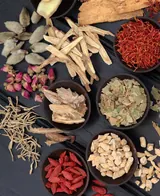
Several plant-based treatments have been tested in small trials. They include propolis (a bee product) and echinacea taken by mouth, a garlic extract applied to warts, Chinese herbal preparations for flat warts and genital warts, and green tea extract ointment for genital warts.[12, 13, 14, 15, 16]
What the research shows
The evidence is limited, and much of it is from small single-center trials. In a single-blind trial of 135 people with several wart types, oral propolis cleared the warts of 75 percent of those with flat warts and 73 percent of those with common warts, results better than echinacea or placebo, although this was one trial from one setting.[12] In a trial of 50 patients with stubborn common warts, a garlic extract applied to a single wart (the largest, if there were several) gave a complete response in 96 percent, compared with a saline control.[13]
For Chinese medicine, a trial of herbal treatment for flat warts reported a better response with herbs than with a Western medicine comparator (86.7 percent versus 71.7 percent), but its details are sparse.[14] A trial of 160 people with genital warts found that adding oral Chinese herbs to CO2 laser removal was followed by a lower relapse rate than laser alone, 25.7 percent against 40.8 percent.[15] A systematic review of traditional Chinese medicine for HPV infections said clinical indicators improved in genital warts and cervical cancer, with proposed effects on immune function.[9]
The best-supported botanical product is a prescription green tea extract ointment for external genital warts. A meta-analysis of three placebo-controlled trials with 1,247 participants found it cleared warts more often than placebo with very low recurrence, with local redness and itching the most common effects.[16] It is a prescription medicine used under a physician's direction.
Safety and herb-drug interactions
Herbs are active substances and can interact with medicines. Case reports describe bleeding when warfarin was combined with herbs including dang gui (Angelica sinensis), dan shen (Salvia miltiorrhiza), ginger, ginseng and Boswellia.[17]
Herbal supplements can also injure the liver, and green tea extract is among the products implicated.[18] About one fifth of Ayurvedic products bought online contained detectable lead, mercury or arsenic.[19] Herbs should come from tested sources and be prescribed individually. Do not apply herbs or essential oils to open, bleeding or genital skin without your physician's approval. Tell us if you are pregnant or breastfeeding, have liver or kidney disease, or take medicines that affect the immune system.
Translating traditional medicine into modern biological language
The links drawn here are interpretation, not equivalence. Chinese medicine often describes warts as arising from heat, dampness or stagnation of qi and blood in the skin, sometimes related to the liver channel. Researchers studying warts instead look at HPV infection of skin cells and the immune response that clears it, and some Chinese medicine studies measure immune cell markers.[1, 15]
Ayurveda's view of an imbalance in the skin and blood tissues has no direct biomedical counterpart. The nearest idea is the host immune response that controls HPV.[3] No study has shown that a dosha or a pattern corresponds to a specific biological process.
How this care fits with your medical care
Integrative care for warts is complementary. Keep your physician or dermatologist, and do not stop or change prescribed treatments without your prescriber. We do not diagnose skin growths, and any growth that is new, changing, bleeding, or in the genital area should be evaluated by a clinician.
Please bring your diagnosis, a list of the treatments you have tried, a full list of medicines, creams and supplements, and information on any condition that affects your immune system.
When to seek urgent medical care
Most warts are not urgent, but some changes need prompt attention.
- A wart or skin growth that bleeds, grows quickly, changes color or does not respond to treatment
- Spreading redness, warmth, swelling, pus or fever around a wart, which may be infected
- Warts in the genital or anal area, or in the mouth or throat
- Many new warts in someone with a weakened immune system, for example from HIV, an organ transplant or immune-suppressing medicine
- A painful wart on the foot in a person with diabetes or poor circulation
If you have heavy bleeding or signs of a spreading infection with high fever, call 911 or go to the nearest emergency department.
Frequently asked questions
What are warts?
Warts are harmless growths on the skin or mucous membranes caused by the human papillomavirus (HPV). They can appear as rough bumps, small flat bumps or painful spots on the soles, and some types affect the genital area. Many warts clear on their own within months or years as the immune system responds, though they can be stubborn and may return.
Can acupuncture help with warts?
The evidence is limited. One single-blind trial of ear acupuncture in 60 people with flat warts reported much higher clearance than tretinoin ointment, but it was small and larger trials are needed. We found no trials of standard acupuncture for common, plantar or genital warts. Acupuncture is used alongside medical care, not in place of it.
Does Ayurvedic or herbal medicine work for warts?
The evidence is thin. For Ayurveda we found only a small case series with no comparison group. For herbs, small trials of propolis, garlic extract and Chinese herbal treatments reported benefit, but the studies were few and often limited in quality. A green tea extract ointment has stronger support for genital warts and is a prescription medicine.
Can I skip wart treatment from my doctor if I use herbs or acupuncture?
No. Acupuncture, Ayurveda and herbal medicine are complementary care. Do not stop or change treatments from your physician or dermatologist. Warts in the genital area, or any growth that is changing or bleeding, need medical evaluation, and people with weakened immunity should be under a physician’s care.
How soon might I notice a change with complementary care?
It differs from person to person and no result can be promised. Warts often take weeks to months to clear even with medical treatment, and many go away by themselves. The ear acupuncture trial gave weekly sessions for 10 weeks. We reassess after a short course of visits to see whether treatment is helping.
Does insurance cover acupuncture for warts?
It may. Netra Integrative Health Clinic is in-network with Blue Cross Blue Shield, Cigna and UnitedHealthcare. Other plans may be covered through out-of-network benefits, and we offer a free benefits check. HSA and FSA cards and CareCredit are also accepted. Call (908) 402-7301 to ask about your plan.
References
- Al Aboud AM, Nigam PK. Wart. StatPearls [Internet]. 2023. PMID 28613701. StatPearls chapter on warts covering HPV causes, wart types, transmission, skin barrier disruption, spontaneous resolution and cancer-associated HPV types.
- Loo SK, Tang WY. Warts (non-genital). BMJ Clin Evid. 2014;2014. PMID 24921240. BMJ Clinical Evidence review of non-genital warts noting that they are caused by HPV, that risk factors include communal showers and immunosuppression, and that they usually resolve naturally.
- Witchey DJ, Witchey NB, Roth-Kauffman MM, et al. Plantar Warts: Epidemiology, Pathophysiology, and Clinical Management. J Am Osteopath Assoc. 2018;118(2):92-105. PMID 29379975. Review of plantar warts covering HPV transmission, immune control, treatment resistance and pain.
- Luria L, Cardoza-Favarato G. Human Papillomavirus. StatPearls [Internet]. 2023. PMID 28846281. StatPearls chapter on human papillomavirus covering wart types, genital warts and cancer-associated subtypes.
- Zhu P, Qi RQ, Yang Y, et al. Clinical guideline for the diagnosis and treatment of cutaneous warts (2022). J Evid Based Med. 2022;15(3):284-301. PMID 36117295. 2022 clinical guideline on diagnosis and treatment of cutaneous warts, with 49 graded recommendations covering common, flat, plantar and genital warts.
- Kwok CS, Gibbs S, Bennett C, et al. Topical treatments for cutaneous warts. Cochrane Database Syst Rev. 2012;2012(9):CD001781. PMID 22972052. Cochrane review of 85 trials of topical treatments for common warts, finding modest benefit from salicylic acid and no clear advantage for cryotherapy.
- Ning S, Li F, Qian L, et al. The successful treatment of flat warts with auricular acupuncture. Int J Dermatol. 2012;51(2):211-5. PMID 22250633. Single-blind trial of 60 people with flat warts finding weekly ear acupuncture cleared more warts than tretinoin ointment, with no adverse effects reported.
- Zhang Y, Jiang JS, Kuai L, et al. Efficacy and Safety of Fire Needle Therapy for Flat Warts: Evidence from 29 Randomized Controlled Trials. Evid Based Complement Alternat Med. 2021;2021:9513762. PMID 33531926. Review of 29 trials (2,666 patients) of fire needle therapy for flat warts, finding better efficacy than some drugs but more skin pigmentation.
- Lin J, Chen L, Qiu X, et al. Traditional Chinese medicine for human papillomavirus (HPV) infections: A systematic review. Biosci Trends. 2017;11(3):267-273. PMID 28484110. Systematic review of traditional Chinese medicine for HPV infections, reporting improved clinical indices in genital warts and proposed immune-related mechanisms.
- Bäumler P, Zhang W, Stübinger T, et al. Acupuncture-related adverse events: systematic review and meta-analyses of prospective clinical studies. BMJ Open. 2021;11(9):e045961. PMID 34489268. Systematic review of 21 prospective studies finding minor acupuncture reactions in about 9 percent of patients and serious events in about 1 per 10,000.
- Gundeti MS, Reddy RG, Muralidhar JV. Subcutaneous intralesional Ksharodaka injection: A novel treatment for the management of Warts: A case series. J Ayurveda Integr Med. 2014;5(4):236-40. PMID 25624698. Case series of warts treated with an Ayurvedic alkaline herbal solution injection, describing the traditional classification and reporting rapid shedding with minor scars.
- Zedan H, Hofny ER, Ismail SA. Propolis as an alternative treatment for cutaneous warts. Int J Dermatol. 2009;48(11):1246-9. PMID 20064186. Single-blind trial of 135 people finding oral propolis cleared most common and flat warts better than echinacea or placebo.
- Kenawy S, Mohammed GF, Younes S, et al. Evaluation of TNF-α serum level in patients with recalcitrant multiple common warts, treated by lipid garlic extract. Dermatol Ther. 2014;27(5):272-7. PMID 24910383. Randomized trial of 50 patients with recalcitrant common warts finding a lipid garlic extract applied to lesions gave higher clearance than saline.
- Chen HM. [Verruca planae Chinese medicine treatment]. Zhonghua Shi Yan He Lin Chuang Bing Du Xue Za Zhi. 2008;22(4):302-4. PMID 19105351. Small randomized trial of Chinese herbal treatment for flat warts reporting a better response than a Western medicine control, with limited detail.
- Xu H, Shen Q, Fan B, et al. Effectiveness of a combination therapy of traditional Chinese medicine and CO2 laser treatment for condyloma acuminatum. J Med Virol. 2020;92(12):3889-3894. PMID 32320078. Randomized trial of 160 people with genital warts finding oral Chinese medicine added to CO2 laser lowered relapse versus laser alone.
- Tzellos TG, Sardeli C, Lallas A, et al. Efficacy, safety and tolerability of green tea catechins in the treatment of external anogenital warts: a systematic review and meta-analysis. J Eur Acad Dermatol Venereol. 2011;25(3):345-53. PMID 21294779. Meta-analysis of three placebo-controlled trials of green tea catechin ointment finding higher clearance of external genital warts and low recurrence.
- Milić N, Milosević N, Golocorbin Kon S, et al. Warfarin interactions with medicinal herbs. Nat Prod Commun. 2014;9(8):1211-6. PMID 25233607. Review of reported interactions between warfarin and medicinal herbs, including bleeding events with dang gui, dan shen, ginger, ginseng and Boswellia.
- Navarro VJ, Khan I, Björnsson E, et al. Liver injury from herbal and dietary supplements. Hepatology. 2017;65(1):363-373. PMID 27677775. Hepatology review of liver injury from herbal and dietary supplements, noting green tea extract among implicated products.
- Saper RB, Phillips RS, Sehgal A, et al. Lead, mercury, and arsenic in US- and Indian-manufactured Ayurvedic medicines sold via the Internet. JAMA. 2008;300(8):915-23. PMID 18728265. JAMA study finding detectable lead, mercury or arsenic in about one fifth of Ayurvedic medicines purchased over the Internet.
This page is for general education and is not medical advice. Acupuncture, Ayurvedic medicine and herbal medicine are complementary therapies; they do not replace diagnosis or treatment by your physician. Do not stop or change prescribed treatment without talking to your prescriber. In an emergency call 911.