














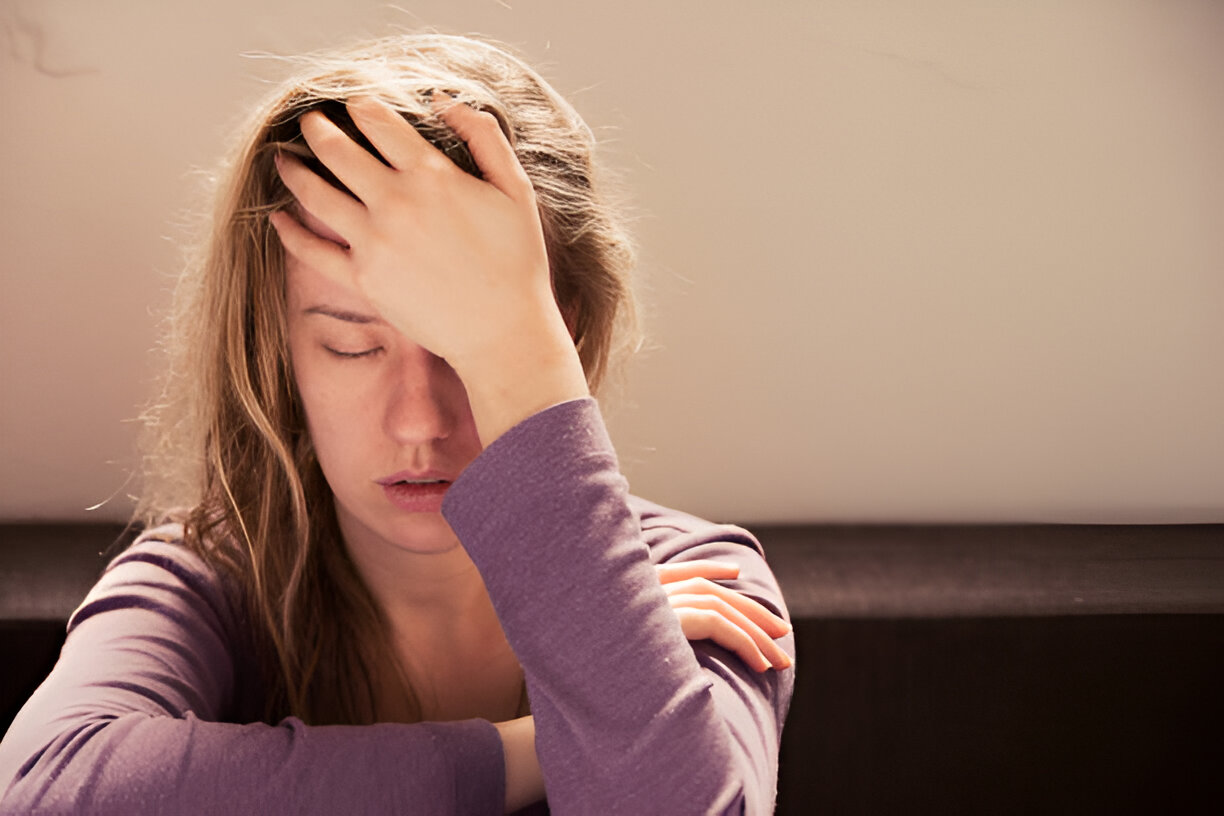
- What it is: Ongoing physical, mental and emotional tiredness out of proportion to activity, caused by cancer or its treatment, that does not go away with rest.
- Common symptoms: Heavy exhaustion, weak muscles, trouble concentrating, low motivation and poor sleep, during or long after treatment.
- Conventional care: Checking for treatable causes, exercise, cognitive behavioral therapy, mindfulness-based programs, and medical review of medicines and other conditions.
- How integrative care fits: Acupuncture, acupressure and related therapies may be added alongside medical care to help with fatigue, sleep and stress.
- Evidence at a glance: Limited for acupuncture and acupressure, with studies of mixed quality and some sham-controlled trials showing no clear difference from sham; limited for herbal medicine; limited for Ayurveda, with one small non-randomized ashwagandha trial.
What is Cancer-Related Fatigue?
Cancer-related fatigue is a distressing, persistent tiredness that is out of proportion to recent activity and is not relieved by rest. It is one of the most common symptoms in people with cancer, and in a large meta-analysis about 43% of patients reported fatigue, with about 71% when mild fatigue was counted.[1]
Common symptoms
People describe heavy exhaustion, weak or heavy limbs, difficulty thinking clearly, low motivation, and a sense that ordinary tasks take far more effort than before.[2] Fatigue often travels with poor sleep, low mood and pain.[3]
- Tiredness that sleep or rest does not fix
- Trouble concentrating or remembering
- Reduced ability to do usual daily activities
- Fatigue that continues months or years after treatment ends[2]
Causes and risk factors
Fatigue can come from the cancer itself, from treatments such as chemotherapy, radiation and surgery, or from related problems such as anemia, poor sleep, pain, low mood and other medical conditions.[2] Researchers have linked it to inflammation, muscle and mitochondrial changes, and altered stress-hormone and brain signaling, but the exact cause is not known.[4]
In the meta-analysis, severe fatigue was more common during active treatment than before treatment, more common after chemotherapy than after surgery or radiation, and more common in women.[1]
How it is diagnosed and treated conventionally
Fatigue is identified through your own description and symptom scales, and your oncology team looks for treatable contributors. It is often under-diagnosed and under-treated.[2] Patients report fatigue more often than doctors record it: in the meta-analysis, severe fatigue was reported far more often by patients than by physicians.[1]
There is no single standard treatment, and exercise has the best support for preventing or reducing fatigue during and after treatment.[2] The 2024 ASCO-Society for Integrative Oncology guideline, based on 113 trials, recommends exercise, cognitive behavioral therapy and mindfulness-based programs, and it advises against routine use of psychostimulants and against L-carnitine.[5]
Why Cancer-Related Fatigue calls for a whole-person approach
Cancer-related fatigue rarely has one cause, so it is rarely fixed by one treatment. Biology, treatment effects, sleep, mood and physical activity can all contribute, and the guideline evidence reflects this: the best-supported approaches are mostly active and behavioral.[4, 5]
Complementary care can sit alongside those approaches. Its role is to support comfort, sleep and stress, not to replace exercise or counseling.
Inflammation and body chemistry
Reviews describe raised inflammatory signals, mitochondrial and muscle changes, and disrupted stress-hormone (HPA axis) function in people with cancer-related fatigue.[4] Whether treating these directly relieves fatigue is not established.
Sleep and stress
Fatigue is closely tied to sleep problems. In one trial of self-acupressure in ovarian cancer survivors, fatigue improved while sleep quality did not, which shows the two are related but separate targets.[6]
Pain and mood
Fatigue is strongly correlated with pain in cancer survivors.[3] A 2023 trial in people with advanced cancer found that acupuncture and massage improved pain, fatigue, insomnia and quality of life together.[7]
Acupuncture for Cancer-Related Fatigue
What the research shows
Research suggests acupuncture and related methods may reduce cancer-related fatigue, but the studies are mixed in quality. A 2023 network meta-analysis of 34 trials with 2,632 participants found acupuncture treatments, especially combined with usual care, improved fatigue scores and had acceptable side effects, while calling for larger, higher-quality trials.[8] An earlier meta-analysis of 7 trials with 804 participants found fatigue benefits for acupuncture and moxibustion despite several weaknesses in the studies.[9] An overview of 51 systematic reviews listed fatigue among the symptoms acupuncture may help, but rated most of the reviews as low or very low methodological quality.[10]
A secondary analysis of a US trial of 274 cancer survivors with chronic pain found fatigue fell by about 2 points on a 10-point scale with electroacupuncture or battlefield (ear) acupuncture, and the benefit lasted to 24 weeks. This was not a sham-controlled comparison of fatigue; the comparison was a waitlist.[3]
Acupressure, which uses finger pressure instead of needles, has its own evidence. The 2024 ASCO guideline says acupressure and moxibustion may be recommended for fatigue after treatment is complete, and rated the evidence overall as low to moderate certainty.[5] A 2026 trial in ovarian cancer survivors found that app-taught self-acupressure lowered fatigue compared with usual care, but the sham version also lowered it, and the two did not differ significantly.[6]
Moxibustion, which warms points with burning mugwort, has mixed support. An infrared laser moxibustion trial in breast cancer survivors found less fatigue than waitlist control, but the difference from sham treatment at 6 weeks was not significant, although it was at 18 weeks, and the authors said the result needs confirming in larger trials.[11] A network meta-analysis of 49 trials of non-drug therapies ranked massage first, followed by infrared laser and ginger moxibustion, though each therapy had few studies.[12]
How acupuncture may work
How acupuncture might relieve fatigue is not known, and the studies above did not establish a mechanism. Cancer-related fatigue has been linked to inflammation and altered HPA-axis (stress-hormone) function, so an effect on those pathways is a possible but unproven explanation.[4]
What treatment involves
Treatment uses fine, sterile, single-use needles placed at points chosen for you, usually left in for about 20 to 40 minutes. Trials gave about 10 to 12 sessions over several weeks, and we reassess after a short course of visits.[3, 11]
Side effects are usually minor. In prospective studies, about 9 in 100 patients had a minor reaction such as bleeding, soreness or redness at a needle site, and serious events occurred in about 1 in 10,000.[13]
Tell the practitioner first if you have a low platelet count or low white blood cell count, a bleeding disorder, take blood thinners, have lymphedema in a limb, are pregnant, or have a pacemaker (relevant to electroacupuncture).
Ayurvedic medicine for Cancer-Related Fatigue
The Ayurvedic view
In Ayurveda, deep tiredness is traditionally linked to depleted ojas (vital essence) and to weakened digestive fire (agni) and tissues (dhatus), and cancer care is traditionally framed in terms of the doshas and the state of the tissues.[14] These are traditional frameworks, not biomedical diagnoses.
Therapies that may be used
Care is chosen for the individual and is gentle in this setting:
- Diet and daily routine centered on regular warm meals, rest and steady sleep
- Light oil massage, if your oncology team agrees it is suitable for your skin and treatment area
- Individually prescribed herbs traditionally used for strength and stamina, such as ashwagandha, only after your oncology team has been informed and your cancer treatment and medicines have been reviewed
Panchakarma is not appropriate during pregnancy, acute illness, frailty or active chemotherapy, and in cancer care it should not be used without your oncology team's agreement.
What the research shows
The research on Ayurvedic treatment for cancer-related fatigue is very sparse. We found one open-label, non-randomized trial of 100 women with breast cancer, in which those who took ashwagandha root extract during chemotherapy reported less fatigue and better quality of life than those on chemotherapy alone. Its authors said a larger randomized trial is needed to confirm the findings.[15] We found no systematic reviews of Ayurvedic treatments for cancer-related fatigue.
The rest of the Ayurvedic cancer literature we found is about traditional concepts of how disease develops, not tested fatigue treatments.[14] Any benefit is therefore unproven, and Ayurvedic care here is offered for general support, sleep and stress, not as a proven fatigue treatment.
Herbal medicine for Cancer-Related Fatigue
Herbs and formulas that have been studied
Most research covers Chinese herbal formulas given with conventional care, and ginseng.[16, 17] American ginseng (Panax quinquefolius) is the single herb that cancer-fatigue guidelines and reviews address.[5, 18]
What the research shows
The evidence is limited. A review of 10 trials with 751 participants found Chinese herbal medicine appeared to relieve cancer-related fatigue, but the methodological quality was generally poor and the authors said the evidence was not enough for firm conclusions.[16] For ginseng, the 2024 ASCO guideline says American ginseng may be recommended for people having cancer treatment, while noting that other dietary supplements did not improve fatigue.[5] A systematic review of 10 ginseng studies in fatigue from chronic illness found modest evidence of benefit and a low risk of adverse events, and asked for stronger research.[17] An earlier review rated ginseng as an option during active treatment and said no therapy could be definitively recommended.[18]
Safety and herb-drug interactions
Herbs are active substances, and in people with cancer the cautions matter more. Case reports describe bleeding when warfarin was combined with herbs including ginseng, dang gui, dan shen, ginger and Boswellia.[19] Tell us about every medicine you take, including chemotherapy, targeted therapy and blood thinners, and let your oncologist know about any herb before you start it.
In one study, about one fifth of Ayurvedic products bought online contained detectable lead, mercury or arsenic.[20] Herbs should come from tested sources and be prescribed individually. Tell us if you are pregnant or breastfeeding, have liver or kidney disease, or have surgery or radiation planned.
Translating traditional medicine into modern biological language
The links drawn here are interpretation, not equivalence. Chinese medicine often describes cancer-related fatigue as deficiency of qi and blood, with weakness of the spleen. Researchers studying fatigue instead look at inflammation, mitochondrial energy production, and stress-hormone signaling.[4]
Ayurveda's depleted ojas and weakened agni describe a state of low vitality and poor digestion and tissue nourishment. No study has shown that these concepts correspond to a specific biological process.
How this care fits with your medical care
For a condition like this, we ask that you are under a physician's care for it and that your treating team knows you are receiving complementary care. Integrative care is added to, never substituted for, your oncology care, exercise, counseling and other evidence-based treatment. Do not stop or change prescribed treatment without your prescriber.
We do not diagnose the cause of fatigue or treat the cancer. Please bring your diagnosis, current treatment plan, a full list of medicines and supplements, and recent blood test results, including blood counts. Sudden or worsening fatigue should be reported to your oncology team.
When to seek urgent medical care
Fatigue that is sudden or severe can signal a problem that needs prompt assessment.
- Fever or chills, especially during chemotherapy
- Shortness of breath, chest pain or a racing heartbeat
- Fainting, severe dizziness or confusion
- Black stools, vomiting blood or unusual bleeding or bruising
- A swollen, painful leg
- Thoughts of ending your life (call or text 988, the Suicide and Crisis Lifeline)
If any of these occur, call 911 or go to the nearest emergency department.
Frequently asked questions
What is cancer-related fatigue?
Cancer-related fatigue is a lasting tiredness caused by cancer or its treatment that is out of proportion to activity and does not improve with rest. It can affect energy, thinking and mood, and it may continue long after treatment ends. Your oncology team can look for treatable causes and recommend approaches such as exercise or counseling.
Can acupuncture help with cancer-related fatigue?
Research suggests it may. Several meta-analyses found less fatigue with acupuncture, and a US trial in cancer survivors with pain saw clinically meaningful drops in fatigue. Many studies were small or low quality, and some compared acupuncture only with waiting rather than sham treatment. Acupuncture is used alongside medical care and exercise, not instead of them.
Does Ayurvedic or herbal medicine work for cancer-related fatigue?
The evidence is thin. For Ayurveda we found only one small non-randomized trial of ashwagandha during chemotherapy, which needs confirming. Chinese herbal formulas and American ginseng have been studied, with some benefit reported, but trial quality was often poor. Herbs can interact with cancer drugs and blood thinners, so they must be prescribed individually and reviewed by your oncology team.
Can I stop exercise or my prescribed treatment if I have acupuncture?
No. Exercise is the best-supported approach to cancer-related fatigue, and acupuncture, Ayurveda and herbal medicine are complementary care. Do not stop or change prescribed treatment without talking to your oncologist or prescriber.
How soon might I notice a change with acupuncture?
It differs from person to person and no result can be promised. In the trials, people received about 10 to 12 sessions over several weeks, and results were measured at 6 to 12 weeks. We reassess after a short course of visits to see whether treatment is helping.
Does insurance cover acupuncture for cancer-related fatigue?
It may. Netra Integrative Health Clinic is in-network with Blue Cross Blue Shield, Cigna and UnitedHealthcare. Other plans may be covered through out-of-network benefits, and we offer a free benefits check. HSA and FSA cards and CareCredit are also accepted. Call (908) 402-7301 to ask about your plan.
References
- Kang YE, Yoon JH, Park NH, et al. Prevalence of cancer-related fatigue based on severity: a systematic review and meta-analysis. Sci Rep. 2023;13(1):12815. PMID 37550326. Meta-analysis of 57 studies finding fatigue in about 43% of cancer patients, with severe fatigue more common during treatment, after chemotherapy and in women.
- Thong MSY, van Noorden CJF, Steindorf K, et al. Cancer-Related Fatigue: Causes and Current Treatment Options. Curr Treat Options Oncol. 2020;21(2):17. PMID 32025928. 2020 review of the causes and treatment of cancer-related fatigue, noting it is under-diagnosed and under-treated and that exercise appears most effective.
- Li X, Lampson K, Rosa WE, et al. Effect of acupuncture on fatigue in cancer survivors with chronic pain: a secondary analysis. Support Care Cancer. 2025;34(1):31. PMID 41389238. Secondary analysis of a trial of 274 cancer survivors with pain finding electroacupuncture or battlefield acupuncture reduced fatigue versus waitlist.
- Yang S, Chu S, Gao Y, et al. A Narrative Review of Cancer-Related Fatigue (CRF) and Its Possible Pathogenesis. Cells. 2019;8(7). PMID 31323874. Narrative review of possible causes of cancer-related fatigue, including mitochondrial dysfunction, inflammation and altered brain and stress-hormone signaling.
- Bower JE, Lacchetti C, Alici Y, et al. Management of Fatigue in Adult Survivors of Cancer: ASCO-Society for Integrative Oncology Guideline Update. J Clin Oncol. 2024;42(20):2456-2487. PMID 38754041. 2024 ASCO-Society for Integrative Oncology guideline from 113 trials recommending exercise, CBT, mindfulness, and noting acupressure, moxibustion and American ginseng.
- Zick SM, Chen D, Harris RE, et al. Self-Acupressure for Fatigue in Patients Surviving Ovarian Cancer: A Randomized Clinical Trial. JAMA Netw Open. 2026;9(2):e2556357. PMID 41642626. Randomized trial of app-taught self-acupressure in 171 ovarian cancer survivors, with true and sham acupressure both lowering fatigue versus usual care.
- Epstein AS, Liou KT, Romero SAD, et al. Acupuncture vs Massage for Pain in Patients Living With Advanced Cancer: The IMPACT Randomized Clinical Trial. JAMA Netw Open. 2023;6(11):e2342482. PMID 37962891. IMPACT randomized trial of 298 patients with advanced cancer finding acupuncture and massage both reduced pain, fatigue and insomnia, with mild adverse events.
- Tian H, Chen Y, Sun M, et al. Acupuncture therapies for cancer-related fatigue: A Bayesian network meta-analysis and systematic review. Front Oncol. 2023;13:1071326. PMID 37051548. Network meta-analysis of 34 trials (2,632 participants) finding acupuncture therapies improved cancer-related fatigue with acceptable safety, calling for larger trials.
- He XR, Wang Q, Li PP. Acupuncture and moxibustion for cancer-related fatigue: a systematic review and meta-analysis. Asian Pac J Cancer Prev. 2013;14(5):3067-74. PMID 23803081. Meta-analysis of 7 trials (804 participants) finding acupuncture and moxibustion appeared helpful for cancer fatigue despite study weaknesses.
- Zhang XW, Hou WB, Pu FL, et al. Acupuncture for cancer-related conditions: An overview of systematic reviews. Phytomedicine. 2022;106:154430. PMID 36099656. Overview of 51 systematic reviews of acupuncture for cancer-related conditions, finding possible benefit for fatigue but mostly low review quality.
- Mao H, Jin M, Xie L, et al. Infrared laser moxibustion for cancer-related fatigue in breast cancer survivors: a randomized controlled trial. Breast Cancer Res. 2024;26(1):80. PMID 38773552. Randomized trial of infrared laser moxibustion in 140 breast cancer survivors, with benefit over waitlist but not clearly over sham at 6 weeks.
- Long Y, Zhou Z, Zhou S, et al. The effectiveness of different non-pharmacological therapies on cancer-related fatigue in cancer patients:A network meta-analysis. Int J Nurs Stud. 2024;160:104904. PMID 39305683. Network meta-analysis of 49 trials of non-drug therapies for cancer fatigue, with massage and moxibustion ranking highest but few studies per therapy.
- Bäumler P, Zhang W, Stübinger T, et al. Acupuncture-related adverse events: systematic review and meta-analyses of prospective clinical studies. BMJ Open. 2021;11(9):e045961. PMID 34489268. Systematic review of 21 prospective studies finding minor acupuncture reactions in about 9 percent of patients and serious events in about 1 per 10,000.
- Chauhan A, Semwal DK, Mishra SP, et al. Ayurvedic concept of Shatkriyakala: a traditional knowledge of cancer pathogenesis and therapy. J Integr Med. 2017;15(2):88-94. PMID 28285613. Review of the Ayurvedic concept of Shatkriyakala, describing a traditional framework for cancer development in terms of doshas, not tested treatments.
- Biswal BM, Sulaiman SA, Ismail HC, et al. Effect of Withania somnifera (Ashwagandha) on the development of chemotherapy-induced fatigue and quality of life in breast cancer patients. Integr Cancer Ther. 2013;12(4):312-22. PMID 23142798. Open-label non-randomized trial of 100 breast cancer patients finding less chemotherapy-related fatigue with ashwagandha root extract than with chemotherapy alone, with a call for randomized trials.
- Su CX, Wang LQ, Grant SJ, et al. Chinese herbal medicine for cancer-related fatigue: a systematic review of randomized clinical trials. Complement Ther Med. 2014;22(3):567-79. PMID 24906595. Systematic review of 10 trials (751 participants) of Chinese herbal medicine for cancer fatigue, suggesting benefit but with generally poor methodological quality.
- Arring NM, Millstine D, Marks LA, et al. Ginseng as a Treatment for Fatigue: A Systematic Review. J Altern Complement Med. 2018;24(7):624-633. PMID 29624410. Systematic review of 10 studies of ginseng for fatigue in chronic illness finding modest evidence of benefit and low risk of adverse events.
- Arring NM, Barton DL, Brooks T, et al. Integrative Therapies for Cancer-Related Fatigue. Cancer J. 2019;25(5):349-356. PMID 31567463. Systematic review of integrative therapies for cancer-related fatigue concluding American ginseng, acupressure and mind-body therapies may be considered but nothing is definitive.
- Milić N, Milosević N, Golocorbin Kon S, et al. Warfarin interactions with medicinal herbs. Nat Prod Commun. 2014;9(8):1211-6. PMID 25233607. Review of case reports of bleeding and other harms when warfarin was combined with medicinal herbs including dang gui, dan shen, ginger, ginseng and Boswellia.
- Saper RB, Phillips RS, Sehgal A, et al. Lead, mercury, and arsenic in US- and Indian-manufactured Ayurvedic medicines sold via the Internet. JAMA. 2008;300(8):915-23. PMID 18728265. JAMA study finding detectable lead, mercury or arsenic in about one fifth of Ayurvedic medicines purchased over the Internet.
This page is for general education and is not medical advice. Acupuncture, Ayurvedic medicine and herbal medicine are complementary therapies; they do not replace diagnosis or treatment by your physician. Do not stop or change prescribed treatment without talking to your prescriber. In an emergency call 911.