










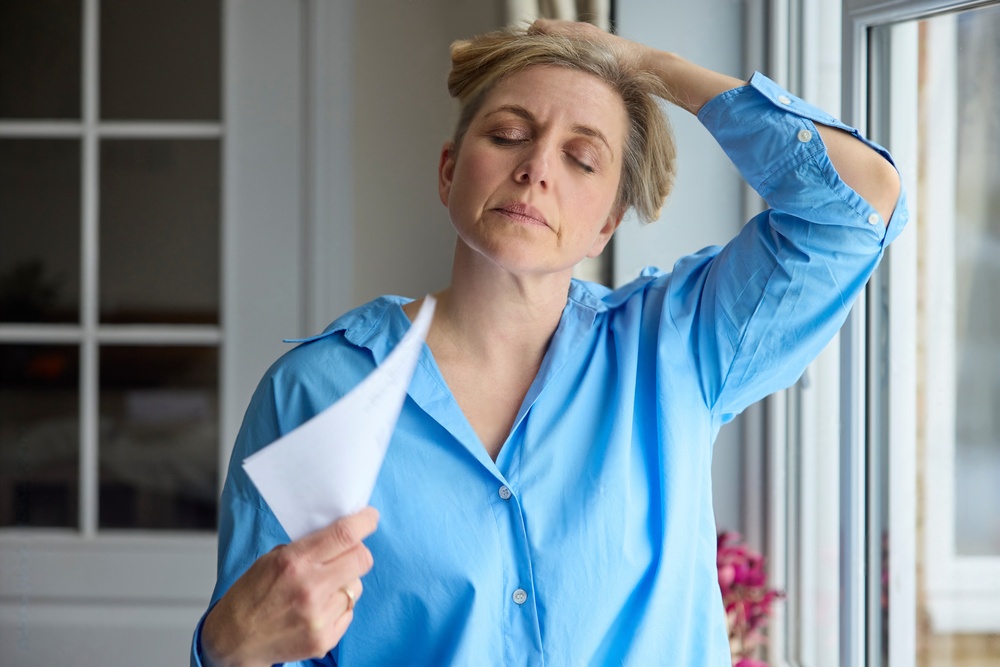
- What it is: Sudden heat, flushing and sweating, often with night sweats, triggered when cancer treatment lowers estrogen or testosterone.
- Common symptoms: Waves of heat in the face, neck and chest, sweating, chills afterward, night sweats, poor sleep, and mood or concentration changes.
- Conventional care: Hormone therapy is often not an option in hormone-sensitive cancers, so non-hormonal medicines, cognitive-behavioral therapy and hypnosis are used.
- How integrative care fits: Acupuncture, Ayurvedic therapies and individually prescribed herbs are used alongside oncology care to ease symptoms and sleep.
- Evidence at a glance: Limited for acupuncture, with several randomized trials but mixed pooled results, low-certainty evidence and high risk of bias; limited for herbal medicine; none for Ayurveda in cancer-related hot flashes.
What is Hot Flashes from Cancer Treatment?
Hot flashes from cancer treatment are episodes of sudden heat, flushing and sweating that begin when cancer therapy lowers sex hormone levels. They are a form of vasomotor symptom, the same family of symptoms as menopausal hot flashes, but they can be more severe and can affect women, men and younger people.[1, 2]
Common symptoms
The typical hot flash is a wave of heat across the face, neck and chest, with sweating and skin flushing, sometimes followed by chills. At night the same events appear as night sweats.[2]
- Disturbed sleep and daytime tiredness
- Changes in mood, sexual function and quality of life
- In some people, symptoms that overlap with fatigue or other treatment effects, which can make the cause hard to sort out[1]
Causes and risk factors
Many cancer treatments reduce estrogen or testosterone, and that drop is what triggers vasomotor symptoms. Examples include chemotherapy that stops the ovaries, surgical removal of the ovaries, endocrine therapy for hormone receptor-positive breast cancer, and androgen deprivation therapy for prostate cancer.[2, 3] Researchers link the symptoms to changes in the brain's temperature-control pathways in the hypothalamus.[2]
Symptoms after cancer treatment can be more severe than at natural menopause, especially when the hormone drop is abrupt.[1]
How it is diagnosed and treated conventionally
Hot flashes are recognized from the pattern of symptoms and the treatment history, and your oncology team decides whether other causes need to be ruled out.[1] Menopausal hormone therapy is the most effective treatment, but it is generally avoided in hormone-sensitive cancers.[2, 4]
Non-hormonal options with good evidence include cognitive-behavioral therapy, clinical hypnosis, certain antidepressants, gabapentin and a newer class of drugs that act on the brain's temperature-control pathway. These medicines can have side effects that limit their use.[2, 4] In men on androgen deprivation therapy, oxybutynin and antidepressants have been used, and acupuncture and cognitive-behavioral therapy may have a role.[3]
Why Hot Flashes from Cancer Treatment calls for a whole-person approach
Hot flashes are not only a nuisance. They can disrupt sleep and quality of life, and they can make it harder for people to keep taking treatment such as endocrine therapy.[2] A plan that addresses several contributors at once is therefore reasonable, with your oncology team guiding the cancer treatment itself.
The sections below describe factors that interact with hot flashes. Complementary care can address some of them, but it cannot change the underlying hormone effects of your cancer therapy.
Hormone drop and temperature control
The trigger is a fall in sex hormones, and the symptoms are tied to the hypothalamic pathway that controls body temperature.[2] Newer drugs that act on that pathway are being studied for this reason.[2]
Sleep
Night sweats disrupt sleep, and poor sleep makes the day harder. In a small trial of 58 breast cancer survivors with daily hot flashes, electroacupuncture improved sleep quality about as well as gabapentin over 8 weeks.[5]
Mood, stress and quality of life
Menopausal symptoms after cancer extend beyond hot flashes to include sleep, mood and quality of life.[1] Mind-body approaches such as cognitive-behavioral therapy and hypnosis have good-quality evidence for vasomotor symptoms, and they are worth discussing with your care team alongside any complementary care.[4]
Staying on cancer treatment
Hot flashes are linked with reduced tolerability of and adherence to cancer treatment.[2] If symptoms are making you consider stopping a cancer medicine, talk to your oncologist first. Do not stop on your own.
Acupuncture for Hot Flashes from Cancer Treatment
What the research shows
Acupuncture has been studied in several randomized trials, and the results are mixed. Most trials involve women with breast cancer. A systematic review of eight randomized trials in cancer patients found that every study showed improvement in the true acupuncture groups, but only a few showed a clear advantage over sham acupuncture, and none had a low risk of bias. The authors judged the evidence insufficient to support or refute benefit.[6]
More recent trials are somewhat more encouraging. In a trial of 120 breast cancer survivors, electroacupuncture, sham acupuncture, gabapentin and placebo pills were compared over 8 weeks. Hot flash scores fell most with electroacupuncture, then sham acupuncture, gabapentin and placebo pills. The authors called the findings preliminary and noted that the pill groups had more adverse events.[7]
An Italian trial of 190 women found that 10 acupuncture sessions plus enhanced self-care lowered hot flash scores more than self-care alone, with benefit still present 6 months later. Because there was no sham control, expectation may have played a part.[8] A pooled analysis of three trials in the United States, China and South Korea (158 women) found that 20 sessions over 10 weeks improved hot flash scores and endocrine symptoms compared with delayed treatment, although the effect differed by site.[9] A 2025 meta-analysis of 11 trials (963 women) found lower hot flash symptom scores with acupuncture but no clear reduction in how often hot flashes occurred, and it rated the evidence as low certainty with a high risk of bias.[10] The 2023 North American Menopause Society statement, which covers menopausal hot flashes in general rather than cancer specifically, did not recommend acupuncture and rated the evidence as limited or inconsistent.[4]
In prostate cancer, evidence is much thinner. A pilot study of 22 men on androgen deprivation therapy reported that about 4 in 10 had at least a 50 percent drop in hot flash score after 4 weeks, but it had no control group.[11]
How acupuncture may work
How acupuncture might reduce hot flashes is not settled. In a small trial of 24 breast cancer patients, 5 weeks of acupuncture improved hot flash scores and changed brain connectivity on functional MRI, but without a sham group this cannot show that the needling itself caused the change.[12] The sham-versus-placebo-pill difference in the electroacupuncture trial also suggests that the ritual and expectation of a procedure contribute to the response.[7]
What treatment involves
Sessions use fine, sterile, single-use needles placed at points chosen for the person, typically for about 20 to 40 minutes. Some practitioners add mild electrical stimulation. The trials above gave treatment over 8 to 12 weeks, with 10 to 20 sessions where the number was reported, and we reassess after a short course of visits.[7, 8, 9]
Serious problems from acupuncture are rare. In prospective studies, about 9 in 100 patients had at least one adverse event, about half of which were bleeding, pain or redness at a needle site, and serious events occurred in about 1 in 10,000 patients.[13] Tell the practitioner first if you have a low blood count, a bleeding disorder, take blood thinners, have lymphedema in an arm (needling in that arm is usually avoided), are pregnant, or have a pacemaker (relevant to electroacupuncture).
Ayurvedic medicine for Hot Flashes from Cancer Treatment
The Ayurvedic view
In Ayurveda, hot flashes are generally described as an excess of Pitta, the principle associated with heat and transformation, sometimes with depleted tissues after a long illness or treatment. This is a traditional framework used to choose therapies, not a biomedical diagnosis.
Therapies that may be used
Care is chosen for the individual and traditionally combines:
- Diet and daily routine aimed at reducing heat, such as cooling foods, avoiding very spicy or fried meals, and regular sleep
- Stress-reducing practices such as gentle breathing and relaxation
- Herbs traditionally used in women's health, such as shatavari (Asparagus racemosus) and ashwagandha (Withania somnifera), prescribed individually
Panchakarma is not appropriate during active chemotherapy or radiation, with low blood counts, in frailty, in pregnancy or in acute illness, and it should only be considered with your oncologist's agreement.
What the research shows
There are no clinical trials of Ayurvedic treatment for hot flashes caused by cancer treatment. A PubMed search for Ayurveda, Panchakarma and these herbs combined with cancer-related hot flashes found none, so the evidence for this condition is none.
Some small trials in women with natural menopause exist. A 70-person trial of a shatavari root extract reported fewer hot flashes and night sweats than placebo, and the authors called for larger studies.[14] An 8-week placebo-controlled trial of an ashwagandha root extract in 100 perimenopausal women found improvement in menopausal symptom scores, but it also found a rise in blood estradiol.[15] Neither trial included cancer patients, and a hormone effect matters in hormone-sensitive cancers, so these findings cannot be applied to you without your oncologist's input.
Herbal medicine for Hot Flashes from Cancer Treatment
Herbs and formulas that have been studied
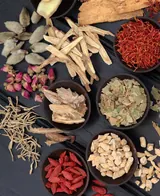
Chinese herbal formulas chosen by pattern, and black cohosh (Actaea or Cimicifuga racemosa), have been studied for hot flashes and menopause-like symptoms. Both have been reviewed in women with or at risk of breast cancer.[16, 17]
What the research shows
The evidence is limited and mixed. A meta-analysis of 42 studies in 3,112 breast cancer survivors found lower menopausal symptom and hot flash scores with traditional Chinese medicine (not only herbs) than with control treatment, and no difference in estradiol or FSH levels; but results like these depend on the quality of the included studies, which was not uniform.[16] A Cochrane review of 22 trials in women with natural menopause found insufficient evidence that Chinese herbal medicine reduced hot flushes more than placebo, with very low to moderate quality evidence.[18]
For black cohosh, a systematic review of 26 studies in women with or at risk of breast cancer found that benefit for hot flashes appeared against baseline but not against placebo, concluded that evidence for efficacy in breast cancer patients is lacking, and found no association with increased breast cancer risk.[17] The 2023 North American Menopause Society statement did not recommend supplements or herbal remedies for vasomotor symptoms.[4]
Safety and herb-drug interactions
Herbs are active substances. Reviews describe interactions with blood thinners, antidepressants and other medicines. St John's wort, for example, has been reported to cause serotonin syndrome with SSRIs, and some herbs increase bleeding risk with warfarin or aspirin.[19] Because antidepressants are sometimes used for hot flashes, and because some herbs have hormone-like activity, every herb should be reviewed with your oncologist. In one study, about one fifth of Ayurvedic medicines bought online contained detectable lead, mercury or arsenic.[20] Use only tested products prescribed individually by a practitioner. Tell us if you are pregnant or breastfeeding, have liver or kidney disease, are on chemotherapy, immunotherapy or targeted therapy, or have surgery planned.
Translating traditional medicine into modern biological language
The links drawn here are interpretation, not equivalence. Chinese medicine often describes hot flashes as yin deficiency with rising heat, a picture that loosely parallels the falling hormone levels described in the research.[2] Acupuncture research looks at effects on brain networks, though findings are early.[12]
Ayurveda's aggravated Pitta describes heat, sweating and irritability. No study has shown that a dosha or a yin-deficiency pattern corresponds to a specific biological process.
How this care fits with your medical care
Integrative care is complementary. Keep your oncology team and do not stop or change cancer treatment, endocrine therapy or any prescribed medicine without your prescriber. For a condition like this, we ask that you are under a physician's care for it and that your treating team knows you are receiving complementary care. We do not manage the cancer or prescribe medicines.
Please bring your cancer diagnosis and current treatment plan, a full list of medicines and supplements, recent blood counts if you have them, and notes on when your hot flashes occur.
When to seek urgent medical care
Hot flashes are usually not dangerous, but some symptoms during cancer treatment need prompt evaluation.
- Fever of 100.4 degrees F or higher during chemotherapy, which can signal infection
- Drenching night sweats with unexplained weight loss, which should be reported to your oncology team
- Chest pain, a racing or irregular heartbeat, or trouble breathing
- Fainting or severe dizziness
- Sudden severe headache, confusion or weakness on one side of the body
- Thoughts of ending your life, in which case call or text 988
For emergencies, call 911 or go to the nearest emergency department.
Frequently asked questions
What are hot flashes from cancer treatment?
They are sudden waves of heat, flushing and sweating, often with night sweats, that occur when cancer treatment lowers estrogen or testosterone. Causes include chemotherapy, endocrine therapy for breast cancer, ovary removal and androgen deprivation therapy for prostate cancer. They can be more severe than hot flashes at natural menopause and can disturb sleep and quality of life.
Can acupuncture help with hot flashes from cancer treatment?
It may help some people. Several randomized trials in breast cancer survivors found fewer or milder hot flashes, and one preliminary trial found the largest drop with electroacupuncture compared with sham acupuncture, gabapentin and placebo pills. However, systematic reviews rate the evidence low certainty with a high risk of bias, and results for hot flash frequency are inconsistent. Acupuncture is used alongside your medical care.
Do Ayurvedic or herbal medicines work for hot flashes from cancer treatment?
The evidence is thin. No trials of Ayurveda for cancer-related hot flashes exist. Chinese herbal medicine showed benefit in a meta-analysis of breast cancer survivors, but studies were of variable quality, and black cohosh is inconclusive. Some herbs may act on hormones or interact with cancer drugs, so any herb should be reviewed with your oncologist first.
Can I stop my cancer medicine or hot flash medicine if I have acupuncture?
No. Acupuncture, Ayurveda and herbal medicine are complementary care. Do not stop or change endocrine therapy or other prescribed medicines without talking to your oncologist or prescriber. If hot flashes are making treatment hard to continue, tell your oncology team, because they have other options to offer.
How soon might I notice a change with acupuncture?
It differs from person to person and no result can be promised. The trials gave treatment over 8 to 12 weeks, and some reported benefit lasting several months. We reassess after a short course of visits to see whether treatment is helping.
Does insurance cover acupuncture for hot flashes from cancer treatment?
It may. Netra Integrative Health Clinic is in-network with Blue Cross Blue Shield, Cigna and UnitedHealthcare. Other plans may be covered through out-of-network benefits, and we offer a free benefits check. HSA and FSA cards and CareCredit are also accepted. Call (908) 402-7301 to ask about your plan.
References
- Hickey M, Basu P, Sassarini J, et al. Managing menopause after cancer. Lancet. 2024;403(10430):984-996. PMID 38458217. Lancet review of managing menopause after cancer: hormone therapy, non-hormonal and non-drug options, symptoms beyond hot flushes, and the more severe symptoms after cancer treatment.
- Zhu L, Hshieh TT, Iyer TK, et al. Management of vasomotor symptoms in cancer patients. Oncologist. 2025;30(2). PMID 40037618. Oncologist narrative review of vasomotor symptoms in cancer patients, covering causes, quality-of-life impact, hormone therapy limits, non-hormonal agents and newer drugs targeting hypothalamic pathways.
- Lin KL, Talmor B, Crumbaker M, et al. A Review of Hot Flash Management in Patients With Prostate Cancer. J Clin Endocrinol Metab. 2025;110(9):2509-2519. PMID 40397707. Review of hot flash management in men with prostate cancer on androgen deprivation therapy, covering hormonal and non-hormonal drugs, cognitive behavior therapy and acupuncture.
- New Collective Author. The 2023 nonhormone therapy position statement of The North American Menopause Society. Menopause. 2023;30(6):573-590. PMID 37252752. 2023 North American Menopause Society position statement grading non-hormonal options for vasomotor symptoms, including recommended therapies and those not recommended such as acupuncture and herbal supplements.
- Garland SN, Xie SX, Li Q, et al. Comparative effectiveness of electro-acupuncture versus gabapentin for sleep disturbances in breast cancer survivors with hot flashes: a randomized trial. Menopause. 2017;24(5):517-523. PMID 27875389. Randomized trial of 58 breast cancer survivors with hot flashes finding electroacupuncture improved sleep about as well as gabapentin over 8 weeks.
- Garcia MK, Graham-Getty L, Haddad R, et al. Systematic review of acupuncture to control hot flashes in cancer patients. Cancer. 2015;121(22):3948-58. PMID 26281028. Systematic review of eight randomized trials of acupuncture for hot flashes in cancer patients, finding none at low risk of bias and insufficient evidence to support or refute benefit.
- Mao JJ, Bowman MA, Xie SX, et al. Electroacupuncture Versus Gabapentin for Hot Flashes Among Breast Cancer Survivors: A Randomized Placebo-Controlled Trial. J Clin Oncol. 2015;33(31):3615-20. PMID 26304905. Randomized trial of 120 breast cancer survivors comparing electroacupuncture, sham acupuncture, gabapentin and placebo pills, with fewer adverse events in the acupuncture groups; findings called preliminary.
- Lesi G, Razzini G, Musti MA, et al. Acupuncture As an Integrative Approach for the Treatment of Hot Flashes in Women With Breast Cancer: A Prospective Multicenter Randomized Controlled Trial (AcCliMaT). J Clin Oncol. 2016;34(15):1795-802. PMID 27022113. Pragmatic trial of 190 women with breast cancer finding that acupuncture plus self-care lowered hot flash scores more than self-care alone, lasting through 6 months of follow-up.
- Lu W, Giobbie-Hurder A, Tanasijevic A, et al. Acupuncture for hot flashes in hormone receptor-positive breast cancer: A pooled analysis of individual patient data from parallel randomized trials. Cancer. 2024;130(18):3219-3228. PMID 38924035. Pooled analysis of three randomized trials (158 women) in the US, China and Korea finding improved hot flashes and endocrine symptoms with 20 acupuncture sessions versus delayed treatment.
- Zhang G, Gao C, Guo Z, et al. How effective is acupuncture in treating hot flashes in breast cancer patients? A systematic review and meta-analysis. Front Oncol. 2025;15:1543938. PMID 40165891. 2025 meta-analysis of 11 trials (963 patients) finding improved hot flash scores but not frequency with acupuncture, with high risk of bias and low-certainty evidence.
- Beer TM, Benavides M, Emmons SL, et al. Acupuncture for hot flashes in patients with prostate cancer. Urology. 2010;76(5):1182-8. PMID 20494414. Uncontrolled pilot study of 22 men on androgen deprivation therapy finding 41 percent had at least a 50 percent reduction in hot flash score after 4 weeks of acupuncture.
- Wang ZN, Tian GH, Ding JR, et al. Acupuncture effect on brain default mode network connectivity in breast cancer patients with hot flashes: A randomized controlled trial. Eur J Cancer. 2025;229:115785. PMID 40974865. Small trial of 24 breast cancer patients with hot flashes finding improved hot flash scores and brain connectivity changes on functional MRI after 5 weeks of acupuncture.
- Bäumler P, Zhang W, Stübinger T, et al. Acupuncture-related adverse events: systematic review and meta-analyses of prospective clinical studies. BMJ Open. 2021;11(9):e045961. PMID 34489268. Systematic review of 21 prospective studies finding minor acupuncture reactions in about 9 percent of patients and serious events in about 1 per 10,000.
- Gudise VS, Dasari MP, Kuricheti SSK. Efficacy and Safety of Shatavari Root Extract for the Management of Menopausal Symptoms: A Double-Blind, Multicenter, Randomized Controlled Trial. Cureus. 2024;16(4):e57879. PMID 38725785. Small placebo-controlled trial in 70 menopausal women reporting fewer hot flashes and night sweats with shatavari root extract; no cancer patients included.
- Gopal S, Ajgaonkar A, Kanchi P, et al. Effect of an ashwagandha (Withania Somnifera) root extract on climacteric symptoms in women during perimenopause: A randomized, double-blind, placebo-controlled study. J Obstet Gynaecol Res. 2021;47(12):4414-4425. PMID 34553463. Placebo-controlled trial in 100 perimenopausal women of ashwagandha root extract, with better menopausal symptom scores and higher blood estradiol.
- Wang R, Wang Y, Fang L, et al. Efficacy and safety of traditional Chinese medicine in the treatment of menopause-like syndrome for breast cancer survivors: a systematic review and meta-analysis. BMC Cancer. 2024;24(1):42. PMID 38191442. Meta-analysis of 42 studies (3,112 breast cancer survivors) finding traditional Chinese medicine lowered menopause-like symptom and hot flash scores without affecting estradiol or FSH.
- Fritz H, Seely D, McGowan J, et al. Black cohosh and breast cancer: a systematic review. Integr Cancer Ther. 2014;13(1):12-29. PMID 23439657. Systematic review of black cohosh in women with or at risk of breast cancer finding divided evidence on hot flashes and no link to increased breast cancer risk.
- Zhu X, Liew Y, Liu ZL. Chinese herbal medicine for menopausal symptoms. Cochrane Database Syst Rev. 2016;3(3):CD009023. PMID 26976671. Cochrane review of 22 trials of Chinese herbal medicine for menopausal symptoms finding insufficient evidence of benefit over placebo for hot flushes.
- Hu Z, Yang X, Ho PC, et al. Herb-drug interactions: a literature review. Drugs. 2005;65(9):1239-82. PMID 15916450. Literature review of herb-drug interactions including St John's wort with SSRIs and several herbs with warfarin.
- Saper RB, Phillips RS, Sehgal A, et al. Lead, mercury, and arsenic in US- and Indian-manufactured Ayurvedic medicines sold via the Internet. JAMA. 2008;300(8):915-23. PMID 18728265. JAMA study finding detectable lead, mercury or arsenic in about one fifth of Ayurvedic medicines purchased over the Internet.
This page is for general education and is not medical advice. Acupuncture, Ayurvedic medicine and herbal medicine are complementary therapies; they do not replace diagnosis or treatment by your physician. Do not stop or change prescribed treatment without talking to your prescriber. In an emergency call 911.