













- What it is: The visible changes of facial aging, including fine lines, wrinkles, uneven tone, dryness and loss of firmness, which many people wish to soften.
- Common symptoms: Wrinkles and frown lines, thinning or dry skin, uneven pigmentation, and sagging or volume loss in the cheeks, eyes and jaw.
- Conventional care: Sun protection, topical retinoids and other skin care, and in-office procedures such as peels, injectables, lasers and microneedling.
- How integrative care fits: Cosmetic acupuncture, Ayurvedic skin routines and individually prescribed herbs are used as optional add-ons, not as replacements for medical skin care.
- Evidence at a glance: Limited for cosmetic acupuncture, with one small waitlist-controlled trial; limited and low quality for botanical skin products; none for Ayurveda.
Understanding Facial Rejuvenation
Facial rejuvenation is the effort to reduce the visible signs of facial aging, which come from time passing (intrinsic aging) and from long-term exposure to sunlight (photoaging).[1, 2] It is a cosmetic goal rather than a medical condition, so what counts as improvement depends on the person.
Common symptoms
Facial aging shows up in several layers of the face, not only in the skin surface.[3]
- Wrinkles and fine lines, including frown lines
- Thinner, drier skin with less elasticity
- Uneven tone and pigmentation
- Loss of fullness from fat pads, changes in muscle tone and sagging around the eyes, cheeks and jaw
Causes and risk factors
With age the outer skin renews more slowly and the collagen in the deeper skin layer breaks down, which reduces strength and resilience.[1] Chronic sun exposure adds to this and is a main driver of visible aging.[2] Changes also occur in the facial bones, fat and muscles beneath the skin.[3]
Cellular aging and oxidative stress contribute from within, and ultraviolet light and pollution add to the damage from outside.[4]
How it is diagnosed and treated conventionally
There is no test for facial aging, and a dermatologist or other physician can assess the skin, check for sun damage and skin cancer, and discuss options. Sunscreen helps prevent photoaging, pigment change and DNA damage from ultraviolet light.[5]
The most effective topical treatment is prescription tretinoin, and other skin care products such as peels, retinoids, peptides and antioxidants have a supporting role.[2] In-office options include chemical peels, injectables and energy-based devices.[2, 4]
Why Facial Rejuvenation calls for a whole-person approach
The look of the face reflects sun history, skin structure, the tissues beneath the skin, and daily habits all at once.[3, 4] No single treatment addresses all of these.
For this reason many people combine sun protection and medical skin care with complementary options, and the choices are best made together with a physician or dermatologist.
Sun exposure
Sun exposure over a lifetime is a major cause of wrinkles, uneven pigment and rougher texture, and regular sunscreen use is supported as prevention.[2, 5]
Changes beneath the skin
Aging changes bone, fat and muscle as well as skin, which is why skin care alone cannot restore volume or lift.[3]
Collagen and skin structure
Breakdown of the collagen network in the dermis, the deeper skin layer, is central to wrinkling and loss of firmness.[1] A meta-analysis of 19 trials found that taking hydrolyzed collagen supplements for about 90 days was associated with better skin hydration, elasticity and wrinkles than placebo.[6]
Skin hydration and barrier
Plant-based topical products, taken together, improved skin hydration and elasticity in a meta-analysis of eight trials, though some measures did not change and the longer-term results were less clear.[7]
Acupuncture for Facial Rejuvenation
What the research shows
The evidence for cosmetic acupuncture is limited. We found one randomized trial of acupuncture for wrinkles: a 2025 waitlist-controlled trial in 72 women aged 30 to 59 in Iran, using facial plus body acupuncture twice weekly for six weeks. At week 7, 63% of treated women showed reduced frown lines at rest, and results were still present at week 12. The comparison group received no treatment, so the trial cannot separate a true needle effect from expectation, and it was a single-center study that used photograph ratings and self-reported satisfaction.[8]
A 2016 randomized trial of facial acupuncture for melasma, a pigmentation condition, found smaller patches in nearly all participants, but it compared two types of acupuncture without an untreated or sham group, so it cannot show that acupuncture caused the change.[9] A narrative article by a practitioner describes improvement in wrinkles, skin texture and sagging with facial acupuncture, but it is an opinion article, not research evidence.[10]
How acupuncture may work
How cosmetic acupuncture might change facial skin has not been established in clinical research. We found no study that measured skin collagen or structure after cosmetic acupuncture, so we make no claim about a mechanism.
What treatment involves
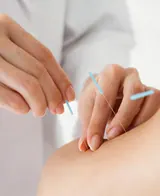
Cosmetic acupuncture uses very fine, sterile, single-use needles placed on the face, often together with points on the body, typically for about 20 to 40 minutes. A course involves several visits, and a reassessment partway through shows whether to continue. In the 2025 trial, sessions were twice weekly for six weeks.[8]
Facial needling can cause small spots of bleeding or bruising. In that trial, minor bleeding occurred in about 5% of sessions and bruising in under 1%.[8] Across prospective studies, about 9 in 100 patients had a minor reaction and serious events occurred in about 1 in 10,000 patients.[11] Tell the practitioner first if you have a bleeding disorder, take blood thinners, are pregnant, have active skin infection or inflammation on the face, or have a pacemaker (relevant to electroacupuncture).
Ayurvedic medicine for Facial Rejuvenation
The Ayurvedic view
Ayurveda describes healthy, glowing skin as a sign of balanced digestion, good sleep and well-nourished tissues (dhatus). Aging is linked in this tradition to a gradual rise in Vata, the principle of dryness and movement, with thinning and dryness of the skin. This is a traditional framework, not a biomedical description.
Therapies that may be used
Care is individualized and traditionally combines:
- Regular meals, sleep and daily routine, with attention to hydration and nourishing foods
- Gentle oil massage of the face and body (abhyanga), using oils suited to the person's skin
- Rasayana herbs, traditionally used for rejuvenation, prescribed individually
- Herbal pastes or other preparations applied to the skin
Panchakarma is a more intensive course of cleansing procedures. It is generally not appropriate during pregnancy, acute illness or frailty, and it is not a cosmetic treatment.
What the research shows
We found no clinical trials of Ayurvedic treatment programs for facial rejuvenation, so the evidence is none. The closest research is on single botanicals, such as Centella asiatica (gotu kola), which is also used in Ayurvedic practice and is covered in the herbal section below.[12]
Quality control matters for Ayurvedic products: about one fifth of Ayurvedic medicines bought online contained detectable lead, mercury or arsenic.[13]
Herbal medicine for Facial Rejuvenation
Herbs and formulas that have been studied
Clinical studies of herbs for skin aging mostly test plant extracts applied to the skin. Centella asiatica (gotu kola) has been studied for wrinkles, and trials of other botanicals include soy, peony, date kernel and green tea, the last without a significant effect on wrinkles.[12, 14] A review of 51 clinical trials of herbal compounds in skin aging reported effects on wrinkles, elasticity, hydration and pigmentation.[15] We also offer transdermal medication therapy, in which an herbal preparation is applied to the skin, but we make no claim that it improves facial aging.
What the research shows
The evidence is limited and mostly low in quality. A systematic review of five double-blind trials with 172 Asian women found Centella asiatica improved lip and periocular wrinkles and skin hydration, although the herb was not standardized, so results cannot be applied broadly.[12] A 2025 meta-analysis of eight trials of plant-based topical products found improvements in hydration, elasticity, melanin and redness.[7]
An older review of 11 trials found weak evidence that some botanical extracts reduced wrinkling, all trials were of poor quality, and no evidence that the effect lasts.[14] Authors of the larger 2025 review called for larger trials and better identification of the active compounds.[15]
Safety and herb-drug interactions
Skin products made from plants can cause irritation or allergy, so a small test area is sensible, and tell us about any reaction history. Adverse effects were often not reported in botanical trials.[14]
Herbs taken by mouth can interact with medicines. Reported examples include bleeding with warfarin and danshen or ginkgo, and altered levels of several drugs with St. John's wort.[16] Tell us if you take blood thinners, immunosuppressants, thyroid or antidepressant medicine, are pregnant or breastfeeding, or have liver or kidney disease. Herbs should come from tested sources and be prescribed individually.[13]
Translating traditional medicine into modern biological language
This section is interpretation, not equivalence. Chinese medicine often relates a dull, thin or lined complexion to weak qi and blood, or poor circulation to the face, and Ayurveda relates dry, aging skin to Vata and weak tissue nourishment. Researchers studying skin aging describe collagen loss, slower skin renewal, oxidative stress and sun damage.[1, 4]
These descriptions share a general idea that skin reflects deeper tissue health and daily habits, but no study has shown that a qi pattern or a dosha corresponds to a measurable biological change in facial skin.
How this care fits with your medical care
Facial rejuvenation with acupuncture, Ayurveda or herbs is an optional, complementary choice. Sun protection and prescription skin care such as tretinoin have better-established evidence for changing the skin.[2, 5]
We do not diagnose skin conditions or skin cancer, and we do not replace your dermatologist. Please bring your skin care routine, a list of medicines and supplements, any recent cosmetic procedures such as injectables, peels or lasers, and your medical history, including bleeding disorders or skin infections.
When to seek urgent medical care
Most skin changes with age are harmless, but some need prompt medical care, especially a mole or spot that changes, because sun damage is linked to skin cancer.[5]
- A new or changing mole, or a sore that does not heal
- Sudden drooping of one side of the face, weakness, trouble speaking or confusion
- Spreading redness, warmth, swelling, pus or fever after needling or any cosmetic procedure
- Swelling of the lips, face or throat, hives, or trouble breathing after a product or herb
- Severe or ongoing bleeding at a needle site
If any of these occur, call 911 or go to the nearest emergency department.
Frequently asked questions
What is facial rejuvenation?
Facial rejuvenation means improving the visible signs of facial aging, such as fine lines, wrinkles, uneven tone, dryness and loss of firmness. It is a cosmetic goal, not a disease. Aging comes from time and from sun exposure, and it also affects the fat, muscle and bone under the skin. A dermatologist can assess your skin and discuss options.
Can acupuncture help with facial rejuvenation?
The evidence is limited. One 2025 randomized trial of 72 women compared facial and body acupuncture with no treatment and found fewer visible frown lines after six weeks, but it had no sham group and used subjective ratings. Larger, better-controlled trials are needed. Acupuncture does not replace sun protection or dermatologic care.
Do Ayurvedic or herbal approaches work for facial aging?
Evidence is thin. No trials of Ayurvedic programs for facial rejuvenation were found. Some plant extracts applied to the skin, such as Centella asiatica, improved wrinkles or hydration in small trials, but studies were generally of low quality and the products were not standardized. Herbs should be prescribed individually and checked against your medicines.
Can cosmetic acupuncture replace Botox, fillers or prescription skin care?
No. Cosmetic acupuncture has not been shown to produce the effects of injectables, peels, lasers or prescription retinoids, and we do not offer it as a replacement. It is an optional complementary service. Sun protection and dermatologist-guided care have stronger evidence for improving skin.
How soon might I notice a change?
It differs from person to person, and no result can be promised. In the one randomized trial, women were treated twice weekly for six weeks and assessed at weeks 7 and 12. We reassess after a short course of visits to see whether the treatment is worth continuing for you.
Does insurance cover cosmetic acupuncture?
Coverage varies, and cosmetic services are often not covered. Netra Integrative Health Clinic is in-network with Blue Cross Blue Shield, Cigna and UnitedHealthcare. Other plans may be covered through out-of-network benefits, and we offer a free benefits check. HSA and FSA cards and CareCredit are also accepted. Call (908) 402-7301 to ask about your plan.
References
- Rittié L, Fisher GJ. Natural and sun-induced aging of human skin. Cold Spring Harb Perspect Med. 2015;5(1):a015370. PMID 25561721. Review of chronological aging and photoaging of human skin, describing slower renewal, collagen fragmentation and other structural changes.
- Griffiths TW, Watson REB, Langton AK. Skin ageing and topical rejuvenation strategies. Br J Dermatol. 2023;189(Suppl 1):i17-i23. PMID 37903073. British Journal of Dermatology review of skin aging and topical rejuvenation, naming tretinoin as the most effective topical treatment and covering peptides and antioxidants.
- Swift A, Liew S, Weinkle S, et al. The Facial Aging Process From the "Inside Out". Aesthet Surg J. 2021;41(10):1107-1119. PMID 33325497. Review of facial aging layer by layer, from bone and fat to muscle and skin, with implications for treatment choices.
- Shin SH, Lee YH, Rho NK, et al. Skin aging from mechanisms to interventions: focusing on dermal aging. Front Physiol. 2023;14:1195272. PMID 37234413. Review of intrinsic and extrinsic mechanisms of skin aging, including oxidative stress, UV damage, senescent cells and interventions such as peels, injectables and devices.
- Guan LL, Lim HW, Mohammad TF. Sunscreens and Photoaging: A Review of Current Literature. Am J Clin Dermatol. 2021;22(6):819-828. PMID 34387824. Review of sunscreens and photoaging finding that sunscreen helps prevent photoaging, pigmentary change and DNA damage.
- de Miranda RB, Weimer P, Rossi RC. Effects of hydrolyzed collagen supplementation on skin aging: a systematic review and meta-analysis. Int J Dermatol. 2021;60(12):1449-1461. PMID 33742704. Meta-analysis of 19 trials (1,125 participants) finding oral hydrolyzed collagen improved skin hydration, elasticity and wrinkles versus placebo.
- Cheng F, Feng J, Cao Z, et al. Efficacy and Safety of Topical Application of Plant-Based Products on Skin Aging in Healthy Individuals: A Systematic Review and Meta-Analysis of Randomized Controlled Trials. J Cosmet Dermatol. 2025;24(2):e16710. PMID 39654386. 2025 meta-analysis of eight trials of topical plant-based products in healthy adults finding improved hydration, elasticity, melanin and redness.
- Haghir H, Yazdanpanah MJ, Farahmand SK, et al. Is Acupuncture Effective in Diminishing Frown Lines? Evidence From a Randomized Controlled Trial. J Cosmet Dermatol. 2025;24(4):e70144. PMID 40193060. 2025 randomized waitlist-controlled trial of 72 women finding facial plus body acupuncture reduced frown lines after six weeks, with minor bleeding in about 5 percent of sessions.
- Rerksuppaphol L, Charoenpong T, Rerksuppaphol S. Randomized clinical trial of facial acupuncture with or without body acupuncture for treatment of melasma. Complement Ther Clin Pract. 2016;22:1-7. PMID 26850796. Randomized trial of 41 women with melasma comparing facial acupuncture with and without body acupuncture, finding reduced melasma area in both groups, with no untreated group.
- Barrett JB. Acupuncture and facial rejuvenation. Aesthet Surg J. 2005;25(4):419-24. PMID 19338843. Practitioner article describing traditional facial acupuncture and its claimed benefits for wrinkles and skin texture, without controlled data.
- Bäumler P, Zhang W, Stübinger T, et al. Acupuncture-related adverse events: systematic review and meta-analyses of prospective clinical studies. BMJ Open. 2021;11(9):e045961. PMID 34489268. Systematic review of 21 prospective studies finding minor acupuncture reactions in about 9 percent of patients and serious events in about 1 per 10,000.
- Kongkaew C, Meesomperm P, Scholfield CN, et al. Efficacy and Safety of Centella Asiatica (L.) Urb. on Wrinkles: A Systematic Review of Published Data and Network Meta-Analysis. J Cosmet Sci. 2020;71(6):439-454. PMID 33413787. Systematic review and network meta-analysis of five double-blind trials (172 women) of Centella asiatica for wrinkles, finding benefit for lip and periocular wrinkles.
- Saper RB, Phillips RS, Sehgal A, et al. Lead, mercury, and arsenic in US- and Indian-manufactured Ayurvedic medicines sold via the Internet. JAMA. 2008;300(8):915-23. PMID 18728265. JAMA study finding detectable lead, mercury or arsenic in about one fifth of Ayurvedic medicines purchased over the Internet.
- Hunt KJ, Hung SK, Ernst E. Botanical extracts as anti-aging preparations for the skin: a systematic review. Drugs Aging. 2010;27(12):973-85. PMID 21087067. Systematic review of 11 trials of botanical extracts for wrinkles finding weak evidence of benefit, poor study quality and frequent non-reporting of adverse effects.
- Goh AP, Goh SM, Tow WK, et al. Exploring the Role of Herbal Compounds in Skin Aging: A Systematic Review of Topical Approaches. Phytother Res. 2025;39(1):315-363. PMID 39541733. Systematic review of 51 clinical trials of herbal compounds applied for skin aging, reporting effects on wrinkles, elasticity, hydration and pigmentation, and calling for larger trials.
- Hu Z, Yang X, Ho PC, et al. Herb-drug interactions: a literature review. Drugs. 2005;65(9):1239-82. PMID 15916450. Literature review of herb-drug interactions including warfarin with danshen and ginkgo, and St. John's wort with many drugs.
This page is for general education and is not medical advice. Acupuncture, Ayurvedic medicine and herbal medicine are complementary therapies; they do not replace diagnosis or treatment by your physician. Do not stop or change prescribed treatment without talking to your prescriber. In an emergency call 911.