





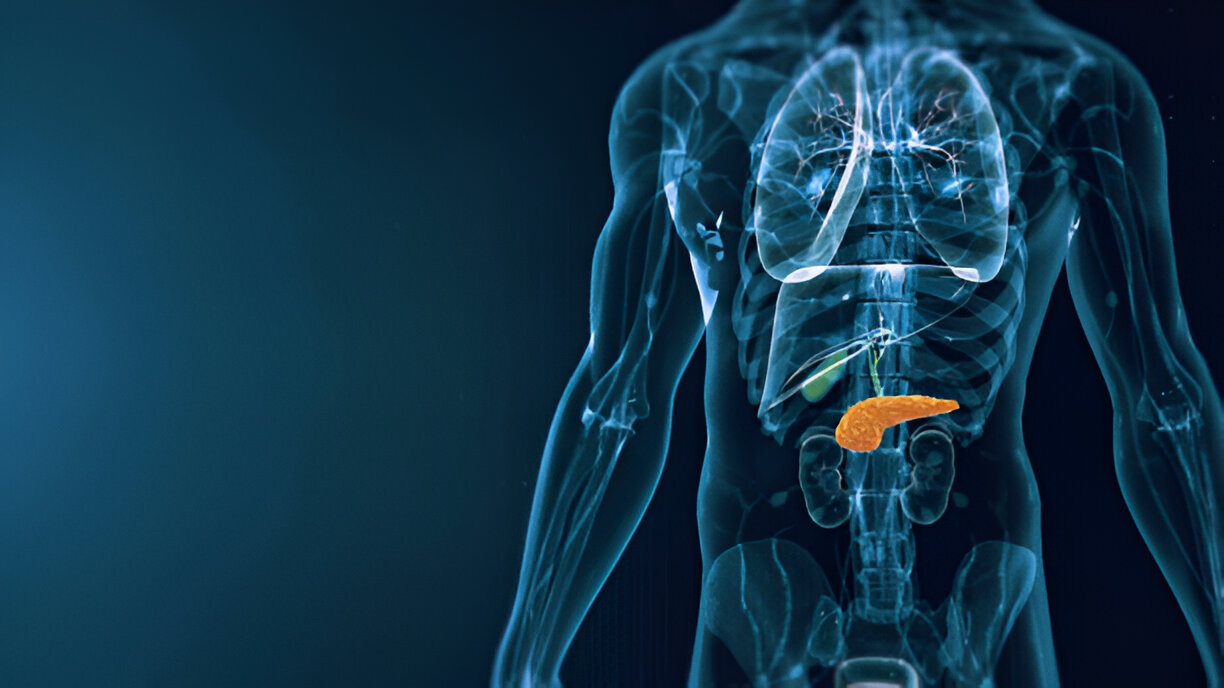
- What it is: Hard deposits, usually cholesterol-based, that form in the gallbladder or bile ducts. Most are found by chance and cause no symptoms.
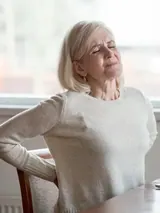
- Common symptoms: When symptoms occur, sudden pain in the upper right or upper middle abdomen, often after a meal, sometimes with nausea.
- Conventional care: Observation if there are no symptoms; pain medicines for biliary colic; laparoscopic gallbladder removal for symptomatic stones; urgent treatment for complications.
- How integrative care fits: Supportive only, for comfort, digestion and healthy habits, after a physician has evaluated the stones and with your treating team informed.
- Evidence at a glance: Limited for acupuncture, from a few small trials; none for Ayurveda; limited for herbal medicine, with no strong evidence that Chinese herbs help.
What is Gallstones?
Gallstones are hard deposits that form in the gallbladder, a small organ under the liver that stores bile, and sometimes in the bile ducts. They can be as small as sand or as large as several centimeters.[1] Most people who have them never know, and about 10% develop symptoms within 5 years and about 20% within 20 years of diagnosis.[1]
Common symptoms
Gallstones that cause symptoms typically produce biliary colic, which is intermittent pain in the upper right or upper middle abdomen, often after eating.[1, 2] The pain happens when the gallbladder contracts against a stone that partly blocks bile flow.[1]
Nearly 80% of gallstones are found incidentally and stay silent.[2]
Causes and risk factors
Gallstones arise from metabolic, environmental and genetic factors.[1] Risk factors include female sex, older age, certain medicines, type 2 diabetes, fatty liver disease, obesity, rapid weight loss and hemolytic anemia.[2] A genetic study supports obesity, type 2 diabetes and smoking as causes of gallstone disease, and found that higher coffee intake was linked with lower risk.[3]
Globally, about 6% of people have gallstones, more often women and older people.[4]
How it is diagnosed and treated conventionally
Ultrasound is the preferred test for gallstones.[1] Doctors may add blood tests and other imaging if a complication is suspected.[2]
Stones that cause no symptoms are generally watched. For biliary colic, anti-inflammatory medicines and antispasmodics are used, and laparoscopic cholecystectomy (gallbladder removal) is the standard treatment for recurring colic or acute cholecystitis.[1, 5] Ursodeoxycholic acid can reduce stone formation during significant weight loss, and is not routinely used to treat established gallstones.[2, 5] A systematic review found that evidence on the best treatment of symptomatic stones remains limited.[6]
Why Gallstones calls for a whole-person approach
Gallstones are a local problem in the gallbladder, but the conditions that favor stone formation involve metabolism, weight and daily habits. Stones can also cause serious complications, so treatment is directed by physicians and surgeons.[1, 5]
Supportive care can address the factors around the stones, such as healthy habits and comfort, but it does not remove them.
Weight and metabolic health
Obesity and type 2 diabetes have an independent causal role in gallstone disease.[3] Fatty liver disease is also a risk factor.[2]
Weight change and diet
Rapid weight loss raises the risk of gallstones, and doctors may prescribe ursodeoxycholic acid to lower this risk after significant weight loss from diet or bariatric surgery.[2, 5] Anyone planning to lose weight should discuss the pace with a physician.
Physical activity
A systematic review concluded that regular physical activity seems likely to reduce the risk of gallstones, although the evidence has limits and the effect on gallbladder motility remains unclear.[7]
Smoking and coffee
Smoking has a causal link to gallstone disease in genetic analyses, while higher coffee intake was associated with lower risk.[3]
Acupuncture as supportive care in Gallstones
What the research shows
The research is limited: a few small trials, mostly from China, tested acupuncture-related treatments in people with gallstones or gallbladder inflammation. None shows that acupuncture removes stones.
In a sham-controlled trial of 63 people with gallstones, all taking a bile acid medicine, acupoint catgut embedding (absorbable thread placed at acupuncture points) every 2 weeks for 8 weeks improved gallbladder emptying on ultrasound more than sham embedding. Symptom scores also improved, though they improved in the sham group too.[8] Catgut embedding is not the same as standard needle acupuncture.
In a trial of 60 people with chronic gallbladder inflammation, needling at a shoulder point (GB 21) relieved pain more than needling a non-acupoint and changed gallbladder volume on ultrasound after a single session.[9] A 120-person Chinese trial reported a higher effective rate with electroacupuncture than with a comparison regimen of herbs, magnesium sulfate and diet, but its abstract gives few details on how success was measured.[10] A systematic review of treatments for symptomatic stones identified electroacupuncture as one studied option and described the overall evidence base as a gap in knowledge.[6]
How acupuncture may work
Researchers have looked at whether acupuncture changes how the gallbladder fills and empties. The small trials above measured gallbladder volume and emptying on ultrasound.[8, 9] Whether this has lasting clinical value is not known, and acupuncture is not shown to dissolve or pass stones.
What treatment involves
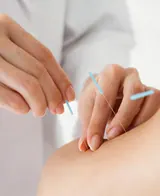
Treatment uses fine, sterile, single-use needles, usually left in place for about 20 to 40 minutes. We reassess after a short course of visits. Acupuncture here is offered for comfort and general support, not as treatment for the stones, and never in place of evaluation of abdominal pain.
Serious problems from acupuncture are rare. In prospective studies, about 9 in 100 patients had a minor reaction such as brief soreness or bleeding at a needle site, and serious events occurred in about 1 in 10,000 patients.[11] Tell the practitioner first if you have a bleeding disorder, take blood thinners, are pregnant, or have a pacemaker (relevant to electroacupuncture).
Ayurvedic medicine as supportive care in Gallstones
The Ayurvedic view
Ayurvedic texts do not describe gallstones in modern terms. Practitioners often relate gallbladder and digestive problems to Pitta and Kapha, impaired digestive fire (agni) and the handling of fats. This is a traditional framework, not a biomedical explanation.
Therapies that may be used
Care is traditionally centered on diet and daily routine, such as regular meals, moderate amounts of fat, spices used in cooking and daily movement. For some people a gentle, individually chosen herbal plan may be used. Transdermal medication therapy, an herbal preparation applied to the skin, can be mentioned for comfort measures.
Panchakarma is not appropriate during pregnancy, acute illness or frailty, and it is not appropriate while gallstones are causing pain or have not been evaluated. Fasting, strong purgation and home "gallbladder flushes" with large amounts of oil are not supported by the research we found. Because a moving stone can block the bile duct, discuss any such plan with your physician first.[1]
What the research shows
No clinical trials of Ayurvedic medicine for gallstones turned up in PubMed. There is no research basis to claim that Ayurvedic treatment dissolves or prevents gallstones. Any benefit from diet and lifestyle guidance would work through the risk factors described above, such as weight, activity and metabolic health.[3, 7]
Herbal medicine as supportive care in Gallstones
Herbs and formulas that have been studied
Chinese herbal formulas for gallstones, including Paishi capsule, Qingdan capsule and Danshu capsule, have been tested in randomized trials.[12] A narrative review of cholesterol gallstone treatments lists herbal plants as an area of interest.[13]
What the research shows
The evidence is limited. A Cochrane review of 11 trials with 1,205 people with mild or symptom-free gallstones found no strong evidence that the Chinese herbs tested help. No trial was placebo-controlled, and most gave no usable data on symptoms or stone changes. Two tablets compared with each other did not differ in upper abdominal pain, and no serious adverse events were reported.[12]
A narrative review describes herbal plants as an emerging area that needs much more research.[13] Herbs have not been shown to dissolve or prevent gallstones in people.
Safety and herb-drug interactions
Herbs are active substances. They can interact with medicines, for example bleeding with warfarin and altered levels of other drugs.[14] Herbal and dietary supplements are a recognized cause of liver injury, which matters if bile flow is already affected.[15] In theory, herbs that increase bile flow could provoke pain when a stone is lodged in a duct, so tell your physician and us about any plan to use them.
In one study, about one fifth of Ayurvedic products bought online contained detectable lead, mercury or arsenic.[16] Herbs should come from tested sources and be prescribed individually. Tell us if you are pregnant or breastfeeding, have liver or kidney disease, or have surgery planned.
Translating traditional medicine into modern biological language
The links drawn here are interpretation, not equivalence. Chinese medicine often describes gallstones as damp-heat in the liver and gallbladder or stagnation of liver qi. Researchers studying this area measure things that loosely parallel those ideas: gallbladder emptying, bile composition, metabolic risk factors and inflammation of the gallbladder wall.[8, 9, 13]
Ayurveda's concepts of aggravated Pitta and weak agni resemble, in loose terms, the modern focus on fat handling and digestion.[1] No study has shown that a dosha or traditional pattern corresponds to a specific biological process.
How this care fits with your medical care
For a condition like this, we ask that you are under a physician's care for it and that your treating team knows you are receiving complementary care. Keep your surgeon, gastroenterologist or primary care doctor, and follow their advice about imaging, medicines and gallbladder surgery. Do not delay or decline recommended surgery because of complementary care.
We do not diagnose gallstones or decide whether you need surgery. Please bring your diagnosis, ultrasound or other imaging reports, a full list of medicines and supplements, and any plans for surgery or weight loss.
When to seek urgent medical care
Gallstones can cause serious complications, including inflammation of the gallbladder, bile duct infection and pancreatitis.[1, 17]
- Severe abdominal pain that lasts more than a few hours or keeps getting worse
- Fever or chills with abdominal pain
- Yellowing of the skin or eyes
- Persistent vomiting, or pain that spreads to the back
- Very dark urine or pale stools
- Confusion, a fast heartbeat or feeling faint
If any of these occur, call 911 or go to the nearest emergency department.
Frequently asked questions
What are gallstones?
Gallstones are hard deposits that form in the gallbladder, which stores bile from the liver. They range from sand-like grains to stones several centimeters wide. Most people never have symptoms. When they do, the usual sign is sudden pain in the upper abdomen, often after a meal, and a physician decides whether treatment such as surgery is needed.
Can acupuncture help people with gallstones?
Evidence is limited. A few small trials suggested acupuncture-related treatments may improve gallbladder emptying or pain, but they were small, mostly from China, and did not show that stones go away. Acupuncture is offered only as supportive care alongside your physician’s treatment, and it does not replace evaluation or surgery.
Do Ayurvedic or herbal remedies dissolve gallstones?
There is no good evidence that they do. No Ayurvedic trials were found, and a Cochrane review found no strong evidence that Chinese herbs help with gallstones. Home gallbladder flushes are not supported by research, and a stone that moves can block a duct. Please talk with your physician before trying any of these.
Can I avoid gallbladder surgery if I use acupuncture or herbs?
No. Complementary care does not replace surgery or other medical treatment. Laparoscopic gallbladder removal is the standard treatment for recurring pain or inflammation from gallstones. Do not delay or decline recommended treatment, and do not stop prescribed medicines without talking to your prescriber.
What should I bring to my first visit?
Please bring your diagnosis, any ultrasound or other imaging reports, recent blood test results, a list of all medicines and supplements, and any surgery plans. Tell us if you are pregnant or breastfeeding, take blood thinners, or have liver disease. This helps us plan supportive care that fits with your physician’s treatment.
Does insurance cover acupuncture for gallstones?
It may. Netra Integrative Health Clinic is in-network with Blue Cross Blue Shield, Cigna and UnitedHealthcare. Other plans may be covered through out-of-network benefits, and we offer a free benefits check. HSA and FSA cards and CareCredit are also accepted. Call (908) 402-7301 to ask about your plan.
References
- Jones MW, Weir CB, Marietta M. Gallstones (Cholelithiasis). StatPearls [Internet]. 2026. PMID 29083691. StatPearls chapter on gallstones covering prevalence, causes, biliary colic, complications, ultrasound diagnosis and laparoscopic cholecystectomy as standard care.
- Patel H, Jepsen J. Gallstone Disease: Common Questions and Answers. Am Fam Physician. 2024;109(6):518-524. PMID 38905549. American Family Physician review of gallstone disease covering risk factors, silent stones, imaging, complications, treatment of pain and the role of surgery and bile acids.
- Yuan S, Gill D, Giovannucci EL, et al. Obesity, Type 2 Diabetes, Lifestyle Factors, and Risk of Gallstone Disease: A Mendelian Randomization Investigation. Clin Gastroenterol Hepatol. 2022;20(3):e529-e537. PMID 33418132. Mendelian randomization study supporting causal roles of obesity, type 2 diabetes and smoking in gallstone disease, with coffee intake inversely associated.
- Wang X, Yu W, Jiang G, et al. Global Epidemiology of Gallstones in the 21st Century: A Systematic Review and Meta-Analysis. Clin Gastroenterol Hepatol. 2024;22(8):1586-1595. PMID 38382725. Meta-analysis of 115 studies finding global gallstone prevalence of about 6%, higher in women, older people and in South America.
- Lammert F, Wittenburg H. Gallstones: Prevention, Diagnosis, and Treatment. Semin Liver Dis. 2024;44(3):394-404. PMID 39095030. Review of gallstone prevention, diagnosis and treatment, noting ursodeoxycholic acid after weight loss, cholecystectomy for symptomatic stones, and NSAIDs and antispasmodics for colic.
- Shenoy R, Kirkland P, Hadaya JE, et al. Management of symptomatic cholelithiasis: a systematic review. Syst Rev. 2022;11(1):267. PMID 36510302. Systematic review of 10 trials on treatment of symptomatic gallstones, including electroacupuncture, highlighting gaps in evidence.
- Shephard RJ. Physical Activity and the Biliary Tract in Health and Disease. Sports Med. 2015;45(9):1295-1309. PMID 26068960. Systematic review concluding that regular physical activity seems likely to reduce risk of gallstones, with limited and uncertain data on gallbladder motility.
- Duan J, Chen X, Wang Y, et al. Acupoint Catgut Embedding as Adjunctive Therapy for Patients With Gallstones. J Clin Gastroenterol. 2022;56(1):e77-e83. PMID 33471487. Sham-controlled trial of 63 people finding acupoint catgut embedding plus a bile acid improved gallbladder emptying more than sham embedding.
- Wen FY, Li SC, Wang GM, et al. [Effects of acupuncture of Jianjing (GB 21) on gallbladder volume and symptoms of cholecystitis patients]. Zhen Ci Yan Jiu. 2012;37(5):398-402. PMID 23342781. Randomized trial of 60 people with chronic cholecystitis finding needling at GB 21 relieved pain and changed gallbladder volume more than a non-acupoint.
- Song MP. [Clinical observation on frequency-changeable electroacupuncture for treatment of cholelithiasis]. Zhongguo Zhen Jiu. 2006;26(11):772-4. PMID 17165496. Randomized trial of 120 people with gallstones in China reporting a higher effective rate with electroacupuncture than a stone-expelling regimen, with limited detail.
- Bäumler P, Zhang W, Stübinger T, et al. Acupuncture-related adverse events: systematic review and meta-analyses of prospective clinical studies. BMJ Open. 2021;11(9):e045961. PMID 34489268. Systematic review of 21 prospective studies finding minor acupuncture reactions in about 9 percent of patients and serious events in about 1 per 10,000.
- Gan T, Chen J, Jin SJ, et al. Chinese medicinal herbs for cholelithiasis. Cochrane Database Syst Rev. 2013;2013(6):CD004547. PMID 23813425. Cochrane review of 11 trials (1,205 people) finding no strong evidence that Chinese medicinal herbs help asymptomatic or mild cholelithiasis; no placebo-controlled trials.
- E S, Srikanth MS, Shreyas A, et al. Recent advances, novel targets and treatments for cholelithiasis; a narrative review. Eur J Pharmacol. 2021;908:174376. PMID 34303667. Narrative review of cholelithiasis pathogenesis and treatments describing herbal plants as an emerging area needing more research.
- Hu Z, Yang X, Ho PC, et al. Herb-drug interactions: a literature review. Drugs. 2005;65(9):1239-82. PMID 15916450. Literature review of herb-drug interactions including bleeding with warfarin and altered drug levels with several herbs.
- Navarro VJ, Khan I, Björnsson E, et al. Liver injury from herbal and dietary supplements. Hepatology. 2017;65(1):363-373. PMID 27677775. Hepatology review of liver injury from herbal and dietary supplements, which accounts for about 20% of US drug-induced liver injury.
- Saper RB, Phillips RS, Sehgal A, et al. Lead, mercury, and arsenic in US- and Indian-manufactured Ayurvedic medicines sold via the Internet. JAMA. 2008;300(8):915-23. PMID 18728265. JAMA study finding detectable lead, mercury or arsenic in about one fifth of Ayurvedic medicines purchased over the Internet.
- Jones MW, Santos G, Patel PJ. Acute Cholecystitis. StatPearls [Internet]. 2025. PMID 29083809. StatPearls chapter on acute cholecystitis, usually caused by a gallstone blocking the cystic duct, with surgery as the preferred treatment.
This page is for general education and is not medical advice. Acupuncture, Ayurvedic medicine and herbal medicine are complementary therapies; they do not replace diagnosis or treatment by your physician. Do not stop or change prescribed treatment without talking to your prescriber. In an emergency call 911.