



















- What it is: Inflammation of the stomach lining, which can be short-lived or long-lasting, and which a doctor confirms with endoscopy and biopsy.
- Common symptoms: Upper abdominal pain or burning, nausea, bloating and early fullness, though some people have no symptoms at all.
- Conventional care: Treating the cause (for example H. pylori or NSAID use), acid-lowering medicines, and follow-up for long-standing atrophic gastritis.
- How integrative care fits: Acupuncture, Ayurvedic therapies and individually prescribed herbs are used alongside medical care to help with digestive symptoms and stress.
- Evidence at a glance: Limited for acupuncture, mostly small and unblinded trials from China; limited for herbal medicine, with low-certainty meta-analyses; very limited for Ayurveda.
What is Gastritis?
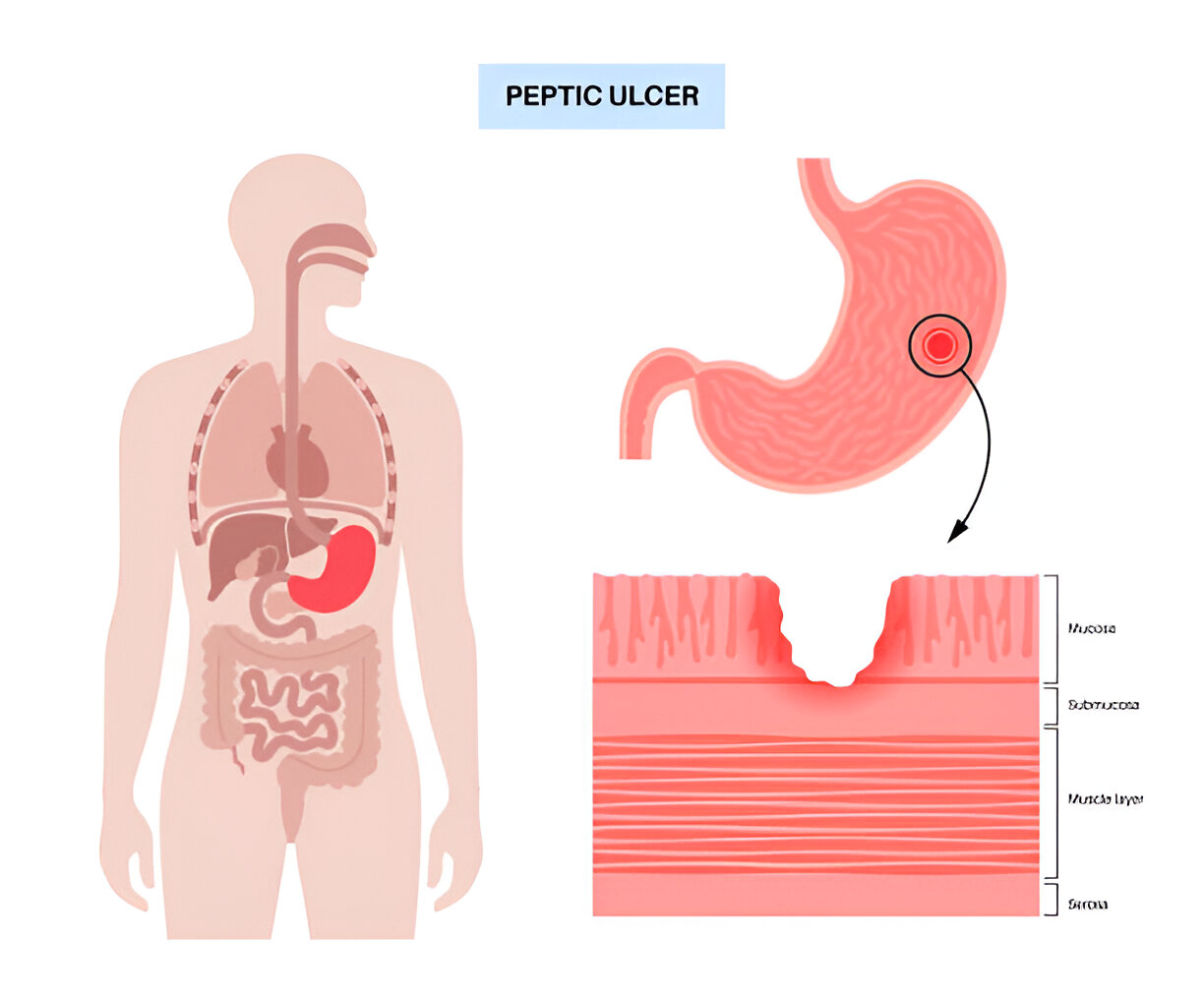
Gastritis is inflammation of the stomach lining (the gastric mucosa), and the diagnosis rests on finding inflammation in a tissue sample taken during endoscopy.[1] It is grouped by how quickly it develops (acute or chronic), by what the tissue looks like under the microscope, and by cause.[1]
A related term is gastropathy, which means damage to the lining without much inflammation. The two can overlap.[1]
Common symptoms
The most common symptoms are upper abdominal pain or burning, nausea, bloating and feeling full early in a meal.[1] Many people with chronic gastritis have no symptoms at all, so the condition is often found only when a doctor looks for another reason.[2]
Long-standing atrophic gastritis can also interfere with absorbing vitamin B12, iron and other nutrients.[2]
Causes and risk factors
Infection with Helicobacter pylori, usually acquired in childhood, is the main cause of chronic gastritis worldwide.[2] Other causes include aspirin and other NSAIDs, heavy alcohol use, an autoimmune attack on the stomach lining, and bile reflux.[1, 3] Gastritis from severe physical stress, such as critical illness, is a separate form.[4]
How it is diagnosed and treated conventionally
Diagnosis combines endoscopy, a biopsy examined under the microscope, and testing for H. pylori.[1, 5] Treatment depends on the cause. If H. pylori is present it is treated with a course of prescribed medicines, and if an NSAID is responsible, stopping or changing it is the key step.[3] Acid-lowering medicines such as proton pump inhibitors are the usual first-line way to ease symptoms and help the lining heal.[3]
Chronic atrophic gastritis needs ongoing medical follow-up. A meta-analysis of 23 studies found it was linked to about a fourfold higher risk of stomach cancer, which is why a doctor's diagnosis and surveillance matter.[6]
Why Gastritis calls for a whole-person approach
Gastritis is not one disease with one cause. An infection, a medicine, the immune system and the way the stomach reacts to stress can all play a part, and the symptoms people feel do not always match what the endoscope shows.
Medical treatment targets the cause. Complementary care is aimed at the symptoms and the factors around them, and it is not a substitute for finding and treating the cause.
Infection and chronic inflammation
H. pylori colonizes the stomach for decades and drives continuing inflammation of the lining. Over years this can progress to atrophy and, in some people, to precancerous change.[2, 5]
Medicines and alcohol
Aspirin and other NSAIDs, which people often take for pain elsewhere in the body, are a leading cause of stomach injury.[3] This is one reason we ask for a full medicine list. Treating pain with other methods may sometimes reduce the need for an NSAID, but that decision belongs to you and your prescriber.
Physical stress and the nervous system
The stomach lining protects itself against its own acid, and acute illness can disrupt that barrier and cause erosive gastritis.[4] Stress, worry and low mood are also common alongside long-term upper digestive symptoms. In a meta-analysis of 16 trials in functional dyspepsia (a related condition with symptoms but no visible damage), acupuncture lowered anxiety and depression scores on most scales, although the certainty was low or very low and one scale showed no difference from placebo.[7]
Nutrition
Chronic atrophic gastritis can reduce absorption of B12, iron and other nutrients, so blood tests and diet quality deserve attention.[2]
Acupuncture for Gastritis
What the research shows
The evidence that acupuncture helps gastritis is limited. A 2026 review of 55 randomized trials in chronic atrophic gastritis, involving 5,311 patients, found serious weaknesses: almost none used allocation concealment or blinding, none were prospectively registered, and the outcomes measured varied widely.[8] The authors called for better-designed trials and a standard set of outcomes.[8]
One example is a Chinese trial of 88 patients with chronic atrophic gastritis. After two months, symptoms improved more in the acupuncture and acupuncture-plus-moxibustion groups than in the control group, and the combined group also showed improvement in biopsy findings (glandular atrophy and intestinal metaplasia) compared with its own starting point.[9] The trial was small, and its findings need confirmation in blinded studies before they can be relied on.
For related symptoms, a Cochrane review of 7 trials (542 people) of acupuncture for functional dyspepsia found low or very low quality evidence and could not say whether acupuncture works better or is safer than other treatments.[10] Evidence for functional dyspepsia is not evidence for gastritis, since the two are different conditions.
How acupuncture may work
Most mechanism research is in animals. A review of 30 animal studies lists changes in gene expression in the stomach lining, effects on anti-inflammatory substances, increased vagal nerve activity and changes in how brain regions communicate.[11] These are proposed explanations from animal work and do not show that acupuncture heals inflamed stomach tissue in people.
What treatment involves
Treatment uses fine, sterile, single-use needles placed at points on the abdomen, arms, legs and back, usually left in place for about 20 to 40 minutes. Moxibustion, the warming of points with burning mugwort, is sometimes added in traditional practice. A course is several visits, with reassessment along the way.
Serious problems from acupuncture are rare. In prospective studies, about 9 in 100 patients had a minor reaction such as bleeding, soreness or redness at a needle site, and serious events occurred in about 1 in 10,000 patients.[12] Tell the practitioner first if you have a bleeding disorder, take blood thinners, are pregnant, or have a pacemaker (relevant to electroacupuncture).
Ayurvedic medicine for Gastritis
The Ayurvedic view
Ayurveda describes burning, sour, acidic stomach complaints under the name Amlapitta. In this traditional framework it is linked to aggravated Pitta, the principle associated with heat and digestion, and to weak digestive fire (agni). These are traditional categories for choosing treatment, not biomedical diagnoses.
Therapies that may be used
Care is chosen for the individual and traditionally combines:
- Regular meal times and a diet that avoids very spicy, sour, fried and heavy foods
- Stress-reducing routines and steady sleep hours
- Herbs traditionally used for Pitta-type digestive complaints, prescribed individually
- Pitta-pacifying cleansing therapies from Panchakarma, only where traditionally appropriate and medically sensible
Panchakarma procedures are not appropriate during pregnancy, acute illness or frailty, with active stomach bleeding or a known ulcer, or before symptoms have been medically assessed.
What the research shows
The research on Ayurveda for gastritis is very limited. A 30-day open-label pilot study of 30 people with endoscopic gastritis, given an Ayurvedic suspension called Amlapitta Mishran, reported lower endoscopy scores and symptom scores with no adverse events.[13] It had no placebo or comparison group, so it cannot show that the product caused the improvement. We found no systematic reviews or placebo-controlled trials of Ayurvedic treatment for gastritis.
Turmeric (curcumin) has been studied more often, as a food or supplement. A randomized trial in people with H. pylori gastritis found that adding curcumin to standard triple therapy for 8 weeks improved inflammation scores and the eradication rate compared with triple therapy alone.[14] This was a single trial, and curcumin was an addition to medical treatment, not a replacement.
Herbal medicine for Gastritis
Herbs and formulas that have been studied
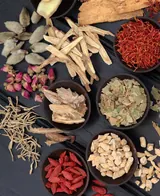
Most research is on Chinese herbal formulas for chronic atrophic gastritis. A review of 12 trials found that the herbs used most often included white peony (Paeonia lactiflora), Atractylodes, Pinellia, tangerine peel, Codonopsis, Salvia miltiorrhiza (dan shen) and Coptis.[15] A Korean formula, Yukgunja-tang, has also been reviewed.[16] Foods and food-derived products studied in gastritis include garlic, turmeric, red pepper, broccoli sprouts, cranberry juice, honey and probiotics.[17]
What the research shows
The evidence is limited and the studies are mostly of low quality. A meta-analysis of 16 studies (1,673 participants) found Chinese herbal medicine gave better overall clinical efficacy and some symptom scores than routine drug treatment, with no clear difference for acid regurgitation or loss of appetite. The authors said more rigorous research is needed.[18] A meta-analysis of 12 trials in atrophic gastritis found that adding Chinese herbs to standard treatment gave better clinical response.[15]
A 2025 meta-analysis of 22 trials of Yukgunja-tang found it improved the overall clinical response rate when added to Western medicine, with moderate certainty for that combination and low or very low certainty for several other results.[16] A review of food-based therapies found 28 clinical studies with a high risk of bias and called for more rigorous trials.[17] None of these studies show that herbs reverse atrophy or prevent stomach cancer.
Safety and herb-drug interactions
Herbs are active substances and can interact with medicines. Reports describe extra bleeding when warfarin or aspirin was combined with herbs including dan shen, garlic and ginkgo.[19] That matters in gastritis, because gastric lining injury can itself bleed. Anyone taking blood thinners or NSAIDs needs a practitioner's review before using herbs.
Tell us if you have liver disease, because some herbs are hard on the liver. In one study, about one fifth of Ayurvedic products bought online contained detectable lead, mercury or arsenic.[20] Herbs should come from tested sources and be prescribed individually. Tell us if you are pregnant or breastfeeding, or have kidney disease. A herbal preparation applied to the skin (transdermal medication therapy) is also available, but we are not aware of trials of it for gastritis.
Translating traditional medicine into modern biological language
The links drawn here are interpretation, not equivalence. Chinese medicine describes many chronic stomach complaints as a pattern of spleen-stomach deficiency with cold, or of liver qi disharmony in which stress disturbs digestion. Researchers studying this care look at things that loosely parallel this picture: inflammatory signaling, nerve activity along the vagus nerve, and how the brain and gut communicate.[11, 15]
Ayurveda's aggravated Pitta and weak agni describe burning discomfort and poor digestion. No study has shown that a dosha or agni corresponds to a specific biological process in the stomach.
How this care fits with your medical care
Integrative care for gastritis is complementary. Keep your physician or gastroenterologist, and do not stop or change prescribed medicines without your prescriber. We do not diagnose gastritis or its cause, and we do not test for or treat H. pylori. Persistent upper abdominal symptoms should be medically evaluated first.
Please bring your diagnosis, endoscopy and biopsy reports, any H. pylori test results, a full list of medicines and supplements (including NSAIDs and aspirin), and recent blood tests such as B12 or iron.
When to seek urgent medical care
Some stomach symptoms point to bleeding, an ulcer or another serious cause that needs prompt medical care.[3]
- Vomiting blood or material that looks like coffee grounds
- Black, tarry or bloody stools
- Severe or sudden abdominal pain, or a rigid, tender abdomen
- Repeated vomiting or being unable to keep fluids down
- Trouble swallowing, or unintended weight loss
- Dizziness, fainting, a racing heart or unusual paleness
If any of these occur, call 911 or go to the nearest emergency department.
Frequently asked questions
What is gastritis?
Gastritis is inflammation of the stomach lining. It can come on suddenly or last for years. Common causes are H. pylori infection, aspirin and other NSAIDs, alcohol and autoimmune disease. Symptoms include upper abdominal pain or burning, nausea and bloating, but some people have none. A doctor confirms it with endoscopy and a biopsy.
Can acupuncture help with gastritis?
The evidence is limited. Trials of acupuncture for chronic atrophic gastritis are mostly small, unblinded and from China, so benefit for the stomach lining is unproven. Research in related digestive symptoms, such as functional dyspepsia, is also of low quality. Some people use acupuncture for symptoms and stress alongside medical care, but it is not a treatment for the underlying cause.
Do Ayurvedic or herbal medicines work for gastritis?
The evidence is thin. Chinese herbal formulas have shown better response rates than usual drugs in meta-analyses of low-quality trials, and curcumin added to standard H. pylori treatment improved inflammation in one trial. Ayurveda has only a small study without a comparison group. Herbs can interact with blood thinners and aspirin, so they should be prescribed individually and reviewed against your medicines.
Can I stop my acid reducer or H. pylori treatment if I have acupuncture or herbs?
No. Acupuncture, Ayurveda and herbal medicine are complementary care. Do not stop or change prescribed medicines without talking to your prescriber. Treating H. pylori or stopping a problem NSAID addresses the cause of many cases, and complementary care does not replace that. Black stools or vomiting blood need emergency care.
How soon might I notice a change?
It differs from person to person and no result can be promised. Some people notice changes in symptoms such as discomfort or bloating over several visits, but acupuncture has not been shown to repair damaged stomach lining. We reassess after a short course of visits, and your doctor’s follow-up tests remain the way to track the condition itself.
Does insurance cover acupuncture for gastritis?
It may. Netra Integrative Health Clinic is in-network with Blue Cross Blue Shield, Cigna and UnitedHealthcare. Other plans may be covered through out-of-network benefits, and we offer a free benefits check. HSA and FSA cards and CareCredit are also accepted. Call (908) 402-7301 to ask about your plan.
References
- Azer SA, Awosika AO, Akhondi H. Gastritis. StatPearls [Internet]. 2024. PMID 31334970. StatPearls chapter on gastritis covering definition, histological diagnosis, the distinction from gastropathy, and classification by acuity, histology and cause.
- Sipponen P, Maaroos HI. Chronic gastritis. Scand J Gastroenterol. 2015;50(6):657-67. PMID 25901896. Review of chronic gastritis describing H. pylori as the main cause, progression to atrophy, gastric cancer risk, and impaired absorption of B12, iron and other nutrients.
- Vakil N. Peptic Ulcer Disease: A Review. JAMA. 2024;332(21):1832-1842. PMID 39466269. JAMA review of peptic ulcer disease covering H. pylori and NSAID causes, endoscopy, acid blockers, eradication and bleeding complications.
- Megha R, Farooq U, Lopez PP. Stress-Induced Gastritis. StatPearls [Internet]. 2023. PMID 29763101. StatPearls chapter on stress-induced gastritis explaining how acute illness disrupts the gastric mucosal barrier and causes erosive injury.
- Rugge M, Savarino E, Sbaraglia M, et al. Gastritis: The clinico-pathological spectrum. Dig Liver Dis. 2021;53(10):1237-1246. PMID 33785282. Review of the clinico-pathological spectrum of gastritis, noting that H. pylori and autoimmune gastritis cause atrophy, the main driver of gastric cancer.
- Li J, Pan J, Xiao D, et al. Chronic atrophic gastritis and risk of incident upper gastrointestinal cancers: a systematic review and meta-analysis. J Transl Med. 2024;22(1):429. PMID 38711123. Meta-analysis of 23 studies finding chronic atrophic gastritis linked to roughly two- to fourfold higher risk of upper gastrointestinal cancers.
- Xu Z, Zhang X, Shi H, et al. Efficacy of acupuncture for anxiety and depression in functional dyspepsia: A systematic review and meta-analysis. PLoS One. 2024;19(3):e0298438. PMID 38452033. Meta-analysis of 16 trials (1,315 people) in functional dyspepsia finding lower anxiety and depression scores with acupuncture, with low to very low certainty.
- Zhang H, Yu Y, Zheng S, et al. A methodological review of acupuncture for chronic atrophic gastritis: toward a core outcome set. Front Med (Lausanne). 2026;13:1818918. PMID 42305969. 2026 methodological review of 55 randomized trials of acupuncture for chronic atrophic gastritis, finding major risk of bias and inconsistent outcome measures.
- Gao X, Yuan J, Li H, et al. Clinical research on acupuncture and moxibustion treatment of chronic atrophic gastritis. J Tradit Chin Med. 2007;27(2):87-91. PMID 17710798. Randomized trial of 88 patients with chronic atrophic gastritis comparing acupuncture, acupuncture with moxibustion and a control group, with symptom and biopsy changes.
- Lan L, Zeng F, Liu GJ, et al. Acupuncture for functional dyspepsia. Cochrane Database Syst Rev. 2014;2014(10):CD008487. PMID 25306866. Cochrane review of 7 acupuncture trials (542 people) in functional dyspepsia; evidence low or very low quality and no firm conclusion.
- Kim MJ, Lee S, Kim SN. Effects of acupuncture on gastrointestinal diseases and its underlying mechanism: a literature review of animal studies. Front Med (Lausanne). 2023;10:1167356. PMID 37351066. Review of 30 animal studies on mechanisms of acupuncture in gastrointestinal disease, including anti-inflammatory and vagal effects.
- Bäumler P, Zhang W, Stübinger T, et al. Acupuncture-related adverse events: systematic review and meta-analyses of prospective clinical studies. BMJ Open. 2021;11(9):e045961. PMID 34489268. Systematic review of 21 prospective studies finding minor acupuncture reactions in about 9 percent of patients and serious events in about 1 per 10,000.
- Shetty YC, Koli PG, Lahoti M, et al. A prospective, single centre, open label, single arm pilot study to evaluate the efficacy and safety of Amlapitta Mishran Suspension in participants with endoscopic gastritis. J Ayurveda Integr Med. 2022;13(4):100664. PMID 36436294. Open-label single-arm pilot study of 30 people with endoscopic gastritis given an Ayurvedic suspension, with improved endoscopy and symptom scores.
- Judaki A, Rahmani A, Feizi J, et al. CURCUMIN IN COMBINATION WITH TRIPLE THERAPY REGIMES AMELIORATES OXIDATIVE STRESS AND HISTOPATHOLOGIC CHANGES IN CHRONIC GASTRITIS-ASSOCIATED HELICOBACTER PYLORI INFECTION. Arq Gastroenterol. 2017;54(3):177-182. PMID 28492711. Randomized trial in H. pylori-associated chronic gastritis finding curcumin added to triple therapy improved inflammation scores and eradication compared with triple therapy alone.
- Weng J, Wu XF, Shao P, et al. Medicine for chronic atrophic gastritis: a systematic review, meta- and network pharmacology analysis. Ann Med. 2023;55(2):2299352. PMID 38170849. Meta-analysis of 12 trials (1,140 participants) in chronic atrophic gastritis finding added Chinese herbs improved clinical response, with analysis of commonly used herbs.
- Jeong N, Jeong H, Ha NY, et al. Safety and efficacy of traditional herbal medicine Yukgunja-tang for atrophic gastritis: a systematic review and meta-analysis. J Ethnopharmacol. 2025;353(Pt B):120414. PMID 40812557. Meta-analysis of 22 trials (2,086 participants) of Yukgunja-tang in atrophic gastritis, with low to moderate certainty and a favorable adverse event profile.
- Duque-Buitrago LF, Tornero-Martínez A, Loera-Castañeda V, et al. Use of food and food-derived products in the treatment of gastritis: A systematic review. Crit Rev Food Sci Nutr. 2023;63(22):5771-5782. PMID 34989280. Systematic review of 28 clinical studies of food-based therapies for gastritis, with high risk of bias throughout.
- Yan ZX, Dai YK, Ma T, et al. Efficacy of traditional Chinese medicine for chronic gastritis: A meta-analysis of randomized controlled trials. Medicine (Baltimore). 2019;98(20):e15710. PMID 31096520. Meta-analysis of 16 studies (1,673 participants) finding Chinese herbal medicine more effective than routine drugs in chronic gastritis, with a call for more rigorous research.
- Hu Z, Yang X, Ho PC, et al. Herb-drug interactions: a literature review. Drugs. 2005;65(9):1239-82. PMID 15916450. Literature review of herb-drug interactions, including bleeding with warfarin or aspirin combined with dan shen, garlic and ginkgo.
- Saper RB, Phillips RS, Sehgal A, et al. Lead, mercury, and arsenic in US- and Indian-manufactured Ayurvedic medicines sold via the Internet. JAMA. 2008;300(8):915-23. PMID 18728265. JAMA study finding detectable lead, mercury or arsenic in about one fifth of Ayurvedic medicines purchased over the Internet.
This page is for general education and is not medical advice. Acupuncture, Ayurvedic medicine and herbal medicine are complementary therapies; they do not replace diagnosis or treatment by your physician. Do not stop or change prescribed treatment without talking to your prescriber. In an emergency call 911.