







- What it is: Symptoms that begin after COVID-19 infection, usually last at least 2 months, appear about 3 months after onset and are not explained by another diagnosis.
- Common symptoms: Fatigue, shortness of breath, trouble with memory and concentration, poor sleep, and symptoms that worsen after exertion.
- Conventional care: Medical evaluation to rule out other causes, symptom-based care, and paced rehabilitation or cognitive behavioral therapy programs.
- How integrative care fits: Acupuncture, Ayurvedic therapies and individually prescribed herbs are used alongside medical care to support symptoms such as fatigue, sleep and stress.
- Evidence at a glance: Limited for acupuncture and for Chinese herbal medicine, with small or low-quality studies; none found for Ayurveda in long COVID.
What is Long COVID?
Long COVID, also called post-COVID-19 condition, is a condition in which symptoms continue or appear after COVID-19 and cannot be explained by another diagnosis. A WHO-led consensus definition says it usually shows up about 3 months after the start of infection and lasts at least 2 months.[1]
Researchers estimate that at least 10% of infections lead to long COVID, and more than 200 symptoms have been described.[2]
Common symptoms
The most common symptoms are fatigue, shortness of breath and problems with thinking, memory and concentration, and these usually affect everyday life.[1] Symptoms can fluctuate or relapse over time.[1]
Other symptoms include sleep problems, pain, anxiety or low mood, and many other organ-related symptoms.[3, 4] More than half of people with long COVID in a meta-analysis had post-exertional malaise, a worsening of symptoms after physical or mental effort.[5]
Causes and risk factors
The exact causes are not settled. Researchers are studying several possible mechanisms, and long COVID overlaps with other post-viral conditions such as ME/CFS and postural tachycardia syndrome.[2, 4]
Long COVID symptom clusters were more common in women than in men in a global analysis, and symptoms lasted longer on average after hospitalization.[6] A review of post-COVID fatigue also named older age, female sex, a severe acute illness, more medical conditions and prior depression or anxiety as risk factors.[7]
How it is diagnosed and treated conventionally
Long COVID is diagnosed by a physician after other explanations for the symptoms are ruled out.[1] Current care is largely symptomatic and supportive, and a physician may order tests for the heart, lungs and other systems depending on symptoms.[4]
A living systematic review of 24 trials found moderate-certainty evidence that an online cognitive behavioral therapy program probably reduces fatigue and improves concentration. It also found that a supervised physical and mental health rehabilitation program probably improves overall health, and that many other treatments tested had no compelling evidence of benefit.[8]
Why Long COVID calls for a whole-person approach
Long COVID affects several body systems at once, and a one-size-fits-all approach is unlikely to fit.[3] A "treatable traits" review grouped common problems into neurological, chest, psychological, pain, fatigue, sleep and functional clusters, each of which can be addressed separately.[3]
Complementary care aims at several of these clusters, such as sleep, stress and fatigue, and sits next to the medical evaluation of each one.
Fatigue and post-exertional malaise
Fatigue is one of the most common and limiting symptoms.[1, 7] Because many people have post-exertional malaise, activity is usually added slowly and with rest, and plans are worked out with the treating team.[5, 8]
Breathing and the chest
Ongoing respiratory problems are one of the three major symptom clusters in a global analysis, with shortness of breath a core symptom.[1, 6] Chest and breathing symptoms need medical evaluation to rule out lung or heart disease.[4]
Brain, mood and sleep
Cognitive problems, anxiety, depression and sleep impairment are among the common symptom groups.[3] The treatable traits review notes that further high-quality trials are needed for the fatigue, psychological, pain and sleep clusters.[3]
Pain and autonomic symptoms
Pain is a recognized trait cluster in long COVID.[3] Overlap with postural tachycardia syndrome suggests that some people also have problems with heart rate and blood pressure regulation, which need medical assessment.[2]
Acupuncture for Long COVID
What the research shows
Acupuncture is being studied for long COVID, but the evidence is limited and there are no large, well-controlled trials in people with long COVID. Reviews cover mainly symptoms and related conditions.
A systematic review of 110 trials found acupuncture improved fatigue, depression, cognitive, headache and sleep scores compared with medication or sham. Those trials were in people with other conditions, not long COVID, and the authors say studies in long COVID are needed.[9]
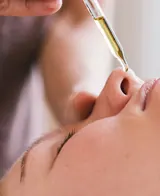
For loss of smell, a systematic review of mostly low-quality studies found that acupuncture and acupoint injection may help after viral infection.[10] A sham-controlled trial of 40 patients with COVID-related loss of smell compared a frequency-guided ear acupuncture protocol with switched-off laser sessions. Smell scores improved in the treated group but not the control group, and both groups used nasal steroid drops.[11]
Otherwise there are only case-level reports. One patient with post-COVID syndrome recovered after 7 acupuncture sessions combined with graded exercise, which makes the role of acupuncture unclear.[12] In a retrospective survey of 79 patients treated by TCM physicians in Germany and Austria, fatigue and exertional breathlessness improved on physician ratings, but with no control group.[13]
How acupuncture may work
How acupuncture might help in long COVID is not known. Researchers have proposed that it modulates nerve signaling and inflammation, and one case report suggested effects through the vagus nerve and gut-brain pathways.[14] These are hypotheses, not settled facts.
What treatment involves
Treatment uses fine, sterile, single-use needles placed at points on the body, scalp and sometimes ears, usually left in place for about 20 to 40 minutes. We reassess after a short course of visits, and tell us if treatment leaves you more tired.
Serious problems from acupuncture are rare. In prospective studies, about 9 in 100 patients had a minor reaction such as brief bleeding, soreness or bruising, and serious events occurred in about 1 in 10,000 patients.[15] Tell the practitioner first if you have a bleeding disorder, take blood thinners, are pregnant, or have a pacemaker (relevant to electroacupuncture).
Ayurvedic medicine for Long COVID
The Ayurvedic view
Ayurveda has no classical name for long COVID. Practitioners may describe lingering fatigue and weakness after illness as depleted strength and weak digestion (agni), with imbalance of the doshas that is understood for each person. These are traditional categories for choosing treatment, not biomedical diagnoses.
Therapies that may be used
Care is chosen for the individual and traditionally combines:
- Easily digested warm meals and a regular daily routine with consistent sleep
- Gentle breathing practices and rest, paced to your energy
- Gentle oil massage
- Herbs prescribed individually by a qualified practitioner
Panchakarma procedures are not appropriate during acute illness, frailty, pregnancy or severe exhaustion, and they are not a substitute for medical evaluation of ongoing symptoms.
What the research shows
We found no clinical trials of Ayurvedic treatment for long COVID.
A review of integrative care in long COVID notes that interest in complementary therapies has surged because established treatments are lacking, and describes what has been studied rather than endorsing particular therapies.[16] Daily routine, sleep and stress care may reasonably support recovery, since rehabilitation and behavioral programs have shown benefit for fatigue and concentration.[8] No study shows that Ayurveda changes the course of long COVID.
Herbal medicine for Long COVID
Herbs and formulas that have been studied
The research is on Chinese herbal formulas, which have been tested in China. One example is Qingjin Yiqi granules, studied in people with post-COVID-19 condition.[17] A meta-analysis pooled 10 trials of Chinese herbal medicine for post-COVID syndrome.[18]
What the research shows
The evidence is limited. A randomized trial of 388 patients found that 14 days of Qingjin Yiqi granules plus standard rehabilitation improved breathlessness and fatigue scale scores more than rehabilitation alone, with no treatment-related adverse events. Symptom score and walking distance did not differ, and there was no placebo.[17]
A meta-analysis of 10 randomized trials (2,401 patients) found Chinese herbal medicine did not significantly lower overall symptom scores, although it improved chest tightness and insomnia. Trends for fatigue and shortness of breath did not reach significance, heterogeneity was high, and the authors urged caution.[18] A systematic review of post-COVID fatigue also found that treatments, including a Chinese herbal formula, were mostly tested in small, uncontrolled studies.[7]
Safety and herb-drug interactions
Herbs are active substances and can interact with medicines. A literature review, mostly of case reports, found enhanced warfarin effect or bleeding with herbs such as dan shen (Salvia miltiorrhiza), garlic and ginkgo, and bleeding when ginkgo was combined with aspirin.[19] People taking blood thinners or other long-term medicines need a practitioner's review before using herbs.
In one study, about one fifth of Ayurvedic products bought online contained detectable lead, mercury or arsenic.[20] Herbs should come from tested sources and be prescribed individually. Tell us if you are pregnant or breastfeeding, have liver or kidney disease, or have surgery planned.
Translating traditional medicine into modern biological language
The links drawn here are interpretation, not equivalence. Chinese medicine often describes lingering fatigue and breathlessness after infection as deficiency of qi and yin, with lingering pathogenic factors in the lungs. Researchers instead study immune activation, inflammation, nervous system regulation and the gut-brain axis in long COVID.[2, 14]
Ayurveda's depleted strength and weak digestion describe exhaustion and gut symptoms, which loosely parallel the fatigue and digestive symptoms that people report.[4] No study has shown that a dosha or a TCM pattern corresponds to a specific biological process in long COVID.
How this care fits with your medical care
Integrative care for long COVID is complementary. For a condition like this, we ask that you are under a physician's care for it and that your treating team knows you are receiving complementary care. Do not stop or change prescribed medicines or rehabilitation without your prescriber.
We do not diagnose long COVID or decide its cause, and new or worsening symptoms need a medical evaluation. Please bring your diagnosis, recent test results, a list of medicines and supplements, and any rehabilitation plan.
When to seek urgent medical care
Long COVID can overlap with serious heart, lung and blood clot problems, so some symptoms need prompt evaluation.[4]
- Chest pain or pressure, or a racing, pounding or irregular heartbeat with faintness
- Severe or worsening shortness of breath
- Fainting or near-fainting
- Sudden weakness, numbness, trouble speaking, confusion or severe headache
- Swelling and pain in one leg, or coughing up blood
- Thoughts of harming yourself; call or text 988, the Suicide and Crisis Lifeline
If any of these occur, call 911 or go to the nearest emergency department.
Frequently asked questions
What is long COVID?
Long COVID, or post-COVID-19 condition, is a set of symptoms that continue or appear after COVID-19 and are not explained by another diagnosis. Common symptoms include fatigue, shortness of breath and problems with memory and concentration. It usually shows up about 3 months after infection and lasts at least 2 months, and symptoms may come and go.
Can acupuncture help with long COVID?
It may help some symptoms, but the evidence is limited. Large reviews of acupuncture for fatigue, sleep and mood come from people with other conditions, and studies in long COVID itself are small, such as one trial on loss of smell. Acupuncture is used alongside medical care, not in place of it.
Does Ayurvedic or herbal medicine work for long COVID?
We found no clinical trials of Ayurvedic treatment for long COVID. Chinese herbal formulas have been tested in trials, with some benefit for breathlessness, chest tightness and sleep, but results are mixed and study quality is limited. Herbs should be prescribed individually and checked against your medicines.
Can I stop my medicines or rehabilitation if I have acupuncture?
No. Acupuncture, Ayurveda and herbal medicine are complementary care. Do not stop or change prescribed medicines or rehabilitation without talking to your prescriber. Chest pain, severe breathlessness, fainting or new weakness need urgent medical attention.
How soon might I notice a change with acupuncture?
It differs from person to person and no result can be promised. Studies in long COVID are too small to say how quickly it works, and the smell trial gave two sessions a week apart. We reassess after a short course of visits and pace treatment to your energy.
Does insurance cover acupuncture for long COVID?
It may. Netra Integrative Health Clinic is in-network with Blue Cross Blue Shield, Cigna and UnitedHealthcare. Other plans may be covered through out-of-network benefits, and we offer a free benefits check. HSA and FSA cards and CareCredit are also accepted. Call (908) 402-7301 to ask about your plan.
References
- Soriano JB, Murthy S, Marshall JC, et al. A clinical case definition of post-COVID-19 condition by a Delphi consensus. Lancet Infect Dis. 2022;22(4):e102-e107. PMID 34951953. WHO-led Delphi consensus definition of post-COVID-19 condition: symptoms at about 3 months, lasting at least 2 months, not explained by another diagnosis.
- Davis HE, McCorkell L, Vogel JM, et al. Long COVID: major findings, mechanisms and recommendations. Nat Rev Microbiol. 2023;21(3):133-146. PMID 36639608. Review of long COVID findings and mechanisms, including prevalence of at least 10 percent of infections, over 200 symptoms and overlap with ME/CFS and POTS.
- Lewthwaite H, Byrne A, Brew B, et al. Treatable traits for long COVID. Respirology. 2023;28(11):1005-1022. PMID 37715729. Review proposing treatable-trait clusters for long COVID and summarizing trials, with exercise or respiratory training supported for chest and function.
- Greenhalgh T, Sivan M, Perlowski A, et al. Long COVID: a clinical update. Lancet. 2024;404(10453):707-724. PMID 39096925. Lancet clinical update on long COVID covering definition, mechanisms, clinical features, and largely symptomatic and supportive management.
- An Y, Guo Z, Fan J, et al. Prevalence and measurement of post-exertional malaise in post-acute COVID-19 syndrome: A systematic review and meta-analysis. Gen Hosp Psychiatry. 2024;91:130-142. PMID 39490027. Meta-analysis of 12 studies finding post-exertional malaise in over half of people with post-acute COVID-19 syndrome.
- Global Burden of Disease Long COVID Collaborators, Wulf Hanson S, Abbafati C, et al. Estimated Global Proportions of Individuals With Persistent Fatigue, Cognitive, and Respiratory Symptom Clusters Following Symptomatic COVID-19 in 2020 and 2021. JAMA. 2022;328(16):1604-1615. PMID 36215063. Global analysis of 1.2 million people estimating proportions with long COVID symptom clusters, by sex and hospitalization, and their duration.
- Joli J, Buck P, Zipfel S, et al. Post-COVID-19 fatigue: A systematic review. Front Psychiatry. 2022;13:947973. PMID 36032234. Systematic review of post-COVID fatigue covering risk factors and small, mostly uncontrolled treatment studies, including a Chinese herbal formula.
- Zeraatkar D, Ling M, Kirsh S, et al. Interventions for the management of long covid (post-covid condition): living systematic review. BMJ. 2024;387:e081318. PMID 39603702. Living systematic review of 24 trials; moderate-certainty evidence that online CBT and a rehabilitation program probably help, with no compelling evidence for many other treatments.
- Lam WC, Wei D, Li H, et al. The use of acupuncture for addressing neurological and neuropsychiatric symptoms in patients with long COVID: a systematic review and meta-analysis. Front Neurol. 2024;15:1406475. PMID 39099786. Systematic review of 110 trials of acupuncture for fatigue, depression, cognition, headache and sleep, mostly in other conditions, calling for studies in long COVID.
- Zou XY, Liu XH, Lu CL, et al. Traditional Chinese medicine for post-viral olfactory dysfunction: A systematic review. Integr Med Res. 2024;13(2):101045. PMID 38831890. Systematic review of acupuncture and related TCM for post-viral loss of smell (6 randomized trials), with low-quality evidence suggesting benefit.
- Mohebbi A, Bagheri SH, Raziabadi E, et al. Effects of Frequency-Controlled Ear Acupuncture on COVID-19- related Refractory Olfactory Dysfunction: a Randomized Clinical Trial. J Acupunct Meridian Stud. 2024;17(2):69-75. PMID 38686430. Sham-controlled trial of 40 people with COVID-related loss of smell in which ear acupuncture improved smell scores over switched-off laser sessions.
- Trager RJ, Brewka EC, Kaiser CM, et al. Acupuncture in Multidisciplinary Treatment for Post-COVID-19 Syndrome. Med Acupunct. 2022;34(3):177-183. PMID 35821795. Case report of one post-COVID patient who recovered after acupuncture combined with graded exercise, so acupuncture's own effect is unclear.
- Kraft J, Hardy A, Baustädter V, et al. Traditional Chinese medicine for post-COVID: A retrospective cohort study. Medicine (Baltimore). 2025;104(18):e42275. PMID 40327434. Retrospective survey of 79 post-COVID patients treated by TCM physicians, reporting improved fatigue and breathlessness without a control group.
- Kim DY, Youn J, Kang N, et al. Potential application of brain-gut axis-based treatments in Long COVID and ME/CFS: a case-based systematic review. J Transl Med. 2026;24(1). PMID 41668172. Case-based review proposing brain-gut axis mechanisms and covering trials of gut-targeting, herbal and nerve-stimulation treatments for long COVID and ME/CFS fatigue.
- Bäumler P, Zhang W, Stübinger T, et al. Acupuncture-related adverse events: systematic review and meta-analyses of prospective clinical studies. BMJ Open. 2021;11(9):e045961. PMID 34489268. Systematic review of 21 prospective studies finding minor acupuncture reactions in about 9 percent of patients and serious events in about 1 per 10,000.
- Estores IM, Ackerman P. Integrative Medicine in Long COVID. Phys Med Rehabil Clin N Am. 2023;34(3):677-688. PMID 37419539. Overview of complementary and integrative therapies used in long COVID, noting a lack of proven treatments and describing what has been studied.
- Pang W, Yang F, Zhao Y, et al. Qingjin Yiqi granules for post-COVID-19 condition: A randomized clinical trial. J Evid Based Med. 2022;15(1):30-38. PMID 35416437. Randomized trial of 388 patients with post-COVID-19 condition; Qingjin Yiqi granules plus rehabilitation eased breathlessness and fatigue scale scores, with no placebo.
- Wang Y, Li X, Hui H, et al. Efficacy and safety of traditional Chinese medicine for post-COVID-19 syndrome: a systematic review and meta-analysis. J Transl Med. 2025;23(1):801. PMID 40671020. Meta-analysis of 10 trials (2,401 patients) of Chinese herbal medicine for post-COVID syndrome; improved chest tightness and insomnia but not overall symptom score significantly.
- Hu Z, Yang X, Ho PC, et al. Herb-drug interactions: a literature review. Drugs. 2005;65(9):1239-82. PMID 15916450. Literature review of herb-drug interactions, mostly case reports, including enhanced warfarin effect or bleeding with dan shen, garlic and ginkgo, and bleeding with ginkgo plus aspirin.
- Saper RB, Phillips RS, Sehgal A, et al. Lead, mercury, and arsenic in US- and Indian-manufactured Ayurvedic medicines sold via the Internet. JAMA. 2008;300(8):915-23. PMID 18728265. JAMA study finding detectable lead, mercury or arsenic in about one fifth of Ayurvedic medicines purchased over the Internet.
This page is for general education and is not medical advice. Acupuncture, Ayurvedic medicine and herbal medicine are complementary therapies; they do not replace diagnosis or treatment by your physician. Do not stop or change prescribed treatment without talking to your prescriber. In an emergency call 911.