















- What it is: A reduced (hyposmia) or absent (anosmia) sense of smell, which also dulls the flavor of food.
- Common symptoms: Not smelling or tasting food normally, not noticing smoke or gas, and sometimes distorted or phantom smells.
- Conventional care: Finding and treating the cause, such as sinus disease, plus smell training and, in selected cases, steroid medicines.
- How integrative care fits: Acupuncture and individually prescribed herbs may be used alongside medical care and smell training; there is no research on Ayurvedic treatment for smell loss.
- Evidence at a glance: Limited for acupuncture, mostly small trials of post-viral smell loss; none for Ayurveda; very limited for herbal medicine.
What is Loss of Smell?
Loss of smell is a reduced or absent ability to detect odors. About 20% of people in the general population have some impairment of smell.[1] Complete loss is called anosmia and partial loss is called hyposmia.[2] It can lower quality of life, nutrition, social relationships and mental health.[2]
Common symptoms
The main symptom is not smelling things as you used to, and because taste depends on smell, food can seem flat.[1] Some people do not notice the loss at all until they miss a hazard, because smell loss often goes unnoticed and is diagnosed late.[3]
- Not noticing smoke, natural gas or spoiled food, which can be dangerous[1]
- Reduced enjoyment of eating and a change in appetite
- Smells that seem distorted, or odors perceived when nothing is there (phantosmia)[4]
Causes and risk factors
The most common causes are sinus and nasal disease, viral infection and head or facial injury.[1] Smell can be lost when something blocks odors from reaching the nasal lining (a conductive problem), or when the nerve cells or their pathways are damaged (a sensorineural problem).[4]
Smell loss can also be an early sign of neurodegenerative disorders such as Alzheimer disease and Parkinson disease.[1] Tobacco use is linked with poorer smell.[1]
How it is diagnosed and treated conventionally
A physician, often an ear, nose and throat specialist, looks for the cause, and smell is measured with standardized tests such as the Sniffin' Sticks.[2, 5] Treatment depends on the cause. Sinus surgery may be used for polyps, and corticosteroids may help when inflammation is the cause.[1]
Smell training is the best-supported option for smell loss after a viral infection. It involves sniffing a set of odors twice a day over several months, and a meta-analysis of 13 studies found improvement in smell.[1, 5, 6] Short courses of steroids are an option in selected patients, and trials do not clearly show added benefit when steroids are combined with training.[5, 7]
Many people recover on their own. Up to 60% of those with smell loss after infection and up to 20% of those after head injury improve without treatment, which makes it hard to judge any therapy without a control group.[1]
Why Loss of Smell calls for a whole-person approach
Smell loss has several possible causes, and it affects eating, safety and mood. The factors below are why it is worth looking beyond the nose alone.
Care that pays attention to these linked factors is a reasonable addition to medical evaluation. It does not replace finding the cause.
Sinus and nasal inflammation
Inflammation of the nose and sinuses is among the most common causes of smell loss.[1] In a review of 28 trials in chronic sinusitis with nasal polyps, oral and topical steroids improved smell, while herbal products, antibiotics and antifungals showed no overall effect on smell scores.[8]
Viral infection and nerve recovery
After a viral infection, the smell-sensing nerve lining may be damaged, and recovery can take months.[1, 5] Smell training is thought to work through the plasticity of the olfactory system, although the exact mechanism is still being studied.[6]
Mood and wellbeing
Smell loss can erode quality of life and mental health.[2, 3] A meta-analysis found that people with depression scored lower on smell tests than people without it, which shows an association rather than a cause.[9]
Safety and nutrition
Because food loses its flavor and warning smells go unnoticed, people with smell loss need practical safeguards such as working smoke and gas detectors.[1, 3]
Acupuncture for Loss of Smell
What the research shows
Acupuncture has been tested for smell loss in small trials, and the evidence is limited. In a sham-controlled trial of 60 people with smell loss after an upper respiratory infection, real acupuncture improved the overall smell score more than sham acupuncture. The gain came mostly from odor discrimination and was larger in people with a shorter duration of loss.[10]
A trial of 40 people with smell loss after COVID-19 compared two sessions of ear acupuncture with a switched-off laser. Both groups used steroid nose drops, and self-rated smell improved more with real treatment. Three people had brief nausea, headache or dizziness.[11]
A systematic review of traditional Chinese medicine for post-viral smell loss found 6 randomized trials with 545 participants plus smaller non-randomized studies. Most used acupuncture or acupoint injection, and five trials favored treatment, but the overall quality was low.[12] A broader review of acupuncture in ear, nose and throat conditions found that conclusions were limited by differing methods and that higher-quality trials are needed.[13] The evidence for smell loss from causes other than viral infection is thinner still.
How acupuncture may work
How acupuncture might affect the sense of smell is not established. The trials above measured smell, not mechanisms, so any explanation remains a hypothesis.[10, 12] Smell training, which has stronger support, remains the standard non-drug approach.[5]
What treatment involves
Treatment uses fine, sterile, single-use needles placed at points on the face, head, hands and legs, usually left in place for about 20 to 40 minutes. The ear acupuncture trial above used two sessions one week apart, and we reassess after a short course of visits.[11]
Serious problems from acupuncture are rare. In prospective studies, about 9 in 100 patients had a minor reaction such as brief bleeding, soreness or redness at a needle site, and serious events occurred in about 1 in 10,000 patients.[14] Tell the practitioner first if you have a bleeding disorder, take blood thinners, are pregnant, or have a pacemaker (relevant to electroacupuncture).
Ayurvedic medicine for Loss of Smell
The Ayurvedic view
Ayurveda traditionally treats the nose as the gateway to the head, and loss of smell is understood as a disturbance in the nose and head region. In this framework, a Kapha imbalance causing congestion, or a Vata imbalance affecting sensation, may be considered. These are traditional categories for choosing treatment, not biomedical diagnoses.
Therapies that may be used
Care is chosen for the individual and traditionally combines:
- Diet and daily routine intended to calm Kapha or Vata, such as warm foods and regular sleep
- Steam inhalation and gentle warm-oil practices for the head and neck
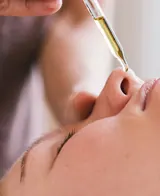
- Nasya, the placing of herbal oils or powders in the nose, which is the Panchakarma therapy traditionally used for the nose and head
Panchakarma procedures are not appropriate during pregnancy, acute illness or frailty. Nasal therapies should wait until a physician has found the cause of smell loss and ruled out an infection or a structural problem.
What the research shows
There is no clinical research on Ayurvedic treatment for loss of smell. We found no trials or systematic reviews, so any benefit is unknown. The nearest research is on chronic sinusitis, a common cause of smell loss, where a systematic review of 13 Ayurvedic studies found reported improvement but a significant risk of bias in every study.[15] Because many people with post-viral smell loss improve on their own, an apparent improvement after any treatment cannot be taken as proof that the treatment worked.[1]
Herbal medicine for Loss of Smell
Herbs and formulas that have been studied
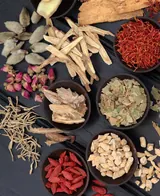
Research on herbs for smell loss is sparse. A lavender syrup has been tested in COVID-19-related smell loss, and ginkgo has been evaluated for smell loss after a viral cold.[16, 17] Chinese herbal medicine has been grouped with acupuncture in reviews of post-viral smell loss, but the controlled studies mainly tested acupuncture and acupoint injection.[12]
What the research shows
The evidence is very limited. In a pilot trial of 43 outpatients with COVID-19, those who took lavender syrup had a larger drop in self-rated smell loss than those who did not. The study was small, its control group received no placebo, and symptoms had lasted only about a week, so natural recovery may explain much of the change.[1, 16]
A review of herbal medicine in ear, nose and throat practice concluded that ginkgo taken by mouth has no indication in smell loss after viral rhinitis.[17] In the sinus polyp trials above, herbal products did not change overall smell scores.[8]
Safety and herb-drug interactions
Herbs are active substances and can interact with medicines. Ginkgo has been linked to bleeding when combined with warfarin or aspirin, and case reports describe bleeding when warfarin was combined with herbs including dan shen, dang gui, ginger and Boswellia.[18, 19] People taking blood thinners need a practitioner's review before using herbs.
In one study, about one fifth of Ayurvedic products bought online contained detectable lead, mercury or arsenic.[20] Herbs should come from tested sources and be prescribed individually. Tell us if you are pregnant or breastfeeding, have liver or kidney disease, take blood thinners, or have surgery planned.
Translating traditional medicine into modern biological language
The links drawn here are interpretation, not equivalence. Chinese medicine would describe smell loss as a nose orifice that is not open, with patterns such as lung qi weakness or dampness blocking the nose. Researchers might loosely compare this with nasal inflammation and swelling, or with injury to the olfactory nerve cells.[1]
Ayurveda's Kapha-type congestion likewise parallels blocked airflow to the smell lining. No study has shown that a dosha or a qi pattern corresponds to a specific biological process in smell loss.
How this care fits with your medical care
Integrative care for smell loss is complementary. Keep your physician or ENT specialist, and do not stop or change prescribed steroids or other medicines without your prescriber. We do not diagnose the cause of smell loss, and any new or unexplained loss should be medically evaluated.
Please bring your diagnosis, any imaging or smell-test reports, a full list of medicines and supplements, and details of any sinus surgery or head injury. Smell training is a medically supported step that can be done alongside our care.[5]
When to seek urgent medical care
Most smell loss is not an emergency, but some features need prompt medical assessment, because smell loss can be a sign of serious nose, sinus or brain conditions.[1]
- Sudden smell loss after a head injury
- Smell loss with a severe headache, confusion, weakness or vision changes
- Smell loss with a nosebleed, a one-sided blocked nose or a growth in the nose
- Swelling, redness or pain around an eye
- Inability to detect smoke or gas leaks when you live alone
If any of these occur, call 911 or go to the nearest emergency department.
Frequently asked questions
What is loss of smell?
Loss of smell is a reduced or absent ability to detect odors. Complete loss is called anosmia and partial loss is called hyposmia. Common causes include sinus disease, viral infections and head injury. Because taste depends on smell, food may seem flavorless. A physician should look for the cause, and many people improve over time.
Can acupuncture help with loss of smell?
The evidence is limited. A sham-controlled trial of 60 people with smell loss after infection found a better smell score with real acupuncture than with sham, and one other small trial pointed the same way. A systematic review rated the overall quality of such studies as low. Acupuncture is used alongside medical care and smell training, not in place of them.
Does Ayurvedic or herbal medicine work for loss of smell?
There are no clinical studies of Ayurvedic treatment for smell loss, so its effect is unknown. Research on herbs is very limited, with one small lavender pilot study and one review finding no benefit from ginkgo. Herbs should be prescribed individually and checked against your medicines.
Can I stop my steroid medicine or skip smell training if I have acupuncture?
No. Acupuncture, Ayurveda and herbal medicine are complementary care. Do not stop or change prescribed medicines without talking to your prescriber. Smell training is the best-supported option for smell loss after an infection, and your physician can advise you on it.
How soon might I notice a change with acupuncture?
It differs from person to person and no result can be promised. Many people with smell loss after an infection improve on their own over months, so change over time does not prove that a treatment worked. We reassess after a short course of visits to see whether treatment is helping.
Does insurance cover acupuncture for loss of smell?
It may. Netra Integrative Health Clinic is in-network with Blue Cross Blue Shield, Cigna and UnitedHealthcare. Other plans may be covered through out-of-network benefits, and we offer a free benefits check. HSA and FSA cards and CareCredit are also accepted. Call (908) 402-7301 to ask about your plan.
References
- Kronenbuerger M, Pilgramm M. Olfactory Training. StatPearls [Internet]. 2024. PMID 33620818. StatPearls chapter on olfactory training covering causes, prevalence, spontaneous recovery rates, smell training and its uncertain evidence.
- Whitcroft KL, Altundag A, Balungwe P, et al. Position paper on olfactory dysfunction: 2023. Rhinology. 2023;61(33):1-108. PMID 37454287. 2023 international position paper on olfactory dysfunction covering definitions, quality-of-life impact, diagnosis and management, agreed by expert consensus.
- Schäfer L, Schriever VA, Croy I. Human olfactory dysfunction: causes and consequences. Cell Tissue Res. 2021;383(1):569-579. PMID 33496882. Review of the causes, prevalence, diagnosis and consequences of olfactory loss, including effects on well-being, mental health and daily safety.
- Gillette B, Matz O, Winters R, et al. Phantosmia. StatPearls [Internet]. 2026. PMID 36256775. StatPearls chapter on phantosmia describing phantom smells and conductive versus sensorineural olfactory disorders.
- Hura N, Xie DX, Choby GW, et al. Treatment of post-viral olfactory dysfunction: an evidence-based review with recommendations. Int Forum Allergy Rhinol. 2020;10(9):1065-1086. PMID 32567798. Systematic review of 36 studies in post-viral olfactory dysfunction recommending olfactory training and noting steroids as an option, with few high-quality studies.
- Sorokowska A, Drechsler E, Karwowski M, et al. Effects of olfactory training: a meta-analysis. Rhinology. 2017;55(1):17-26. PMID 28040824. Meta-analysis of 13 studies finding that smell training improved smell identification, discrimination and threshold.
- Asvapoositkul V, Samuthpongtorn J, Aeumjaturapat S, et al. Therapeutic options of post-COVID-19 related olfactory dysfunction: a systematic review and meta-analysis. Rhinology. 2023;61(1):2-11. PMID 36173148. Meta-analysis of post-COVID-19 smell loss treatments finding smell training improved function and no added benefit from combining it with steroids.
- Banglawala SM, Oyer SL, Lohia S, et al. Olfactory outcomes in chronic rhinosinusitis with nasal polyposis after medical treatments: a systematic review and meta-analysis. Int Forum Allergy Rhinol. 2014;4(12):986-94. PMID 25400017. Systematic review of 28 trials in nasal polyp sinusitis finding steroids improved smell and herbal products, antibiotics and antifungals did not.
- Kim BY, Bae JH. Olfactory Function and Depression: A Meta-Analysis. Ear Nose Throat J. 2025;104(1):39-46. PMID 35360974. Meta-analysis finding lower smell test scores in people with depression than in controls.
- Drews T, Hummel T, Rochlitzer B, et al. Acupuncture is associated with a positive effect on odour discrimination in patients with postinfectious smell loss-a controlled prospective study. Eur Arch Otorhinolaryngol. 2022;279(3):1329-1334. PMID 34032906. Sham-controlled trial of 60 people with post-infectious smell loss finding real acupuncture improved smell scores more than sham, mainly odor discrimination.
- Mohebbi A, Bagheri SH, Raziabadi E, et al. Effects of Frequency-Controlled Ear Acupuncture on COVID-19- related Refractory Olfactory Dysfunction: a Randomized Clinical Trial. J Acupunct Meridian Stud. 2024;17(2):69-75. PMID 38686430. Trial of 40 people with COVID-19 smell loss finding ear acupuncture improved self-rated smell more than a switched-off laser, with brief mild side effects.
- Zou XY, Liu XH, Lu CL, et al. Traditional Chinese medicine for post-viral olfactory dysfunction: A systematic review. Integr Med Res. 2024;13(2):101045. PMID 38831890. Systematic review of traditional Chinese medicine for post-viral smell loss with 6 randomized trials, mostly acupuncture, of overall low quality.
- Kahn CI, Huestis MJ, Cohen MB, et al. Evaluation of Acupuncture's Efficacy Within Otolaryngology. Ann Otol Rhinol Laryngol. 2020;129(7):727-736. PMID 32090591. Qualitative review of acupuncture in otolaryngology concluding that varied methods limit conclusions and better trials are needed.
- Bäumler P, Zhang W, Stübinger T, et al. Acupuncture-related adverse events: systematic review and meta-analyses of prospective clinical studies. BMJ Open. 2021;11(9):e045961. PMID 34489268. Systematic review of 21 prospective studies finding minor acupuncture reactions in about 9 percent of patients and serious events in about 1 per 10,000.
- Schmale IL, Nimmagadda SV, Ravikumar S, et al. Ayurvedic medicine for the treatment of chronic rhinosinusitis: a systematic review of randomized and non-randomized trials. J Complement Integr Med. 2023;20(4):675-688. PMID 36800361. Systematic review of 13 Ayurvedic studies in chronic rhinosinusitis, all reporting improvement but all at significant risk of bias; evidence for a common cause of smell loss, not smell loss itself.
- Hashem-Dabaghian F, Ali Azimi S, Bahrami M, et al. Effect of Lavender (Lavandula angustifolia L.) syrup on olfactory dysfunction in COVID-19 infection: A pilot controlled clinical trial. Avicenna J Phytomed. 2022;12(1):1-7. PMID 35145890. Pilot controlled trial of 43 COVID-19 outpatients finding lavender syrup produced a larger drop in smell loss scores than standard care alone.
- Laccourreye O, Werner A, Laccourreye L, et al. Benefits, pitfalls and risks of phytotherapy in clinical practice in otorhinolaryngology. Eur Ann Otorhinolaryngol Head Neck Dis. 2017;134(2):95-99. PMID 27914909. Review of herbal medicine in ear, nose and throat practice, finding no indication for oral ginkgo in post-viral anosmia and noting herb risks.
- Hu Z, Yang X, Ho PC, et al. Herb-drug interactions: a literature review. Drugs. 2005;65(9):1239-82. PMID 15916450. Literature review of herb-drug interactions, including bleeding with ginkgo combined with warfarin or aspirin.
- Milić N, Milosević N, Golocorbin Kon S, et al. Warfarin interactions with medicinal herbs. Nat Prod Commun. 2014;9(8):1211-6. PMID 25233607. Review of reported interactions between warfarin and medicinal herbs, including bleeding events with dan shen, dang gui, ginger and Boswellia.
- Saper RB, Phillips RS, Sehgal A, et al. Lead, mercury, and arsenic in US- and Indian-manufactured Ayurvedic medicines sold via the Internet. JAMA. 2008;300(8):915-23. PMID 18728265. JAMA study finding detectable lead, mercury or arsenic in about one fifth of Ayurvedic medicines purchased over the Internet.
This page is for general education and is not medical advice. Acupuncture, Ayurvedic medicine and herbal medicine are complementary therapies; they do not replace diagnosis or treatment by your physician. Do not stop or change prescribed treatment without talking to your prescriber. In an emergency call 911.