














- What it is: A rare acquired, probably immune-mediated neuropathy that affects motor nerves and causes progressive weakness that is uneven between limbs, with conduction block on nerve testing.
- Common symptoms: Weakness that starts in the hands and forearms, trouble with gripping, writing or dressing, muscle wasting and twitching, usually with little or no numbness.
- Conventional care: Immunoglobulin (IVIg) is the first-line treatment. Steroids and plasma exchange usually do not help, and other options are being studied.
- How integrative care fits: Supportive care for fatigue, stress and comfort after the disease is under neurologic management, always with your treating team's knowledge.
- Evidence at a glance: No studies of acupuncture, Ayurveda or herbs in MMN were found. Evidence from other neuropathies and fatigue is limited and may not apply.
What is Multifocal Motor Neuropathy?
Multifocal motor neuropathy (MMN), also called MMN with conduction block, is a rare acquired neuropathy that affects motor nerves. It causes progressive weakness that is asymmetric, meaning it differs between limbs, without sensory problems.[1] It is thought to be immune-mediated, which is why it is classed with autoimmune neuropathies.[2, 3]
Common symptoms
The main symptom is slowly progressive weakness, most often in the hands and arms, with the upper limbs affected more than the legs.[1, 4] Some people have mild symptoms and need no treatment. Others develop trouble with simple daily tasks such as writing, washing or dressing.[1]
- Weakness that starts in one hand or forearm and spreads unevenly
- Difficulty gripping, holding objects or doing fine tasks
- Muscle thinning and twitching in affected muscles
- Minor sensory symptoms in a minority of people[4]
Causes and risk factors
The exact cause is not known. MMN is probably immune-mediated, and antibodies against a nerve component called GM1 ganglioside are found in at least 40 percent of people.[2] Recent research points to antibody-driven complement activity at the node of Ranvier, a gap in the nerve's insulation, but the underlying mechanism is still debated.[2, 4] It typically appears in middle-aged adults.[4]
How it is diagnosed and treated conventionally
Diagnosis depends on the pattern of weakness and nerve conduction studies that show conduction block. Blood tests for GM1 antibodies, nerve MRI and ultrasound can help.[4] MMN can resemble motor neuron disease or other demyelinating neuropathies, so specialist evaluation matters.[4, 5]
Immunoglobulin therapy is the first-line treatment. In small trials it improved strength in many people, though the evidence is low certainty, and most responders worsened after stopping it. People with MMN do not usually respond to steroids or plasma exchange.[3] Strength can still decline slowly over the long term despite maintenance treatment, and complement-blocking drugs are being studied.[4]
Why Multifocal Motor Neuropathy calls for a whole-person approach
MMN is an immune-mediated disease that needs a neurologist, and no integrative therapy has been shown to affect the nerve damage. Living with progressive hand and arm weakness affects work, independence, energy and mood, and some of those effects can be supported.
Almost no research exists on integrative care in MMN itself. Where we cite studies, they come from related nerve conditions or from symptoms in general, and the results may not apply to MMN.
Movement, strength and function
A systematic review of 13 studies in Guillain-Barré syndrome and chronic inflammatory demyelinating polyneuropathy (CIDP), related immune-mediated neuropathies, found that multicomponent exercise programs were linked to improvements in fatigue and function. The studies were varied and small, with only 37 participants having CIDP.[6] Exercise plans for MMN should be set by your neurologist or therapist.
Fatigue
In a randomized trial of 16 adults with chronic Guillain-Barré syndrome, supervised individualized exercise reduced fatigue and improved strength and quality of life more than home exercise.[7] Whether this applies to MMN is not known.
Treatment burden and stress
Ongoing immunoglobulin infusions can bring transient side effects, which were reported in most treated participants in two small trials, although the certainty of this evidence was very low.[3] Living with a rare chronic condition is also stressful. Supportive care for stress and comfort is a reasonable goal, even though no MMN trials exist.
Nerve pain and sensation
Some people with neuropathy have pain or odd sensations. Because MMN is mainly a motor condition, this is less common, and any new sensory symptoms should be reported to your neurologist.[4]
Acupuncture as supportive care in Multifocal Motor Neuropathy
What the research shows
No clinical trials of acupuncture in MMN were found in a PubMed search, and acupuncture has not been shown to improve strength in MMN or to affect the disease. We can only describe research on related symptoms.
A 2024 network meta-analysis of 33 studies with 2,027 people found that acupuncture-related treatments improved symptoms, pain and quality of life in neuropathy caused by chemotherapy compared with usual care or medicines. That is a different kind of nerve damage, mostly affecting sensation, so it does not show benefit in MMN.[8] A 2019 meta-analysis in chronic fatigue syndrome found a favorable effect of acupuncture on fatigue, but most studies were of low quality and the authors reached no firm conclusion.[9] A 2025 narrative review suggested that acupuncture may have anti-inflammatory effects in autoimmune conditions, mostly based on animal models, and it did not address MMN.[10]
How acupuncture may work
Researchers propose that acupuncture may influence inflammatory signaling and the way the nervous system processes pain, mainly from animal studies of other autoimmune diseases.[10] None of this has been shown in MMN.
What treatment involves
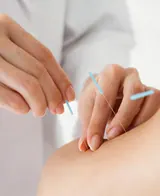
Treatment uses fine, sterile, single-use needles, usually left in place for about 20 to 40 minutes. In the chemotherapy-neuropathy review, benefit was linked to treatment lasting at least 3 weeks.[8] We reassess after a short course of visits.
Serious problems are rare. In prospective studies, about 9 in 100 patients had a minor reaction such as brief bleeding, soreness or redness at a needle site, and serious events occurred in about 1 in 10,000 patients.[11] Tell your practitioner first if you have a bleeding disorder, take blood thinners, are pregnant, or have a pacemaker (relevant to electroacupuncture). We also need to know which muscles are weak, so we can avoid placing needles in a way that interferes with your therapy.
Ayurvedic medicine as supportive care in Multifocal Motor Neuropathy
The Ayurvedic view
Ayurveda has no classical name that matches MMN. In this traditional framework, wasting and weakness of the limbs are generally described as involving Vata, the principle said to govern movement and nerve function, together with depleted tissues. This is a traditional way to organize care, not a biomedical explanation.
Therapies that may be used
Care is chosen for the individual and, once your neurologist confirms your condition is stable, may include:
- Diet and daily routine intended to calm Vata, such as warm regular meals, rest and steady sleep hours
- Gentle warm oil massage of the limbs for comfort and relaxation
- Breathing and relaxation practices, and gentle movement within the exercise plan set by your neurologist or therapist, since structured exercise is linked to better function in related neuropathies[6]
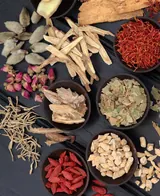
- Herbs prescribed individually by a qualified practitioner, after review of your medicines
Panchakarma, the traditional cleansing program, is not appropriate during pregnancy, acute illness or frailty, or while on immune-suppressing treatment unless your physician agrees. We do not use it to treat MMN.
What the research shows
No clinical studies of Ayurvedic treatment for MMN were found in a PubMed search, and none for related immune-mediated neuropathies. We therefore cannot say that Ayurvedic care changes strength or nerve function. Any care would aim at comfort, sleep and stress.
A comprehensive review of plant-derived medicines for neuropathies found 22 clinical studies, mostly in diabetic, chemotherapy-related and other neuropathies. Turmeric (Curcuma longa) had a single clinical trial, and the authors called for more research.[12]
Herbal medicine as supportive care in Multifocal Motor Neuropathy
Herbs and formulas that have been studied
No herbs or Chinese formulas have been tested in MMN. In other neuropathies, studies have looked at plant products such as cannabis, flaxseed oil, capsaicin and a Japanese formula called Goshajinkigan.[12] Transdermal medication therapy, meaning herbal preparations applied to the skin, may be discussed where relevant, but no benefit in MMN has been shown.
What the research shows
There is no evidence for herbal medicine in MMN. A Cochrane review of herbal products for neuropathic pain lasting at least three months found only two small trials, rated the evidence as very low quality and could not draw conclusions.[13] The plant-medicine review found improvements in some outcomes in other neuropathies, and it called for more trials to confirm safety and benefit.[12]
Safety and herb-drug interactions
Herbs are active substances and can interact with medicines. Reports describe St John's wort lowering blood levels of ciclosporin and tacrolimus, and ginkgo or danshen increasing bleeding risk with blood thinners.[14] If you take any immune-suppressing medicine alongside immunoglobulin, herbs should not be added without your neurologist's agreement.
About one fifth of Ayurvedic products bought online contained detectable lead, mercury or arsenic in one study.[15] Heavy metals can themselves damage nerves, which is another reason to avoid untested products. Herbal and dietary supplements are also a recognized cause of liver injury.[16] Tell us if you are pregnant or breastfeeding, have liver or kidney disease, or have surgery planned.
Translating traditional medicine into modern biological language
This section is interpretation, not equivalence. Chinese medicine often describes limb weakness and muscle wasting as deficiency of qi and blood, or as flaccidity syndrome, and treats it by supporting the spleen and kidney. Researchers instead study immune activity, nerve conduction and muscle function, and none of those links has been tested for acupuncture or herbs in MMN.[4]
Ayurveda's Vata disturbance with tissue depletion describes weakness and dryness of the nerves and muscles. No study has shown that a dosha corresponds to a specific biological process.
How this care fits with your medical care
MMN needs ongoing care from a neurologist. For a condition like this, we ask that you are under a physician's care for it and that your treating team knows you are receiving complementary care. We do not diagnose MMN, interpret nerve tests, adjust immunoglobulin or other medicines, or replace your physicians.
Do not stop or change immunoglobulin infusions or other prescribed treatment because of anything on this page. Please bring your diagnosis, nerve conduction reports, a list of medicines and supplements, your infusion schedule and your neurologist's contact details. Keep up with any physical or occupational therapy you have been given.
When to seek urgent medical care
Most weakness in MMN progresses slowly, but sudden or widespread weakness needs prompt medical assessment because other serious conditions can look similar.[4]
- Weakness that is getting worse quickly over days
- Trouble swallowing, speaking or breathing
- New weakness in the legs, face or both sides of the body
- New numbness or loss of sensation in addition to weakness
- Severe headache, fever or neck stiffness during or after an infusion
If any of these occur, call 911 or go to the nearest emergency department.
Frequently asked questions
What is multifocal motor neuropathy?
Multifocal motor neuropathy (MMN) is a rare, probably immune-mediated condition that damages motor nerves. It causes slowly progressive weakness that is uneven between limbs, often starting in the hands, with little or no numbness. Nerve tests show conduction block. It is diagnosed and treated by a neurologist, most often with immunoglobulin infusions.
Can acupuncture help people with multifocal motor neuropathy?
No studies of acupuncture in MMN were found, so we cannot say it helps the condition or improves strength. Research in other neuropathies and in fatigue suggests acupuncture may ease some symptoms, but that evidence is limited and may not apply. It is only supportive care alongside your neurologist’s treatment.
Is Ayurvedic or herbal medicine useful for multifocal motor neuropathy?
No studies of Ayurvedic or herbal treatment in MMN were found. Reviews of herbs for other neuropathies found limited, low-quality evidence. Herbs can interact with medicines and some products contain heavy metals, so any herb must be reviewed with your neurologist first.
Can I stop my immunoglobulin infusions if I have acupuncture?
No. Acupuncture, Ayurveda and herbal medicine do not replace treatment for MMN. In a Cochrane review, most people who responded to immunoglobulin got worse after stopping it. Do not stop or change prescribed treatment without your neurologist.
What should I bring to a first visit?
Bring your diagnosis, nerve conduction and antibody results, a list of medicines and supplements, your infusion schedule, and your neurologist’s contact details. Tell us which muscles are weak. We ask that your treating team knows you are receiving complementary care.
Does insurance cover acupuncture for multifocal motor neuropathy?
It may. Netra Integrative Health Clinic is in-network with Blue Cross Blue Shield, Cigna and UnitedHealthcare. Other plans may be covered through out-of-network benefits, and we offer a free benefits check. HSA and FSA cards and CareCredit are also accepted. Call (908) 402-7301 to ask about your plan.
References
- Hameed S, Cascella M. Multifocal Motor Neuropathy. StatPearls [Internet]. 2023. PMID 32119411. StatPearls chapter on multifocal motor neuropathy covering asymmetric motor weakness without sensory loss, conduction block, anti-GM1 antibodies and response to IVIG.
- Yeh WZ, Dyck PJ, van den Berg LH, et al. Multifocal motor neuropathy: controversies and priorities. J Neurol Neurosurg Psychiatry. 2020;91(2):140-148. PMID 31511307. Review of MMN controversies including pathophysiology, diagnostic criteria, anti-GM1 IgM antibodies in at least 40 percent, and treatment.
- Keddie S, Eftimov F, van den Berg LH, et al. Immunoglobulin for multifocal motor neuropathy. Cochrane Database Syst Rev. 2022;1(1):CD004429. PMID 35015296. Cochrane review of six small trials of immunoglobulin in MMN with low-certainty improved strength, relapse after withdrawal, and no usual response to steroids or plasma exchange.
- Claytor B, Polston D, Li Y. Multifocal Motor Neuropathy: A Narrative Review. Muscle Nerve. 2025;71(4):512-534. PMID 39936246. 2025 narrative review of MMN covering typical features, antibodies, complement mechanisms, imaging, differential diagnosis, and immunoglobulin as first-line therapy.
- Lawson VH, Arnold WD. Multifocal motor neuropathy: a review of pathogenesis, diagnosis, and treatment. Neuropsychiatr Dis Treat. 2014;10:567-76. PMID 24741315. Review of MMN pathogenesis, diagnosis and treatment, noting its resemblance to motor neuron disease and the value of early recognition.
- De León-Muñoz A, Ávila-Gandía V, Andreu-Caravaca L. Impact of Physical Exercise Programs on Fatigue and Functional Capacity in People With Guillain-Barré Syndrome and Chronic Inflammatory Demyelinating Polyneuropathy: A Systematic Review. Arch Phys Med Rehabil. 2026;107(5):1067-1078. PMID 41038424. Systematic review of 13 studies of exercise in Guillain-Barré syndrome and CIDP linking multicomponent programs to less fatigue and better function.
- Shah N, Shrivastava M, Kumar S, et al. Supervised, individualised exercise reduces fatigue and improves strength and quality of life more than unsupervised home exercise in people with chronic Guillain-Barré syndrome: a randomised trial. J Physiother. 2022;68(2):123-129. PMID 35396175. Randomized trial of 16 adults with chronic Guillain-Barré syndrome in which supervised exercise reduced fatigue and improved strength more than home exercise.
- Yeh ML, Liao RW, Yeh PH, et al. Acupuncture-related interventions improve chemotherapy-induced peripheral neuropathy: A systematic review and network meta-analysis. BMC Complement Med Ther. 2024;24(1):310. PMID 39160496. Network meta-analysis of 33 studies of acupuncture-related treatments for chemotherapy-induced neuropathy, finding improved symptoms, pain and quality of life.
- Zhang Q, Gong J, Dong H, et al. Acupuncture for chronic fatigue syndrome: a systematic review and meta-analysis. Acupunct Med. 2019;37(4):211-222. PMID 31204859. Meta-analysis of 16 studies of acupuncture for chronic fatigue syndrome, with a favorable effect on fatigue but low-quality studies and no firm conclusion.
- Gamus D, Shoenfeld Y. Acupuncture therapy in autoimmune diseases: A narrative review. Autoimmun Rev. 2025;24(2):103709. PMID 39586390. Narrative review of acupuncture in autoimmune diseases covering anti-inflammatory mechanisms, mostly from animal models.
- Bäumler P, Zhang W, Stübinger T, et al. Acupuncture-related adverse events: systematic review and meta-analyses of prospective clinical studies. BMJ Open. 2021;11(9):e045961. PMID 34489268. Systematic review of 21 prospective studies finding minor acupuncture reactions in about 9 percent of patients and serious events in about 1 per 10,000.
- Ebrahimi F, Farzaei MH, Bahramsoltani R, et al. Plant-derived medicines for neuropathies: a comprehensive review of clinical evidence. Rev Neurosci. 2019;30(6):671-684. PMID 30768427. Systematic review of 22 clinical studies of plant-derived medicines in neuropathies, mostly diabetic and chemotherapy-related, calling for further trials.
- Boyd A, Bleakley C, Hurley DA, et al. Herbal medicinal products or preparations for neuropathic pain. Cochrane Database Syst Rev. 2019;4(4):CD010528. PMID 30938843. Cochrane review of herbal products for neuropathic pain that found two small trials and insufficient evidence.
- Hu Z, Yang X, Ho PC, et al. Herb-drug interactions: a literature review. Drugs. 2005;65(9):1239-82. PMID 15916450. Literature review of herb-drug interactions, including St John's wort with ciclosporin and tacrolimus, and bleeding with ginkgo or danshen plus warfarin.
- Saper RB, Phillips RS, Sehgal A, et al. Lead, mercury, and arsenic in US- and Indian-manufactured Ayurvedic medicines sold via the Internet. JAMA. 2008;300(8):915-23. PMID 18728265. JAMA study finding detectable lead, mercury or arsenic in about one fifth of Ayurvedic medicines purchased over the Internet.
- Navarro VJ, Khan I, Björnsson E, et al. Liver injury from herbal and dietary supplements. Hepatology. 2017;65(1):363-373. PMID 27677775. Hepatology review of liver injury from herbal and dietary supplements, including difficulty identifying the culprit in multi-ingredient products.
This page is for general education and is not medical advice. Acupuncture, Ayurvedic medicine and herbal medicine are complementary therapies; they do not replace diagnosis or treatment by your physician. Do not stop or change prescribed treatment without talking to your prescriber. In an emergency call 911.