





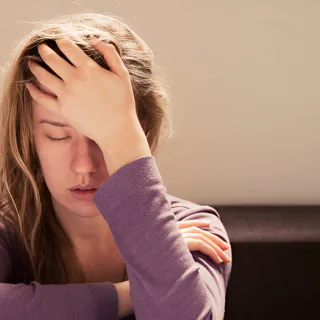
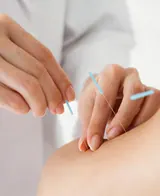

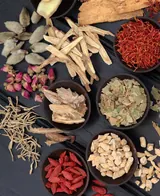

- What it is: The years before the final period, when ovarian hormones fluctuate widely and menstrual cycles become irregular.
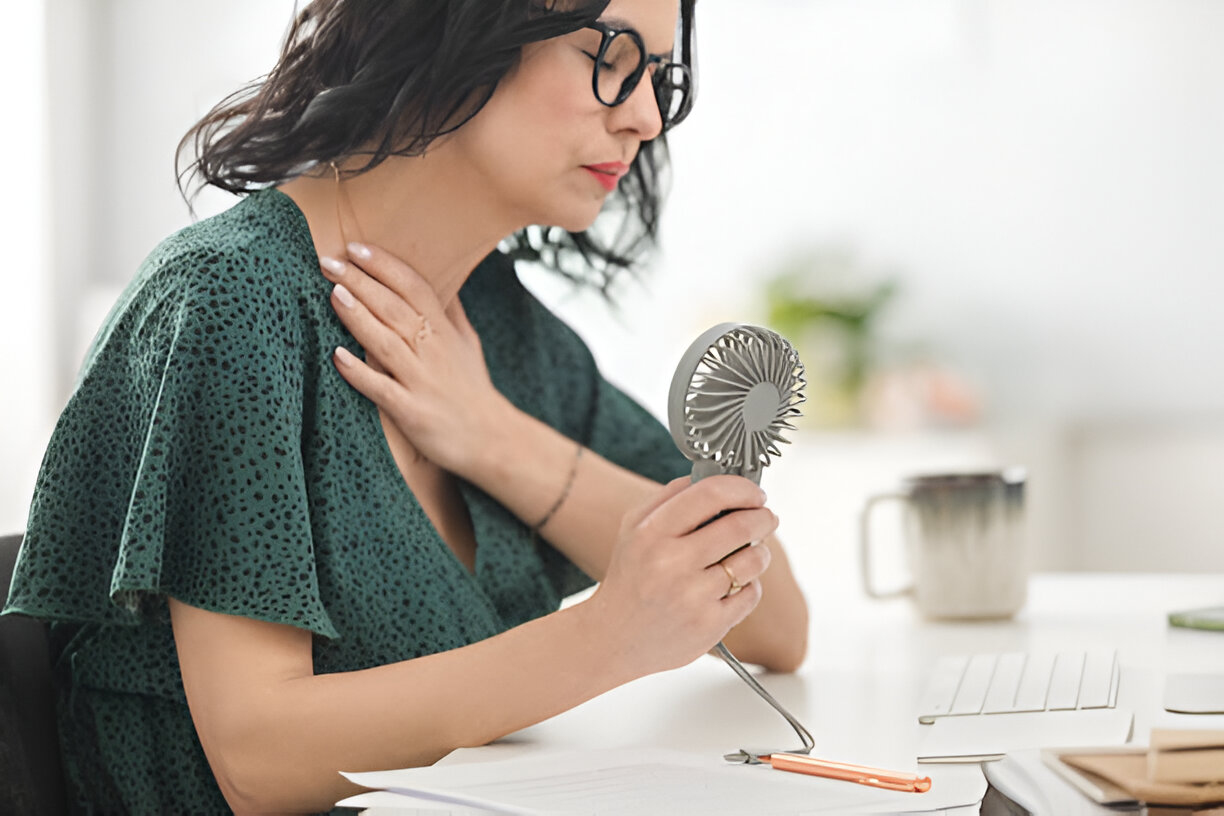
- Common symptoms: Irregular periods, hot flashes and night sweats, poor sleep, mood changes, vaginal dryness and trouble concentrating.
- Conventional care: Hormone therapy, hormonal contraceptives for some women, non-hormonal medicines, and lifestyle changes.
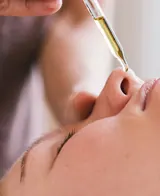
- How integrative care fits: Acupuncture, Ayurvedic therapies and individually prescribed herbs may be used alongside medical care for symptoms, sleep and stress.
- Evidence at a glance: Limited for acupuncture, mixed for hot flashes and more encouraging for sleep; limited for Ayurvedic herbs, with a few small placebo-controlled trials; limited for herbs.
What is Perimenopause?
Perimenopause is the transition state that comes before menopause, the permanent end of menstrual periods. It is marked by the gradual loss of egg cells, wide swings in hormone levels and irregular menstrual patterns.[1] The transition can last for more than a decade and causes symptoms in a majority of women.[1]
Common symptoms
Hot flashes, changes in bleeding pattern, vaginal and sexual changes, and altered mood and sleep are the most common complaints.[2] Temporary problems with thinking and concentration can also occur.[1]
Symptoms can affect quality of life even before periods stop.[2]
Causes and risk factors
The cause is the natural decline in ovarian function. Hormone levels become less predictable, and the body responds less steadily to the hormonal signals that regulate the cycle.[1] The timing and severity of symptoms vary between women and are influenced by ethnic, psychological and social factors.[1]
How it is diagnosed and treated conventionally
Perimenopause is usually recognized from age, symptoms and changes in the menstrual pattern. Because hormone levels swing, evaluation is individualized, and other causes of irregular bleeding should be considered.[2]
Hormone therapy can be effective for perimenopausal symptoms, though concern about risks seen in older postmenopausal users has limited its use.[1] Hormonal contraceptives can also help some women by treating abnormal bleeding and relieving hot flashes, and treatment should be individualized.[3]
Why Perimenopause calls for a whole-person approach
Hormone change starts the transition, but how much symptoms disrupt daily life varies a great deal. A one-size-fits-all approach to symptom management does not work.[1]
Sleep, mood, bleeding patterns and general health all interact, so care that addresses them together is a reasonable addition to medical treatment.
Hormone swings
Wide, unpredictable hormone fluctuation is the defining feature of perimenopause and is what separates it from the more stable low-estrogen state after menopause.[1]
Hot flashes and sleep
Sleep disorder has been described as a core symptom of the menopause transition.[4] Night sweats can break up sleep, and poor sleep in turn affects mood and daytime function.
Mood and stress
Mood disruption is among the common symptoms of the transition.[1] Stress, sleep loss and mood tend to feed one another, which is why they are part of the assessment.
Bleeding changes
Changing bleeding patterns are among the common complaints, and unusual or very heavy bleeding needs a medical evaluation.[2]
Acupuncture for Perimenopause
What the research shows
The evidence for acupuncture is mixed: it does not clearly help hot flashes, and it looks more promising for sleep. A Cochrane review of 16 trials with 1,155 women found no significant difference between acupuncture and sham acupuncture for hot flash frequency, and a small difference in severity based on very low-quality evidence. Acupuncture did better than no treatment, but those trials had no sham control, and it appeared less effective than hormone therapy.[5]
A sham-controlled trial of 327 women in Australia, in the late menopausal transition or after menopause, found no difference in hot flash scores between real and sham acupuncture.[6] A trial of 360 women in China found that 24 sessions of electroacupuncture lowered menopause symptom scores more than sham, but by less than the clinically important difference, while quality of life scores improved by more than the threshold.[7]
For sleep, a trial of 76 perimenopausal women with insomnia found much larger improvements in sleep scores after 10 sessions of real acupuncture than after sham acupuncture over 3 weeks.[8] A meta-analysis of 31 trials in perimenopausal and postmenopausal women linked acupuncture to fewer sleep disturbances.[9] A 2025 meta-analysis of 12 trials in perimenopausal insomnia rated the evidence as low to moderate quality and noted that adverse events were reported in only 4 of the 12 studies.[10]
For sleep, acupuncture combined with Chinese herbs seemed more effective than Western medicine alone in 15 trials, but the studies were at high risk of bias.[4] A 2026 review for the International Menopause Society found promising results for acupuncture and Chinese herbal medicine, most of low or very low certainty.[11]
How acupuncture may work
How acupuncture might act in the menopause transition is not established. Some meta-analyses report changes in estradiol, FSH and LH, but in the large sham-controlled electroacupuncture trial those hormone levels largely did not differ between real and sham groups.[7, 9] Any benefit may therefore not come from changing hormones.
What treatment involves
Treatment uses fine, sterile, single-use needles, usually left in place for about 20 to 40 minutes. The trials above gave 10 to 24 sessions over 3 to 8 weeks.[6, 7, 8] We reassess after a short course of visits.
Serious problems from acupuncture are rare. In prospective studies, about 9 in 100 patients had a minor reaction such as bleeding, soreness or redness at a needle site, and serious events occurred in about 1 in 10,000 patients.[12] Tell the practitioner first if you have a bleeding disorder, take blood thinners, are pregnant, or have a pacemaker (relevant to electroacupuncture).
Ayurvedic medicine for Perimenopause
The Ayurvedic view
In Ayurveda, the years around menopause are traditionally linked to rising Vata, the principle of movement, so dryness, restlessness and poor sleep are explained in that way. Hot flashes are traditionally linked to Pitta, the principle associated with heat. These are traditional categories used to choose care, not biomedical diagnoses.
Therapies that may be used
Care is chosen for the individual and traditionally combines:
- Regular meals, cooling foods and steady sleep hours
- Gentle breathing practices and meditation
- Warm oil massage
- Herbs such as shatavari (Asparagus racemosus) and ashwagandha (Withania somnifera), prescribed individually[13]
Panchakarma is not appropriate during pregnancy, acute illness or frailty, and is used only where traditionally appropriate and medically sensible.
What the research shows
The research is limited. A literature review of Ayurvedic herbs in women's reproductive health, including menopausal symptoms, discussed the data on herbs such as shatavari and ashwagandha across reproductive health issues, highlighted potential benefits, and also pointed to gaps in study methods.[13]
We found two small placebo-controlled trials in perimenopausal women. An 8-week trial of 100 women found that an ashwagandha root extract improved menopause rating scale and quality of life scores more than placebo.[14] An 8-week trial of 80 women found that a shatavari root extract improved menopause rating scores and hot flashes more than placebo.[15] Both tested specific standardized extracts for a short time, so results may not apply to other products, and they need independent confirmation.
Herbal medicine for Perimenopause
Herbs and formulas that have been studied
Studied plant-based treatments include phytoestrogens such as soy isoflavones, black cohosh extracts and Chinese herbal formulas.[16, 17, 18] The most studied Chinese formula in hot flash trials was Kun Tai capsule, and the most frequently prescribed single herb was Bai shao (white peony root).[18] Most trials enrolled women across the whole menopause transition, not only perimenopause.
What the research shows
The evidence is limited and mixed. A meta-analysis of 62 trials with 6,653 women found that phytoestrogens were associated with modest reductions in daily hot flashes and vaginal dryness but not night sweats. Chinese medicinal herbs were not linked to an overall reduction, and 74% of trials had a high risk of bias in three or more areas.[16]
A separate review of 19 trials of Chinese herbal formulas found that, compared with placebo, they reduced hot flash severity, and compared with hormone therapy they had similar overall effectiveness. Hormone levels did not change, and the most common side effects were mild digestive reactions.[18] A meta-analysis of 22 trials found black cohosh extracts were linked to improvement in overall symptoms and hot flashes compared with placebo.[17] The International Menopause Society review rated moderate-certainty evidence for black cohosh and Chinese herbal medicine, with most other evidence of low certainty.[11]
Safety and herb-drug interactions
Herbs are active substances and can interact with medicines. Reported interactions include bleeding with blood thinners and serious effects with antidepressants and immunosuppressants.[19] Many women in this age group take hormone therapy, antidepressants or blood thinners, so a full medication list matters. Plant extracts with estrogen-like activity should be discussed with your doctor if you have had a hormone-sensitive cancer.
In one study, about one fifth of Ayurvedic products bought online contained detectable lead, mercury or arsenic.[20] Herbs should come from tested sources and be prescribed individually. Tell us if you are pregnant, breastfeeding or have liver disease.
Translating traditional medicine into modern biological language
This is interpretation, not equivalence. Chinese medicine often describes the transition as kidney yin deficiency with heat rising, a pattern the Australian trial used to select its participants.[6] Researchers studying the transition measure related ideas: fluctuating estrogen, FSH and LH, temperature regulation and sleep.[1, 9]
Ayurveda's Vata and Pitta disturbance loosely parallels the sleep disruption, restlessness and heat sensations of the transition. Ashwagandha and shatavari are traditionally called tonics, and the trials measure symptom scales, stress scores and hormone levels.[14, 15] No study has shown that a dosha or a TCM pattern corresponds to a specific biological process.
How this care fits with your medical care
Complementary care sits beside your medical care and does not replace it. Keep your gynecologist or primary care doctor, and do not start, stop or change hormone therapy, contraception or other prescribed medicines without your prescriber. We do not diagnose perimenopause or its causes, so irregular or heavy bleeding needs medical evaluation.
Please bring your diagnosis, any recent blood work, and a full list of medicines and supplements, including hormone therapy and contraceptives.
When to seek urgent medical care
Perimenopause itself is usually not dangerous, but some symptoms need prompt medical assessment.
- Very heavy bleeding that soaks a pad or tampon every hour, or bleeding with dizziness
- Bleeding between periods that is new, or bleeding after sex
- Chest pain, a racing or irregular heartbeat with shortness of breath, or fainting
- Thoughts of harming yourself, or severe depression (call or text the 988 Suicide and Crisis Lifeline)
- A sudden severe headache, weakness on one side, or trouble speaking
- A swollen, painful leg
If any of these occur, call 911 or go to the nearest emergency department.
Frequently asked questions
What is perimenopause?
Perimenopause is the transition before menopause, when the ovaries make hormones less predictably and periods become irregular. It can last more than a decade. Common signs include hot flashes, night sweats, poor sleep, mood changes and vaginal dryness. It is a natural stage, but symptoms can be disruptive, and effective medical options exist.
Can acupuncture help with perimenopause?
The evidence is mixed. A large Australian sham-controlled trial found real acupuncture no better than sham for hot flashes, and a large Chinese trial found differences smaller than the clinically important level, although quality of life improved. Smaller trials and meta-analyses suggest it may help sleep, but the studies are of low to moderate quality. Acupuncture is used alongside medical care, not instead of it.
Does Ayurvedic or herbal medicine work for perimenopause?
The evidence is limited. Two small placebo-controlled trials of ashwagandha and shatavari extracts report better symptom scores, but they were short and tested specific extracts. Reviews of Chinese herbs, black cohosh and phytoestrogens show mixed results with risk of bias. Herbs can interact with medicines, so they should be prescribed individually.
Can I stop hormone therapy or my other medicines if I have acupuncture?
No. Acupuncture, Ayurveda and herbal medicine are complementary care. Do not stop or change hormone therapy, contraception or any prescribed medicine without talking to your prescriber. If you have very heavy bleeding, chest pain or thoughts of self-harm, seek medical care right away.
How soon might I notice a change with acupuncture?
It differs from person to person and no result can be promised. In the trials, women received 10 to 24 sessions over 3 to 8 weeks. We reassess after a short course of visits to see whether treatment is helping. A symptom diary can make changes easier to judge.
Does insurance cover acupuncture for perimenopause?
It may. Netra Integrative Health Clinic accepts most major insurance plans that include out-of-network acupuncture benefits, for example Aetna, Blue Cross Blue Shield, Cigna and UnitedHealthcare, and offers a free benefits check. HSA and FSA cards and CareCredit are also accepted. Call (908) 402-7301 to ask about your plan.
References
- Santoro N, Roeca C, Peters BA, et al. The Menopause Transition: Signs, Symptoms, and Management Options. J Clin Endocrinol Metab. 2021;106(1):1-15. PMID 33095879. Review of the menopause transition covering hormone fluctuation, symptoms such as hot flashes and mood changes, and hormone therapy and other management options.
- Delamater L, Santoro N. Management of the Perimenopause. Clin Obstet Gynecol. 2018;61(3):419-432. PMID 29952797. Clinical review of perimenopause management covering hot flashes, vaginal changes, mood, sleep and changing bleeding patterns, and evidence-based evaluation and treatment.
- Troìa L, Martone S, Morgante G, et al. Management of perimenopause disorders: hormonal treatment. Gynecol Endocrinol. 2021;37(3):195-200. PMID 33263443. Review of hormonal treatment in perimenopause, including contraceptives for abnormal bleeding and vasomotor symptoms, and the need for individualized, multidisciplinary care.
- Li Z, Yin S, Feng J, et al. Acupuncture combined with Chinese herbal medicine in the treatment of perimenopausal insomnia: A systematic review and meta-analysis. Medicine (Baltimore). 2023;102(45):e35942. PMID 37960761. Meta-analysis of 15 trials (1,188 women) of acupuncture with Chinese herbs for perimenopausal insomnia, with high risk of bias.
- Dodin S, Blanchet C, Marc I, et al. Acupuncture for menopausal hot flushes. Cochrane Database Syst Rev. 2013;2013(7):CD007410. PMID 23897589. Cochrane review of 16 trials (1,155 women) of acupuncture for hot flushes, finding no significant difference from sham and low to very low quality evidence.
- Ee C, Xue C, Chondros P, et al. Acupuncture for Menopausal Hot Flashes: A Randomized Trial. Ann Intern Med. 2016;164(3):146-54. PMID 26784863. Sham-controlled trial of 327 women finding Chinese medicine acupuncture no better than non-insertive sham for menopausal hot flashes.
- Liu Z, Ai Y, Wang W, et al. Acupuncture for symptoms in menopause transition: a randomized controlled trial. Am J Obstet Gynecol. 2018;219(4):373.e1-373.e10. PMID 30125529. Sham-controlled trial of 360 women in China in which electroacupuncture modestly lowered symptom scores below the clinically important difference but improved quality of life.
- Fu C, Zhao N, Liu Z, et al. Acupuncture Improves Peri-menopausal Insomnia: A Randomized Controlled Trial. Sleep. 2017;40(11). PMID 29029258. Sham-controlled trial of 76 perimenopausal women with insomnia finding 10 acupuncture sessions improved sleep scores and sleep measures more than sham.
- Chiu HY, Hsieh YJ, Tsai PS. Acupuncture to Reduce Sleep Disturbances in Perimenopausal and Postmenopausal Women: A Systematic Review and Meta-analysis. Obstet Gynecol. 2016;127(3):507-515. PMID 26855097. Meta-analysis of 31 trials (2,433 women) linking acupuncture to fewer sleep disturbances and to changes in estradiol, FSH and LH.
- Yang R, Zhang S, Huang G, et al. Acupuncture for perimenopausal insomnia: a systematic review and meta-analysis. Front Med (Lausanne). 2025;12:1673994. PMID 41158464. 2025 meta-analysis of 12 trials of acupuncture for perimenopausal insomnia reporting better sleep scores, with low to moderate quality evidence and sparse safety reporting.
- Maunder A, Mardon AK, Rao V, et al. Complementary therapies for management of menopausal symptoms: a systematic review to inform the update of the International Menopause Society recommendations on women's midlife health. Climacteric. 2026;29(2):165-209. PMID 41498229. 2026 systematic review for the International Menopause Society finding promising but mostly low-certainty evidence for complementary therapies, with moderate-certainty evidence for black cohosh and Chinese herbs.
- Bäumler P, Zhang W, Stübinger T, et al. Acupuncture-related adverse events: systematic review and meta-analyses of prospective clinical studies. BMJ Open. 2021;11(9):e045961. PMID 34489268. Systematic review of 21 prospective studies finding minor acupuncture reactions in about 9 percent of patients and serious events in about 1 per 10,000.
- Patibandla S, Gallagher JJ, Patibandla L, et al. Ayurvedic Herbal Medicines: A Literature Review of Their Applications in Female Reproductive Health. Cureus. 2024;16(2):e55240. PMID 38558676. Literature review of Ayurvedic herbs for menopausal symptoms, PCOS and menstrual irregularities, with critique of study quality.
- Gopal S, Ajgaonkar A, Kanchi P, et al. Effect of an ashwagandha (Withania Somnifera) root extract on climacteric symptoms in women during perimenopause: A randomized, double-blind, placebo-controlled study. J Obstet Gynaecol Res. 2021;47(12):4414-4425. PMID 34553463. Placebo-controlled trial of 100 perimenopausal women finding ashwagandha root extract reduced menopause symptom scores over 8 weeks.
- Mahajan S, Avad P, Langade J. Efficacy and Safety of Shatavari (Asparagus racemosus) Root Extract for Perimenopause: Randomized, Double-Blind, Placebo-Controlled Study. Int J Womens Health. 2025;17:4057-4073. PMID 41209045. Placebo-controlled trial of 80 perimenopausal women finding shatavari root extract improved menopause rating scores and hot flashes over 8 weeks.
- Franco OH, Chowdhury R, Troup J, et al. Use of Plant-Based Therapies and Menopausal Symptoms: A Systematic Review and Meta-analysis. JAMA. 2016;315(23):2554-63. PMID 27327802. JAMA meta-analysis of 62 trials (6,653 women) of plant-based therapies finding modest benefit for phytoestrogens, none for Chinese herbs, and high risk of bias.
- Sadahiro R, Matsuoka LN, Zeng BS, et al. Black cohosh extracts in women with menopausal symptoms: an updated pairwise meta-analysis. Menopause. 2023;30(7):766-773. PMID 37192826. Meta-analysis of 22 trials (2,310 women) finding black cohosh extracts improved overall menopausal symptoms and hot flashes versus placebo.
- Li M, Hung A, Lenon GB, et al. Chinese herbal formulae for the treatment of menopausal hot flushes: A systematic review and meta-analysis. PLoS One. 2019;14(9):e0222383. PMID 31536531. Meta-analysis of 19 trials (2,469 women) of Chinese herbal formulas for hot flushes, finding reduced severity versus placebo and mild adverse events.
- Hu Z, Yang X, Ho PC, et al. Herb-drug interactions: a literature review. Drugs. 2005;65(9):1239-82. PMID 15916450. Literature review of herb-drug interactions, including bleeding with warfarin and serious effects with antidepressants and immunosuppressants.
- Saper RB, Phillips RS, Sehgal A, et al. Lead, mercury, and arsenic in US- and Indian-manufactured Ayurvedic medicines sold via the Internet. JAMA. 2008;300(8):915-23. PMID 18728265. JAMA study finding detectable lead, mercury or arsenic in about one fifth of Ayurvedic medicines purchased over the Internet.
This page is for general education and is not medical advice. Acupuncture, Ayurvedic medicine and herbal medicine are complementary therapies; they do not replace diagnosis or treatment by your physician. Do not stop or change prescribed treatment without talking to your prescriber. In an emergency call 911.