













- What it is: The absence of menstrual periods, either never having started (primary) or stopping after having been present (secondary).
- Common symptoms: Missed periods, sometimes with symptoms of the underlying cause such as hot flashes, excess hair growth, acne, milk discharge from the breasts or headaches.
- Conventional care: A medical evaluation to find the cause, then treatment of that cause, which may include lifestyle changes, hormone therapy, other medicines, surgery or mental health support.
- How integrative care fits: Acupuncture, Ayurvedic care and individually prescribed herbs may be used as supportive care after the cause has been evaluated and while you remain under your physician's care.
- Evidence at a glance: Limited for acupuncture and herbal medicine, mostly from studies of polycystic ovary syndrome or premature ovarian insufficiency; very limited for Ayurveda, with only small studies.
Understanding Amenorrhea
Amenorrhea is the absence of menstruation in a female of reproductive age. It is a symptom of an underlying problem, not a disease in itself, and it is divided into primary and secondary types.[1]
Common symptoms
The main sign is missing periods. Primary amenorrhea means no period has ever occurred by age 15, or by three years after breast development began. Secondary amenorrhea means no period for three months or more in someone who had regular cycles, or six months or more in someone whose cycles were irregular.[1]
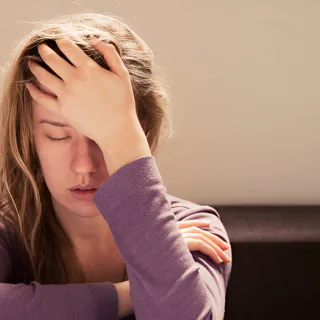
Other symptoms depend on the cause. They can include signs of excess male-type hormones such as acne and extra hair growth, milk discharge from the breasts, headaches or vision changes, and symptoms of low estrogen such as hot flashes.[1]
Causes and risk factors
Pregnancy, breastfeeding and menopause are the normal causes of missed periods. Beyond these, most secondary amenorrhea comes from one of five conditions: functional hypothalamic amenorrhea, polycystic ovary syndrome (PCOS), high prolactin, primary ovarian insufficiency, or scarring inside the uterus.[2]
Functional hypothalamic amenorrhea accounts for about a third of secondary cases. It results from psychological stress, disordered eating, excessive exercise, or a combination of these.[3] Other causes include thyroid and other endocrine disorders, some medicines, chronic illness, and structural problems of the uterus, cervix or vagina.[1]
How it is diagnosed and treated conventionally
Anyone with amenorrhea should be evaluated. The first steps are usually a history, a physical examination, a pregnancy test, blood hormone tests and often pelvic imaging.[1]
Treatment depends on the cause. It may include lifestyle changes, hormone therapy or other medicines, surgery, and mental health support.[1] For functional hypothalamic amenorrhea, an Endocrine Society guideline calls for a team approach that includes medical, dietary and mental health support.[4]
Why Amenorrhea calls for a whole-person approach
Menstrual cycles depend on signals passing from the brain to the pituitary gland to the ovaries, and a problem at any point can stop them.[2] Because the cause may be hormonal, metabolic, nutritional, emotional or structural, care works best when each contributing factor is identified and addressed by your medical team.
Supportive care can add attention to stress, sleep, energy and general well-being. It does not replace the search for the cause.
Stress and the brain-ovary signal
Psychological stress can interrupt the pulsed release of gonadotropin-releasing hormone from the hypothalamus. That signal drives the pituitary and ovaries, so when it falters, ovulation and periods stop.[3] In a small randomized trial of women with functional hypothalamic amenorrhea, cognitive behavior therapy was followed by renewed ovarian activity in 6 of 8 women who ovulated, compared with 1 of 8 in the observation group.[5]
Energy balance and exercise
Not eating enough for the energy you use can switch off the cycle. A review of dietary management describes low energy availability as a key trigger and advises more food and often less intense training, but not stopping activity altogether, plus stress reduction.[6]
Hormones and metabolism
In PCOS, high androgen levels and insulin resistance are common alongside irregular or absent periods.[7, 8] These drive part of the cycle disruption and are managed medically.
Bone and long-term health
When estrogen stays low, bone loss, infertility and effects on heart health and mood can follow.[3] This is one reason amenorrhea should not be ignored or left to self-care.
Acupuncture as supportive care in Amenorrhea
What the research shows
No clinical trials were found that test acupuncture for amenorrhea as a whole. The research that exists is for two causes: PCOS, where absent or infrequent periods are a main feature, and premature ovarian insufficiency. The evidence is limited.
For PCOS, a 2025 Cochrane review included nine trials with 1,606 women. Compared with sham acupuncture, it found little to no difference in live birth or ovulation, and the certainty was low. One trial of 141 women suggested fewer days between periods, but the review rated that evidence as very uncertain. Adverse events were probably more common with acupuncture.[9] An earlier trial of 84 women with PCOS found that 16 weeks of low-frequency electroacupuncture raised menstrual frequency from 0.28 to 0.69 per month, more than exercise or no treatment. That trial did not use a sham comparison.[8]
For premature ovarian insufficiency, a meta-analysis of 13 trials with 775 women found that acupuncture was linked to lower FSH, higher estradiol and anti-Müllerian hormone, and a better overall response rate. The authors called for larger, carefully designed studies.[10] Another review pooled 14 trials of acupoint stimulation with Chinese herbs against hormone therapy and reported more women with normalized cycles, and called the combined approach a possible complementary therapy.[11] An umbrella review noted that earlier meta-analyses of PCOS and ovarian insufficiency had given inconclusive findings, while its own pooled analysis favored acupuncture for several hormone measures.[7]
How acupuncture may work
Researchers propose that acupuncture may influence beta-endorphin, a brain chemical that may in turn affect gonadotropin-releasing hormone and therefore ovulation and the cycle. This idea comes from animal and clinical studies in PCOS and remains a hypothesis.[12]
What treatment involves
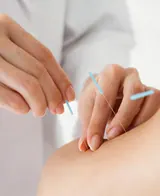
Treatment uses fine, sterile, single-use needles placed at points on the abdomen, lower back, arms and legs, usually left in place for about 20 to 40 minutes. A course of several visits is followed by reassessment, and we ask for your diagnosis and recent test results first.
In prospective studies, about 9 in 100 patients had a minor reaction such as bleeding, soreness or a flare at the needle site, and serious events occurred in about 1 in 10,000 patients.[13] Tell the practitioner first if you could be pregnant, have a bleeding disorder, take blood thinners, or have a pacemaker (relevant to electroacupuncture).
Ayurvedic medicine as supportive care in Amenorrhea
The Ayurvedic view
In Ayurveda, absent menstruation is traditionally described as artavakshaya, a reduction or loss of the menstrual fluid. It is explained in terms of the doshas, tissues and channels, with the pattern chosen for each person. These are traditional categories, not biomedical diagnoses.
Therapies that may be used
Care is individualized and traditionally combines:
- Regular meals, adequate nourishment and steady sleep and daily routines
- Warm sesame oil massage and stress-reducing practices
- Individually prescribed herbs and herbal formulas
- Panchakarma procedures only where traditionally appropriate and medically sensible
Panchakarma is not appropriate during pregnancy, acute illness or frailty, or before the cause of missed periods has been medically assessed. Missed periods should never be treated as something to "bring on" before pregnancy has been excluded.
What the research shows
The research on Ayurveda for amenorrhea is very limited. No randomized trials of Ayurvedic treatment for absent periods turned up. The studies that exist concern PCOS and are small. In one single-group study of 30 women with PCOS and infrequent periods, a satapushpa powder with sesame oil was followed by a shorter interval between periods at three months. With no comparison group, the study cannot show that the treatment caused the change.[14]
A placebo-controlled trial of shatavari root extract in 70 women with PCOS found no difference in ovarian volume or hormone levels, but lower stress scores, a lower follicle count and a thicker endometrium than with placebo. Menstrual regularity was not its main outcome.[15]
Herbal medicine as supportive care in Amenorrhea
Herbs and formulas that have been studied
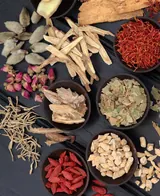
Chinese herbal formulas for amenorrhea often include dang gui (Angelica sinensis), chuanxiong, taoren, honghua, licorice, poria, white atractylodes, cyperus, bupleurum, processed rehmannia and white peony.[16] Traditional Persian medicine lists many plants for absent or infrequent periods, and clinical studies have examined a few of them, including chasteberry (Vitex agnus-castus), fenugreek, fennel, cinnamon, peony, sesame, mint and nettle.[17]
What the research shows
Evidence for herbal medicine is limited and of low quality. A pooled analysis of 18 studies of Chinese herbal medicine for amenorrhea caused by antipsychotic drugs reported a response rate of about 91 percent, but it did not include randomized trials and the benefit usually took more than three months to appear.[16]
A systematic review found 12 clinical studies of 8 plants for infrequent or absent periods. The authors concluded that few plants have been shown to work and that the findings serve as an outline for future studies.[17] A Cochrane review of 8 trials of Chinese herbal medicine in women with PCOS and subfertility found insufficient evidence, with very low-certainty results and almost no safety data.[18]
Safety and herb-drug interactions
Herbs are active substances and are chosen individually by a qualified practitioner. Herbs can interact with medicines. Reported examples include bleeding when danshen or ginkgo is combined with warfarin or aspirin, and bleeding between periods and unplanned pregnancies when St John's wort was taken with oral contraceptives.[19] Tell us about all prescription medicines, hormone therapy and supplements.
Herbs traditionally used to promote menstruation are not appropriate in pregnancy or breastfeeding, so pregnancy must be excluded first. Tell us if you have liver or kidney disease or a planned procedure. In one study, about one fifth of Ayurvedic products bought online contained detectable lead, mercury or arsenic, so herbs should come from tested sources.[20]
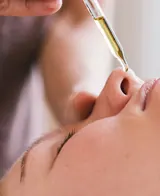
Transdermal medication therapy, an herbal preparation applied to the skin, is also offered. We found no studies of it for amenorrhea.
Translating traditional medicine into modern biological language
The comparisons here are interpretation, not equivalence. Chinese medicine often describes absent periods as blood deficiency, qi stagnation or blood stasis, and Ayurveda describes artavakshaya. Researchers studying the same problem measure the brain-to-ovary hormone signal, stress hormones, energy availability, insulin and androgen levels, and ovarian reserve.[3, 7]
One mechanism proposed for acupuncture, a change in beta-endorphin signaling to the hypothalamus, loosely parallels the traditional idea of restoring free flow.[12] No study has shown that a pattern or dosha corresponds to a specific biological process.
How this care fits with your medical care
Supportive care works alongside your physician, and you should keep your medical team and not stop or change prescribed treatment such as hormone therapy. We do not diagnose the cause of amenorrhea. For a condition like this, we ask that you are under a physician's care for it and that your treating team knows you are receiving complementary care.
Please bring your diagnosis, pregnancy and hormone test results, imaging reports, a full list of medicines and supplements, and any bone density results.
When to seek urgent medical care
Missed periods should be evaluated by a physician, and some symptoms need prompt attention.
- A positive pregnancy test, or missed periods with possible pregnancy and one-sided pelvic pain or bleeding
- Severe headache or new vision changes
- Milk discharge from the breasts together with missed periods
- Sudden or heavy bleeding, or severe pelvic pain
- Rapid weight loss, an eating disorder, or fainting or dizziness
- Thoughts of harming yourself; call or text 988, the Suicide and Crisis Lifeline
For an emergency, call 911 or go to the nearest emergency department.
Frequently asked questions
What is amenorrhea?
Amenorrhea is the absence of menstrual periods. Primary amenorrhea means periods never began by age 15 or three years after breast development started. Secondary amenorrhea means periods stopped for three months or more after being regular. Pregnancy, breastfeeding and menopause are normal causes. Other causes include stress, low energy intake, PCOS, high prolactin and ovarian insufficiency, so a medical evaluation is needed.
Can acupuncture help people with amenorrhea?
It may offer supportive benefit, but the evidence is limited. No trials test acupuncture for amenorrhea itself. Studies in PCOS and premature ovarian insufficiency show mixed results, with a Cochrane review finding little difference from sham acupuncture for ovulation and live birth. Acupuncture does not find or treat the cause, so it is used alongside your physician’s care.
Do Ayurvedic or herbal treatments work for absent periods?
The evidence is limited for herbs and very limited for Ayurveda. Studies are small, often uncontrolled, and mostly in PCOS or in women on antipsychotic medicines. Reviews call for better trials. Herbs can interact with medicines and some should be avoided in pregnancy, so they are chosen individually and reviewed against your medication list.
Can I stop my hormone therapy or other treatment if I try acupuncture or herbs?
No. Hormone therapy and other treatments for amenorrhea often protect bone and heart health or treat the underlying cause. Acupuncture, Ayurveda and herbal medicine are complementary and do not replace them. Do not stop or change prescribed medicines without talking to your prescriber.
What should I bring to my first visit?
Bring your diagnosis, pregnancy and hormone test results, any imaging reports, a list of all medicines, hormone therapy and supplements, and notes on your menstrual history, weight changes, exercise and stress. Tell us if you could be pregnant. Results cannot be promised, and we reassess after a short course of visits.
Does insurance cover acupuncture for amenorrhea?
It may. Netra Integrative Health Clinic is in-network with Blue Cross Blue Shield, Cigna and UnitedHealthcare. Other plans may be covered through out-of-network benefits, and we offer a free benefits check. HSA and FSA cards and CareCredit are also accepted. Call (908) 402-7301 to ask about your plan.
References
- Nawaz G, Rogol AD, Jenkins SM. Amenorrhea. StatPearls [Internet]. 2024. PMID 29489290. StatPearls chapter on amenorrhea covering definitions of primary and secondary types, causes, initial evaluation and treatment depending on the cause.
- Lord M, Jenkins SM, Sahni M. Secondary Amenorrhea. StatPearls [Internet]. 2024. PMID 28613709. StatPearls chapter on secondary amenorrhea describing the menstrual pathway and the five main causes: functional hypothalamic amenorrhea, PCOS, high prolactin, ovarian insufficiency and uterine scarring.
- Saadedine M, Kapoor E, Shufelt C. Functional Hypothalamic Amenorrhea: Recognition and Management of a Challenging Diagnosis. Mayo Clin Proc. 2023;98(9):1376-1385. PMID 37661145. Mayo Clinic Proceedings review of functional hypothalamic amenorrhea: about a third of secondary cases, stress, eating and exercise causes, effects on bone and heart health, and management.
- Gordon CM, Ackerman KE, Berga SL, et al. Functional Hypothalamic Amenorrhea: An Endocrine Society Clinical Practice Guideline. J Clin Endocrinol Metab. 2017;102(5):1413-1439. PMID 28368518. Endocrine Society guideline on functional hypothalamic amenorrhea recommending exclusion of other causes and a team approach with medical, dietary and mental health support.
- Berga SL, Marcus MD, Loucks TL, et al. Recovery of ovarian activity in women with functional hypothalamic amenorrhea who were treated with cognitive behavior therapy. Fertil Steril. 2003;80(4):976-81. PMID 14556820. Small randomized trial of 16 women with functional hypothalamic amenorrhea in which cognitive behavior therapy restored ovarian activity more often than observation.
- Dobranowska K, Plińska S, Dobosz A. Dietary and Lifestyle Management of Functional Hypothalamic Amenorrhea: A Comprehensive Review. Nutrients. 2024;16(17). PMID 39275282. Review of dietary and lifestyle management of functional hypothalamic amenorrhea, covering energy availability, activity levels, stress reduction and cognitive behavior therapy.
- Bai T, Deng X, Bi J, et al. The effects of acupuncture on patients with premature ovarian insufficiency and polycystic ovary syndrome: an umbrella review of systematic reviews and meta-analyses. Front Med (Lausanne). 2024;11:1471243. PMID 39655237. Umbrella review of 38 meta-analyses of acupuncture in PCOS and premature ovarian insufficiency reporting improved hormone, metabolic and pregnancy outcomes.
- Jedel E, Labrie F, Odén A, et al. Impact of electro-acupuncture and physical exercise on hyperandrogenism and oligo/amenorrhea in women with polycystic ovary syndrome: a randomized controlled trial. Am J Physiol Endocrinol Metab. 2011;300(1):E37-45. PMID 20943753. Randomized trial of 84 women with PCOS in which electroacupuncture increased menstrual frequency and lowered testosterone more than exercise or no intervention; no sham group.
- Zhang GS, Lim ECN, Cheng NCL, et al. Acupuncture for polycystic ovary syndrome. Cochrane Database Syst Rev. 2025;10(10):CD007689. PMID 41147529. 2025 Cochrane review of acupuncture for PCOS (9 trials, 1,606 women) finding little to no difference from sham in live birth or ovulation and probably more adverse events.
- Cao H, Li H, Lin G, et al. The clinical value of acupuncture for women with premature ovarian insufficiency: a systematic review and meta-analysis of randomized controlled trials. Front Endocrinol (Lausanne). 2024;15:1361573. PMID 39055062. Meta-analysis of 13 trials (775 women) of acupuncture for premature ovarian insufficiency finding lower FSH, higher estradiol and AMH, and calling for larger trials.
- Li Y, Xia G, Tan Y, et al. Acupoint stimulation and Chinese herbal medicines for the treatment of premature ovarian insufficiency: A systematic review and meta-analysis. Complement Ther Clin Pract. 2020;41:101244. PMID 33039750. Meta-analysis of 14 trials (1,030 women) of acupoint stimulation and Chinese herbs versus hormone therapy in premature ovarian insufficiency, with more normalized cycles.
- Ye Y, Zhou CC, Hu HQ, et al. Underlying mechanisms of acupuncture therapy on polycystic ovary syndrome: Evidences from animal and clinical studies. Front Endocrinol (Lausanne). 2022;13:1035929. PMID 36353235. Narrative review of proposed mechanisms of acupuncture in PCOS, including beta-endorphin effects on gonadotropin-releasing hormone and ovulation.
- Bäumler P, Zhang W, Stübinger T, et al. Acupuncture-related adverse events: systematic review and meta-analyses of prospective clinical studies. BMJ Open. 2021;11(9):e045961. PMID 34489268. Systematic review of 21 prospective studies finding minor acupuncture reactions in about 9 percent of patients and serious events in about 1 per 10,000.
- Jacob J, Vijayakumar N, Olickal JJ. Effect of satapushpa churnam with tila tailam in oligomenorrhea associated with polycystic ovarian syndrome. J Ayurveda Integr Med. 2021;12(4):695-699. PMID 34740494. Single-group study of 30 women with PCOS and infrequent periods given satapushpa powder with sesame oil; the interval between periods shortened, with no control group.
- Mhatre Y, Jadhav P, Malik A, et al. Efficacy and safety of Shatavari root extract in women with Polycystic Ovarian Syndrome: a randomized, double-blind, placebo-controlled trial. Front Endocrinol (Lausanne). 2026;17:1769773. PMID 41816216. Placebo-controlled trial of 70 women with PCOS testing shatavari root extract, showing lower stress scores and no difference in ovarian volume or hormones.
- Liu L, Li H, Tan G, et al. Traditional Chinese herbal medicine in treating amenorrhea caused by antipsychotic drugs: Meta-analysis and systematic review. J Ethnopharmacol. 2022;289:115044. PMID 35101572. Meta-analysis of 18 studies of Chinese herbal medicine for antipsychotic-induced amenorrhea, reporting high response rates, long treatment times and a need for more research.
- Moini Jazani A, Hamdi K, Tansaz M, et al. Herbal Medicine for Oligomenorrhea and Amenorrhea: A Systematic Review of Ancient and Conventional Medicine. Biomed Res Int. 2018;2018:3052768. PMID 29744355. Systematic review of herbs for oligomenorrhea and amenorrhea in traditional Persian medicine and 12 clinical studies of 8 plants, finding few shown effective.
- Zhou K, Zhang J, Xu L, et al. Chinese herbal medicine for subfertile women with polycystic ovarian syndrome. Cochrane Database Syst Rev. 2021;6(6):CD007535. PMID 34085287. Cochrane review of 8 trials (609 women) of Chinese herbal medicine for subfertile women with PCOS finding insufficient, very low-certainty evidence.
- Hu Z, Yang X, Ho PC, et al. Herb-drug interactions: a literature review. Drugs. 2005;65(9):1239-82. PMID 15916450. Literature review of herb-drug interactions, including bleeding with warfarin and bleeding between periods with oral contraceptives when taken with St John's wort.
- Saper RB, Phillips RS, Sehgal A, et al. Lead, mercury, and arsenic in US- and Indian-manufactured Ayurvedic medicines sold via the Internet. JAMA. 2008;300(8):915-23. PMID 18728265. JAMA study finding detectable lead, mercury or arsenic in about one fifth of Ayurvedic medicines purchased over the Internet.
This page is for general education and is not medical advice. Acupuncture, Ayurvedic medicine and herbal medicine are complementary therapies; they do not replace diagnosis or treatment by your physician. Do not stop or change prescribed treatment without talking to your prescriber. In an emergency call 911.