

















- What it is: Repeated infections of the bladder or urinary tract, usually defined as two or more in six months or three or more in a year.
- Common symptoms: Burning with urination, frequent or urgent need to urinate, lower abdominal discomfort, and sometimes cloudy or bloody urine.
- Conventional care: Urine culture to confirm each infection, antibiotics, and prevention steps such as fluids, vaginal estrogen after menopause, cranberry or D-mannose, or low-dose antibiotics.
- How integrative care fits: Acupuncture and individually prescribed herbs are used alongside medical care, after infections have been confirmed and treated by your physician.
- Evidence at a glance: Limited for acupuncture, from a few small trials; limited for Chinese herbal medicine, with high risk of bias; no clinical trials found for Ayurveda.
What is Recurrent UTIs?
Recurrent UTIs are urinary tract infections that return repeatedly, usually defined as at least two episodes in six months or three in twelve months.[1] Most are bladder infections (cystitis), and an uncomplicated bladder infection is one that occurs without structural problems in the urinary tract or conditions such as diabetes, a weakened immune system or pregnancy.[2]
About 40 to 50 percent of women have a UTI at some point, and 20 to 30 percent of those women go on to have another.[3]
Common symptoms
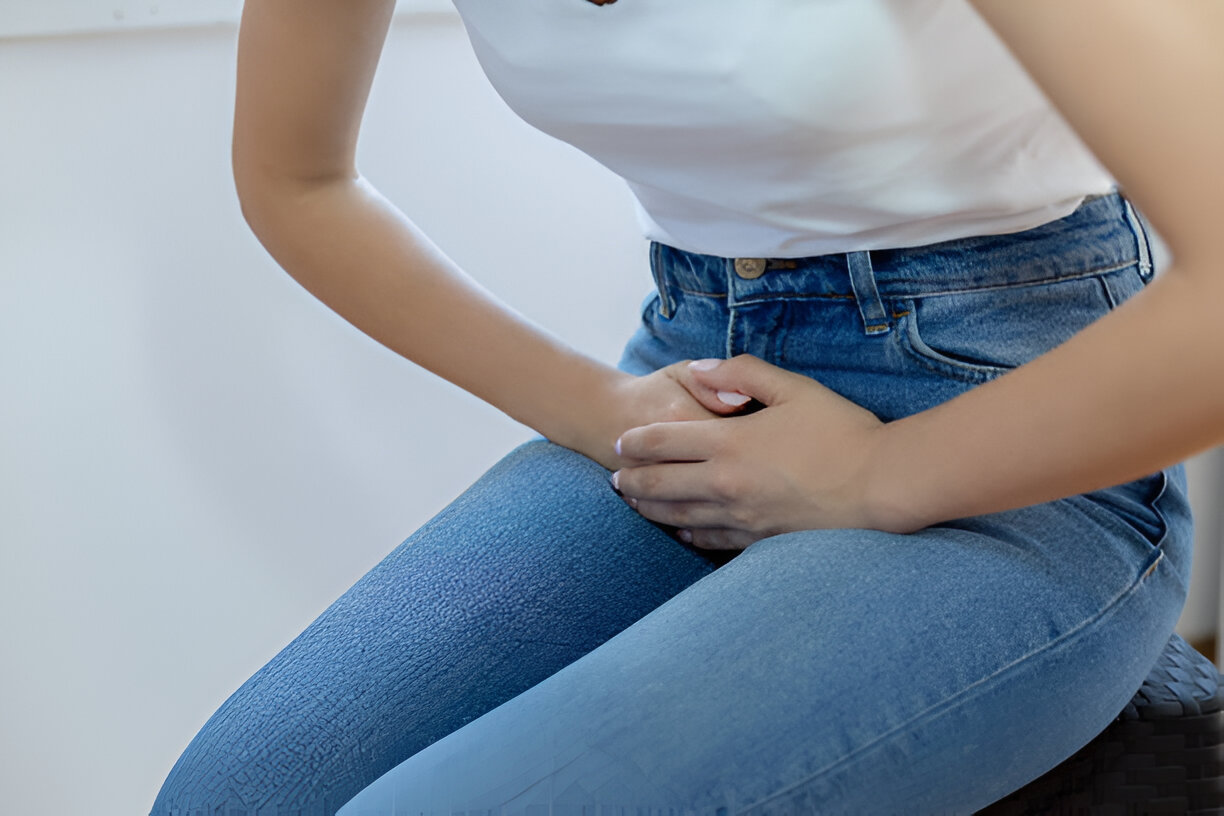
Typical symptoms are frequent urination, a strong urge to urinate, discomfort above the pubic bone and burning or pain when passing urine.[2] Some people also notice cloudy or bloody urine. Fever, back or flank pain, or feeling very unwell can mean the infection has reached the kidneys, which needs prompt medical care.[4]
Causes and risk factors
Most UTIs are caused by bacteria, most commonly Escherichia coli, that travel up the urethra into the bladder.[5] High recurrence rates and growing antibiotic resistance are major concerns.[5]
In older women, risk factors for recurrent symptomatic UTI include diabetes, functional disability, recent sexual intercourse, previous gynecologic or bladder surgery, urinary retention and urinary incontinence.[4]
How it is diagnosed and treated conventionally
Diagnosis rests on your symptoms and a urine test, with a urine culture to confirm infection. Bacteria or white cells in the urine without symptoms are not a UTI.[2] For repeated infections, a urine culture and an ultrasound are reasonable steps, and more invasive testing is not routinely needed in women.[6]
Acute infections are treated with antibiotics chosen by culture results and local resistance patterns.[4] For prevention, long-term low-dose antibiotics are among the most effective options but carry a higher risk of side effects. Other options with lower risk include vaginal estrogen, cranberry, D-mannose and drinking more fluid, and the best choice is individual.[6] In older women, asymptomatic bacteriuria should not be treated.[4]
Why Recurrent UTIs calls for a whole-person approach
Repeated UTIs seldom have a single cause. The bacteria, the lining of the bladder, hormone levels, how completely the bladder empties and the effects of repeated antibiotics all play a part.[4, 5]
Care that looks at these factors together, with your physician leading the diagnosis and antibiotic decisions, is a reasonable way to approach a problem that keeps returning.
Bacteria and the bladder lining
E. coli attaches to cells lining the bladder, and research into prevention often targets that attachment.[5] Cranberry compounds and D-mannose are both thought to block bacterial adhesion to bladder cells.[1, 7]
Hormones and menopause
After menopause, lower estrogen changes the vaginal and urinary tissues. A meta-analysis of eight trials in postmenopausal women found that vaginal estrogen reduced recurrent UTIs, while oral estrogen did not.[8]
Bladder emptying and other risk factors
Urinary retention, incontinence, diabetes and recent sexual intercourse are linked to recurrence in older women.[4] In one small exploratory acupuncture study, use of a kidney-area point (BL23) was linked to less residual urine measured a few days after treatment.[9]
Antibiotic resistance
Growing resistance to antibiotics is a main reason researchers are looking for non-antibiotic ways to prevent recurrent UTIs.[5, 10] A review of non-antibiotic measures said promising options exist but that high-level evidence is needed before firm recommendations can be made.[11]
Acupuncture for Recurrent UTIs
What the research shows
Acupuncture may help prevent recurrences, but the evidence is limited and rests on a few small trials. A 2020 systematic review of five trials with 341 women found low to moderate quality evidence. Recurrence was lower with acupuncture than with no treatment (two studies) and than with sham acupuncture (one study of 53 women), and cure rates were higher than with antibiotics in three studies.[10] The authors said high-quality trials are needed.[10]
An older Norwegian trial of 67 women with three arms found that 85 percent of women who had acupuncture were free of UTI over six months, compared with 58 percent with sham acupuncture and 36 percent with no treatment.[12] A 2024 multicenter trial of 137 women compared 12 acupuncture treatments over 18 weeks plus cranberry with cranberry alone. The difference at six months was not significant, but between six and twelve months more women in the acupuncture group were UTI-free (66 percent versus 45 percent). The trial had no sham group, and the authors called for further studies.[13]
How acupuncture may work
How acupuncture might reduce UTIs is not known. One small study of 58 women suggested that acupuncture points related to the kidney in Chinese medicine were linked to fewer episodes and to less residual urine in the bladder, but this was exploratory and does not show a cause.[9] These are proposed explanations, not settled facts.
What treatment involves
Treatment uses fine, sterile, single-use needles at points on the lower back, abdomen, legs and sometimes the ear, usually left in place for about 20 to 40 minutes. The trials gave treatments twice a week for four weeks in one, and 12 treatments over 18 weeks in another.[9, 13] We reassess after a short course of visits.
Serious problems from acupuncture are rare. In prospective studies, about 9 in 100 patients had a minor reaction such as brief bleeding, soreness or redness at a needle site, and serious events occurred in about 1 in 10,000 patients.[14] Tell the practitioner first if you have a bleeding disorder, take blood thinners, are pregnant, or have a pacemaker (relevant to electroacupuncture).
Acupuncture is not a treatment for an active infection. If you have burning, fever or back pain, contact your physician for testing first.
Ayurvedic medicine for Recurrent UTIs
The Ayurvedic view
Ayurveda describes painful, difficult or burning urination under the classical heading of Mutrakrichra, a group of urinary disorders. In this traditional framework, burning is associated with aggravated Pitta, the principle linked to heat and metabolism. These are traditional categories for choosing treatment, not biomedical diagnoses.
Therapies that may be used
Care is chosen for the individual and traditionally combines:
- Diet and daily routine intended to cool Pitta, such as plenty of fluid, fewer very spicy, sour or fermented foods, and regular meals
- Herbs customarily used for urinary complaints, such as gokshura (Tribulus terrestris) and punarnava (Boerhavia diffusa), prescribed individually by a qualified practitioner
- Stress reduction, gentle yoga and breathing practices
Panchakarma procedures are not appropriate during an active infection, during pregnancy, or in frailty or acute illness, and none is intended to treat an infection.
Ayurvedic products should come from tested sources, because in one study about one fifth of Ayurvedic medicines bought online contained detectable lead, mercury or arsenic.[15]
What the research shows
There is no clinical evidence for Ayurvedic medicine in recurrent UTIs. A PubMed search found no controlled trials and no systematic reviews of Ayurvedic treatment for recurrent UTIs, only laboratory studies and general descriptions. We therefore cannot say whether any Ayurvedic therapy lowers the chance of another infection. Diagnosis by urine testing and treatment of each confirmed infection by your physician remain the standard of care.[2, 4]
Herbal medicine for Recurrent UTIs
Herbs and formulas that have been studied
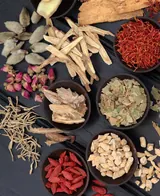
Chinese herbal formulas have been tested for recurrent UTIs in women, including individualized prescriptions based on traditional pattern diagnosis and formulas such as Er Xian Tang.[3, 16] Outside Chinese medicine, cranberry and D-mannose, a sugar found in some fruits, are the most studied non-antibiotic products.[1, 7]
What the research shows
The evidence for Chinese herbal medicine is limited. A Cochrane review of seven small trials with 542 women rated all of them at high risk of bias. Three trials suggested fewer recurrences with herbs than with antibiotics, but the authors said the small number and poor quality of studies prevented firm conclusions.[3] A 2024 trial in five Chinese hospitals randomized 230 women to individualized herbs or antibiotics and reported lower recurrence with herbs, though the control group received antibiotics plus a placebo herb and results may not apply elsewhere.[16] A UK feasibility trial in 61 women found it was possible to run such a study and reported promising early results, but it was not designed to show effectiveness.[17]
For cranberry, a Cochrane review of 50 trials found it probably reduces symptomatic, culture-verified UTIs in women with recurrent UTIs (risk ratio 0.74), with little or no benefit in older people in care homes or in pregnancy.[7] The D-mannose Cochrane review found very low certainty evidence and no clear benefit or harm, although a later network meta-analysis reported a reduced infection rate.[1, 18]
Safety and herb-drug interactions
Herbs are active substances. Some Chinese herbs, particularly those containing aristolochic acid, can damage the kidneys and raise the risk of urinary tract cancer, and contamination, adulteration and wrong processing add to the risk.[19] Herbs for a urinary problem should be prescribed individually, come from tested sources, and never include aristolochic acid.
Cranberry is among the foods and herbs reported to raise bleeding risk in people taking warfarin.[20] About one fifth of Ayurvedic medicines bought online contained detectable lead, mercury or arsenic.[15] Tell us if you take blood thinners, diabetes medicine or any prescription drug, are pregnant or breastfeeding, or have kidney or liver disease.
Translating traditional medicine into modern biological language
This is interpretation, not equivalence. Chinese medicine often describes recurrent UTIs as a pattern of damp-heat in the lower body, with kidney or spleen weakness underlying repeated attacks. Researchers studying these ideas look at bladder emptying, local immune defense and how bacteria attach to the bladder lining.[5, 9, 16]
Ayurveda's aggravated Pitta in the urinary tract corresponds loosely to burning and inflammation. No study has shown that a dosha matches a biological process.
How this care fits with your medical care
Integrative care for recurrent UTIs is complementary. For a condition like this, we ask that you are under a physician's care for it and that your treating team knows you are receiving complementary care. Keep your urine tests, antibiotic treatments and any preventive medicines your physician prescribes, and do not stop or change them without talking to your prescriber.
We do not diagnose infections. Each new episode of burning or frequency should be confirmed by your physician. Please bring your diagnosis, urine culture results, a full list of medicines and supplements, and any recent imaging.
When to seek urgent medical care
Some symptoms suggest the infection has reached the kidneys or the blood and need prompt assessment.[4]
- Fever or shaking chills with urinary symptoms
- Pain in the back or side, or nausea and vomiting
- Blood in the urine, or symptoms that are not improving after antibiotics
- New confusion or sudden weakness, especially in an older adult
- Urinary symptoms during pregnancy, or in a man or a child
- Being unable to urinate
If any of these occur, call 911 or go to the nearest emergency department.
Frequently asked questions
What is Recurrent UTIs?
Recurrent UTIs are urinary tract infections that keep returning, usually defined as two or more in six months or three or more in a year. Most are bladder infections caused by bacteria such as E. coli. Symptoms include burning, frequency and urgency. Each episode should be confirmed and treated by a physician, who can also look for causes and prevention options.
Can acupuncture help with recurrent UTIs?
It may help prevent recurrences, though the evidence is limited. A systematic review of five small trials found fewer recurrences with acupuncture than with no treatment or sham acupuncture, and a 2024 trial found more infection-free women after six months. The studies are small and have limitations. Acupuncture is used alongside medical care and does not treat an active infection.
Does Ayurvedic or herbal medicine work for recurrent UTIs?
There are no clinical trials of Ayurvedic treatment for recurrent UTIs. Chinese herbal medicine has been studied in small trials with a high risk of bias, so benefit is uncertain. Cranberry has moderate-certainty evidence for reducing recurrences in women. Herbs should be prescribed individually, since some can harm the kidneys or interact with medicines.
Can I stop my antibiotics or avoid seeing my doctor if I use acupuncture or herbs?
No. These therapies are complementary care. Do not stop or change prescribed antibiotics or preventive medicines without your prescriber. Fever, back pain, blood in the urine or symptoms that do not improve need prompt medical assessment, because a kidney infection can become serious.
How soon might I notice a change with acupuncture?
It differs from person to person and no result can be promised. In the trials, courses ranged from twice weekly for four weeks to 12 treatments over 18 weeks, and benefit was measured over six to twelve months. We reassess after a short course of visits to see whether treatment is helping.
Does insurance cover acupuncture for recurrent UTIs?
It may. Netra Integrative Health Clinic is in-network with Blue Cross Blue Shield, Cigna and UnitedHealthcare. Other plans may be covered through out-of-network benefits, and we offer a free benefits check. HSA and FSA cards and CareCredit are also accepted. Call (908) 402-7301 to ask about your plan.
References
- Cooper TE, Teng C, Howell M, et al. D-mannose for preventing and treating urinary tract infections. Cochrane Database Syst Rev. 2022;8(8):CD013608. PMID 36041061. Cochrane review of D-mannose for UTIs; defines recurrent UTI, finds very low certainty evidence with no clear benefit or harm, and describes anti-adhesion action.
- Bono MJ, Leslie SW. Uncomplicated Urinary Tract Infections. StatPearls [Internet]. 2025. PMID 29261874. StatPearls chapter on uncomplicated UTIs covering definition, symptoms, diagnosis by history, urinalysis and culture, and treatment goals.
- Flower A, Wang LQ, Lewith G, et al. Chinese herbal medicine for treating recurrent urinary tract infections in women. Cochrane Database Syst Rev. 2015;2015(6):CD010446. PMID 26040964. Cochrane review of seven small trials of Chinese herbal medicine for recurrent UTI in women; all at high risk of bias, with possible benefit but no firm conclusions.
- Mody L, Juthani-Mehta M. Urinary tract infections in older women: a clinical review. JAMA. 2014;311(8):844-54. PMID 24570248. JAMA clinical review of UTIs in older women covering diagnosis, risk factors, red flags, antibiotics, vaginal estrogen and asymptomatic bacteriuria.
- Flores-Mireles AL, Walker JN, Caparon M, et al. Urinary tract infections: epidemiology, mechanisms of infection and treatment options. Nat Rev Microbiol. 2015;13(5):269-84. PMID 25853778. Nature Reviews Microbiology review of UTI epidemiology and mechanisms, covering common bacteria, high recurrence and antibiotic resistance.
- Schmiemann G, Kranz J, Mandraka F, et al. The Diagnosis, Treatment, and Prevention of Recurrent Urinary Tract Infection. Dtsch Arztebl Int. 2024;121(11):373-382. PMID 38686602. Review based on the German guideline covering diagnosis, antibiotic and non-antibiotic prevention including cranberry, mannose, vaginal estrogen and fluids.
- Williams G, Stothart CI, Hahn D, et al. Cranberries for preventing urinary tract infections. Cochrane Database Syst Rev. 2023;11(11):CD001321. PMID 37947276. Cochrane review of 50 trials of cranberry products finding probably fewer UTIs in women with recurrent UTI, and little benefit in older care home residents or pregnancy.
- Chen YY, Su TH, Lau HH. Estrogen for the prevention of recurrent urinary tract infections in postmenopausal women: a meta-analysis of randomized controlled trials. Int Urogynecol J. 2021;32(1):17-25. PMID 32564121. Meta-analysis of eight trials finding vaginal estrogen, but not oral estrogen, reduced recurrent UTIs in postmenopausal women.
- Alraek T, Baerheim A, Birch S. Acupuncture points used in the prophylaxis against recurrent uncomplicated cystitis, patterns identified and their possible relationship to physiological measurements. Chin J Integr Med. 2016;22(7):510-7. PMID 25491541. Exploratory study of 58 women with recurrent cystitis linking a point combination to fewer episodes and a point to reduced residual urine.
- Qin X, Coyle ME, Yang L, et al. Acupuncture for recurrent urinary tract infection in women: a systematic review and meta-analysis. BJOG. 2020;127(12):1459-1468. PMID 32406571. Systematic review of five trials (341 women) of acupuncture for recurrent UTI finding lower recurrence than no treatment or sham, with low to moderate evidence quality.
- Sihra N, Goodman A, Zakri R, et al. Nonantibiotic prevention and management of recurrent urinary tract infection. Nat Rev Urol. 2018;15(12):750-776. PMID 30361493. Review of non-antibiotic prevention of recurrent UTI saying options are promising but need high-level evidence before firm recommendations.
- Aune A, Alraek T, LiHua H, et al. Acupuncture in the prophylaxis of recurrent lower urinary tract infection in adult women. Scand J Prim Health Care. 1998;16(1):37-9. PMID 9612877. Three-arm Norwegian trial of 67 women finding fewer UTIs with acupuncture than sham acupuncture or no treatment over six months.
- Ots T, Gold D, Ziller P, et al. Segmental Acupuncture for Prevention of Recurrent Urinary Tract Infections. A Randomised Clinical Trial. Int Urogynecol J. 2024;35(8):1689-1697. PMID 39060726. Multicenter trial of 137 women finding acupuncture plus cranberry gave more UTI-free women between six and twelve months than cranberry alone, with no sham group.
- Bäumler P, Zhang W, Stübinger T, et al. Acupuncture-related adverse events: systematic review and meta-analyses of prospective clinical studies. BMJ Open. 2021;11(9):e045961. PMID 34489268. Systematic review of acupuncture adverse events finding minor reactions in about 9 percent of patients and serious events in about 1 per 10,000.
- Saper RB, Phillips RS, Sehgal A, et al. Lead, mercury, and arsenic in US- and Indian-manufactured Ayurvedic medicines sold via the Internet. JAMA. 2008;300(8):915-23. PMID 18728265. JAMA study finding detectable lead, mercury or arsenic in about one fifth of Ayurvedic medicines purchased over the Internet.
- Xiangchen GU, Meisi Q, Lin X, et al. Individualized Traditional Chinese Medicine treatment antibiotics for recurrent urinary tract infections: a multicenter, randomized controlled study. J Tradit Chin Med. 2024;44(3):524-529. PMID 38767636. Trial of 230 women in five Chinese hospitals finding individualized Chinese herbs reduced recurrence compared with antibiotics plus placebo herb.
- Flower A, Harman K, Willcox M, et al. The RUTI trial: A feasibility study exploring Chinese herbal medicine for the treatment of recurrent urinary tract infections. J Ethnopharmacol. 2019;243:111935. PMID 31082512. UK feasibility trial of Chinese herbal medicine for recurrent UTIs showing the study was possible and early results were promising.
- Han Z, Yi X, Li J, et al. Nonantibiotic prophylaxis for urinary tract infections: a network meta-analysis of randomized controlled trials. Infection. 2025;53(2):535-546. PMID 39095666. Network meta-analysis of 50 trials of non-antibiotic prevention finding D-mannose, cranberry, probiotics and others reduced UTI incidence versus placebo.
- Yang B, Xie Y, Guo M, et al. Nephrotoxicity and Chinese Herbal Medicine. Clin J Am Soc Nephrol. 2018;13(10):1605-1611. PMID 29615394. Review of kidney toxicity from Chinese herbal medicine, including aristolochic acid, contamination and adulteration.
- Tan CSS, Lee SWH. Warfarin and food, herbal or dietary supplement interactions: A systematic review. Br J Clin Pharmacol. 2021;87(2):352-374. PMID 32478963. Systematic review of warfarin interactions with foods, herbs and supplements, listing cranberry among items linked to bleeding risk.
This page is for general education and is not medical advice. Acupuncture, Ayurvedic medicine and herbal medicine are complementary therapies; they do not replace diagnosis or treatment by your physician. Do not stop or change prescribed treatment without talking to your prescriber. In an emergency call 911.