








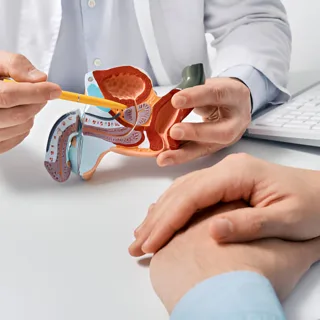





- What it is: A baby lying with the buttocks or feet, rather than the head, positioned to enter the pelvis first.
- Common symptoms: Usually none; it is found by your provider through an abdominal exam and confirmed with ultrasound.
- Conventional care: Monitoring, an offer of external cephalic version (a manual turn by an obstetric provider) from 37 weeks, and counseling on cesarean or planned vaginal breech birth.
- How integrative care fits: Acupuncture, Ayurvedic and herbal care are supportive only, and decisions about turning the baby and delivery stay with your obstetric provider.
- Evidence at a glance: Limited and mixed for acupuncture-type treatment, studied mainly as moxibustion at one acupuncture point; none found for Ayurveda or herbal medicine.
What is Breech Presentation?
Breech presentation means the fetus lies lengthwise with the buttocks or legs, rather than the head, entering the mother's pelvis first.[1] It is a position of the baby, not an illness, and it is managed by an obstetric provider.
Common symptoms
Breech presentation usually causes no symptoms you can feel. It is typically found when a provider examines the abdomen and is confirmed with ultrasound.[1]
There are three types. In a frank breech, the hips are bent and the legs extend up toward the face. In a complete breech, the baby sits with hips and knees both bent. In an incomplete breech, one or both hips are extended, including footling breech, where one or both feet come first.[1]
Causes and risk factors
Breech presentation is common earlier in pregnancy and less common at the end. Nearly one fourth of babies are breech at 28 weeks, but only about 3 to 4 percent are at term.[2] Most babies turn head down on their own as pregnancy advances.
Factors that can make a breech position more likely include a baby born early, more than one baby, too much or too little amniotic fluid, a low-lying placenta, and an unusually shaped uterus or fibroids. Often no cause is found.[1]
How it is diagnosed and treated conventionally
Providers check the baby's position by feeling the abdomen and confirm it with ultrasound.[1]
External cephalic version (ECV) is a procedure in which a provider turns the baby from outside the abdomen. It may be offered after 37 weeks, and its overall success rate approaches 60 percent.[2] A Cochrane review of eight trials found that attempting ECV at term reduced both breech presentation at birth and cesarean section, although the trials were limited and the data on complications were not sufficient.[3]
Most breech babies are delivered by cesarean section.[2] A meta-analysis of observational studies found higher rates of perinatal death and birth trauma with planned vaginal breech birth, and slightly higher severe maternal complications with planned cesarean.[4] National guidelines differ on ECV and on vaginal breech birth, so counseling from your own provider matters.[5, 6]
Why Breech Presentation calls for a whole-person approach
Why a baby stays breech depends on timing, the shape and space of the uterus, and the baby itself, and it is not always possible to know. The decisions that follow involve safety, preferences and information, and they belong with your obstetric team.
Supportive care can add attention to comfort and well-being during these decisions. It does not change the medical plan.
Timing in pregnancy
Because most babies turn without help, a breech position at 28 weeks often changes by term.[2] This is also why research on turning techniques needs control groups, since many babies turn on their own.
Space and shape in the uterus
The uterus, placenta and amniotic fluid affect how freely the baby can move.[1] Your provider looks for these factors on ultrasound, which is another reason evaluation comes first.
Maternal position
Positioning techniques with the pelvis raised, such as the knee-chest position, have been studied. A Cochrane review of six trials with 417 women found insufficient evidence from well-controlled trials to support postural management.[7]
Informed choice and stress
Guidelines differ, and a review has argued that women should be given balanced counseling on the risks of both vaginal breech birth and cesarean section.[6] Uncertainty about birth plans can be stressful, and supportive conversations are part of care.
Acupuncture as supportive care in Breech Presentation
What the research shows
The research on acupuncture-type treatment for breech presentation is mixed, and the evidence is limited. Most of it is moxibustion, in which the herb mugwort is burned near an acupuncture point on the little toe called Bladder 67. It is sometimes combined with needling.[8]
The 2023 Cochrane review included 13 trials with 2,181 women. It found moderate-certainty evidence that moxibustion plus usual care probably lowers the chance of a non-head-down position at birth. It also found it probably makes little or no difference to cesarean rates, and that the effect on the need for ECV was very uncertain.[8] A 2021 meta-analysis of 16 trials with 2,555 women found more head-down babies at birth with moxibustion, but the effect of needling alone was inconsistent.[9]
Individual trials disagree. In Spain, a trial of 406 women found that 58 percent of babies were head down at birth with moxibustion at the true point, compared with 43 percent with moxibustion at a non-specific point and 45 percent with usual care alone.[10] An Italian trial of 240 women found acupuncture plus moxibustion gave more head-down births than observation.[11]
Several other trials found no benefit. A French placebo-controlled trial of 328 women found no significant difference at 37 weeks,[12] and a sham-controlled trial of 259 women found that needling with fire needling at the same point did not increase turning.[13] A Danish trial of 200 women[14] and a Swiss trial of 212 women[15] also found no effect.
How acupuncture may work
A review of moxibustion describes proposed mechanisms but notes that research on its effects on breech presentation is sparse, and that efficacy, safety and the best technique need more study.[16] These are hypotheses, not settled facts.
What treatment involves
Acupuncture uses fine, sterile, single-use needles, usually left in place for about 20 to 40 minutes. In trials, treatment began in the third trimester and was repeated over several sessions, or daily for two weeks in one moxibustion trial.[12, 15] Timing, and any decision about turning the baby, are made with your obstetric provider.
In prospective studies, about 9 in 100 patients had a minor reaction such as bleeding, soreness or a flare at the needle site, and serious events occurred in about 1 in 10,000 patients.[17] Safety data for moxibustion are limited. One small monitoring study found no changes in fetal or maternal well-being.[18] The Cochrane review, however, found adverse events inadequately reported, and one study reported nausea, unpleasant odor, abdominal pain and uterine contractions in some women.[8]
Tell the practitioner first if you have vaginal bleeding, a low-lying placenta, a history of preterm labor or a bleeding disorder, or take blood thinners.
Ayurvedic medicine as supportive care in Breech Presentation
The Ayurvedic view
Ayurveda has detailed traditional guidance on pregnancy care. In this framework, the downward movement of the baby at birth is attributed to a form of Vata called Apana Vata. This is a traditional explanation, not a biomedical finding.
Therapies that may be used
Care in pregnancy is limited to gentle measures, such as regular nourishing meals, rest and stress-reducing routines, chosen with your obstetric provider's knowledge. Panchakarma procedures are not appropriate during pregnancy. Herbal preparations are generally avoided unless your obstetric provider agrees. Product quality is a concern, since about one fifth of Ayurvedic products bought online contained detectable lead, mercury or arsenic.[19]
What the research shows
We found no clinical studies of Ayurvedic treatment for breech presentation. The traditional-medicine trials that do exist test moxibustion and acupuncture, not Ayurveda.[8, 9] Nothing in the published literature we reviewed shows that Ayurvedic therapy turns a breech baby or changes the way the baby is delivered.
Herbal medicine as supportive care in Breech Presentation
Herbs and formulas that have been studied
Moxibustion uses the herb mugwort (Artemisia) burned near the skin, and it is studied as a heat therapy at an acupuncture point.[8] We found no studies of herbs taken by mouth for breech presentation.
What the research shows
There is no clinical evidence that herbal medicine changes fetal position. The only evidence in this area concerns moxibustion, described under acupuncture above.
Safety and herb-drug interactions
Herbs taken by mouth are not appropriate for a pregnancy without your obstetric provider's approval, and some are avoided in pregnancy. Herbs can interact with medicines, for example by raising bleeding risk with blood thinners.[20] Product quality is also a concern. In one study, about one fifth of Ayurvedic products bought online contained detectable lead, mercury or arsenic.[19]
Transdermal medication therapy, an herbal preparation applied to the skin, is also offered, but we found no studies of it for breech presentation.
Translating traditional medicine into modern biological language
The comparisons here are interpretation, not equivalence. Chinese medicine uses Bladder 67 on the little toe because of its traditional link to the uterus and the bladder channel, and the heat of moxibustion is traditionally said to move qi. Researchers have proposed that stimulating this point may influence fetal movement, but the biological mechanism is unproven.[16]
Ayurveda attributes the baby's descent to Apana Vata. No study has shown that a dosha corresponds to a specific biological process, and no trial links Ayurvedic ideas to fetal position.
How this care fits with your medical care
Supportive care works alongside your obstetrician or midwife, and it never replaces their guidance. For a condition like this, we ask that you are under a physician's care for it and that your treating team knows you are receiving complementary care.
Decisions about ECV, how to give birth and the timing of any treatment belong with your obstetric provider. Do not delay or decline recommended monitoring or ECV in order to try other methods. Please bring your due date, your ultrasound results, your provider's plan and a list of all medicines and supplements.
When to seek urgent medical care
Contact your obstetric provider right away, or go to the hospital, if you have any of the following in pregnancy.
- Vaginal bleeding
- Leaking or a gush of fluid
- Regular contractions or labor pains before 37 weeks
- A noticeable drop in your baby's movements
- Severe headache, vision changes or sudden swelling
- Constant severe abdominal pain
If you think you are in labor with a breech baby, or in any emergency, call 911 or go to the nearest emergency department.
Frequently asked questions
What is breech presentation?
Breech presentation means the baby is lying with the bottom or feet pointing down instead of the head. Nearly one in four babies is breech at 28 weeks, but only about 3 to 4 percent remain so at term. It is found on exam and confirmed by ultrasound, and your obstetric provider guides what to do.
Can acupuncture help people with breech presentation?
The evidence is limited and mixed. Most research tests moxibustion at one point on the little toe. A Cochrane review found moderate-certainty evidence that it probably reduces breech position at birth, but it probably makes little or no difference to cesarean rates, and several well-designed trials found no benefit. It is supportive only, with your obstetric team’s knowledge.
Is moxibustion or acupuncture safe in late pregnancy?
Serious problems from acupuncture are rare, and a small monitoring study found no change in fetal or maternal well-being with moxibustion. However, adverse events were poorly reported in trials, and one reported nausea, odor, abdominal pain and contractions. Talk to your obstetric provider before any treatment in pregnancy, and tell your acupuncturist about bleeding or placenta problems.
Can acupuncture replace external cephalic version or change my delivery plan?
No. External cephalic version is a procedure done by an obstetric provider, and its success rate approaches 60 percent. Acupuncture, Ayurveda and herbal medicine do not replace it. Delivery decisions belong with your obstetrician or midwife, and no result can be promised.
Do Ayurvedic or herbal treatments turn a breech baby?
We found no clinical studies showing that they do. Herbs taken by mouth are not appropriate in pregnancy without your obstetric provider’s approval, and Panchakarma is not used in pregnancy. Supportive care in pregnancy is gentle and limited to routines such as rest and regular meals.
Does insurance cover acupuncture in pregnancy?
It may. Netra Integrative Health Clinic is in-network with Blue Cross Blue Shield, Cigna and UnitedHealthcare. Other plans may be covered through out-of-network benefits, and we offer a free benefits check. HSA and FSA cards and CareCredit are also accepted. Call (908) 402-7301 to ask about your plan.
References
- Miller C, Vadakekut ES. Breech Presentation. StatPearls [Internet]. 2026. PMID 28846227. StatPearls chapter on breech presentation defining it as buttocks or legs first in a longitudinal lie and describing the frank, complete and incomplete types.
- Shanahan MM, Martingano DJ, Gray CJ. External Cephalic Version. StatPearls [Internet]. 2023. PMID 29494082. StatPearls chapter on external cephalic version covering how common breech is at 28 weeks and at term, cesarean rates and a success rate near 60 percent.
- Hofmeyr GJ, Kulier R, West HM. External cephalic version for breech presentation at term. Cochrane Database Syst Rev. 2015;2015(4):CD000083. PMID 25828903. Cochrane review of 8 trials (1,308 women) finding that attempting external cephalic version at term reduced non-cephalic birth and cesarean section, with low-quality evidence.
- Fernández-Carrasco FJ, Cristóbal-Cañadas D, Gómez-Salgado J, et al. Maternal and fetal risks of planned vaginal breech delivery vs planned caesarean section for term breech birth: A systematic review and meta-analysis. J Glob Health. 2022;12:04055. PMID 35976004. Meta-analysis of observational studies (94,285 breech births) finding higher perinatal mortality and birth trauma with planned vaginal birth and slightly higher maternal morbidity with planned cesarean.
- Tsakiridis I, Mamopoulos A, Athanasiadis A, et al. Management of Breech Presentation: A Comparison of Four National Evidence-Based Guidelines. Am J Perinatol. 2020;37(11):1102-1109. PMID 31167240. Comparison of four national guidelines on breech presentation, finding differences in recommendations for external cephalic version and vaginal breech delivery.
- Morris S, Geraghty S, Sundin D. Breech presentation management: A critical review of leading clinical practice guidelines. Women Birth. 2022;35(3):e233-e242. PMID 34253466. Critical review of leading breech guidelines finding inconsistencies in birth counseling and calling for balanced counseling to support consent.
- Hofmeyr GJ, Kulier R. Cephalic version by postural management for breech presentation. Cochrane Database Syst Rev. 2012;10(10):CD000051. PMID 23076882. Cochrane review of 6 trials (417 women) of postural management for breech presentation finding insufficient evidence to support it.
- Coyle ME, Smith C, Peat B. Cephalic version by moxibustion for breech presentation. Cochrane Database Syst Rev. 2023;5(5):CD003928. PMID 37158339. 2023 Cochrane review of 13 trials (2,181 women) of moxibustion for breech: moderate-certainty reduction in non-cephalic birth, little effect on cesarean, poorly reported adverse events.
- Liao JA, Shao SC, Chang CT, et al. Correction of Breech Presentation with Moxibustion and Acupuncture: A Systematic Review and Meta-Analysis. Healthcare (Basel). 2021;9(6). PMID 34067379. Meta-analysis of 16 trials (2,555 women) finding moxibustion increased cephalic presentation at birth, with inconsistent effects for acupuncture alone.
- Vas J, Aranda-Regules JM, Modesto M, et al. Using moxibustion in primary healthcare to correct non-vertex presentation: a multicentre randomised controlled trial. Acupunct Med. 2013;31(1):31-8. PMID 23249535. Multicenter trial of 406 women finding more cephalic births with moxibustion at the true point than with sham-point moxibustion or usual care.
- Neri I, Airola G, Contu G, et al. Acupuncture plus moxibustion to resolve breech presentation: a randomized controlled study. J Matern Fetal Neonatal Med. 2004;15(4):247-52. PMID 15280133. Randomized trial of 240 Italian women finding more cephalic births and fewer cesareans for breech with acupuncture plus moxibustion than observation.
- Coulon C, Poleszczuk M, Paty-Montaigne MH, et al. Version of breech fetuses by moxibustion with acupuncture: a randomized controlled trial. Obstet Gynecol. 2014;124(1):32-39. PMID 24901279. Placebo-controlled trial of 328 women finding moxibustion with acupuncture did not significantly change breech presentation at 37 weeks.
- Sananes N, Roth GE, Aissi GA, et al. Acupuncture version of breech presentation: a randomized sham-controlled single-blinded trial. Eur J Obstet Gynecol Reprod Biol. 2016;204:24-30. PMID 27521594. Sham-controlled trial of 259 women finding acupuncture with fire needling at Bladder 67 did not significantly increase cephalic presentation.
- Bue L, Lauszus FF. Moxibustion did not have an effect in a randomised clinical trial for version of breech position. Dan Med J. 2016;63(2). PMID 26836801. Randomized trial of 200 women finding no significant effect of daily moxibustion on breech position after 33 weeks.
- Guittier MJ, Pichon M, Dong H, et al. Moxibustion for breech version: a randomized controlled trial. Obstet Gynecol. 2009;114(5):1034-1040. PMID 20168104. Randomized trial of 212 women finding no beneficial effect of moxibustion on cephalic version, though women viewed it favorably.
- Schlaeger JM, Stoffel CL, Bussell JL, et al. Moxibustion for Cephalic Version of Breech Presentation. J Midwifery Womens Health. 2018;63(3):309-322. PMID 29775226. Review of the history, mechanisms and literature of moxibustion for breech presentation, noting sparse research and the need for more studies on efficacy and safety.
- Bäumler P, Zhang W, Stübinger T, et al. Acupuncture-related adverse events: systematic review and meta-analyses of prospective clinical studies. BMJ Open. 2021;11(9):e045961. PMID 34489268. Systematic review of 21 prospective studies finding minor acupuncture reactions in about 9 percent of patients and serious events in about 1 per 10,000.
- Guittier MJ, Klein TJ, Dong H, et al. Side-effects of moxibustion for cephalic version of breech presentation. J Altern Complement Med. 2008;14(10):1231-3. PMID 19040374. Small monitoring study during a trial finding no change in fetal or maternal well-being or side effects with moxibustion at Bladder 67.
- Saper RB, Phillips RS, Sehgal A, et al. Lead, mercury, and arsenic in US- and Indian-manufactured Ayurvedic medicines sold via the Internet. JAMA. 2008;300(8):915-23. PMID 18728265. JAMA study finding detectable lead, mercury or arsenic in about one fifth of Ayurvedic medicines purchased over the Internet.
- Hu Z, Yang X, Ho PC, et al. Herb-drug interactions: a literature review. Drugs. 2005;65(9):1239-82. PMID 15916450. Literature review of herb-drug interactions, including enhanced bleeding when some herbs are combined with warfarin or aspirin.
This page is for general education and is not medical advice. Acupuncture, Ayurvedic medicine and herbal medicine are complementary therapies; they do not replace diagnosis or treatment by your physician. Do not stop or change prescribed treatment without talking to your prescriber. In an emergency call 911.