










- What it is: A scar is the permanent mark left by healing skin. Hypertrophic scars and keloids are raised, thick scars caused by excess collagen.
- Common symptoms: Raised, firm or discolored scar tissue, itching, pain or tenderness, tightness, and in some cases limited movement.
- Conventional care: Prevention after injury, silicone gel or sheeting, corticosteroid injections, other injected medicines, laser, pressure therapy, surgery and radiation for stubborn keloids.
- How integrative care fits: Acupuncture, Ayurvedic therapies and individually prescribed herbs are used alongside medical care, mainly to ease scar pain, itch and stress.
- Evidence at a glance: Limited for acupuncture and dry needling, from a few small trials and case reports; limited for herbal products on the skin; none found for Ayurveda.
What is Scars and Keloids?
A scar is the fibrous tissue that replaces normal skin after a wound heals. Hypertrophic scars and keloids are both raised, firm scars caused by too much collagen, and keloids grow beyond the edges of the original injury and do not shrink on their own, while hypertrophic scars stay within the wound and may fade over time.[1]
Common symptoms
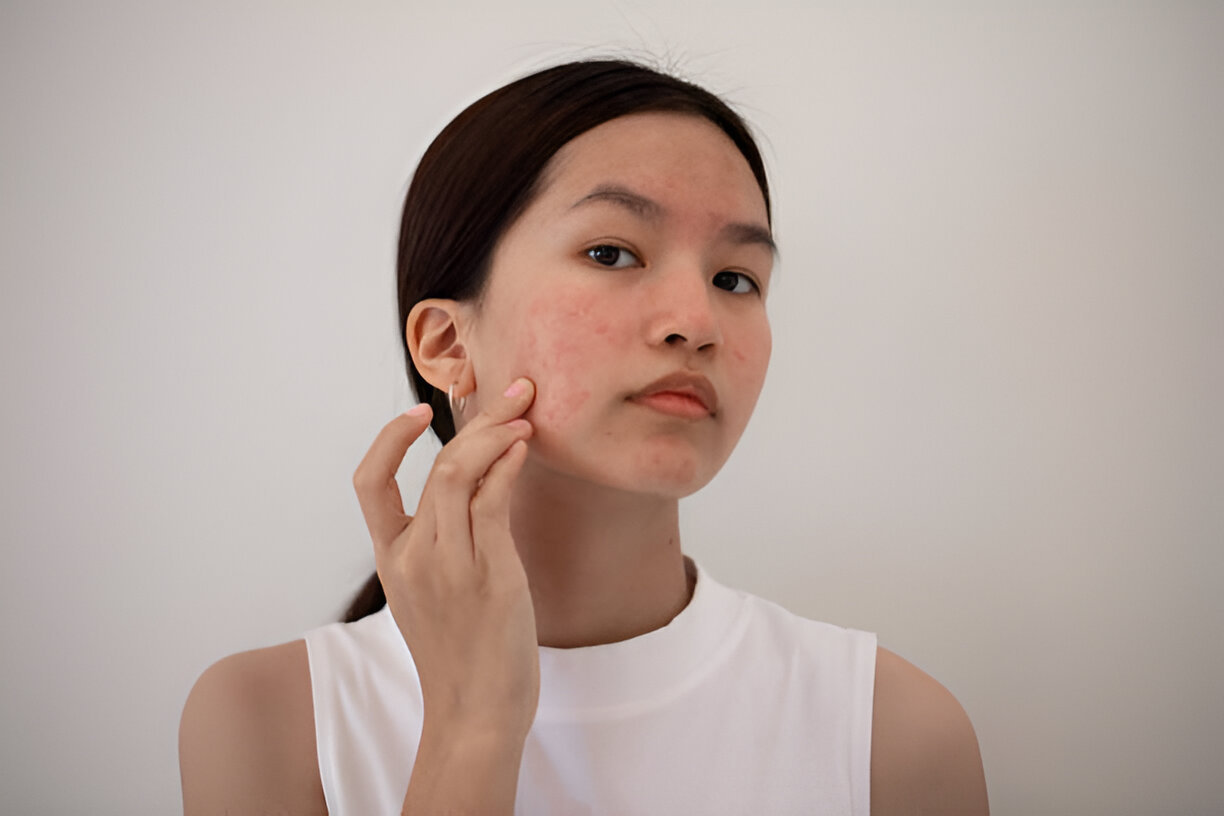
The most common symptom of a raised scar is itch, and some scars are also painful, tender or tight. A scar over a joint can limit movement, and its appearance can cause distress.[1]
- A raised, firm scar that may be red, pink or darker than nearby skin
- Itching or a burning feeling
- Pain or tenderness, sometimes with a touch
- A tight scar that restricts a joint or the skin around it[2]
Causes and risk factors
Abnormal scars appear to arise when inflammation continues after the wound has closed in people who are prone to them, so that the skin keeps laying down extra, disordered collagen.[2] Immune cells such as mast cells and certain macrophages are thought to push skin cells toward making scar tissue.[3] Burns are a well-known trigger: up to 70 percent of people with burns develop hypertrophic scars.[4]
Keloids can follow even minor injuries and tend to run in some families and to be more common in people with darker skin, though the exact mechanisms are not well defined.[1, 2] People with a history of abnormal scars are advised to avoid unnecessary procedures, since prevention works better than treatment.[5]
How it is diagnosed and treated conventionally
Scars are diagnosed by looking at the lesion and learning how it formed. A physician or dermatologist tells hypertrophic scars from keloids, which matters because their treatment and outlook differ.[1]
No single treatment works for everyone. Silicone gel or sheeting together with corticosteroid injections is first-line care for keloids, and injected 5-fluorouracil, bleomycin or verapamil, laser, surgery with radiation and pressure therapy are used in stubborn cases. A review of 108 studies noted that most were small and inconsistent.[6] Keloids often come back after treatment, and combination treatment tailored to the person is advised.[7, 8]
Why Scars and Keloids calls for a whole-person approach
Scars are not only a skin surface problem. Inflammation, itch and pain signaling, the tension on the skin, and the emotional weight of a visible scar all affect how a person lives with it, and no single treatment resolves all of them.[5] Care that supports comfort and stress management is a reasonable complement to medical scar treatment.
Inflammation
Ongoing inflammation is considered central to why some wounds become raised scars.[3] Medical treatments for keloids include intralesional steroid injection, though recurrence remains high.[7]
Itch and pain
Scars are often symptomatic, and itch is the most common symptom, with pain also frequent.[1] Persistent scar itch and pain can reduce quality of life and psychological recovery after an injury.[9]
Tension and movement
Scars can contract or stick to deeper tissue and limit movement. Manual scar therapy aims to improve flexibility of the scar and surrounding tissue.[9]
Appearance and emotional strain
Raised scars can affect people psychologically and socially as well as physically, which is one reason treatment plans consider more than the scar itself.[4, 5]
Acupuncture for Scars and Keloids
What the research shows
Research on acupuncture for scars is limited. A systematic review of acupuncture for scars found five case studies, one retrospective cohort, one cohort and three clinical trials, all reporting positive results for scar symptoms such as pain and itch, but the studies were of low to moderate quality, and the review concluded that the level of evidence is low.[10]
A 2024 systematic review of acupuncture and dry needling applied to scars included 11 reports: eight case reports, two randomized trials and one case series. The review could not pool results because the studies differed too much, and it described wide variation in how the needling was done.[11] A narrative review found that two randomized trials of needling around a scar, one using the "surrounding the dragon" technique, were better than sham or control treatment for scar appearance and pain, and called this preliminary evidence.[12]
We found no good trials of acupuncture specifically for keloids. A small study of combined manual scar therapy that included massage, cupping, dry needling and taping reported less pain and itch after 8 weeks, but it did not describe a comparison group, so the benefit of any one part cannot be separated.[9]
How acupuncture may work
Researchers propose that needling near a scar may reduce pain and ease tissue mobility and may influence the wound healing process, supported by an animal study.[12] These are proposed explanations and not settled facts.
What treatment involves
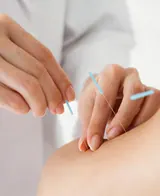
Treatment uses fine, sterile, single-use needles, sometimes placed around or near the scar and sometimes at points on the body, and usually left in place for about 20 to 40 minutes. A course of several visits is typical, with reassessment. Needling is not placed into infected skin, and a new or changing keloid should be evaluated by a physician first.
In prospective studies, about 9 in 100 patients had a minor reaction such as bleeding, soreness or redness at a needle site, and serious events occurred in about 1 in 10,000 patients.[13] People prone to keloids should discuss this with their dermatologist, because any skin puncture is a form of injury and we are not aware of data on keloid formation after acupuncture. Tell the practitioner first if you have a bleeding disorder, take blood thinners, are pregnant, or have a pacemaker (relevant to electroacupuncture).
Ayurvedic medicine for Scars and Keloids
The Ayurvedic view
Ayurveda describes skin conditions in terms of imbalance of the doshas and of the blood tissue, and raised or thickened scar tissue is traditionally understood in relation to excess Kapha and Pitta. These are traditional categories used to choose treatment, not biomedical diagnoses.
Therapies that may be used
Care is chosen for the individual and traditionally combines:
- Diet and daily routine that lighten Kapha and avoid foods a person finds inflaming
- Gentle massage with herbal oils applied to healed skin, where the skin is intact
- Herbs such as turmeric (Curcuma longa) and Centella asiatica, traditionally used for the skin[14]
- Transdermal medication therapy, meaning an herbal preparation applied to the skin, where appropriate and with the physician's knowledge
Panchakarma, a set of traditional cleansing procedures, is not appropriate during pregnancy, acute illness, frailty, or while a wound is still healing.
What the research shows
We found no clinical trials of Ayurvedic treatment for hypertrophic scars or keloids. Individual Ayurvedic ingredients have been studied for skin and wound care, but not as an Ayurvedic treatment of scars. Centella asiatica is used in Asian traditional medicine for skin conditions, and laboratory and review data describe effects on cells that make collagen, but this is not proof of benefit in people.[14]
Herbal medicine for Scars and Keloids
Herbs and formulas that have been studied
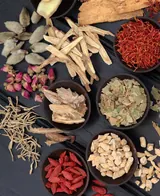
Herbal products studied for scars are mainly applied to the skin. They include onion extract (Allium cepa), Centella asiatica, aloe vera and turmeric or curcumin.[15, 16, 17] Dermatology recommendations list onion extract among newer agents with growing research support.[8]
What the research shows
The evidence is limited. A systematic review of 34 trials of topical scar products found strong evidence for silicone gel but only a limited number of studies supporting onion extract and other products such as vitamin E.[15] A textbook chapter notes that onion extract may help fresh scars, but that the data are overall relatively poor.[18]
In a randomized trial of 46 patients after chest surgery, silicone gel plus a gel containing onion, Centella asiatica, aloe vera and paper mulberry gave slightly better scar scores than silicone gel alone, with better vascularity and pigmentation at some points. It was a small trial.[16] A systematic review of curcumin trials in skin disease graded the recommendation for cesarean scars as B, and called for larger trials.[17] We did not find trials of oral Chinese herbal formulas for scars.
Safety and herb-drug interactions
Herbs are active substances. Herbs applied to the skin can cause irritation or allergy, and they should not be placed on an open wound or fresh stitches without your surgeon's approval. Herbs taken by mouth can interact with medicines. Case reports describe bleeding when warfarin was combined with herbs including dang gui (Angelica sinensis), dan shen (Salvia miltiorrhiza), ginger, ginseng and Boswellia.[19] This matters for people having surgery, including scar surgery.
In one study, about one fifth of Ayurvedic products bought online contained detectable lead, mercury or arsenic.[20] Herbs should come from tested sources and be prescribed individually. Tell us if you are pregnant or breastfeeding, have liver or kidney disease, or have surgery planned.
Translating traditional medicine into modern biological language
The links drawn here are interpretation, not equivalence. Chinese medicine describes stubborn scars as stagnation of qi and blood in the skin and the channels. Researchers study things that loosely parallel this picture: prolonged inflammation, immune cells that drive scar tissue, and local tissue changes after needling.[3, 12]
Ayurveda's excess Kapha, described as heaviness and thickening, may loosely echo the excess matrix deposition seen in raised scars.[2] No study has shown that a dosha or a pattern corresponds to a specific biological process.
How this care fits with your medical care
Integrative care for scars is complementary. Keep your physician, dermatologist or plastic surgeon, and do not stop or change prescribed treatments such as steroid injections or silicone products without them. We do not diagnose scars or keloids, and a scar that is growing, changing, bleeding or not healing needs medical evaluation.
Please bring your diagnosis, a history of how and when the scar formed, past scar treatments, a full list of medicines, creams and supplements, and details of any planned surgery or procedures.
When to seek urgent medical care
Some symptoms need prompt medical attention.
- A wound or scar with spreading redness, warmth, swelling, pus or fever, which may be infected
- A scar or skin lump that grows quickly, bleeds, forms an ulcer or does not heal
- A scar that restricts movement of a joint, the eyelids or the mouth and is getting worse
- Severe pain, numbness or color change in the skin near a scar
- A burn that has not been medically assessed
If you have trouble breathing, a spreading infection with high fever, or heavy bleeding, call 911 or go to the nearest emergency department.
Frequently asked questions
What are scars and keloids?
A scar is the permanent tissue that replaces skin after an injury heals. Hypertrophic scars and keloids are raised, firm scars from too much collagen. Hypertrophic scars stay within the wound edges and may fade, while keloids grow beyond the original injury and do not regress on their own. Both can itch, hurt or restrict movement.
Can acupuncture help with scars and keloids?
It may help scar symptoms such as pain and itch, but the evidence is limited. Reviews found mostly case reports and a few small trials, with low to moderate quality, and two randomized trials of needling around scars were favorable. We found no good trials for keloids. Acupuncture is used alongside medical scar care, not in place of it.
Does Ayurvedic or herbal medicine work for scars and keloids?
The evidence is thin. We found no clinical trials of Ayurvedic treatment for scars. Skin-applied herbal products such as onion extract and Centella asiatica have been studied, but trials are few and small, and silicone products have much stronger support. Herbs should be prescribed individually and checked against your medicines.
Can I skip scar treatment from my dermatologist if I have acupuncture?
No. Acupuncture, Ayurveda and herbal medicine are complementary care. Do not stop or change treatments such as steroid injections, silicone products or planned surgery without your physician. Keloids often return after treatment, so ongoing medical follow-up is important.
How soon might I notice a change with acupuncture?
It differs from person to person and no result can be promised. Published reports of needling for scars used differing schedules, so there is no standard course. We reassess after a short course of visits to see whether treatment is helping, and we keep your physician’s treatment in place throughout.
Does insurance cover acupuncture for scars and keloids?
It may. Netra Integrative Health Clinic is in-network with Blue Cross Blue Shield, Cigna and UnitedHealthcare. Other plans may be covered through out-of-network benefits, and we offer a free benefits check. HSA and FSA cards and CareCredit are also accepted. Call (908) 402-7301 to ask about your plan.
References
- Carswell L, Borger J. Hypertrophic Scarring Keloids. StatPearls [Internet]. 2023. PMID 30725743. StatPearls chapter on hypertrophic scars and keloids covering definition, differences between the two, and symptoms such as itch, pain and movement restriction.
- Jeschke MG, Wood FM, Middelkoop E, et al. Scars. Nat Rev Dis Primers. 2023;9(1):64. PMID 37973792. Nature Reviews Disease Primers overview of scars, explaining how ongoing inflammation drives excess collagen in susceptible people and the burden of abnormal scarring.
- Hong YK, Chang YH, Lin YC, et al. Inflammation in Wound Healing and Pathological Scarring. Adv Wound Care (New Rochelle). 2023;12(5):288-300. PMID 36541356. Review of how aberrant inflammation and immune cells such as M2 macrophages and mast cells contribute to hypertrophic scars and keloids, causing itch and pain.
- Finnerty CC, Jeschke MG, Branski LK, et al. Hypertrophic scarring: the greatest unmet challenge after burn injury. Lancet. 2016;388(10052):1427-1436. PMID 27707499. Lancet review of hypertrophic scarring after burns, reporting up to 70 percent of burn patients develop it with major quality-of-life effects.
- Frech FS, Hernandez L, Urbonas R, et al. Hypertrophic Scars and Keloids: Advances in Treatment and Review of Established Therapies. Am J Clin Dermatol. 2023;24(2):225-245. PMID 36662366. Review of established and emerging treatments for hypertrophic scars and keloids, stressing prevention, psychosocial effects and individualized combination therapy.
- Walsh LA, Wu E, Pontes D, et al. Keloid treatments: an evidence-based systematic review of recent advances. Syst Rev. 2023;12(1):42. PMID 36918908. Systematic review of 108 prospective keloid studies supporting silicone with steroid injections as first line, while noting small, inconsistent studies.
- Ekstein SF, Wyles SP, Moran SL, et al. Keloids: a review of therapeutic management. Int J Dermatol. 2021;60(6):661-671. PMID 32905614. Review of keloid treatment finding no gold standard, high recurrence, and favorable results from combination approaches.
- Gold MH, McGuire M, Mustoe TA, et al. Updated international clinical recommendations on scar management: part 2--algorithms for scar prevention and treatment. Dermatol Surg. 2014;40(8):825-31. PMID 25068544. International consensus recommendations on scar prevention and treatment algorithms, favoring combination therapy and noting onion extract among newer agents.
- Lubczyńska A, Garncarczyk A, Wcisło-Dziadecka D. Effectiveness of various methods of manual scar therapy. Skin Res Technol. 2023;29(3):e13272. PMID 36973982. Study without a described comparison group of manual scar therapy including massage, cupping, dry needling and taping, reporting less pain and itch after 8 weeks.
- Tuckey C, Kohut S, Edgar DW. Efficacy of acupuncture in treating scars following tissue trauma. Scars Burn Heal. 2019;5:2059513119831911. PMID 30886746. Systematic review of acupuncture for abnormal scars finding ten small studies, all positive but of low to moderate quality, and a low level of evidence.
- Chmielewska D, Malá J, Opala-Berdzik A, et al. Acupuncture and dry needling for physical therapy of scar: a systematic review. BMC Complement Med Ther. 2024;24(1):14. PMID 38167051. 2024 systematic review of acupuncture and dry needling for scars including two randomized trials and mainly case reports, too varied to pool.
- Rozenfeld E, Sapoznikov Sebakhutu E, Krieger Y, et al. Dry needling for scar treatment. Acupunct Med. 2020;38(6):435-439. PMID 32228036. Narrative review reporting two randomized trials of scar needling better than sham or control for appearance and pain, calling the evidence preliminary.
- Bäumler P, Zhang W, Stübinger T, et al. Acupuncture-related adverse events: systematic review and meta-analyses of prospective clinical studies. BMJ Open. 2021;11(9):e045961. PMID 34489268. Systematic review of 21 prospective studies finding minor acupuncture reactions in about 9 percent of patients and serious events in about 1 per 10,000.
- Diniz LRL, Calado LL, Duarte ABS, et al. Centella asiatica and Its Metabolite Asiatic Acid: Wound Healing Effects and Therapeutic Potential. Metabolites. 2023;13(2). PMID 36837896. Review of Centella asiatica and asiatic acid describing traditional use for skin disease and effects on fibroblasts and collagen in wound healing.
- Tran B, Wu JJ, Ratner D, et al. Topical Scar Treatment Products for Wounds: A Systematic Review. Dermatol Surg. 2020;46(12):1564-1571. PMID 32932267. Systematic review of 34 trials of topical scar products finding strong support for silicone gel but limited support for onion extract and vitamin E.
- Surakunprapha P, Winaikosol K, Chowchuen B, et al. Adding herbal extracts to silicone gel on post-sternotomy scar: a prospective randomised double-blind study. J Wound Care. 2020;29(Sup4):S36-S42. PMID 32279615. Randomized trial of 46 patients after chest surgery comparing silicone gel with or without a herbal extract gel, finding slightly better scar scores with the herbal gel.
- Patel P, Wang JY, Mineroff J, et al. Evaluation of curcumin for dermatologic conditions: a systematic review. Arch Dermatol Res. 2023;316(1):37. PMID 38085369. Systematic review of 18 curcumin trials in skin disease, including a grade B recommendation for cesarean scars, and a call for larger trials.
- Téot L, Mustoe TA, Middelkoop E, et al. Onion Extract. Textbook on Scar Management: State of the Art Management and Emerging Technologies. 2020. PMID 36351124. Textbook chapter on onion extract for scars, saying it may help fresh scars but that supporting data remain relatively poor.
- Milić N, Milosević N, Golocorbin Kon S, et al. Warfarin interactions with medicinal herbs. Nat Prod Commun. 2014;9(8):1211-6. PMID 25233607. Review of reported interactions between warfarin and medicinal herbs, including bleeding events with dang gui, dan shen, ginger, ginseng and Boswellia.
- Saper RB, Phillips RS, Sehgal A, et al. Lead, mercury, and arsenic in US- and Indian-manufactured Ayurvedic medicines sold via the Internet. JAMA. 2008;300(8):915-23. PMID 18728265. JAMA study finding detectable lead, mercury or arsenic in about one fifth of Ayurvedic medicines purchased over the Internet.
This page is for general education and is not medical advice. Acupuncture, Ayurvedic medicine and herbal medicine are complementary therapies; they do not replace diagnosis or treatment by your physician. Do not stop or change prescribed treatment without talking to your prescriber. In an emergency call 911.