











- What it is: A common inflammatory skin condition of oil-rich areas such as the scalp, face and chest. It comes and goes over time.
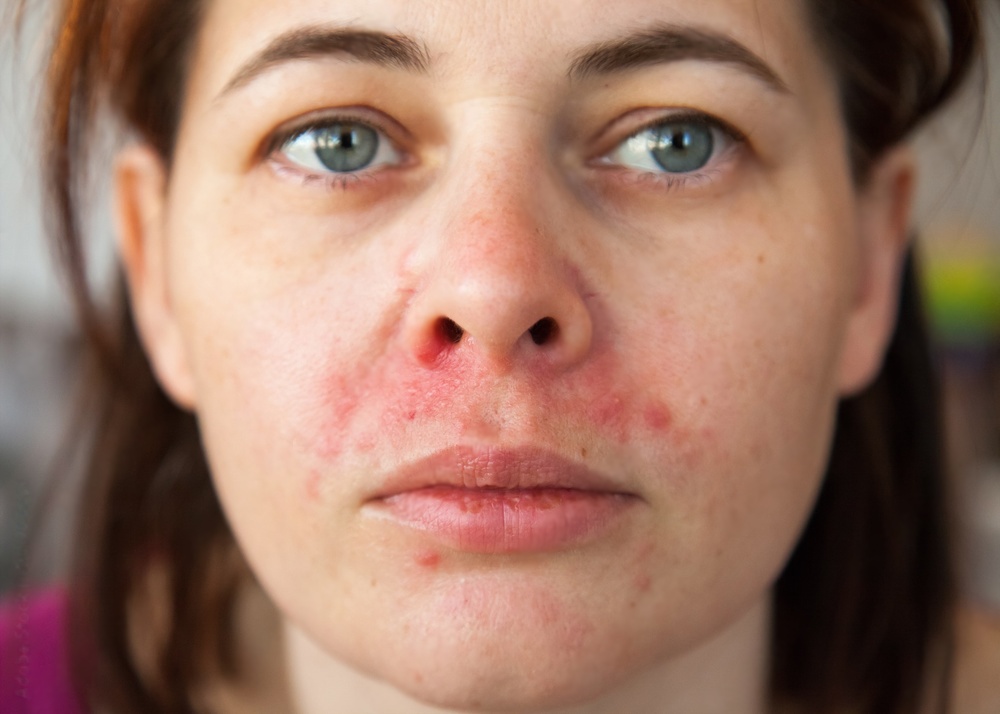
- Common symptoms: Greasy or flaky scales, red patches, dandruff and itching, most often on the scalp, eyebrows, sides of the nose, ears and chest.
- Conventional care: Antifungal shampoos and creams to reduce yeast, and short courses of anti-inflammatory creams for flares.
- How integrative care fits: Acupuncture, Ayurvedic therapies and individually prescribed herbs are used alongside medical care, mainly for itch, stress and skin comfort.
- Evidence at a glance: None found for acupuncture; very limited for Ayurveda, with one placebo-controlled trial of an herbal prebiotic for scalp oiliness; limited for herbs, mostly tea tree oil shampoo for dandruff.
What is Seborrheic Dermatitis?
Seborrheic dermatitis is a common inflammatory skin disease that causes scaly, red patches in areas rich in oil glands, particularly the scalp, face and body folds.[1] It is chronic, relapses and remits, and affects about 4 percent of people worldwide, more often adults than children.[1, 2]
Common symptoms
The typical symptoms are scaling, redness and itching.[3] They occur most often on the scalp, face, chest, back, armpits and groin. Mild scalp flaking without much redness is known as dandruff.[3, 4]
- Greasy, yellowish or white flakes on the scalp, eyebrows or beard
- Red or pink patches along the sides of the nose, behind the ears and on the chest
- Itching, which affects many patients[5]
- On darker skin, patches may look lighter or darker than the surrounding skin, with little redness[5]
Seborrheic dermatitis of the eyelid margins can occur with blepharitis, which has its own eye care.[6]
Causes and risk factors
The exact cause is not certain. Three factors are generally agreed upon: oil secretion by the sebaceous glands, colonization by Malassezia yeast, and some form of immune dysregulation that makes a person prone to the condition.[5] The skin changes are thought to be an inflammatory response to Malassezia yeast, a normal skin organism.[3]
Other predisposing factors include a weakened immune system, such as in HIV infection, skin barrier problems, and endocrine and neurologic factors.[7]
How it is diagnosed and treated conventionally
Seborrheic dermatitis is a clinical diagnosis based on where the patches are and how they look.[3] A baby's form (cradle cap) is usually mild and clears by itself within the first year, and parents should ask their pediatrician about it.[1]
Treatment aims to reduce Malassezia yeast and the inflammation it triggers. Antifungal agents such as ketoconazole are the mainstay for the face and body, and antifungal shampoos are used for the scalp. Topical corticosteroids and calcineurin inhibitors are used only for short periods because of possible side effects.[3, 5] Because the condition relapses, long-term maintenance is often needed.[4]
Why Seborrheic Dermatitis calls for a whole-person approach
Seborrheic dermatitis is not just a yeast problem. Researchers now think that skin oils, the skin barrier, skin microbes and the immune system all play a part, and that Malassezia may over-grow when the skin environment already favors it.[7]
Care that addresses these background factors, along with stress and itch, is a reasonable addition to antifungal treatment, though research on that approach is still limited.
Sebum and the skin barrier
An intrinsic change in the amount or makeup of skin oil, or a weakened skin barrier, has been proposed as a basis of the condition, creating conditions in which Malassezia over-colonizes the skin.[7]
Skin microbes
A systematic review of 12 studies found a changed balance of skin microbes in people with seborrheic dermatitis and dandruff, with more Malassezia restricta relative to Malassezia globosa, and Malassezia was linked to higher itch scores and disease severity.[8]
Diet and lifestyle
A systematic review of 13 studies found that a Western diet was associated with a higher risk of seborrheic dermatitis in women, that eating more fruit was associated with lower risk, and that regular alcohol use was often associated with the condition. The authors said interventional studies are still needed.[9]
Stress and itch
Stress and itch feed each other. A review found that stress can make itch worse, and that this involves the stress hormone axis and the sympathetic nervous system acting on skin mast cells and nerves.[10] This review was about itch in general, not specifically seborrheic dermatitis. Stress management is therefore a sensible part of care for people whose flares follow stressful periods.
Acupuncture for Seborrheic Dermatitis
What the research shows
We found no clinical trials of acupuncture for seborrheic dermatitis. A PubMed search turned up only a trial protocol for acupuncture in seborrheic alopecia, a hair loss condition, and no results for the skin disease itself.
The research that exists concerns itch in other conditions. An updated systematic review of acupuncture in dermatology reported improved outcomes in uremic itch, atopic dermatitis, urticaria and itch, and concluded that larger sham-controlled trials are needed.[11] Whether this applies to the itch of seborrheic dermatitis is not known.
How acupuncture may work
For seborrheic dermatitis there is no mechanism research. Acupuncture is sometimes used to ease stress, and stress can worsen itch in general, but this link has not been tested in this condition.[10] These are possible explanations, not established facts.
What treatment involves
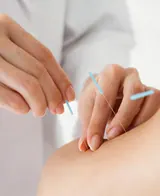
Treatment uses fine, sterile, single-use needles placed at points chosen for you, and usually left in place for about 20 to 40 minutes. A course of several visits is typical, with reassessment along the way. Needles are not placed into inflamed or infected patches of skin.
In prospective studies, about 9 in 100 patients had a minor reaction such as bleeding, soreness or redness at a needle site, and serious events occurred in about 1 in 10,000 patients.[12] Tell the practitioner first if you have a bleeding disorder, take blood thinners, are pregnant, or have a pacemaker (relevant to electroacupuncture).
Ayurvedic medicine for Seborrheic Dermatitis
The Ayurvedic view
Ayurveda groups scalp scaling and flaking under conditions often called Darunaka, described as a disorder in which dryness, itching and flaking are linked to aggravated Vata and Kapha, sometimes with Pitta. In this traditional framework, irregular digestion and an oily, heavy diet are also thought to contribute. These are traditional categories used to choose treatment, not biomedical diagnoses.
Therapies that may be used
Care is chosen for the individual and traditionally combines:
- Diet and daily routine, such as regular meals, less heavy, greasy and sugary food, and steady sleep
- Gentle scalp oil applications chosen to suit the skin type, avoided when the scalp is inflamed or weeping
- Herbs such as neem and triphala, traditionally used for skin and digestion
- Transdermal medication therapy, meaning an herbal preparation applied to the skin, where appropriate
Panchakarma, a set of traditional cleansing procedures, is not appropriate during pregnancy, acute illness or frailty, and it is not a substitute for medical treatment of a skin condition.
What the research shows
The research is very limited. We found no clinical trials of Ayurvedic treatment for seborrheic dermatitis as a whole. One 8-week placebo-controlled trial of 80 people with scalp seborrhea, meaning an oily scalp, found that triphala taken by mouth lowered scalp oil levels and gave higher satisfaction than placebo. It did not measure scaling or redness, so it does not show benefit for the dermatitis itself.[13] A systematic review of diet and seborrheic dermatitis mentioned the same trial and called for more studies.[9]
Herbal medicine for Seborrheic Dermatitis
Herbs and formulas that have been studied
Herbal research in this area focuses on dandruff, the mildest form of seborrheic dermatitis. Essential oils and plant extracts such as tea tree oil, thyme, aloe vera and mint have been tested for their effect on the microbes linked to dandruff.[14] A review of aloe vera in dermatology listed seborrheic dermatitis among the conditions where topical aloe vera might be effective.[15] We did not find trials of Chinese herbal formulas for seborrheic dermatitis.
What the research shows
The evidence is limited. In a single-blind trial of 126 people aged 14 and older with mild to moderate dandruff, a 5 percent tea tree oil shampoo used daily for 4 weeks improved a dandruff severity score by 41 percent, compared with 11 percent for placebo, with better itch and greasiness scores and no adverse effects reported.[16] This was one trial in dandruff and not in moderate or severe seborrheic dermatitis. A broader review of tea tree oil in dermatology noted that several studies suggest it may be useful for seborrheic dermatitis.[17]
Reviews describe many plant products with anti-dandruff activity in the laboratory, but state that clinical research is needed before conclusions can be drawn about benefit in people.[14] Aloe vera has not been explored sufficiently in well-designed trials.[15]
Safety and herb-drug interactions
Herbs are active substances and can interact with medicines. Case reports describe bleeding when warfarin was combined with herbs including dang gui (Angelica sinensis), dan shen (Salvia miltiorrhiza), ginger, ginseng and Boswellia.[18] A wider review found that herb-drug interactions can have serious consequences and recommended telling your doctor about herbs you use.[19]
Herbal products applied to the skin, including essential oils, can cause irritation or allergy, so tell your dermatologist what you use on inflamed skin. In one study, about one fifth of Ayurvedic products bought online contained detectable lead, mercury or arsenic.[20] Herbs should come from tested sources and be prescribed individually. Tell us if you are pregnant or breastfeeding, have liver or kidney disease, or take medicines that affect the immune system.
Translating traditional medicine into modern biological language
The links drawn here are interpretation, not equivalence. Chinese medicine often describes greasy, itchy, scaly skin as dampness and heat, sometimes with dryness or wind from blood deficiency. Researchers studying seborrheic dermatitis measure things that loosely parallel this picture: sebum production, Malassezia overgrowth and the immune response to it.[5, 7]
Ayurveda's description of excess oil and heaviness in Kapha, and of impaired digestion, may loosely echo research on skin oils and on diet and nutrition in this condition.[9] No study has shown that a dosha or a pattern corresponds to a specific biological process.
How this care fits with your medical care
Integrative care for seborrheic dermatitis is complementary. Keep your physician or dermatologist and your prescribed antifungal or anti-inflammatory treatments, and do not stop or change them without your prescriber. We do not diagnose skin conditions, and similar-looking rashes such as psoriasis, eczema or fungal infections need a clinician's assessment.
Please bring your diagnosis, a list of the shampoos, creams and medicines you use, any supplements or herbal products, and notes on what seems to trigger flares.
When to seek urgent medical care
Most seborrheic dermatitis is not dangerous, but some changes need prompt attention.
- Skin that becomes very red, hot, painful, swollen or oozing, or has crusts or pus, which may be infected
- A rash with fever or feeling very unwell
- Eye pain, redness or vision changes with eyelid inflammation
- A widespread, sudden or severe rash, especially in someone with a weakened immune system
- A rash that does not respond to treatment, or a patch that grows, bleeds or does not heal
If you have swelling of the face or throat, trouble breathing or a rapidly spreading rash with high fever, call 911 or go to the nearest emergency department.
Frequently asked questions
What is seborrheic dermatitis?
Seborrheic dermatitis is a common, long-lasting inflammatory skin condition that causes greasy scales, redness and itching, mainly on the scalp, face and chest. Dandruff is its mildest form. It is thought to involve skin oil, Malassezia yeast and the immune response to it. It tends to flare and settle repeatedly, and treatment keeps it under control rather than curing it.
Can acupuncture help with seborrheic dermatitis?
We found no clinical trials of acupuncture for seborrheic dermatitis, so we cannot say it helps the condition. Acupuncture has been studied for itch in other skin conditions, with some promising results that reviewers say need larger sham-controlled trials, and it may be used for stress. It is used alongside medical care, not in place of it.
Does Ayurvedic or herbal medicine work for seborrheic dermatitis?
The evidence is limited. Ayurvedic treatment has not been tested for seborrheic dermatitis itself, though one trial found an oral triphala preparation lowered scalp oil. A tea tree oil shampoo improved dandruff in one single-blind trial. Antifungal shampoos and creams have far more support. Herbs should be prescribed individually and checked against your medicines.
Can I stop my antifungal shampoo or cream if I have acupuncture or herbs?
No. Acupuncture, Ayurveda and herbal medicine are complementary care. Do not stop or change prescribed or recommended treatments without talking to your physician or dermatologist. Because seborrheic dermatitis tends to return when treatment stops, ongoing medical follow-up is important.
How soon might I notice a change with complementary care?
It differs from person to person and no result can be promised. Because we found no trials of acupuncture for this condition, there is no research-based schedule. We reassess after a short course of visits to see whether treatment is helping, and we keep your physician’s treatment in place throughout.
Does insurance cover acupuncture for seborrheic dermatitis?
It may. Netra Integrative Health Clinic is in-network with Blue Cross Blue Shield, Cigna and UnitedHealthcare. Other plans may be covered through out-of-network benefits, and we offer a free benefits check. HSA and FSA cards and CareCredit are also accepted. Call (908) 402-7301 to ask about your plan.
References
- Tucker D, Syed HA, Masood S. Seborrheic Dermatitis. StatPearls [Internet]. 2024. PMID 31869171. StatPearls chapter on seborrheic dermatitis covering its scalp, face and body-fold distribution, infantile and adult forms, and its relapsing course.
- Polaskey MT, Chang CH, Daftary K, et al. The Global Prevalence of Seborrheic Dermatitis: A Systematic Review and Meta-Analysis. JAMA Dermatol. 2024;160(8):846-855. PMID 38958996. JAMA Dermatology meta-analysis of 121 studies putting global prevalence of seborrheic dermatitis at about 4.4 percent, higher in adults than children.
- Clark GW, Pope SM, Jaboori KA. Diagnosis and treatment of seborrheic dermatitis. Am Fam Physician. 2015;91(3):185-90. PMID 25822272. American Family Physician review of seborrheic dermatitis covering symptoms, diagnosis by appearance, the role of Malassezia, and antifungal and short-term corticosteroid treatment.
- Borda LJ, Perper M, Keri JE. Treatment of seborrheic dermatitis: a comprehensive review. J Dermatolog Treat. 2019;30(2):158-169. PMID 29737895. Comprehensive review of seborrheic dermatitis treatment covering antifungals, anti-inflammatory agents, maintenance therapy and alternative therapies such as tea tree oil.
- Jackson JM, Alexis A, Zirwas M, et al. Unmet needs for patients with seborrheic dermatitis. J Am Acad Dermatol. 2024;90(3):597-604. PMID 36538948. Review of unmet needs describing the diagnosis, three key pathogenic factors, itching, presentation in different skin tones and topical treatments.
- Eberhardt M, Zeppieri M, Rammohan G. Blepharitis. StatPearls [Internet]. 2025. PMID 29083763. StatPearls chapter on blepharitis noting its frequent association with seborrheic dermatitis and its separate eye care.
- Wikramanayake TC, Borda LJ, Miteva M, et al. Seborrheic dermatitis-Looking beyond Malassezia. Exp Dermatol. 2019;28(9):991-1001. PMID 31310695. Review arguing that sebum and skin barrier changes, immunity, microbes, and endocrine and neurologic factors may underlie seborrheic dermatitis beyond Malassezia alone.
- Tao R, Li R, Wang R. Skin microbiome alterations in seborrheic dermatitis and dandruff: A systematic review. Exp Dermatol. 2021;30(10):1546-1553. PMID 34415635. Systematic review of 12 studies of skin microbiome changes in seborrheic dermatitis and dandruff, linking Malassezia to itch and severity.
- Woolhiser E, Keime N, Patel A, et al. Nutrition, Obesity, and Seborrheic Dermatitis: Systematic Review. JMIR Dermatol. 2024;7:e50143. PMID 39102684. Systematic review of 13 studies on diet, obesity, alcohol and nutrients in seborrheic dermatitis, which also described a triphala trial.
- Golpanian RS, Kim HS, Yosipovitch G. Effects of Stress on Itch. Clin Ther. 2020;42(5):745-756. PMID 32147148. Review showing stress worsens itch and itch worsens stress through the stress hormone axis, sympathetic nervous system and skin mast cells and nerves.
- Hwang J, Lio PA. Acupuncture in Dermatology: An Update to a Systematic Review. J Altern Complement Med. 2021;27(1):12-23. PMID 32955916. Updated systematic review of acupuncture in dermatology reporting promising results for itch-related conditions but needing larger sham-controlled trials.
- Bäumler P, Zhang W, Stübinger T, et al. Acupuncture-related adverse events: systematic review and meta-analyses of prospective clinical studies. BMJ Open. 2021;11(9):e045961. PMID 34489268. Systematic review of 21 prospective studies finding minor acupuncture reactions in about 9 percent of patients and serious events in about 1 per 10,000.
- Zareie E, Mansouri P, Hosseini H, et al. Effect of oral administration of Triphala, a polyphenol-rich prebiotic, on scalp sebum in patients with scalp seborrhea a randomized clinical trial. J Dermatolog Treat. 2022;33(2):1011-1016. PMID 32698634. Placebo-controlled trial of 80 people with scalp seborrhea finding oral triphala lowered scalp sebum compared with placebo over 8 weeks.
- Kumari KMU, Yadav NP, Luqman S. Promising Essential Oils/Plant Extracts in the Prevention and Treatment of Dandruff Pathogenesis. Curr Top Med Chem. 2022;22(13):1104-1133. PMID 35642120. Review of essential oils and plant extracts for dandruff and their antimicrobial effects, stating clinical research is needed before efficacy can be concluded.
- Feily A, Namazi MR. Aloe vera in dermatology: a brief review. G Ital Dermatol Venereol. 2009;144(1):85-91. PMID 19218914. Review of aloe vera in dermatology listing possible benefit in seborrheic dermatitis while stating clinical effectiveness is not sufficiently explored.
- Satchell AC, Saurajen A, Bell C, et al. Treatment of dandruff with 5% tea tree oil shampoo. J Am Acad Dermatol. 2002;47(6):852-5. PMID 12451368. Single-blind trial of 126 people with mild to moderate dandruff finding 5 percent tea tree oil shampoo improved severity more than placebo over 4 weeks.
- Pazyar N, Yaghoobi R, Bagherani N, et al. A review of applications of tea tree oil in dermatology. Int J Dermatol. 2013;52(7):784-90. PMID 22998411. Review of tea tree oil in dermatology, noting suggested uses including seborrheic dermatitis and its antimicrobial and anti-inflammatory properties.
- Milić N, Milosević N, Golocorbin Kon S, et al. Warfarin interactions with medicinal herbs. Nat Prod Commun. 2014;9(8):1211-6. PMID 25233607. Review of reported interactions between warfarin and medicinal herbs, including bleeding events with dang gui, dan shen, ginger, ginseng and Boswellia.
- Hu Z, Yang X, Ho PC, et al. Herb-drug interactions: a literature review. Drugs. 2005;65(9):1239-82. PMID 15916450. Literature review of herb-drug interactions, many from case reports, showing serious clinical consequences can occur.
- Saper RB, Phillips RS, Sehgal A, et al. Lead, mercury, and arsenic in US- and Indian-manufactured Ayurvedic medicines sold via the Internet. JAMA. 2008;300(8):915-23. PMID 18728265. JAMA study finding detectable lead, mercury or arsenic in about one fifth of Ayurvedic medicines purchased over the Internet.
This page is for general education and is not medical advice. Acupuncture, Ayurvedic medicine and herbal medicine are complementary therapies; they do not replace diagnosis or treatment by your physician. Do not stop or change prescribed treatment without talking to your prescriber. In an emergency call 911.