






- What it is: A narrowing of the spinal canal or the openings where nerves exit, most often in the lower back and most often from age-related wear.
- Common symptoms: Back, buttock and leg pain, numbness, tingling or heaviness that comes on with standing or walking and eases with sitting or bending forward.
- Conventional care: Activity changes, physical therapy and exercise, pain medicines, sometimes injections, and decompression surgery when other care has not helped enough.
- How integrative care fits: Acupuncture, Ayurvedic therapies and individually prescribed herbs are used alongside medical care and exercise to help with pain and function.
- Evidence at a glance: Moderate for acupuncture, from two sham-controlled trials with modest effects; limited for herbal medicine; none found for Ayurveda.
What is Spinal Stenosis?
Spinal stenosis is a narrowing of the spinal canal, the side pockets (lateral recesses) or the openings where nerve roots exit, which can squeeze the nerves.[1] It is most common in the lower back (lumbar stenosis), and the neck can be affected too.[2] Lumbar spinal stenosis affects an estimated 11% of older adults in the US and is a prevalent and disabling cause of back and leg pain in older people.[3]
Common symptoms
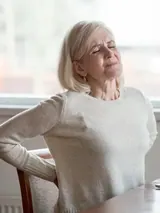
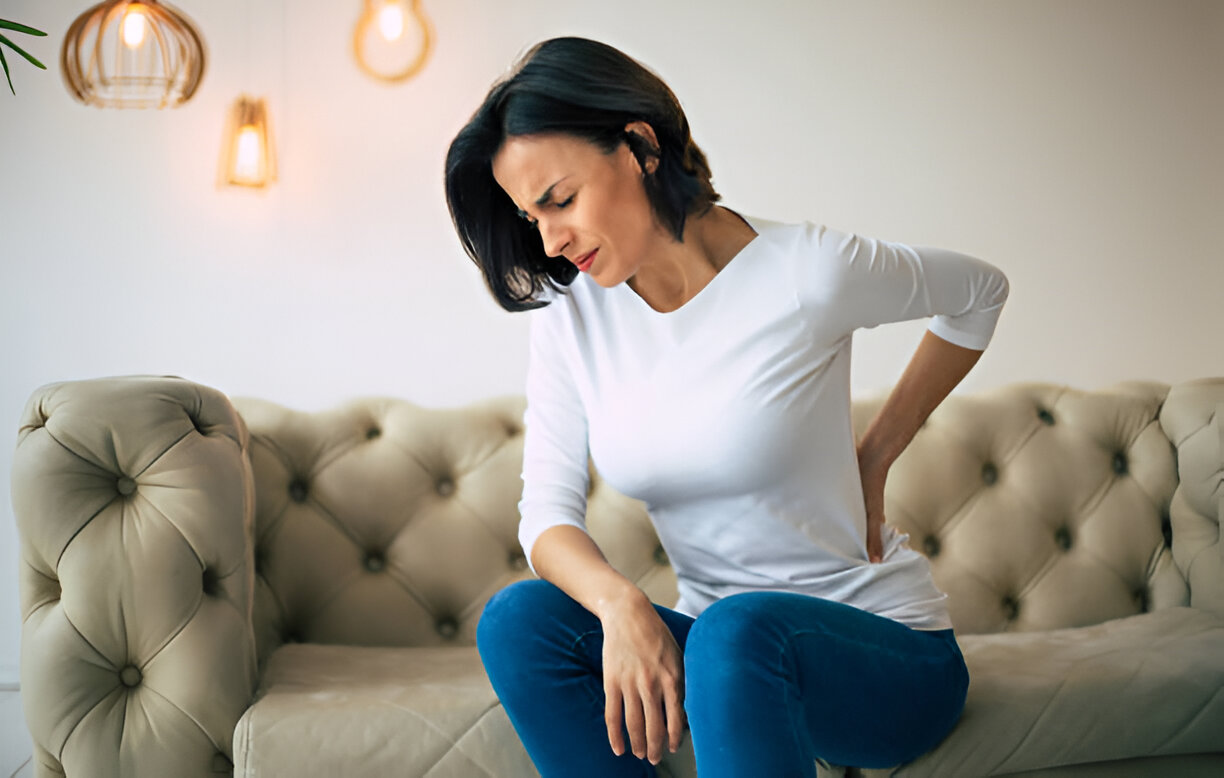
The typical symptom is back and leg pain that is brought on by standing or walking and relieved by bending forward or sitting. This pattern is called neurogenic claudication.[2, 3]
- Pain, cramping or heaviness in the buttocks and legs when walking or standing
- Numbness or tingling in the legs or feet
- Weakness in the legs
- Relief when sitting, leaning on a cart or bending forward
Central narrowing can cause symptoms in both legs, while narrowing at the side of the canal or the exit openings usually affects the nerve root on one side.[1]
Causes and risk factors
Most spinal stenosis is degenerative and part of the aging process. Thickening of the ligamentum flavum, bulging discs and bony overgrowth from facet joint arthritis all take up room in the canal.[1, 2] Symptoms do not match the scan findings closely: there is no clear-cut link between stenosis on imaging and the presence of symptoms.[2]
How it is diagnosed and treated conventionally
The diagnosis is usually made from a history of back and leg pain provoked by extension of the spine and relieved by bending forward, and then confirmed with CT or MRI.[3] Doctors also need to rule out other causes of leg pain and walking problems.
First-line treatment is activity modification, pain medicines such as anti-inflammatory drugs, and physical therapy.[3] A systematic review found moderate-quality evidence that manual therapy plus exercise improved symptoms and function in the short term, and that epidural steroid injections were not effective for neurogenic claudication.[4] Followed for up to 3 years without surgery, about a third of patients improved, about half stayed the same and 10% to 20% got worse.[3]
Decompression surgery may help carefully selected patients who do not improve with non-surgical care.[3, 5] A Cochrane review of five trials had very little confidence about whether surgery or non-surgical care is better, and noted surgical complication rates of 10% to 24% in some studies.[6]
Why Spinal Stenosis calls for a whole-person approach
Spinal stenosis is more than a narrow canal on a scan. Symptoms depend on the nerves, the muscles and joints, general fitness and mood, and they do not track closely with imaging.[2, 7]
Care that also addresses movement, muscle tension, pain sensitivity and emotional well-being is therefore a reasonable addition to treatment aimed at the spine.
Aging and joint wear
Stenosis is part of the aging process, and the degenerative process can be slowed down, though not prevented, by exercise, diet and lifestyle.[2]
Movement and fitness
Exercise is a central part of non-operative care. A review of 13 trials of exercise for neurogenic claudication found that successful programs more often included stretching, strengthening, fitness exercise such as cycling, and psychologically informed approaches.[8]
Mood and psychological distress
Lumbar spinal stenosis is associated with higher levels of psychological distress, including depression. A systematic review of 23 articles found that depression before surgery was linked with worse disability and symptoms afterward, with moderate-quality evidence.[7]
Nerve pain and pain sensitivity
Nerve compression can cause neuropathic leg pain that does not always match what scans show.[2] Laboratory research suggests that acupuncture may affect how the spinal cord and brain process pain signals.[9]
Acupuncture for Spinal Stenosis
What the research shows
Research suggests acupuncture may modestly reduce pain-related disability in degenerative lumbar spinal stenosis, though effects are small. In a trial at five hospitals in China, 196 people with mainly neurogenic claudication had 18 sessions of real or sham acupuncture over 6 weeks. Disability improved more with real acupuncture, but the difference from sham did not reach the threshold for a clinically important change, and benefits seemed to last up to 24 weeks.[10]
A trial of 80 people over age 50 compared 24 sessions of acupuncture with a non-insertive sham over 8 weeks. Acupuncture reduced disability and leg and buttock pain more, but the authors said the evidence was insufficient to conclude that it gives clinical benefits over sham.[11] A smaller pilot trial of 50 people found that adding 12 to 16 sessions of acupuncture to usual care did not significantly improve function at 3 months.[12]
Reviews agree that the evidence is promising but weak. A 2023 meta-analysis of 37 studies of Chinese non-drug therapies found moderate-quality evidence, from two trials of 128 people, that 6 to 8 weeks of acupuncture beat sham for back pain and lumbar function at 6 months, and low-quality evidence for short-term benefit, with no effect on leg pain.[13] An earlier review of six trials from China found no conclusive evidence, because of risk of bias.[14] A 2022 review of non-operative treatments said that most options other than manual therapy with exercise had insufficient quality of evidence to draw conclusions.[4]
How acupuncture may work
Researchers propose that acupuncture acts through the nervous system. Laboratory studies suggest it can quiet pain-amplifying glial cells in the spinal cord, lower inflammatory molecules and activate the descending pain-control pathways of the brain, which involve endogenous opioids.[9] These are proposed explanations, mostly from animal research, and have not been shown to relieve nerve compression itself.
What treatment involves
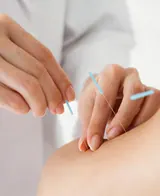
Treatment uses fine, sterile, single-use needles placed in the low back, buttocks, legs and sometimes distant points, usually left in place for about 20 to 40 minutes. The trials gave 12 to 24 sessions over 6 to 8 weeks.[10, 11, 12] We reassess after a short course of visits.
In prospective studies, about 9 in 100 patients had a minor reaction such as bleeding, soreness or redness at a needle site, and serious events occurred in about 1 in 10,000 patients.[15] Tell the practitioner first if you have a bleeding disorder, take blood thinners, are pregnant, or have a pacemaker (relevant to electroacupuncture).
Ayurvedic medicine for Spinal Stenosis
The Ayurvedic view
Ayurveda has no exact classical equivalent for spinal stenosis. Age-related stiffness, back pain and leg pain on walking are traditionally described in terms of Vata, the principle said to govern movement and said to increase in later life, with the back conditions often grouped under Kati Graha or Gridhrasi. These are traditional categories for choosing care, not biomedical diagnoses.
Therapies that may be used
Care is chosen for the individual and traditionally combines:
- Diet and daily routine intended to calm Vata, such as warm, regular meals and steady sleep hours
- Warm oil massage and local heat over the low back and legs
- Gentle movement and stretching suited to your condition
- Herbs traditionally used for joint and nerve complaints, prescribed individually by a qualified practitioner
- Basti, a medicated enema therapy from Panchakarma, only where traditionally appropriate
Panchakarma procedures are not appropriate during pregnancy, acute illness or frailty, or before red-flag symptoms have been medically assessed. Because spinal stenosis is mainly a condition of older adults, many people are not suitable candidates for the more intensive Panchakarma therapies.
What the research shows
We found no clinical trials of Ayurvedic treatment for spinal stenosis, so the evidence is none. Any benefit is unproven. What the literature supports is general: exercise, diet and lifestyle may slow degenerative change in the spine, which is consistent with the lifestyle part of Ayurvedic care but is not evidence for Ayurvedic treatments.[2]
Ayurvedic products also vary in quality: about one fifth of those bought online in one study contained detectable lead, mercury or arsenic.[16]
Herbal medicine for Spinal Stenosis
Herbs and formulas that have been studied
Herbal research specific to spinal stenosis is sparse. Chinese herbal medicine appears as one of the treatments compared in a network meta-analysis of conservative care for lumbar spinal stenosis.[17] Research on herbal products for non-specific low back pain includes capsicum (cayenne) cream or plaster, devil's claw and white willow bark.[18]
What the research shows
The evidence for spinal stenosis is limited. A network meta-analysis of 12 randomized trials (1,194 patients) of conservative treatments found that traditional Chinese medicine and physiotherapy had a better effect on pain scores, and that traditional Chinese medicine and limaprost (a prescription drug) were associated with better improvement on the Japanese Orthopaedic Association score than other treatments. The authors concluded that limaprost may have the best efficacy overall. The abstract does not name specific formulas or herbs or say how well the trials were conducted.[17]
A Cochrane review of 14 trials in non-specific low back pain, not spinal stenosis, found moderate-quality evidence that capsicum cream or plaster reduces chronic pain more than placebo, and low to moderate-quality evidence for short-term pain relief with devil's claw and white willow bark.[18] Whether this carries over to stenosis is not known.
Safety and herb-drug interactions
Herbs are active substances and can interact with medicines. Case reports describe serious bleeding or clotting problems when warfarin was combined with herbs including dang gui (Angelica sinensis), dan shen (Salvia miltiorrhiza), ginger, ginseng and Boswellia.[19] Older adults often take blood thinners, blood pressure and diabetes medicines, so a practitioner's review of every medicine and supplement is needed before any herb is used.
Herbs should come from tested sources and be prescribed individually. Tell us if you are pregnant or breastfeeding, have liver or kidney disease, or have surgery planned.
Translating traditional medicine into modern biological language
The links drawn here are interpretation, not equivalence. Chinese medicine describes pain on walking and numbness in the legs in older adults as blocked flow of qi and blood together with weakness of the kidney and the lower back. Researchers studying acupuncture measure things that loosely parallel this picture: local tissue response, muscle tension, inflammatory signaling and the way the nervous system amplifies pain.[9]
Ayurveda's aggravated Vata describes dry, stiff, painful joints with limited movement. No study has shown that a dosha corresponds to a specific biological process.
How this care fits with your medical care
Integrative care for spinal stenosis is complementary. Keep your physician, physical therapist or spine specialist, and do not stop or change prescribed medicines, injections or exercise programs without your prescriber. We do not diagnose spinal stenosis, so new or worsening leg symptoms should be medically evaluated, and decisions about surgery belong with you and your surgeon.
Please bring your diagnosis, any MRI or CT reports, a full list of medicines and supplements, and details of any injections or surgery, planned or past. We ask that you are under a physician's care for this condition and that your treating team knows you are receiving complementary care.
When to seek urgent medical care
Some symptoms point to severe nerve compression, such as cauda equina syndrome, or another serious cause, and need prompt evaluation.[2]
- New trouble passing urine or loss of bladder or bowel control
- Numbness in the groin, genitals or inner thighs (the "saddle" area)
- Leg weakness that is new or getting worse, such as a foot that drags
- Severe pain, numbness or weakness in both legs
- Back pain with fever, unexplained weight loss or a history of cancer
- Symptoms that begin after a fall or accident
If any of these occur, call 911 or go to the nearest emergency department.
Frequently asked questions
What is spinal stenosis?
Spinal stenosis is a narrowing of the spinal canal or the openings where nerves leave the spine, usually from age-related wear. It most often affects the lower back and can cause pain, numbness or weakness in the buttocks and legs, typically with standing or walking and relieved by sitting or bending forward. Many people are treated without surgery.
Can acupuncture help with spinal stenosis?
It may help a little. Two sham-controlled trials in degenerative lumbar spinal stenosis found greater improvement in disability with real acupuncture than sham, although one difference was not large enough to be clearly meaningful and one pilot study found no added benefit over usual care. Acupuncture is used alongside medical care, not in place of it.
Does Ayurvedic or herbal medicine work for spinal stenosis?
The evidence is thin. We found no clinical trials of Ayurvedic treatment for spinal stenosis. For herbs, a network meta-analysis included Chinese herbal medicine among conservative treatments, and trials in general low back pain support a few herbs such as capsicum cream, but quality is low to moderate. Herbs should be prescribed individually and checked against your medicines.
Can I stop my pain medicine or avoid surgery if I have acupuncture?
No. Acupuncture, Ayurveda and herbal medicine are complementary care. Do not stop or change prescribed medicines without talking to your prescriber, and follow your physician’s advice about injections, therapy or surgery. If you have weakness, bladder or bowel changes, or pain that keeps getting worse, you need prompt medical assessment.
How soon might I notice a change with acupuncture?
It differs from person to person and no result can be promised. In the trials we reviewed, patients had 12 to 24 sessions over 6 to 8 weeks, and benefits were measured at the end of treatment and later. We reassess after a short course of visits to see whether treatment is helping.
Does insurance cover acupuncture for spinal stenosis?
It may. Netra Integrative Health Clinic is in-network with Blue Cross Blue Shield, Cigna and UnitedHealthcare. Other plans may be covered through out-of-network benefits, and we offer a free benefits check. HSA and FSA cards and CareCredit are also accepted. Call (908) 402-7301 to ask about your plan.
References
- Munakomi S, Cruz R. Lumbar Spinal Stenosis. StatPearls [Internet]. 2024. PMID 30285388. StatPearls chapter on lumbar spinal stenosis: definition by region of narrowing, central versus lateral and foraminal stenosis, causes and lack of a universally accepted definition.
- Munakomi S, Foris LA, Varacallo MA. Spinal Stenosis and Neurogenic Claudication. StatPearls [Internet]. 2023. PMID 28613622. StatPearls chapter on spinal stenosis and neurogenic claudication: narrowing of canal, recess and foramen, link with aging and imperfect link between imaging and symptoms.
- Katz JN, Zimmerman ZE, Mass H, et al. Diagnosis and Management of Lumbar Spinal Stenosis: A Review. JAMA. 2022;327(17):1688-1699. PMID 35503342. JAMA review of lumbar spinal stenosis: prevalence about 11% of older US adults, diagnosis, nonoperative care, natural history and surgery outcomes.
- Ammendolia C, Hofkirchner C, Plener J, et al. Non-operative treatment for lumbar spinal stenosis with neurogenic claudication: an updated systematic review. BMJ Open. 2022;12(1):e057724. PMID 35046008. Systematic review of non-operative treatment for neurogenic claudication: moderate evidence for manual therapy with exercise, epidural steroids ineffective, little evidence for other options.
- Anderson DB, Beard DJ, Rannou F, et al. Clinical assessment and management of lumbar spinal stenosis: clinical dilemmas and considerations for surgical referral. Lancet Rheumatol. 2024;6(10):e727-e732. PMID 38723654. Lancet Rheumatology viewpoint on assessing and managing lumbar spinal stenosis, treatment recommendations and when to refer to a spine surgeon.
- Zaina F, Tomkins-Lane C, Carragee E, et al. Surgical versus non-surgical treatment for lumbar spinal stenosis. Cochrane Database Syst Rev. 2016;2016(1):CD010264. PMID 26824399. Cochrane review of five trials comparing surgery with non-surgical care for lumbar spinal stenosis, with very low confidence and surgical complications in 10% to 24%.
- Morales A, El Chamaa A, Mehta S, et al. Depression as a prognostic factor for lumbar spinal stenosis outcomes: a systematic review. Eur Spine J. 2024;33(3):851-871. PMID 37917206. Systematic review of 23 articles finding preoperative depression predicts worse disability and symptoms after treatment for lumbar spinal stenosis.
- Comer C, Williamson E, McIlroy S, et al. Exercise treatments for lumbar spinal stenosis: A systematic review and intervention component analysis of randomised controlled trials. Clin Rehabil. 2024;38(3):361-374. PMID 37715644. Review of 13 exercise trials in neurogenic claudication identifying components such as stretching, strengthening, cycling and psychologically informed approaches in successful programs.
- Chen T, Zhang WW, Chu YX, et al. Acupuncture for Pain Management: Molecular Mechanisms of Action. Am J Chin Med. 2020;48(4):793-811. PMID 32420752. Review of molecular mechanisms of acupuncture analgesia, including glial cells, inflammatory molecules and descending pain pathways involving endogenous opioids.
- Zhu L, Sun Y, Kang J, et al. Effect of Acupuncture on Neurogenic Claudication Among Patients With Degenerative Lumbar Spinal Stenosis : A Randomized Clinical Trial. Ann Intern Med. 2024;177(8):1048-1057. PMID 38950397. Multicenter sham-controlled trial of 196 patients with 18 acupuncture sessions; disability improved more than with sham, but the difference did not reach clinical importance.
- Qin Z, Ding Y, Xu C, et al. Acupuncture vs Noninsertive Sham Acupuncture in Aging Patients with Degenerative Lumbar Spinal Stenosis: A Randomized Controlled Trial. Am J Med. 2020;133(4):500-507.e20. PMID 31525334. Sham-controlled trial of 80 patients over 50 finding 24 acupuncture sessions reduced disability and pain more than non-insertive sham, with authors cautious about clinical benefit.
- Kim KH, Kim YR, Baik SK, et al. Acupuncture for patients with lumbar spinal stenosis: a randomised pilot trial. Acupunct Med. 2016;34(4):267-74. PMID 26953235. Randomized pilot trial of 50 patients finding acupuncture added to usual care gave no significant functional gain at 3 months and mostly minor adverse events.
- Sun YN, An Y, Zhou YJ, et al. Non-pharmaceutical Chinese medical therapies for degenerative lumbar spinal stenosis: A systematic review and meta-analysis of randomized controlled trials. Complement Ther Med. 2023;74:102949. PMID 37062421. Meta-analysis of 37 studies of non-drug Chinese medical therapies in degenerative lumbar spinal stenosis; moderate evidence that acupuncture beat sham for back pain at six months.
- Kim KH, Kim TH, Lee BR, et al. Acupuncture for lumbar spinal stenosis: a systematic review and meta-analysis. Complement Ther Med. 2013;21(5):535-56. PMID 24050593. Systematic review of six randomized trials from China of acupuncture for lumbar spinal stenosis finding no conclusive evidence due to high or uncertain risk of bias.
- Bäumler P, Zhang W, Stübinger T, et al. Acupuncture-related adverse events: systematic review and meta-analyses of prospective clinical studies. BMJ Open. 2021;11(9):e045961. PMID 34489268. Systematic review of 21 prospective studies finding minor acupuncture reactions in about 9 percent of patients and serious events in about 1 per 10,000.
- Saper RB, Phillips RS, Sehgal A, et al. Lead, mercury, and arsenic in US- and Indian-manufactured Ayurvedic medicines sold via the Internet. JAMA. 2008;300(8):915-23. PMID 18728265. JAMA study finding detectable lead, mercury or arsenic in about one fifth of Ayurvedic medicines purchased over the Internet.
- Chen X, Zheng Z, Lin J. Clinical Effectiveness of Conservative Treatments on Lumbar Spinal Stenosis: A Network Meta-Analysis. Front Pharmacol. 2022;13:859296. PMID 35734403. Network meta-analysis of 12 trials (1,194 patients) of conservative treatments for lumbar spinal stenosis including traditional Chinese medicine, physiotherapy, limaprost and analgesics.
- Oltean H, Robbins C, van Tulder MW, et al. Herbal medicine for low-back pain. Cochrane Database Syst Rev. 2014;2014(12):CD004504. PMID 25536022. Cochrane review of 14 trials of herbal medicine for non-specific low back pain, covering capsicum, devil's claw and white willow bark.
- Milić N, Milosević N, Golocorbin Kon S, et al. Warfarin interactions with medicinal herbs. Nat Prod Commun. 2014;9(8):1211-6. PMID 25233607. Review of reported interactions between warfarin and medicinal herbs, including bleeding events with dang gui, dan shen, ginger, ginseng and Boswellia.
This page is for general education and is not medical advice. Acupuncture, Ayurvedic medicine and herbal medicine are complementary therapies; they do not replace diagnosis or treatment by your physician. Do not stop or change prescribed treatment without talking to your prescriber. In an emergency call 911.