












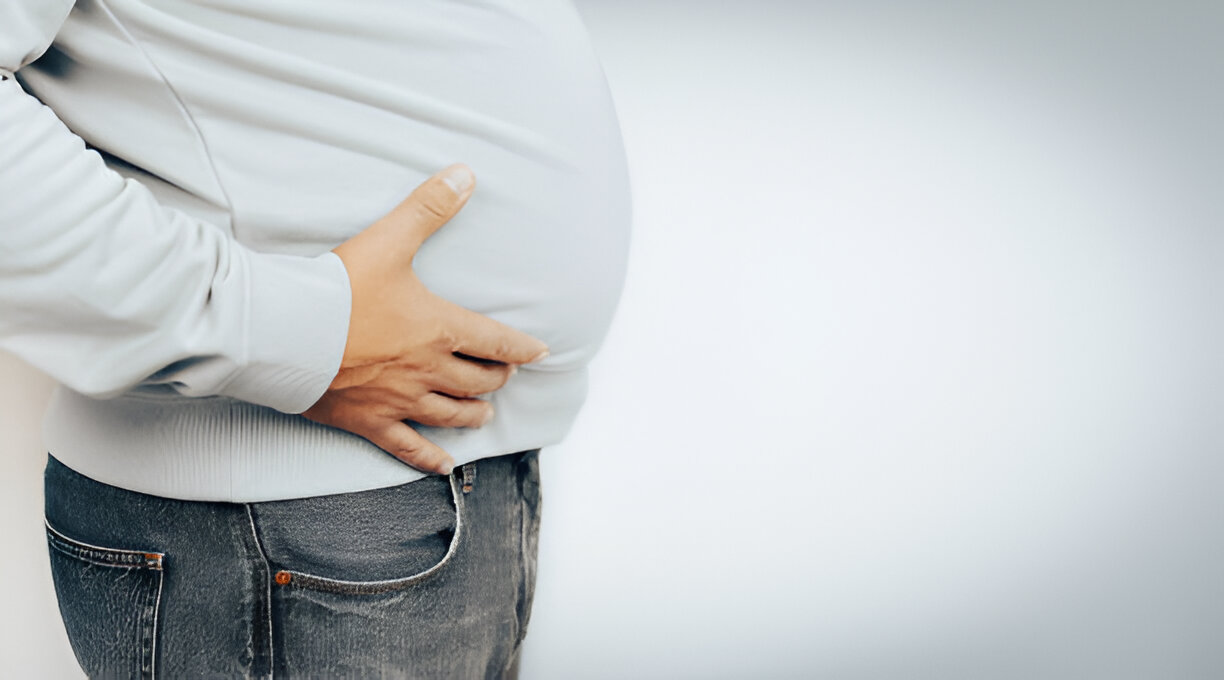
- What it is: Excess fat stored in liver cells, now often called metabolic dysfunction-associated steatotic liver disease (MASLD) and previously NAFLD, ranging from simple fat to inflammation (MASH) and scarring.
- Common symptoms: Often none; some people have fatigue or vague discomfort in the upper right abdomen, and it is often found on blood tests or imaging.
- Conventional care: Weight loss, healthy eating, exercise, limiting alcohol, treating diabetes, cholesterol and blood pressure, regular fibrosis checks, and in some cases specialist drug treatment.
- How integrative care fits: Acupuncture, Ayurvedic lifestyle guidance and individually prescribed herbs are used alongside medical care and lifestyle changes, with your liver specialist informed.
- Evidence at a glance: Limited for acupuncture, from trials of limited quality; moderate for curcumin, a spice used in Ayurveda; none for Ayurvedic whole-system treatment; limited and low quality for Chinese herbal formulas.
What is Fatty Liver Disease?
Fatty liver disease is a condition in which fat builds up in the liver. It is now usually called metabolic dysfunction-associated steatotic liver disease (MASLD), a newer name for non-alcoholic fatty liver disease (NAFLD).[1, 2] It is defined by fat in at least 5% of the liver together with at least one metabolic risk factor such as obesity, diabetes, high blood fats or high blood pressure, and with little or no alcohol.[1]
The condition is a spectrum. It ranges from simple fat to steatohepatitis (MASH, formerly NASH), in which the liver is inflamed and injured, and on to fibrosis, cirrhosis and liver cancer.[2, 3]
Common symptoms
Fatty liver often causes no symptoms and is usually found through abnormal liver tests or an imaging scan done for another reason.[1, 3] Fatigue or mild discomfort in the upper right abdomen can occur. Because it can stay silent while scarring develops, screening of people with risk factors matters.[2]
Causes and risk factors
Fatty liver is closely tied to metabolic syndrome. It has a two-way association with obesity, high blood fats and type 2 diabetes, and diabetes raises the risk of cirrhosis.[1, 3] Heavy alcohol use causes a related condition, alcohol-associated liver disease, and moderate alcohol with metabolic risk factors has its own category.[1] Other causes include some medicines and genetic conditions.[1]
How it is diagnosed and treated conventionally
Doctors suspect fatty liver from risk factors, liver enzyme tests or imaging, and then check for scarring with blood scores such as FIB-4 followed by imaging such as transient elastography.[2] The aim is to find people with advanced fibrosis, who have the highest risk of liver complications.[2, 3]
Treatment centers on lifestyle: weight loss, dietary changes, exercise and limiting alcohol, plus good management of diabetes, obesity and related conditions.[2, 3] Bariatric surgery is an option for some people with obesity. For adults with MASH and significant fibrosis, the European guideline says a liver-targeted drug (resmetirom) should be considered where approved.[2] Leading causes of death in fatty liver are cardiovascular disease and cancers outside the liver, so heart health is part of care.[3]
Why Fatty Liver Disease calls for a whole-person approach
Fatty liver is a liver problem, but it grows out of how the whole body handles energy, fat and sugar. For this reason, treatment looks at weight, diet, movement, blood sugar, blood fats and blood pressure together, and combination treatment is likely to be needed for many people.[2, 3]
Care that supports daily habits and metabolic health is therefore a reasonable companion to medical follow-up of the liver.
Weight, diet and physical activity
Healthy lifestyle and weight reduction remain the foundation of prevention and treatment.[3] Guidelines advise weight loss, dietary change and regular exercise, and discourage alcohol.[2]
Blood sugar and insulin resistance
Fatty liver and type 2 diabetes tend to occur together, and diabetes raises the chance of cirrhosis and its complications.[3] Optimal management of diabetes and obesity is part of the guideline approach.[2]
Cholesterol, blood pressure and heart health
High triglycerides, low HDL cholesterol and high blood pressure are among the metabolic risk factors used to define MASLD.[1] Cardiovascular disease is a leading cause of death in people with fatty liver.[3]
Alcohol
Alcohol intake changes the diagnosis: steatotic liver disease with moderate alcohol and metabolic risk factors is classed differently from MASLD, and heavy use counts as alcohol-associated liver disease.[1] Guidelines discourage alcohol in MASLD.[2]
Acupuncture for Fatty Liver Disease
What the research shows
The research on acupuncture for fatty liver is limited. Meta-analyses point toward benefit but rest on weak trials, and none compared acupuncture with a sham procedure as far as the abstracts state.
A 2021 meta-analysis of 8 randomized trials (939 patients) found that acupuncture, alone or added to conventional treatment, gave better overall clinical response rates and better liver enzymes and blood fats than conventional treatment alone, but not a lower body mass index. The authors cited insufficient methodological quality and sample size.[4] A 2025 meta-analysis of 30 trials reported better clinical response, liver function, lipids and glucose with acupuncture, and called for large, rigorous trials to confirm this. It also reported benefit on liver fibrosis measures, which needs the same confirmation.[5] A review of 16 trials of acupoint therapies found improved liver enzymes and blood fats, with the same caution.[6]
One small trial of 50 women found that 6 weeks of electroacupuncture improved liver enzymes and triglycerides more than aerobic interval training, in addition to their usual medicines.[7] None of these studies shows that acupuncture lowers the risk of liver complications over the long term.
How acupuncture may work
How acupuncture might affect liver fat in people is not established. The studies above mainly measured blood tests, and the review authors did not report an established mechanism.[4, 5] In the trials, commonly used points included Taichong, Zusanli, Fenglong and Sanyinjiao.[4]
What treatment involves
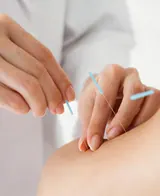
Treatment uses fine, sterile, single-use needles, usually left in place for about 20 to 40 minutes, sometimes with gentle electrical stimulation. The small electroacupuncture trial gave 3 sessions a week for 6 weeks.[7] We reassess after a short course of visits.
Serious problems from acupuncture are rare. In prospective studies, about 9 in 100 patients had a minor reaction such as brief soreness or bleeding at a needle site, and serious events occurred in about 1 in 10,000 patients.[8] Tell the practitioner first if you have a bleeding disorder, including from advanced liver disease, take blood thinners, are pregnant, or have a pacemaker (relevant to electroacupuncture).
Ayurvedic medicine for Fatty Liver Disease
The Ayurvedic view
Ayurveda has no single classical name that matches fatty liver. Practitioners often describe it as an excess of Kapha and of Meda (fat tissue) with weak digestive fire (agni), sometimes with Pitta involvement in the liver. This is a traditional framework used to choose diet and lifestyle guidance, not a biomedical diagnosis.
Therapies that may be used
Care is chosen for the individual and traditionally combines:
- Diet and daily routine aimed at reducing excess Kapha, such as regular meal times, less fried and sweet food, and daily physical activity
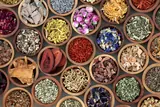
- Herbs and spices, such as turmeric (curcumin), triphala and bitter herbs, prescribed individually
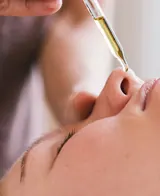
- Transdermal medication therapy, in which an herbal preparation is applied to the skin
- Panchakarma cleansing therapies only where traditionally and medically suitable
Panchakarma is not appropriate during pregnancy, acute illness or frailty, and not for people with advanced liver disease or cirrhosis. Any such therapy should be cleared with your liver specialist first.
What the research shows
There are no clinical trials of Ayurvedic whole-system treatment or Panchakarma for fatty liver in the PubMed searches we ran. The Ayurvedic spice turmeric is the exception, because its extract curcumin has been tested on its own as a supplement in a placebo-controlled trial.[9] Pooled analyses of curcumin trials also exist.[10] That evidence is described in the next section.
Herbal medicine for Fatty Liver Disease
Herbs and formulas that have been studied
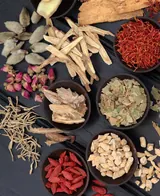
The best-studied herbal ingredients are curcumin from turmeric, berberine (found in several plants used in Chinese and Ayurvedic traditions), and silymarin from milk thistle.[10, 11, 12] Chinese herbal formulas have been studied in many trials, with hawthorn fruit the most frequently used herb in a review of formulas.[13] Xiaoyao Powder and Danning Tablet were the formulas highlighted in an evidence map.[14]
What the research shows
The evidence is moderate for curcumin, but trials used concentrated supplements, not food spice. A meta-analysis of 16 trials with 1,028 participants found curcumin improved ultrasound findings, liver enzymes, cholesterol and body mass index.[10] An umbrella analysis of 11 meta-analyses found lower AST, ALT, insulin resistance and body size measures, but called for higher-quality research.[15] A 24-week double-blind trial of 80 people with simple fatty liver found curcumin reduced liver fat on a scan compared with placebo, along with weight and triglycerides.[9]
Berberine reduced liver enzymes, blood fats and insulin resistance in a meta-analysis of 10 trials with 811 patients.[11] For silymarin, a meta-analysis of 26 trials suggested improved enzymes and liver fat, but a 48-week placebo-controlled trial in 99 people with MASH confirmed by liver biopsy did not meet its main goal, although fibrosis measures improved in some.[12, 16]
For Chinese herbal medicine, a review of 62 trials found modest benefit on enzymes and imaging compared with Western medicines.[13] An overview of 37 systematic reviews found 35 were of low or critically low quality, and said clinical translation is not recommended on current evidence.[14] None of these studies shows that herbs reverse liver scarring.
Safety and herb-drug interactions
Herbs can injure the liver, which matters in people who already have a liver condition. Herbal and dietary supplements account for about 20% of drug-induced liver injury in the United States, with green tea extract and multi-ingredient products among the main causes.[17] Tell your liver specialist and us about every supplement before you start one.
Herbs can also interact with medicines, including warfarin and other drugs.[18] In one study, about one fifth of Ayurvedic products bought online contained detectable lead, mercury or arsenic.[19] Herbs should come from tested sources and be prescribed individually. Tell us if you are pregnant or breastfeeding, have cirrhosis or kidney disease, or take diabetes medicine, since some herbs also lower blood sugar.
Translating traditional medicine into modern biological language
The links drawn here are interpretation, not equivalence. Chinese medicine often describes fatty liver as stagnation of liver qi with spleen deficiency, phlegm and dampness, or blood stasis. Researchers studying this condition measure things that loosely parallel those ideas: insulin resistance, blood fats, liver enzymes and fat stored in liver cells.[4, 14]
Ayurveda's excess Meda and weak agni resemble the modern picture of excess fat storage and disordered metabolism.[1] No study has shown that a dosha or traditional pattern corresponds to a specific biological process.
How this care fits with your medical care
For a condition like this, we ask that you are under a physician's care for it and that your treating team knows you are receiving complementary care. Keep your primary care doctor or liver specialist, and do not stop or change prescribed medicines for diabetes, cholesterol or blood pressure without your prescriber.
We do not diagnose or stage fatty liver or monitor liver scarring. Weight loss, healthy eating and exercise, which guidelines treat as the base of care, remain the priority.[2] Please bring your diagnosis, recent liver tests and imaging or elastography results, a full list of medicines and supplements, and details of your alcohol use.
When to seek urgent medical care
Fatty liver can progress to cirrhosis, and some symptoms signal serious liver disease.[2, 3]
- Yellowing of the skin or eyes
- Vomiting blood, or black, tarry or bloody stools
- Confusion, severe drowsiness or unusual behavior
- A rapidly swelling abdomen or leg swelling with severe abdominal pain
- Fever with abdominal pain
- Easy bruising or bleeding that is new
If any of these occur, call 911 or go to the nearest emergency department.
Frequently asked questions
What is fatty liver disease?
Fatty liver disease is a buildup of fat in the liver. It is now usually called metabolic dysfunction-associated steatotic liver disease (MASLD), formerly NAFLD, and is linked to obesity, diabetes, high blood fats and high blood pressure. It often causes no symptoms. In some people it causes inflammation and scarring, so regular medical monitoring is important.
Can acupuncture help with fatty liver disease?
It might help with some blood test results, but the evidence is limited. Meta-analyses of trials of limited quality found better liver enzymes and blood fats with acupuncture than with conventional treatment alone. No large sham-controlled trial was found, and benefit on liver scarring or long-term outcomes is unconfirmed. It is used alongside lifestyle changes and medical care.
Do Ayurvedic or herbal remedies work for fatty liver?
Evidence varies. No trials of Ayurvedic whole-system treatment were found. Curcumin, from turmeric, has moderate support: several meta-analyses and a placebo-controlled trial found improved liver measures. Chinese herbal formulas show modest benefit in low-quality trials. Herbs can harm the liver in some people, so tell your physician about any supplement.
Can I stop my medicines or skip weight loss if I use acupuncture or herbs?
No. Acupuncture, Ayurveda and herbal medicine are complementary care. Weight loss, healthy eating and exercise are the foundation of treatment, and you should not stop or change prescribed medicines without your prescriber. Keep seeing your physician for liver tests and scarring checks.
What should I bring to my first visit?
Please bring your diagnosis, recent liver blood tests, imaging or elastography reports, a full list of medicines and supplements, and details of alcohol use. Tell us if you have cirrhosis, diabetes, take blood thinners, or are pregnant or breastfeeding. This helps us plan care that is safe alongside your physician’s treatment.
Does insurance cover acupuncture for fatty liver disease?
It may. Netra Integrative Health Clinic is in-network with Blue Cross Blue Shield, Cigna and UnitedHealthcare. Other plans may be covered through out-of-network benefits, and we offer a free benefits check. HSA and FSA cards and CareCredit are also accepted. Call (908) 402-7301 to ask about your plan.
References
- Girish V, John S. Metabolic Dysfunction-Associated Steatotic Liver Disease (MΑSLD). StatPearls [Internet]. 2025. PMID 31082077. StatPearls chapter on MASLD explaining the new terminology, subtypes (MASLD, MASH, MetALD, ALD) and the metabolic risk factors that define the disease.
- European Association for the Study of the Liver (EASL), European Association for the Study of Diabetes (EASD), European Association for the Study of Obesity (EASO). EASL-EASD-EASO Clinical Practice Guidelines on the management of metabolic dysfunction-associated steatotic liver disease (MASLD). J Hepatol. 2024;81(3):492-542. PMID 38851997. EASL-EASD-EASO guideline on MASLD covering definitions, fibrosis screening, lifestyle treatment, incretin therapies, bariatric surgery and resmetirom for MASH with significant fibrosis.
- Powell EE, Wong VW, Rinella M. Non-alcoholic fatty liver disease. Lancet. 2021;397(10290):2212-2224. PMID 33894145. Lancet review of NAFLD describing its prevalence, spectrum, links to metabolic syndrome and diabetes, causes of death, fibrosis as the key prognostic marker, and lifestyle as the foundation.
- Chen P, Zhong X, Dai Y, et al. The efficacy and safety of acupuncture in nonalcoholic fatty liver disease: A systematic review and meta-analysis of randomized controlled trials. Medicine (Baltimore). 2021;100(38):e27050. PMID 34559098. Meta-analysis of 8 trials (939 patients) finding acupuncture improved clinical response, liver enzymes and lipids in NAFLD, with insufficient methodological quality.
- Liu C, Ao Y, Liu B, et al. The safety and efficacy of acupuncture in treating nonalcoholic fatty liver disease: A systematic review and meta-analysis based on randomized controlled trials. Medicine (Baltimore). 2025;104(18):e42272. PMID 40324281. 2025 meta-analysis of 30 randomized trials finding acupuncture improved clinical response, liver function, lipids and glucose in NAFLD, calling for rigorous large trials.
- Bi Y, Yin B, Fan G, et al. Effects of acupoint therapy on nonalcoholic fatty liver disease: A systematic review and meta-analysis. Complement Ther Clin Pract. 2021;43:101376. PMID 33813176. Meta-analysis of 16 trials (1,320 patients) of acupoint therapy finding improved liver enzymes and lipids in NAFLD, needing confirmation in rigorous trials.
- Draz RS, Serry ZMH, Rahmy AF, et al. Electroacupuncture Versus Aerobic Interval Training on Liver Functions in Patients with Nonalcoholic Fatty Liver. J Altern Complement Med. 2020;26(1):51-57. PMID 31657614. Randomized trial of 50 women comparing electroacupuncture with aerobic interval training; both lowered liver enzymes, with greater effect in the electroacupuncture group.
- Bäumler P, Zhang W, Stübinger T, et al. Acupuncture-related adverse events: systematic review and meta-analyses of prospective clinical studies. BMJ Open. 2021;11(9):e045961. PMID 34489268. Systematic review of 21 prospective studies finding minor acupuncture reactions in about 9 percent of patients and serious events in about 1 per 10,000.
- He Y, Chen X, Li Y, et al. Curcumin supplementation alleviates hepatic fat content associated with modulation of gut microbiota-dependent bile acid metabolism in patients with nonalcoholic simple fatty liver disease: a randomized controlled trial. Am J Clin Nutr. 2024;120(1):66-79. PMID 38795741. 24-week double-blind randomized trial of 80 patients with simple fatty liver finding curcumin reduced liver fat on scan, weight and triglycerides versus placebo.
- Ngu MH, Norhayati MN, Rosnani Z, et al. Curcumin as adjuvant treatment in patients with non-alcoholic fatty liver (NAFLD) disease: A systematic review and meta-analysis. Complement Ther Med. 2022;68:102843. PMID 35661765. Meta-analysis of 16 trials (1,028 participants) finding curcumin improved ultrasound steatosis, liver enzymes, cholesterol and body mass index in NAFLD.
- Nie Q, Li M, Huang C, et al. The clinical efficacy and safety of berberine in the treatment of non-alcoholic fatty liver disease: a meta-analysis and systematic review. J Transl Med. 2024;22(1):225. PMID 38429794. Meta-analysis of 10 trials (811 patients) finding berberine lowered liver enzymes, lipids and insulin resistance in NAFLD, with mild gastrointestinal side effects.
- Li S, Duan F, Li S, et al. Administration of silymarin in NAFLD/NASH: A systematic review and meta-analysis. Ann Hepatol. 2024;29(2):101174. PMID 38579127. Meta-analysis of 26 trials (2,375 patients) finding silymarin improved liver enzymes, lipids and steatosis in NAFLD, needing confirmation.
- Shi KQ, Fan YC, Liu WY, et al. Traditional Chinese medicines benefit to nonalcoholic fatty liver disease: a systematic review and meta-analysis. Mol Biol Rep. 2012;39(10):9715-22. PMID 22718512. Meta-analysis of 62 randomized trials of Chinese herbal formulas in NAFLD finding modest benefit over Western medicines and hawthorn as the most used herb.
- Li J, Jiao R, Su W, et al. Traditional Chinese medicine for non-alcoholic fatty liver disease: an overview of systematic reviews with evidence mapping and metabolic outcome assessment. Front Pharmacol. 2025;16:1675793. PMID 41451376. Overview of 37 systematic reviews of traditional Chinese medicine in NAFLD; most were low quality, results suggested lower ALT, and clinical translation was not recommended.
- Molani-Gol R, Dehghani A, Rafraf M. Effects of curcumin/turmeric supplementation on the liver enzymes, lipid profiles, glycemic index, and anthropometric indices in non-alcoholic fatty liver patients: An umbrella meta-analysis. Phytother Res. 2024;38(2):539-555. PMID 37918958. Umbrella meta-analysis of 11 meta-analyses of curcumin in NAFLD finding lower AST, ALT, insulin resistance and body size measures, with a call for higher-quality research.
- Wah Kheong C, Nik Mustapha NR, Mahadeva S. A Randomized Trial of Silymarin for the Treatment of Nonalcoholic Steatohepatitis. Clin Gastroenterol Hepatol. 2017;15(12):1940-1949.e8. PMID 28419855. Placebo-controlled trial of 99 patients with biopsy-proven NASH finding silymarin did not meet the primary histology goal but may reduce fibrosis.
- Navarro VJ, Khan I, Björnsson E, et al. Liver injury from herbal and dietary supplements. Hepatology. 2017;65(1):363-373. PMID 27677775. Hepatology review of liver injury from herbal and dietary supplements, which accounts for about 20% of US drug-induced liver injury.
- Hu Z, Yang X, Ho PC, et al. Herb-drug interactions: a literature review. Drugs. 2005;65(9):1239-82. PMID 15916450. Literature review of herb-drug interactions including bleeding with warfarin and altered drug levels with several herbs.
- Saper RB, Phillips RS, Sehgal A, et al. Lead, mercury, and arsenic in US- and Indian-manufactured Ayurvedic medicines sold via the Internet. JAMA. 2008;300(8):915-23. PMID 18728265. JAMA study finding detectable lead, mercury or arsenic in about one fifth of Ayurvedic medicines purchased over the Internet.
This page is for general education and is not medical advice. Acupuncture, Ayurvedic medicine and herbal medicine are complementary therapies; they do not replace diagnosis or treatment by your physician. Do not stop or change prescribed treatment without talking to your prescriber. In an emergency call 911.