












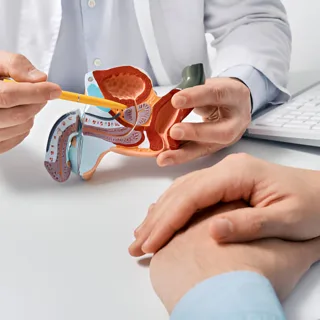




- What it is: IVF and IUI are medical fertility treatments. IUI places prepared sperm in the uterus, and IVF fertilizes eggs in a laboratory before an embryo is transferred.
- Common symptoms: Not a disease. People usually seek these treatments after a year or more without pregnancy, and the process often brings stress, anxiety and poor sleep.
- Conventional care: Ovulation-inducing medicines, IUI, and IVF, chosen by a reproductive specialist based on age and the cause of infertility.
- How integrative care fits: Acupuncture, Ayurvedic therapies and individually prescribed herbs are used as supportive care for stress, sleep and well-being, with your fertility team informed.
- Evidence at a glance: The largest sham-controlled trial found no benefit of acupuncture for live birth rates in IVF. Evidence for Ayurveda in IVF or IUI is absent, and herbal evidence is limited and not specific to IVF.
Understanding IVF and IUI
IVF and IUI are medical treatments for infertility, which is usually defined as not achieving pregnancy after 12 months of regular unprotected intercourse.[1] About 1 in 8 women of reproductive age in the US receives infertility services each year.[1] Both treatments are planned and carried out by a physician, and this page describes only the supportive care we can offer around them.
Common symptoms
Infertility itself is not a symptom-based illness, since the main sign is the lack of pregnancy over time. Some of the causes do produce symptoms, such as irregular or absent periods when ovulation is disrupted.[1]
The treatment process often brings its own strain. In one survey of 97 women during the ovarian stimulation phase of IVF, 43 percent had anxiety, 30 percent had depression and about 43 percent had poor sleep quality.[2]
Causes and risk factors
The most common causes of infertility are ovulation problems, male factor infertility and tubal disease, and in about 15 percent of couples no cause is found.[1] Female age, smoking and obesity affect fertility.[1]
The male partner contributes substantially to about half of infertility cases, which is why both partners should be evaluated.[3]
How it is diagnosed and treated conventionally
A fertility evaluation looks for ovulation problems, male factor and tubal disease, and treatment is matched to the cause and to the woman's age.[1] Ovulation-inducing medicines such as clomiphene or letrozole, or injectable gonadotropins, may be tried first. Adverse effects of gonadotropins include multiple pregnancy and ovarian hyperstimulation syndrome.[1]
IUI is often used for unexplained infertility or mild male factor infertility, and IVF is considered if those approaches do not work, or sooner for older women or for severe male factor or tubal disease.[1] A Cochrane review of 15 trials found that, for unexplained infertility, the evidence on whether IUI improves live birth was uncertain and mostly of low quality. It did find IUI with ovarian stimulation probably helps when the chance of natural conception is low.[4]
Why IVF and IUI calls for a whole-person approach
Success with IVF or IUI depends mainly on medical factors such as age and the cause of infertility, and your fertility team manages those. Other parts of life still matter for how you cope with months of treatment, injections, waiting and uncertain outcomes.
Our supportive care is aimed at the person going through treatment, not at changing the biology of the cycle.
Emotional strain
Fertility treatment is emotionally demanding. A survey of women having IVF found high rates of anxiety and depression.[2] A study of 450 women found that anxiety, depression and stress symptoms before a first cycle were not linked to the chance of clinical pregnancy.[5] Stress is therefore a reason for support in its own right, but it should not be blamed for a failed cycle.
Sleep
In the survey of women in IVF stimulation, higher anxiety scores were linked to worse sleep quality.[2] Poor sleep is a common and treatable burden during cycles, and it is one of the things we may address.
Age, weight and smoking
Female age is the strongest factor in fertility, and smoking and obesity can also reduce it.[1] These are discussed with your physician. We do not offer weight-loss or smoking programs as treatment for infertility.
Both partners
Male factors contribute to about half of cases, so fertility care involves both partners.[3]
Acupuncture as supportive care in IVF and IUI
What the research shows
Acupuncture has not been shown to raise live birth rates in IVF when tested against a convincing sham. The largest trial enrolled 848 women at 16 centers in Australia and New Zealand. Live births occurred in 18.3 percent of the real acupuncture group and 17.8 percent of the sham group, and the authors concluded the findings do not support acupuncture to improve live births.[6]
A 2021 meta-analysis of 8 placebo-controlled trials with 3,607 women reached the same result for acupuncture around embryo transfer. Clinical pregnancy, ongoing pregnancy, miscarriage and live birth rates did not differ from placebo acupuncture, and the placebo was not different from usual care.[7] A 2010 review of 14 trials also found no evidence of benefit.[8]
Other meta-analyses are more favorable but have weaknesses. One pooling 25 trials found higher clinical pregnancy and live birth rates with acupuncture, and another of 58 trials found higher rates but rated the certainty of evidence as extremely low to low, with no high-quality evidence.[9, 10] Two others found a higher clinical pregnancy rate but no significant difference in live births, with results depending on the type of control used.[11, 12] One of these suggested a benefit in women with earlier unsuccessful IVF cycles, but the authors cited poor reporting and flaws in the studies.[11]
We found no acupuncture trials for IUI cycles. Acupuncture has also been studied for anxiety around IVF. In one trial, ear acupressure reduced anxiety compared with a sham and with no treatment, but this is a single study of a different technique.[13]
How acupuncture may work
Researchers have proposed that acupuncture could improve blood flow to the uterine lining. In a small sham-controlled trial of 70 women, acupuncture between egg retrieval and embryo transfer improved some blood-flow measures on ultrasound, but pregnancy and live birth rates did not differ.[14] Whether blood-flow changes matter for outcome is not established.
What treatment involves
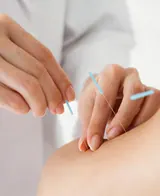
Treatment uses fine, sterile, single-use needles placed at points on the body, usually left in place for about 20 to 40 minutes. We plan a course of several visits and reassess. The timing of any visits relative to your cycle should be agreed with your fertility team.
Serious problems from acupuncture are rare. In prospective studies, about 9 in 100 patients had a minor reaction such as bleeding, soreness or redness at a needle site, and serious events occurred in about 1 in 10,000 patients.[15] In the IVF placebo trials, adverse events were discomfort and bruising of mild to moderate degree.[7] Tell the practitioner first if you have a bleeding disorder, take blood thinners, are pregnant or may be pregnant after a transfer, or have a pacemaker (relevant to electroacupuncture).
Ayurvedic medicine as supportive care in IVF and IUI
The Ayurvedic view
In Ayurveda, fertility is traditionally linked to the balance of the doshas and the health of the reproductive tissues, and treatment is individualized. These are traditional categories, not biomedical diagnoses.
Therapies that may be used
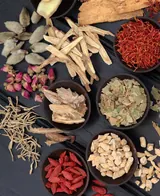
Care traditionally combines diet and daily routine suggestions, such as regular meals and consistent sleep hours, with relaxing oil massage and, in some cases, individually prescribed herbs. Herbs such as shatavari (Asparagus racemosus) and ashwagandha (Withania somnifera) are traditionally used in women's reproductive health.[16]
Panchakarma is not appropriate during active fertility treatment, pregnancy, acute illness or frailty.
What the research shows
We found no clinical trials of Ayurvedic medicine in women having IVF or IUI. A review of Ayurvedic herbs in female reproductive health described the potential benefits of herbs including shatavari and ashwagandha, but stressed the need for more rigorous studies and a critical look at study quality.[16] Evidence is therefore insufficient to say whether any Ayurvedic treatment affects fertility treatment outcomes.
Supportive care for stress and sleep can reasonably be offered, but we do not claim that it improves the chance of pregnancy.
Herbal medicine as supportive care in IVF and IUI
Herbs and formulas that have been studied
Most research on herbs in fertility concerns Chinese herbal formulas given to women with infertility, often with polycystic ovary syndrome (PCOS), rather than women in IVF or IUI cycles. The formulas varied between trials and are prescribed individually.[17, 18]
What the research shows
The evidence is limited and not specific to IVF. A meta-analysis of 40 trials in 4,247 women with infertility reported higher pregnancy rates with Chinese herbal medicine than with Western fertility drugs alone, but the trials covered a mix of causes, including PCOS, endometriosis and tubal blockage, and were not specific to IVF. The abstract does not report the quality of the trials.[17] A Cochrane review of 5 trials in 414 women with PCOS found insufficient evidence for Chinese herbal medicine, with very low quality evidence for most comparisons and no live birth data. It found low-quality evidence that adding herbs to clomiphene raised pregnancy rates.[18]
Safety and herb-drug interactions
Herbs can interact with medicines and may not be suitable during stimulation cycles, around egg retrieval or embryo transfer, or in early pregnancy. Reported herb-drug interactions include increased bleeding when some herbs are combined with warfarin or aspirin.[19] The effect of most herbs on fertility medicines has not been studied, so your fertility physician should know about every herb and supplement you take.
About one fifth of Ayurvedic products bought online contained detectable lead, mercury or arsenic in one study.[20] Herbs should come from tested sources and be prescribed individually. We recommend that herbs be stopped or reviewed with your physician once a transfer or insemination is done and pregnancy is possible.
Translating traditional medicine into modern biological language
This section is interpretation, not equivalence. Chinese medicine describes fertility problems in terms such as stagnation of qi and blood or deficiency of kidney essence. Researchers studying acupuncture in IVF have looked at measurable ideas that loosely parallel the pictures, such as uterine blood flow and the stress response, but the results are mixed.[6, 14]
Ayurveda's emphasis on regular routines, sleep and calm digestion corresponds loosely to the sleep and emotional strain that surveys document in women undergoing treatment.[2] No study has shown that a dosha or a TCM pattern corresponds to a particular biological process in infertility.
How this care fits with your medical care
Our care is supportive and complementary. Your reproductive endocrinologist or gynecologist directs IVF and IUI, and you should keep every appointment, medicine and instruction. Do not stop, delay or change any fertility medicine or protocol because of anything we suggest. We do not diagnose infertility or decide on treatment.
For a condition like this, we ask that you are under a physician's care for it and that your treating team knows you are receiving complementary care. Please bring your diagnosis, your cycle calendar and medication list, and a list of any herbs or supplements. If you become pregnant, tell us right away.
When to seek urgent medical care
Some symptoms during fertility treatment need prompt medical assessment, and ovarian hyperstimulation syndrome is a known adverse effect of the injectable medicines used in stimulation.[1]
- Rapid weight gain, a swollen or painful abdomen, or nausea and vomiting during or after stimulation
- Shortness of breath or markedly reduced urination
- Severe or one-sided pelvic pain, or heavy vaginal bleeding
- Fever with pelvic pain after egg retrieval
- Pain, swelling or redness in one leg, or chest pain
- Thoughts of harming yourself (call or text 988, the Suicide and Crisis Lifeline)
If any of these occur, call your fertility clinic urgently, and call 911 or go to the nearest emergency department for emergencies.
Frequently asked questions
What are IVF and IUI?
IVF (in vitro fertilization) and IUI (intrauterine insemination) are medical fertility treatments. In IUI, prepared sperm is placed in the uterus around ovulation. In IVF, eggs are fertilized in a laboratory and an embryo is transferred to the uterus. A reproductive specialist chooses between them based on age and the cause of infertility.
Can acupuncture help people with IVF and IUI?
Some people use it to feel calmer, but it has not been shown to raise live birth rates. The largest sham-controlled IVF trial, with 848 women, found no difference in live births, and a meta-analysis of placebo-controlled trials agreed. Some other meta-analyses were more positive but rated the evidence low. We offer it as supportive care only.
Does Ayurvedic or herbal medicine help with IVF or IUI?
We found no clinical trials of Ayurvedic medicine for women having IVF or IUI. Chinese herbal medicine has been studied in women with infertility, mostly outside IVF, with low-quality evidence. Herbs can interact with medicines and may not be suitable during stimulation or after a transfer, so your fertility doctor must approve and know about any herb you take.
Can I use this care instead of IVF or IUI, or stop my fertility medicines?
No. Acupuncture, Ayurveda and herbal medicine are complementary care and are not an alternative to fertility treatment. Do not stop, skip or change fertility medicines or your clinic’s protocol without your reproductive specialist. Tell your fertility team that you are receiving complementary care and which therapies you use.
What should I bring to my first visit?
Bring your diagnosis and the name of your fertility clinic, your treatment plan and cycle dates, a full list of medicines including fertility drugs, and any herbs or supplements you take. Tell us about bleeding disorders, blood thinners or a pacemaker. If you are pregnant or may be, tell us before any treatment.
Does insurance cover acupuncture for fertility support?
It may. Netra Integrative Health Clinic is in-network with Blue Cross Blue Shield, Cigna and UnitedHealthcare. Other plans may be covered through out-of-network benefits, and we offer a free benefits check. HSA and FSA cards and CareCredit are also accepted. Call (908) 402-7301 to ask about your plan.
References
- Carson SA, Kallen AN. Diagnosis and Management of Infertility: A Review. JAMA. 2021;326(1):65-76. PMID 34228062. JAMA review of infertility diagnosis and management, covering definition, causes, ovulation induction, IUI, IVF and the adverse effects of gonadotropins.
- Huang LH, Kuo CP, Lu YC, et al. Association of emotional distress and quality of sleep among women receiving in-vitro fertilization treatment. Taiwan J Obstet Gynecol. 2019;58(1):168-172. PMID 30638474. Survey of 97 women in IVF stimulation finding frequent anxiety, depression and poor sleep, with anxiety linked to worse sleep quality.
- Leslie SW, Soon-Sutton TL, Khan MAB. Male Infertility. StatPearls [Internet]. 2026. PMID 32965929. StatPearls chapter on male infertility explaining that the male partner contributes to about half of infertility cases and that both partners should be evaluated.
- Ayeleke RO, Asseler JD, Cohlen BJ, et al. Intra-uterine insemination for unexplained subfertility. Cochrane Database Syst Rev. 2020;3(3):CD001838. PMID 32124980. Cochrane review of 15 trials of intrauterine insemination for unexplained subfertility, finding uncertain live birth benefit overall and very low to moderate quality evidence.
- Peng M, Wen M, Jiang T, et al. Stress, anxiety, and depression in infertile couples are not associated with a first IVF or ICSI treatment outcome. BMC Pregnancy Childbirth. 2021;21(1):725. PMID 34706683. Case-control study of 450 women finding no link between pre-treatment stress, anxiety or depression and clinical pregnancy after a first IVF or ICSI cycle.
- Smith CA, de Lacey S, Chapman M, et al. Effect of Acupuncture vs Sham Acupuncture on Live Births Among Women Undergoing In Vitro Fertilization: A Randomized Clinical Trial. JAMA. 2018;319(19):1990-1998. PMID 29800212. Sham-controlled trial of 848 women in Australia and New Zealand finding no difference in live birth rates between acupuncture and sham during IVF.
- Coyle ME, Stupans I, Abdel-Nour K, et al. Acupuncture versus placebo acupuncture for in vitro fertilisation: a systematic review and meta-analysis. Acupunct Med. 2021;39(1):20-29. PMID 33040570. Meta-analysis of 8 placebo-controlled trials (3,607 women) finding no significant effect of acupuncture around embryo transfer on pregnancy or live birth, with mild adverse events.
- Cheong Y, Nardo LG, Rutherford T, et al. Acupuncture and herbal medicine in in vitro fertilisation: a review of the evidence for clinical practice. Hum Fertil (Camb). 2010;13(1):3-12. PMID 20053149. Systematic review of 14 trials of acupuncture and Chinese herbal medicine in assisted reproduction, finding no evidence of benefit from acupuncture.
- Xu M, Zhu M, Zheng C. Effects of acupuncture on pregnancy outcomes in women undergoing in vitro fertilization: an updated systematic review and meta-analysis. Arch Gynecol Obstet. 2024;309(3):775-788. PMID 37436463. 2024 meta-analysis of 25 trials (4,757 women) reporting higher clinical pregnancy and live birth rates with acupuncture in IVF.
- Zhang HR, Zhang C, Ma PH, et al. Pregnancy Benefit of Acupuncture on in vitro Fertilization: A Systematic Review and Meta-Analysis. Chin J Integr Med. 2023;29(11):1021-1032. PMID 37815728. 2023 meta-analysis of 58 trials (10,968 women) finding higher pregnancy rates with acupuncture, with extremely low to low certainty and no high-quality evidence.
- Xie ZY, Peng ZH, Yao B, et al. The effects of acupuncture on pregnancy outcomes of in vitro fertilization: a systematic review and meta-analysis. BMC Complement Altern Med. 2019;19(1):131. PMID 31200701. Meta-analysis of 27 trials (6,116 women) finding higher clinical pregnancy but not live birth rates with acupuncture, with possible benefit after prior failed cycles and poor study quality.
- Zheng CH, Huang GY, Zhang MM, et al. Effects of acupuncture on pregnancy rates in women undergoing in vitro fertilization: a systematic review and meta-analysis. Fertil Steril. 2012;97(3):599-611. PMID 22243605. Meta-analysis of 24 trials finding higher clinical pregnancy but not live birth rates with acupuncture in IVF, with results depending on the type of control used.
- Qu F, Zhang D, Chen LT, et al. Auricular acupressure reduces anxiety levels and improves outcomes of in vitro fertilization: a prospective, randomized and controlled study. Sci Rep. 2014;4:5028. PMID 24848522. Randomized trial of 305 women finding ear acupressure reduced anxiety around IVF compared with sham and no treatment.
- Dong HX, Wu X, Zhou Q, et al. Effect of Acupuncture on Endometrial Blood Flow in Women Undergoing in vitro Fertilization Embryo Transfer: A Single Blind, Randomized Controlled Trial. Chin J Integr Med. 2024;30(1):10-17. PMID 36790554. Small sham-controlled trial of 70 women finding acupuncture improved some endometrial blood-flow measures during IVF but not pregnancy or live birth rates.
- Bäumler P, Zhang W, Stübinger T, et al. Acupuncture-related adverse events: systematic review and meta-analyses of prospective clinical studies. BMJ Open. 2021;11(9):e045961. PMID 34489268. Systematic review of 21 prospective studies finding minor acupuncture reactions in about 9 percent of patients and serious events in about 1 per 10,000.
- Patibandla S, Gallagher JJ, Patibandla L, et al. Ayurvedic Herbal Medicines: A Literature Review of Their Applications in Female Reproductive Health. Cureus. 2024;16(2):e55240. PMID 38558676. Literature review of Ayurvedic herbs such as shatavari and ashwagandha in female reproductive health, noting the need for more rigorous trials.
- Ried K. Chinese herbal medicine for female infertility: an updated meta-analysis. Complement Ther Med. 2015;23(1):116-28. PMID 25637159. Meta-analysis of 40 trials (4,247 women) reporting higher pregnancy rates with Chinese herbal medicine than Western fertility drugs in women with infertility.
- Zhou K, Zhang J, Xu L, et al. Chinese herbal medicine for subfertile women with polycystic ovarian syndrome. Cochrane Database Syst Rev. 2016;10(10):CD007535. PMID 27731904. Cochrane review of 5 trials (414 women) finding insufficient, very low quality evidence for Chinese herbal medicine in subfertile women with PCOS.
- Hu Z, Yang X, Ho PC, et al. Herb-drug interactions: a literature review. Drugs. 2005;65(9):1239-82. PMID 15916450. Literature review of herb-drug interactions, including increased bleeding with some herbs combined with warfarin or aspirin.
- Saper RB, Phillips RS, Sehgal A, et al. Lead, mercury, and arsenic in US- and Indian-manufactured Ayurvedic medicines sold via the Internet. JAMA. 2008;300(8):915-23. PMID 18728265. JAMA study finding detectable lead, mercury or arsenic in about one fifth of Ayurvedic medicines purchased over the Internet.
This page is for general education and is not medical advice. Acupuncture, Ayurvedic medicine and herbal medicine are complementary therapies; they do not replace diagnosis or treatment by your physician. Do not stop or change prescribed treatment without talking to your prescriber. In an emergency call 911.