











- What it is: Hard crystal deposits that form in the kidney from minerals and salts in concentrated urine and may travel down the ureter.
- Common symptoms: Sudden, severe flank pain that spreads toward the groin and comes in waves, often with nausea, vomiting and blood in the urine.
- Conventional care: Pain relief, fluids, medicine that helps stones pass, and ureteroscopy or shockwave lithotripsy for stones that will not pass.
- How integrative care fits: Acupuncture is studied for stone pain and for discomfort around procedures; herbs and Ayurvedic therapies need caution and your urologist's agreement.
- Evidence at a glance: Moderate for acupuncture for stone pain, with a sham-controlled trial and reviews of mostly lower-quality trials; limited for herbal medicine and for Ayurveda, with poor-quality evidence.
What is Kidney Stones?
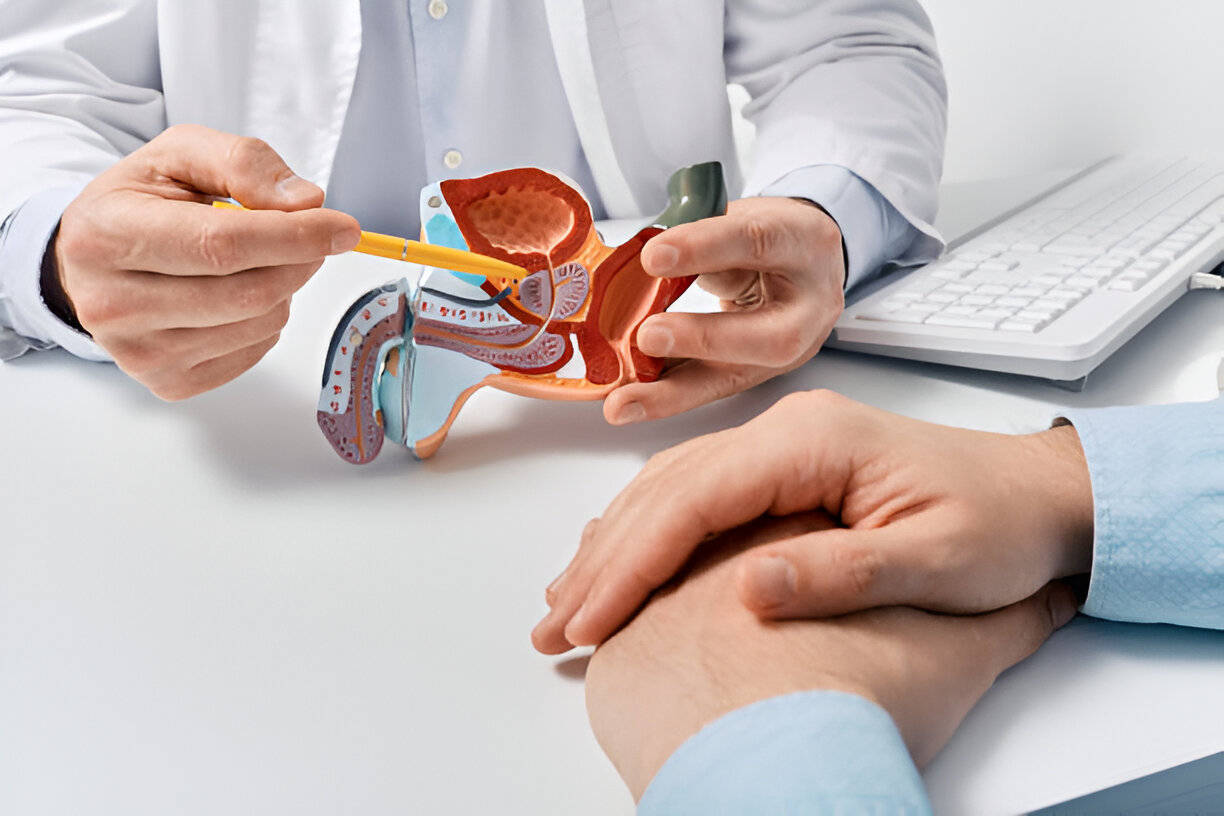
Kidney stones are solid masses that form when substances in the urine become concentrated and crystallize.[1] A stone can stay in the kidney without symptoms, and it causes severe pain when it moves into the ureter, the tube that carries urine to the bladder. This page covers supportive care only, because stones need medical evaluation and sometimes a procedure.
Common symptoms
A stone in the ureter typically causes sudden, severe flank pain that spreads toward the groin and comes in waves (renal colic). People with colic tend to move around constantly, unlike those with other causes of abdominal pain, who stay still.[1]
- Nausea and vomiting
- Blood in the urine, which occurs in most people with a ureteral stone
- Urgency, frequency or burning when a stone nears the bladder[1]
Causes and risk factors
Stones form when dehydration, diet, metabolic disorders or inherited tendencies cause urine to become overloaded with stone-forming minerals.[1] Kidney stones are associated with obesity, diabetes, metabolic syndrome and cardiovascular disease.[1] Some medicines and supplements can also cause stones, including ephedrine and guaifenesin products.[2]
Stones often recur, so prevention matters after a first episode.[1]
How it is diagnosed and treated conventionally
Diagnosis is based on your symptoms, urine tests and imaging, usually a CT scan without contrast.[1] Treatment includes pain relief, anti-nausea medicine, fluids, antibiotics if there is infection, and alpha-blocker medicine that can help a stone pass.[1]
Most stones 5 mm or smaller pass on their own, while stones larger than 7 mm or stones that have not moved in 4 to 6 weeks may need a procedure. The most common are ureteroscopy with laser and extracorporeal shockwave lithotripsy.[1] A 24-hour urine test is suggested after a stone for people at high risk of recurrence, and prevention needs long-term commitment.[1, 3]
Why Kidney Stones calls for a whole-person approach
A stone is a physical blockage, and the treatment of a blocking or infected stone belongs to your physician. What helps prevent the next stone depends on habits and on your own metabolism.
For that reason, supportive care is aimed at pain, anxiety around procedures and prevention habits, in step with your urology team.
Fluids and hydration
High fluid intake is the best-supported way to prevent recurrence. A meta-analysis of randomized trials found that in two trials, drinking enough to produce a urine volume above about 2.5 liters a day, or more than 2 liters of water daily, reduced stone recurrence.[4]
Diet
The same review found that cutting soft drinks lowered risk in people who drank a lot of them, and that limited data suggest benefit from adequate dietary calcium. Other dietary trials were inconclusive.[4] A later review reported that fruits and vegetables and calcium intake were linked to lower stone risk, and sugar-sweetened soda, high protein and a high dietary acid load to higher risk.[5]
Pain and stress during an episode
Stone pain is intense, and procedures such as shockwave lithotripsy bring pain and anxiety. A review of complementary approaches found that acupuncture, acupressure and music reduced pain or anxiety around lithotripsy in most of the studies it included.[6]
Acupuncture as supportive care in Kidney Stones
What the research shows
Acupuncture may help relieve the pain of renal colic. In a double-blind, sham-controlled trial in a Chinese emergency department with 84 patients with suspected renal colic, 64 percent of those given acupuncture had pain relief at 10 minutes, compared with 17 percent given sham acupuncture.[7] A meta-analysis of 13 trials with 1,212 participants found that acupuncture gave a higher response rate and faster pain relief than conventional pain treatments, with fewer side effects. The authors noted that the number and quality of studies were limited.[8]
Around procedures, a meta-analysis of 13 trials with 1,220 participants found that acupuncture during shockwave lithotripsy gave a higher pain relief rate and fewer adverse events than conventional treatment. It did not significantly change the stone-free rate.[9] An earlier review also found no difference in stone-free rates with complementary therapies.[10] A small sham-controlled trial of 51 people found electroacupuncture before percutaneous nephrolithotomy lowered pain scores and opioid use afterward.[11]
Most trials were done in Asia, and acupuncture has not been shown to help a stone pass or dissolve.
How acupuncture may work
How acupuncture relieves stone pain has not been established. The stone-pain trials did not test a mechanism, so any explanation, such as effects on how the nervous system processes pain, is a proposal, not a proven fact.
What treatment involves
Treatment uses fine, sterile, single-use needles, usually left in place for about 20 to 40 minutes. Points may be on the back, abdomen, legs and ears. A course usually involves several visits with reassessment. Acupuncture is used only after a physician has evaluated stone pain, because severe flank pain can also signal infection, blockage or another emergency. It does not replace a visit to the emergency department.
Serious problems from acupuncture are rare. In prospective studies, about 9 in 100 patients had a minor reaction such as brief bleeding, soreness or redness at a needle site, and serious events occurred in about 1 in 10,000 patients.[12] Tell the practitioner first if you have a bleeding disorder, take blood thinners, are pregnant, or have a pacemaker (relevant to electroacupuncture).
Ayurvedic medicine as supportive care in Kidney Stones
The Ayurvedic view
In Ayurveda, urinary stones are called Ashmari, and a review describes them as one of the eight most troublesome diseases in the classical texts.[13] These are traditional categories, not biomedical diagnoses.
Therapies that may be used
Classical Ayurvedic management of stones involves herbal formulas, alkaline liquids and, in the texts, surgical procedures.[13] In practice here, care is chosen for the individual and focuses on:
- Diet and daily routine that support steady hydration and regular meals, in line with your urologist's advice
- Individually prescribed herbs, reviewed against your kidney function and medicines
Panchakarma procedures are not appropriate during an acute stone episode, with pain, fever or obstruction, or during pregnancy, acute illness or frailty.
What the research shows
The research on Ayurveda for kidney stones is limited and mostly concerns herbs, not Ayurvedic treatment as a whole. A review of herbal remedies used in India and China reports that some Ayurvedic preparations, such as Cystone, and the plant Phyllanthus niruri have been tested in clinical trials. It concludes that the evidence is insufficient to establish them as treatments for stones.[13]
Didymocarpus pedicellata, an herb used in Ayurveda, is described in the herbal section below. Ayurvedic reviews also describe alkaline drinks and dietary advice, but we found no controlled trial of Ayurveda as a whole system for stones.
Herbal medicine as supportive care in Kidney Stones
Herbs and formulas that have been studied
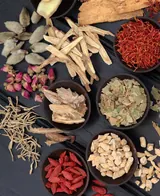
Many plants are traditionally used for stones. The best-known is Phyllanthus niruri (stone breaker, called bhumyamalaki in Ayurveda). Others include a Didymocarpus pedicellata combination preparation, the Chinese Wu-Ling-San formula and the Ayurvedic product Cystone.[13, 14]
What the research shows
The evidence is limited and of low quality. A systematic review of 16 randomized trials found a high risk of bias in every trial. Citrate medicine was better than herbal treatment at reducing stone size, and a Didymocarpus pedicellata preparation did better than placebo for stone clearance and size in the pooled analysis, but the authors warned about low-quality evidence and several sources of bias.[14]
For Phyllanthus niruri, a meta-analysis found only two eligible studies, which reported modest reductions in stone size and number, and the authors called for further study.[15] A systematic review of 16 studies suggested it may be safe and may improve stone-free rates after shockwave lithotripsy, although the studies included both humans and rats.[16] Many other plants show effects in rats given a stone-inducing chemical, which does not show that they work in people.[17]
Safety and herb-drug interactions
Herbs can harm the kidneys, and some herbal products are themselves linked to stones. A review of nephrotoxicity from Chinese herbal medicine lists aristolochic acid and other plant compounds as causes of kidney injury, and nephrolithiasis as one of the reported kidney problems. It notes that contamination, heavy metals, wrong dosing and drug interactions also contribute.[18] Ephedrine-containing supplements have caused stones.[2]
Herbs can also interact with medicines such as warfarin and aspirin.[19] About one fifth of Ayurvedic products bought online contained detectable lead, mercury or arsenic.[20] Any herb should be reviewed against your kidney function and with your physician's agreement before it is used. Tell us if you are pregnant or breastfeeding or have liver or kidney disease. A herbal preparation applied to the skin through transdermal medication therapy has not been studied for stones, and we make no claim for it.
Translating traditional medicine into modern biological language
The links drawn here are interpretation, not equivalence. Chinese medicine often describes stones as damp-heat accumulating in the lower body and obstructing the flow of qi, and acupuncture aims to relax and move the obstruction. Researchers who test herbal remedies look at antioxidant, anti-inflammatory and diuretic effects and at reduced crystal deposition, but much of this comes from animal studies.[13, 17]
In Ayurveda, Ashmari is described in terms of imbalance of the doshas and of the urinary channels. No study has shown that a dosha corresponds to a particular biological process.
How this care fits with your medical care
Kidney stones need medical care, and our role is supportive. Keep your primary physician and urologist, keep taking your prescribed medicines, and do not stop or change them without your prescriber. For a condition like this, we ask that you are under a physician's care for it and that your treating team knows you are receiving complementary care.
Please bring your diagnosis, imaging and stone analysis reports, urine test results, a full list of medicines and supplements, and details of any procedure planned or recently done.
When to seek urgent medical care
Stones can cause infection and blockage that damage the kidney and need urgent treatment.[1]
- Severe pain that is not controlled or that comes with fever or chills
- Fever with a stone, which can signal an infected, blocked kidney (obstructive pyelonephritis) and urosepsis
- Vomiting that prevents keeping down fluids or medicines
- Little or no urine, or inability to urinate
- Blood clots in the urine or heavy bleeding
- Pain in a person with a single kidney, kidney disease or pregnancy
If any of these occur, call 911 or go to the nearest emergency department.
Frequently asked questions
What are kidney stones?
Kidney stones are hard deposits that form when minerals and salts in the urine become concentrated and crystallize. Small ones may pass unnoticed. A stone that moves into the ureter can cause severe, wave-like pain in the flank that spreads to the groin, often with nausea and blood in the urine. Stones need medical evaluation.
Can acupuncture help people with kidney stones?
It may help with the pain. In a sham-controlled emergency department trial, more people had pain relief at 10 minutes with real acupuncture than sham, and meta-analyses of trials suggest faster pain relief and fewer side effects than standard drugs, though study quality is limited. It has not been shown to help stones pass or dissolve.
Do Ayurvedic or herbal medicines dissolve kidney stones?
This is not established. Reviews of herbal trials found low-quality evidence, and reviews of herbs such as Phyllanthus niruri (stone breaker) found few trials with modest results. Some herbs can harm the kidneys or cause stones. No herb should replace stone care from your urologist or be used without your physician’s agreement.
Can I skip a urology visit or procedure if I have acupuncture or take herbs?
No. Do not stop or change prescribed medicines or skip procedures because of complementary care. Acupuncture, Ayurveda and herbal medicine are supportive only. Severe pain, fever with a stone, vomiting or inability to urinate need emergency care.
How soon might I notice a change with acupuncture?
It differs from person to person and no result can be promised. In the emergency department trial, pain relief was measured within 10 to 30 minutes of treatment. For pain that is ongoing or that follows a procedure, acupuncture is usually given as a course of several visits with reassessment along the way.
Does insurance cover acupuncture for kidney stones?
It may. Netra Integrative Health Clinic is in-network with Blue Cross Blue Shield, Cigna and UnitedHealthcare. Other plans may be covered through out-of-network benefits, and we offer a free benefits check. HSA and FSA cards and CareCredit are also accepted. Call (908) 402-7301 to ask about your plan.
References
- Glazer K, Brea IJ, Leslie SW, et al. Ureterolithiasis. StatPearls [Internet]. 2024. PMID 32809509. StatPearls chapter on ureterolithiasis covering symptoms, causes, imaging, standard treatment, stone passage by size, procedures, complications and prevention testing.
- Bennett S, Hoffman N, Monga M. Ephedrine- and guaifenesin-induced nephrolithiasis. J Altern Complement Med. 2004;10(6):967-9. PMID 15673990. Systematic review of ephedrine- and guaifenesin-induced kidney stones in people misusing these supplements.
- Jung H, Andonian S, Assimos D, et al. Urolithiasis: evaluation, dietary factors, and medical management: an update of the 2014 SIU-ICUD international consultation on stone disease. World J Urol. 2017;35(9):1331-1340. PMID 28160089. International consultation review of urolithiasis evaluation, dietary factors and medical management, supporting selective metabolic evaluation of recurrent stone formers.
- Fink HA, Akornor JW, Garimella PS, et al. Diet, fluid, or supplements for secondary prevention of nephrolithiasis: a systematic review and meta-analysis of randomized trials. Eur Urol. 2009;56(1):72-80. PMID 19321253. Meta-analysis of 8 randomized trials (1,855 participants) finding high fluid intake reduced recurrent kidney stones, with inconclusive data on most diet changes.
- Pedro RN, Aslam AU, Bello JO, et al. Nutrients, vitamins, probiotics and herbal products: an update of their role in urolithogenesis. Urolithiasis. 2020;48(4):285-301. PMID 32123972. Systematic review of how nutrients, vitamins, probiotics and herbal products affect stone formation, including fluids, calcium, fruit and vegetables, and soda.
- Saraogi M, Geraghty RM, Hameed B, et al. Role of Complementary Medicine (Music, Acupuncture, Acupressure, TENS and Audio-Visual Distraction) in Shockwave Lithotripsy (SWL): A Systematic Review From EAU Sections of Urolithiasis (EULIS) and Uro-Technology (ESUT). Urology. 2020;145:38-51. PMID 32640263. Systematic review of 23 papers (2,439 participants) of music, acupuncture, acupressure, TENS and distraction during shockwave lithotripsy, mostly reducing pain and anxiety.
- Cao Y, Qu Z, Zhang S, et al. Early acupuncture intervention for pain relief in emergency department patients with suspected acute renal colic caused by urinary calculi: a randomized clinical trial. QJM. 2025;118(5):329-336. PMID 39945796. Double-blind sham-controlled trial of 84 emergency patients with suspected renal colic finding acupuncture gave more pain relief at 10 minutes than sham.
- Chen HT, Kuo CF, Hsu CC, et al. Clinical efficacy of acupuncture for pain relief from renal colic: A meta-analysis and trial sequence analysis. Front Med (Lausanne). 2022;9:1100014. PMID 36698826. Meta-analysis of 13 trials (1,212 participants) finding acupuncture gave faster, more frequent renal colic pain relief than conventional treatment with fewer side effects, limited by study quality.
- Chen HT, Hung KC, Hsu YC, et al. Efficacy of acupuncture for pain relief in patients receiving extracorporeal shock wave lithotripsy: a meta-analysis of randomized controlled studies. Front Med (Lausanne). 2023;10:1114485. PMID 37332744. Meta-analysis of 13 trials (1,220 participants) finding acupuncture during shockwave lithotripsy improved pain relief and adverse events without changing stone-free rate.
- Ngee-Ming G, Tamsin D, Rai BP, et al. Complementary approaches to decreasing discomfort during shockwave lithotripsy (SWL). Urolithiasis. 2014;42(3):189-93. PMID 24648110. Systematic review of 7 trials finding complementary therapy during shockwave lithotripsy reduced analgesia need and anxiety but did not change stone-free rates.
- Capodice JL, Parkhomenko E, Tran TY, et al. A Randomized, Double-Blind, Sham-Controlled Study Assessing Electroacupuncture for the Management of Postoperative Pain after Percutaneous Nephrolithotomy. J Endourol. 2019;33(3):194-200. PMID 30693806. Sham-controlled trial of 51 patients finding electroacupuncture before percutaneous nephrolithotomy reduced postoperative pain and opioid use.
- Bäumler P, Zhang W, Stübinger T, et al. Acupuncture-related adverse events: systematic review and meta-analyses of prospective clinical studies. BMJ Open. 2021;11(9):e045961. PMID 34489268. Systematic review of 21 prospective studies finding minor acupuncture reactions in about 9 percent of patients and serious events in about 1 per 10,000.
- Kasote DM, Jagtap SD, Thapa D, et al. Herbal remedies for urinary stones used in India and China: A review. J Ethnopharmacol. 2017;203:55-68. PMID 28344029. Review of Indian and Chinese herbal remedies for urinary stones, including Ayurvedic and Chinese traditions, Cystone, Wu-Ling-San and Phyllanthus niruri, finding evidence insufficient.
- Monti E, Trinchieri A, Magri V, et al. Herbal medicines for urinary stone treatment. A systematic review. Arch Ital Urol Androl. 2016;88(1):38-46. PMID 27072174. Systematic review of 16 randomized trials of herbal medicines for urinary stones with high bias risk; citrate beat herbs, and a Didymocarpus preparation beat placebo.
- Dhawan S, Olweny EO. Phyllanthus niruri (stone breaker) herbal therapy for kidney stones; a systematic review and meta-analysis of clinical efficacy, and Google Trends analysis of public interest. Can J Urol. 2020;27(2):10162-10166. PMID 32333735. Meta-analysis of two studies of Phyllanthus niruri finding modest reductions in stone size and number, with limited clinical evidence.
- Iregui-Parra J, Rojas Ossa V, Arias Salazar CM, et al. Phyllanthus niruri in the management of nephrolithiasis: A systematic review of the literature. Actas Urol Esp (Engl Ed). 2025;49(6):501791. PMID 40480426. Systematic review of 16 human and rat studies of Phyllanthus niruri suggesting possible safety and benefit after shockwave lithotripsy.
- Khan A, Bashir S, Khan SR. Antiurolithic effects of medicinal plants: results of in vivo studies in rat models of calcium oxalate nephrolithiasis-a systematic review. Urolithiasis. 2021;49(2):95-122. PMID 33484322. Systematic review of 163 rat studies of medicinal plants against calcium oxalate stones, with reduced crystal deposition but no human evidence.
- Yang B, Xie Y, Guo M, et al. Nephrotoxicity and Chinese Herbal Medicine. Clin J Am Soc Nephrol. 2018;13(10):1605-1611. PMID 29615394. Clinical review of nephrotoxicity from Chinese herbal medicine, including aristolochic acid, contamination, nephrolithiasis and drug interactions.
- Hu Z, Yang X, Ho PC, et al. Herb-drug interactions: a literature review. Drugs. 2005;65(9):1239-82. PMID 15916450. Literature review of herb-drug interactions, including bleeding with warfarin or aspirin and other clinically significant interactions.
- Saper RB, Phillips RS, Sehgal A, et al. Lead, mercury, and arsenic in US- and Indian-manufactured Ayurvedic medicines sold via the Internet. JAMA. 2008;300(8):915-23. PMID 18728265. JAMA study finding detectable lead, mercury or arsenic in about one fifth of Ayurvedic medicines purchased over the Internet.
This page is for general education and is not medical advice. Acupuncture, Ayurvedic medicine and herbal medicine are complementary therapies; they do not replace diagnosis or treatment by your physician. Do not stop or change prescribed treatment without talking to your prescriber. In an emergency call 911.