









- What it is: A common term, not a diagnosis, for reduced blood flow to the arms, legs, hands or feet. A frequent cause is peripheral artery disease, in which arteries narrow.
- Common symptoms: Leg pain when walking that eases with rest, cold or numb feet and hands, color changes, slow-healing sores.
- Conventional care: Finding the cause, treating risk factors (smoking, diabetes, blood pressure, cholesterol), walking exercise, medicines, and sometimes procedures to restore flow.
- How integrative care fits: Acupuncture, Ayurvedic therapies and individually prescribed herbs are used alongside medical care for symptoms and general health, not to treat blocked arteries.
- Evidence at a glance: Limited for acupuncture, very limited for Ayurveda, and limited for herbal medicine, with mostly small, low-quality studies.
What is Poor Circulation?
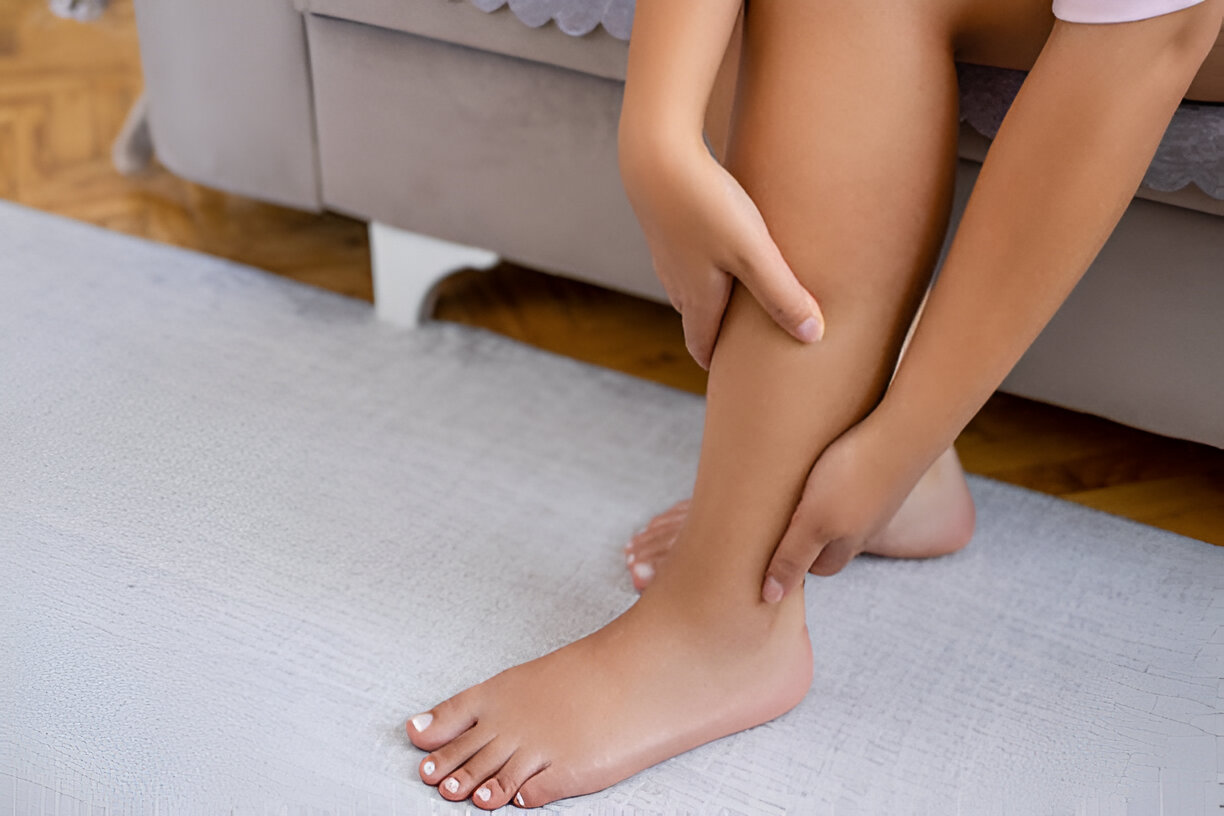
Poor circulation means that blood is not reaching part of the body, usually the legs and feet, as well as it should. It is a descriptive phrase and not a medical diagnosis, and it can come from several different problems in the arteries, veins or small vessels.[1]
The most important cause to rule out is peripheral artery disease (PAD), a progressive disease in which fatty plaque narrows the arteries to the limbs. It is common, affects roughly 200 million people worldwide, and is linked to a higher risk of heart attack and stroke.[1, 2]
Common symptoms
The classic symptom of PAD is leg pain or cramping during walking that settles with rest, called claudication. Some people have no symptoms at all, while others progress to pain at rest, sores that do not heal, or tissue loss in the feet.[1]
- Cold, pale or bluish feet or hands
- Numbness or tingling in the toes or fingers
- Hair loss, thin shiny skin or slow-growing nails on the legs
- Hands or fingers that turn white and then blue in the cold (a pattern called Raynaud's phenomenon, covered on its own page)
Causes and risk factors
Narrowing of arteries by atherosclerosis is the most common cause of poor circulation in the legs, and smoking, diabetes, high blood pressure and high cholesterol are its major risk factors.[3] Prevalence rises steadily with age.[3]
Other causes include blood vessels that overreact to cold or stress, as in Raynaud's phenomenon, and weak vein valves that let blood pool in the legs.[1, 4] Because the causes differ, the cause has to be found before any treatment is chosen.
How it is diagnosed and treated conventionally
PAD is diagnosed with an ankle-brachial index, which compares blood pressure at the ankle with the arm. A value below 0.90 indicates the disease.[2]
Treatment aims to protect the heart and brain as well as the legs. Recommended care includes cholesterol-lowering statins, antiplatelet medicines, blood pressure control, and, for people with diabetes, certain diabetes medicines.[2] Supervised walking exercise and structured home-based walking both improve walking ability, and procedures to reopen arteries are generally kept for symptoms that do not respond to exercise.[2] In one pooled analysis, supervised exercise improved walking distance more than unsupervised exercise.[5]
Why Poor Circulation calls for a whole-person approach
Reduced blood flow rarely has a single cause. Artery disease, blood sugar, blood pressure, smoking, activity level and the way small vessels respond to cold and stress all play a part, so care that looks at only one of them can miss the others.[2, 3]
This is why a physician should look for artery disease first. Complementary care is then aimed at the person's symptoms, comfort, activity and daily habits.
Artery risk factors
Smoking, diabetes, high blood pressure and high cholesterol are the best-established drivers of PAD, and treating them is a core part of medical care.[2, 3]
Walking and physical activity
Regular walking is one of the best-supported treatments for leg symptoms from PAD.[2] Pain with walking can discourage activity, which is one reason pain relief and guidance on staying active matter.
Vessel reactivity and cold sensitivity
Some people have fingers and toes that clamp down too strongly in the cold, as in Raynaud's phenomenon. Calcium channel blockers have clear evidence of benefit for secondary Raynaud's, while for most other treatments the evidence is limited or conflicting.[4]
Inflammation and oxidative stress
Inflammation and oxidative stress are studied as part of how vessels are damaged. In one randomized trial in people with diabetes and mild leg artery disease, markers of inflammation and oxidative stress changed in the group receiving acupuncture plus hydrotherapy, although that trial was not blinded.[6]
Acupuncture for Poor Circulation
What the research shows
The research on acupuncture for poor circulation is limited. A 2005 systematic review of complementary therapies for PAD found acupuncture among the options studied and concluded there was no evidence beyond reasonable doubt that it helps.[7]
A more recent randomized trial of 126 people with type 2 diabetes and mild leg artery disease compared 15 weeks of acupuncture plus hydrotherapy exercise with a control group. The treated group improved on leg blood flow, some physical function measures and a walking questionnaire, and gains held at six weeks. Because acupuncture was combined with exercise, and neither participants nor staff were blinded, the trial cannot show what acupuncture alone contributed.[6]
For cold, color-changing fingers, a meta-analysis of 6 trials (272 people) found acupuncture associated with more remission and fewer daily attacks in Raynaud's syndrome. The authors rated the evidence as very low quality with a high risk of bias.[8] A separate review of secondary Raynaud's found only one acupuncture trial and no clear benefit for treatments other than certain drugs.[4]
How acupuncture may work
Researchers propose that acupuncture may affect blood vessel tone, nerve signaling and inflammation. One review suggests acupuncture may trigger release of nerve peptides that widen blood vessels and have anti-inflammatory effects.[9] An older review noted that studies of acupuncture and blood flow disagree with each other.[10] These are proposed explanations, not settled facts.
What treatment involves
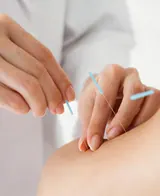
Treatment uses fine, sterile, single-use needles, usually left in place for about 20 to 40 minutes, with several visits and a reassessment. The trial above gave a 30-minute session every two days for 15 weeks.[6]
Serious problems from acupuncture are rare. In prospective studies, about 9 in 100 patients had a minor reaction such as bleeding, pain or redness at a needle site, and serious events occurred in about 1 in 10,000 patients.[11] Tell the practitioner first if you have a bleeding disorder, take blood thinners, are pregnant, have a pacemaker (relevant to electroacupuncture), or have numb feet or open sores, since healing and sensation may be reduced.
Ayurvedic medicine for Poor Circulation
The Ayurvedic view
In Ayurveda, cold, painful or discolored limbs with reduced blood flow are described in terms of Vata, the principle said to govern movement, becoming blocked by vitiated blood. The classical conditions Vatarakta and Raktavrita Vata are the ones most often compared to circulatory disorders.[12, 13] These are traditional categories, not biomedical diagnoses.
Therapies that may be used
Care is individualized and traditionally combines:
- Diet and daily routine intended to calm Vata, with warm, regular meals and gentle daily movement
- Warm herbal oil massage of the limbs
- Herbs and classical formulas, prescribed individually by a qualified practitioner
- Panchakarma procedures in selected cases
Panchakarma is not appropriate during pregnancy, acute illness or frailty, or when ulcers, infection or suspected severe artery blockage have not been medically assessed.
What the research shows
The research on Ayurveda for circulatory problems is very limited. We found no placebo-controlled trials of Ayurvedic treatment for PAD. One study of at least 30 people with a condition the authors compared to PAD gave two classical guggulu formulas and reported improvement in both groups, but it had no placebo group and was small.[12]
A 2024 observational study of 25 people with chronic venous insufficiency, a vein condition, reported improved symptom scores with a bark extract of Terminalia arjuna. It had no control group.[13] Studies like these cannot show that a treatment caused the change.
Herbal medicine for Poor Circulation
Herbs and formulas that have been studied
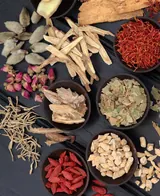
Several herbal products have been tested for the leg pain of PAD or for cold hands and feet. Ginkgo biloba and Padma 28, a Tibetan herbal formula, have been tested in trials for intermittent claudication.[7, 14] Chinese formulas such as Danggui Sini Tang and Buyang Huanwu Tang have been tested for Raynaud's phenomenon.[15]
What the research shows
The evidence is limited and of low quality. A 2013 Cochrane review of 14 ginkgo trials (739 people) found no evidence of a clinically significant benefit for walking distance in PAD, and noted that publication bias may have inflated the effect.[16] An earlier review had been more positive.[7]
A Cochrane review of 5 trials (365 people) of Padma 28 found longer walking distances in the short term but rated the evidence very low quality and called the clinical importance questionable.[14]
For cold hands and feet, a meta-analysis of 14 trials (974 people) found herbal medicine reduced cold hypersensitivity and Raynaud's symptoms, but all studies had a high risk of bias.[17] A review of 8 trials (674 people) of Chinese herbs for primary Raynaud's reached a similar conclusion: possibly helpful, but inconclusive because of weak methods.[15]
Safety and herb-drug interactions
People with poor circulation often take blood thinners or antiplatelet medicines, and several herbs can add to bleeding risk. Case reports describe bleeding when warfarin was combined with ginkgo, dan shen, dang gui, ginger, garlic and ginseng, and ginkgo has caused bleeding when combined with aspirin.[18, 19] Herbs can also interact with blood pressure and diabetes medicines.[19]
In one study, about one fifth of Ayurvedic products bought online contained detectable lead, mercury or arsenic.[20] Herbs should come from tested sources and be prescribed individually. Tell us if you are pregnant or breastfeeding, have liver or kidney disease, or have surgery planned. Transdermal medication therapy, an herbal preparation applied to the skin, is also offered, and has not been studied for circulation.
Translating traditional medicine into modern biological language
The links drawn here are interpretation, not equivalence. Chinese medicine describes cold limbs and fixed pain as stagnation of qi and blood, or as cold and yang deficiency in the channels. Researchers measure things that loosely parallel this picture, such as blood vessel reactivity, skin temperature, blood flow and inflammatory markers.[9, 17]
Ayurveda's Vata and blocked-blood concepts describe cold, dry, painful limbs. No study has shown that a dosha or a pattern corresponds to a specific biological process, or to narrowed arteries.
How this care fits with your medical care
Integrative care for poor circulation is complementary. We do not diagnose the cause of reduced blood flow, so new cold, painful or discolored limbs, or sores on the feet, need medical evaluation first. Keep your physician, vascular specialist and any prescribed medicines, and do not stop or change them without your prescriber.
For a condition like this, we ask that you are under a physician's care for it and that your treating team knows you are receiving complementary care. Please bring your diagnosis, any ankle-brachial index or imaging results, a full list of medicines and supplements, and your blood sugar, blood pressure and cholesterol results if you have them.
When to seek urgent medical care
Sudden or severe loss of blood flow to a limb is an emergency, and PAD itself raises the risk of heart attack and stroke.[1]
- A suddenly cold, pale, painful or numb arm or leg
- Pain in the foot or leg at rest, especially at night
- A sore, blackened skin or an infection on the toes or foot that is not healing
- Chest pain, shortness of breath, face drooping or sudden weakness on one side
- A leg that is suddenly swollen, red and painful
If any of these occur, call 911 or go to the nearest emergency department.
Frequently asked questions
What is Poor Circulation?
Poor circulation is a common phrase for reduced blood flow, usually to the legs and feet or the hands. It is not a diagnosis in itself. A frequent cause is peripheral artery disease, where arteries narrow, and other causes include vessel spasm in the cold and vein problems. A physician needs to find the cause.
Can acupuncture help with Poor Circulation?
The evidence is limited. One randomized trial in people with diabetes and mild leg artery disease combined acupuncture with exercise and reported benefit, but it could not separate the effect of each. For Raynaud’s, small low-quality trials suggest possible benefit. Acupuncture does not open blocked arteries and is used alongside medical care.
Do Ayurvedic or herbal medicines work for poor circulation?
The evidence is thin. Ayurveda has only small studies without placebo groups. Ginkgo did not show a clinically significant benefit for walking distance in a Cochrane review, and Padma 28 and Chinese formulas rest on low-quality trials. Herbs can interact with blood thinners, so they must be checked against your medicines.
Can I stop my blood thinner, statin or other medicine if I use this care?
No. Acupuncture, Ayurveda and herbal medicine are complementary care and not an alternative to medicine or procedures for artery disease. Do not stop or change prescribed medicines without talking to your prescriber, and keep follow-up with your physician or vascular specialist.
How soon might I notice a change?
It differs from person to person, and no result can be promised. In the one acupuncture trial in leg artery disease, treatment ran every other day for 15 weeks. We reassess after a short course of visits to see whether treatment is helping, and we would not delay medical evaluation of your symptoms.
Does insurance cover acupuncture for poor circulation?
It may. Netra Integrative Health Clinic is in-network with Blue Cross Blue Shield, Cigna and UnitedHealthcare. Other plans may be covered through out-of-network benefits, and we offer a free benefits check. HSA and FSA cards and CareCredit are also accepted. Call (908) 402-7301 to ask about your plan.
References
- Gul F, Janzer SF. Peripheral Vascular Disease. StatPearls [Internet]. 2023. PMID 32491414. StatPearls chapter on peripheral vascular disease covering peripheral arterial disease, its range of presentations from no symptoms to limb loss, and its link to heart attack and stroke.
- McDermott MM. Peripheral Artery Disease in the Legs. N Engl J Med. 2026;394(5):486-496. PMID 41604641. 2026 NEJM review of leg peripheral artery disease: ankle-brachial index diagnosis, medicines to prevent cardiovascular events, walking exercise, and when to consider revascularization.
- Song P, Rudan D, Zhu Y, et al. Global, regional, and national prevalence and risk factors for peripheral artery disease in 2015: an updated systematic review and analysis. Lancet Glob Health. 2019;7(8):e1020-e1030. PMID 31303293. Systematic review estimating global PAD prevalence, rising with age, and identifying smoking, diabetes, hypertension and high cholesterol as major risk factors.
- Huisstede BM, Hoogvliet P, Paulis WD, et al. Effectiveness of interventions for secondary Raynaud's phenomenon: a systematic review. Arch Phys Med Rehabil. 2011;92(7):1166-80. PMID 21704799. Systematic review of treatments for secondary Raynaud's phenomenon finding clear benefit for calcium channel blockers and iloprost and limited or no evidence for most other interventions, including acupuncture.
- Vemulapalli S, Dolor RJ, Hasselblad V, et al. Supervised vs unsupervised exercise for intermittent claudication: A systematic review and meta-analysis. Am Heart J. 2015;169(6):924-937.e3. PMID 26027632. Meta-analysis of 27 studies finding supervised exercise improved walking distance in intermittent claudication more than unsupervised exercise, with no difference in general quality of life.
- Qi Z, Pang Y, Lin L, et al. Acupuncture Combined with Hydrotherapy in Diabetes Patients with Mild Lower-Extremity Arterial Disease: A Prospective, Randomized, Nonblinded Clinical Study. Med Sci Monit. 2018;24:2887-2900. PMID 29735963. Randomized, nonblinded trial of 126 diabetic patients with mild leg artery disease; acupuncture plus hydrotherapy improved blood flow, function and inflammatory markers versus control.
- Pittler MH, Ernst E. Complementary therapies for peripheral arterial disease: systematic review. Atherosclerosis. 2005;181(1):1-7. PMID 15939048. Systematic review of complementary therapies for PAD; ginkgo and Padma 28 looked promising for claudication, while acupuncture and other options lacked convincing evidence.
- Zhou F, Huang E, Zheng E, et al. The use of acupuncture in patients with Raynaud's syndrome: a systematic review and meta-analysis of randomized controlled trials. Acupunct Med. 2023;41(2):63-72. PMID 35608095. Meta-analysis of 6 acupuncture trials (272 people) in Raynaud's syndrome suggesting benefit, with very low-quality evidence and high risk of bias.
- Zijlstra FJ, van den Berg-de Lange I, Huygen FJ, et al. Anti-inflammatory actions of acupuncture. Mediators Inflamm. 2003;12(2):59-69. PMID 12775355. Review of proposed anti-inflammatory mechanisms of acupuncture, including nerve peptide release causing vessel widening and effects on inflammatory signaling molecules.
- Balogun JA, Biasci S, Han L. The effects of acupuncture, electroneedling and transcutaneous electrical stimulation therapies on peripheral haemodynamic functioning. Disabil Rehabil. 1998;20(2):41-8. PMID 9494036. Review of acupuncture, electroneedling and electrical stimulation effects on peripheral blood flow, noting controversy in the literature and pitfalls in existing studies.
- Bäumler P, Zhang W, Stübinger T, et al. Acupuncture-related adverse events: systematic review and meta-analyses of prospective clinical studies. BMJ Open. 2021;11(9):e045961. PMID 34489268. Systematic review of 21 prospective studies finding minor acupuncture reactions in about 9 percent of patients and serious events in about 1 per 10,000.
- Ramachandran AP, Prasad SM, Prasad UN, et al. A comparative study of Kaishora Guggulu and Amrita Guggulu in the management of Utthana Vatarakta. Ayu. 2010;31(4):410-6. PMID 22048531. Small comparative study of two guggulu formulas for Utthana Vatarakta, which the authors liken to atherosclerotic PAD; both improved, with no placebo group.
- Pratap Shankar KM, Ashwathykutty V. Effectiveness of herbal drug Terminalia Arjuna in chronic venous insufficiency - A prospective observational study. J Vasc Nurs. 2024;42(1):53-59. PMID 38555178. Observational study of 25 patients with chronic venous insufficiency given Terminalia arjuna extract, reporting improved clinical severity scores without a control group.
- Stewart M, Morling JR, Maxwell H. Padma 28 for intermittent claudication. Cochrane Database Syst Rev. 2016;3(3):CD007371. PMID 27021597. Cochrane review of 5 trials (365 people) of the Tibetan formula Padma 28 for claudication, with longer walking distance but very low-quality evidence.
- Zhang J, Hu J, He X, et al. Effectiveness of Chinese herbal medicine for primary Raynaud's phenomenon: a systematic review and Meta-analysis of randomized controlled trials. J Tradit Chin Med. 2020;40(4):509-517. PMID 32744019. Meta-analysis of 8 trials (674 people) of Chinese herbal medicine for primary Raynaud's finding possible benefit but inconclusive evidence because of poor study quality.
- Nicolaï SP, Kruidenier LM, Bendermacher BL, et al. Ginkgo biloba for intermittent claudication. Cochrane Database Syst Rev. 2013;2013(6):CD006888. PMID 23744597. Cochrane review of 14 trials (739 people) of Ginkgo biloba for claudication finding no clinically significant benefit, with likely publication bias.
- Yu JS, Lee D, Hyun D, et al. Herbal Medicines for Cold Hypersensitivity in the Hands and Feet: A Systematic Review and Meta-Analysis. J Altern Complement Med. 2018;24(12):1150-1158. PMID 29993255. Meta-analysis of 14 trials (974 people) of herbal medicine for cold hands and feet and Raynaud's finding reduced symptoms but high risk of bias in all studies.
- Milić N, Milosević N, Golocorbin Kon S, et al. Warfarin interactions with medicinal herbs. Nat Prod Commun. 2014;9(8):1211-6. PMID 25233607. Review of reported interactions between warfarin and medicinal herbs, including bleeding events with ginseng, dan shen, ginkgo, dang gui, ginger, garlic and others.
- Hu Z, Yang X, Ho PC, et al. Herb-drug interactions: a literature review. Drugs. 2005;65(9):1239-82. PMID 15916450. Literature review of herb-drug interactions including bleeding with ginkgo and warfarin or aspirin and garlic effects on warfarin, mostly from case reports.
- Saper RB, Phillips RS, Sehgal A, et al. Lead, mercury, and arsenic in US- and Indian-manufactured Ayurvedic medicines sold via the Internet. JAMA. 2008;300(8):915-23. PMID 18728265. JAMA study finding detectable lead, mercury or arsenic in about one fifth of Ayurvedic medicines purchased over the Internet.
This page is for general education and is not medical advice. Acupuncture, Ayurvedic medicine and herbal medicine are complementary therapies; they do not replace diagnosis or treatment by your physician. Do not stop or change prescribed treatment without talking to your prescriber. In an emergency call 911.