













- What it is: A sound made when the soft tissues of the nose and throat vibrate during sleep; it can be harmless (primary snoring) or a sign of sleep-disordered breathing.
- Common symptoms: Loud breathing noise in sleep, a bed partner's disturbed sleep, dry mouth on waking, and, in sleep apnea, witnessed pauses in breathing and daytime sleepiness.
- Conventional care: A sleep evaluation, weight and sleep-position changes, treating nasal blockage, dental oral appliances, CPAP for sleep apnea, and sometimes surgery.
- How integrative care fits: Acupuncture, herbs and Ayurvedic therapies are used only alongside a medical evaluation and are not a replacement for CPAP or other treatment for sleep apnea.
- Evidence at a glance: No trials of acupuncture, Ayurveda or herbs for simple snoring; limited research in sleep apnea, with low-quality evidence and mixed results.
What is Snoring?
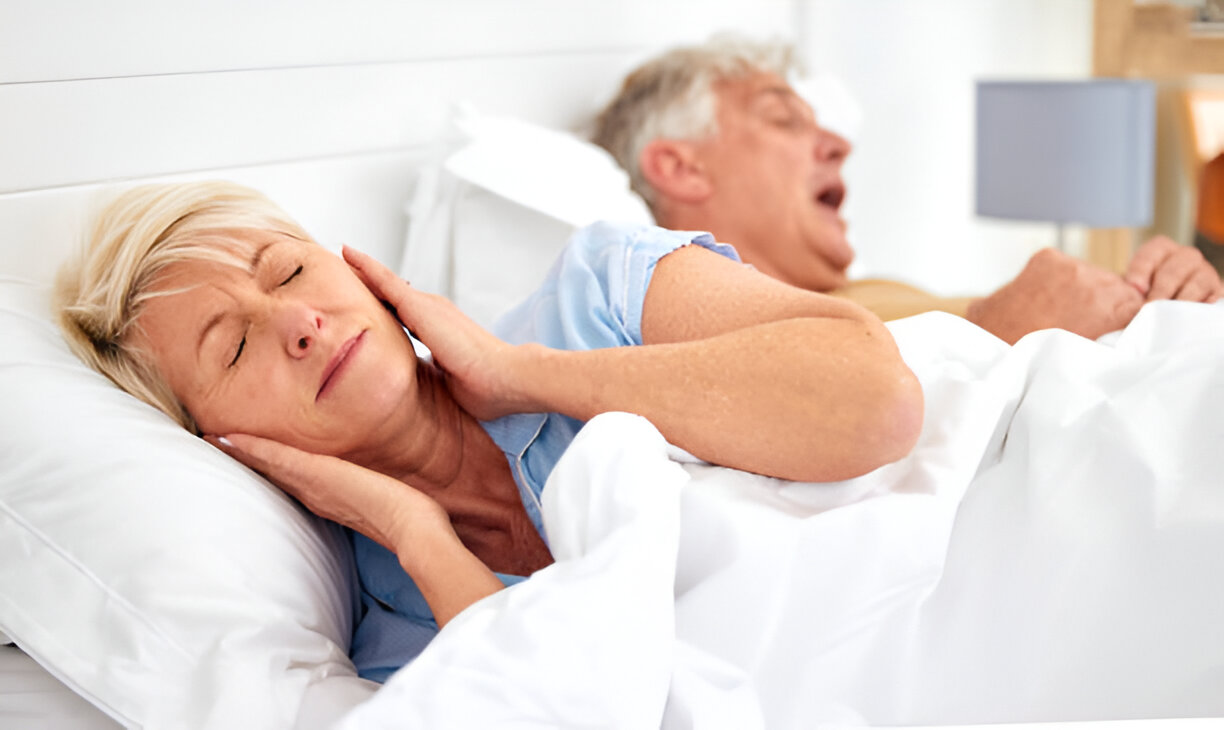
Snoring is the sound made when the soft tissues of the nose and throat vibrate as you breathe during sleep. It can be harmless (primary or simple snoring), or it can be a symptom of sleep-disordered breathing such as obstructive sleep apnea.[1] It is common, and about half of adults over 60 snore.[2]
Common symptoms
The main symptom is a loud breathing noise during sleep, often noticed first by a bed partner. Snoring affects the people who share your bedroom as well as you.[2]
- Loud, regular snoring that disturbs a partner[2]
- Mouth breathing, which can point to a blocked nose[1]
- Pauses in breathing seen by a partner, gasping, and unrefreshing sleep, which suggest sleep apnea[3]
- Excessive daytime sleepiness[3]
Causes and risk factors
Snoring happens when the airway narrows during sleep, and the cause may lie in the structure of the nose, mouth and throat or in how the muscles behave.[1] Researchers separate snoring into anatomic and non-anatomic types, and personalized treatment depends on which applies.[1]
Simple snoring and sleep apnea sit on a continuum, and snoring can be a risk factor for the later development of sleep apnea.[4] Researchers still lack an agreed definition of simple snoring, and the apnea-hypopnea index cut-offs used to separate it from sleep apnea vary between studies.[5]
How it is diagnosed and treated conventionally
A physician evaluates snoring by reviewing sleep habits, other health conditions and the upper airway, and may order an overnight sleep study to check for sleep apnea.[1] This matters because snoring can be a sign of obstructive sleep apnea, which affects cardiovascular health, quality of life and driving safety.[3]
For snoring without sleep apnea, a sleep physician can prescribe a dental oral appliance, and guidelines recommend oral appliances over no treatment for adults who ask for treatment.[6] For sleep apnea, positive airway pressure (CPAP) performed best in a large network meta-analysis, and oral appliances may be an alternative for people who cannot tolerate it.[7]
Why Snoring calls for a whole-person approach
Snoring is rarely caused by one thing. Nasal blockage, body weight, sleep position, age, alcohol and the muscle tone of the throat can each contribute.
Care that looks at these linked factors is a reasonable addition to a medical evaluation. The factors below describe what has been reported, and they are not a promise that changing one will stop snoring.
Nasal airway
A blocked nose can push people to breathe through the mouth, and mouth breathing is linked with snoring and with the progression of sleep-disordered breathing.[1] Nasal problems should be assessed by a physician.
Weight and sleep position
Physicians commonly look at body weight, sleep position and alcohol use when planning care. The causes and consequences of simple snoring are incompletely understood.[4]
Sleep quality and daytime function
Snoring can disturb sleep for both the snorer and the partner.[2] Whether simple snoring on its own causes daytime sleepiness or cardiovascular and metabolic disease is still debated, so those symptoms deserve a check for sleep apnea.[4]
Throat muscle function
Exercises for the mouth and throat muscles, called myofunctional therapy, have been studied. In sleep apnea trials, myofunctional therapy probably reduced snoring intensity slightly, and its effect on snoring frequency was very uncertain.[8] In a trial of 40 obese people who snored, myofunctional therapy did not significantly change measured snoring.[9]
Acupuncture for Snoring
What the research shows
No clinical trials of acupuncture for snoring itself were found, so its effect on snoring is unknown. The research that exists is in obstructive sleep apnea, and it is limited.
A meta-analysis of 9 trials with 584 participants found lower apnea-hypopnea index and sleepiness scores with acupuncture, but the quality of evidence was mainly low to very low, and the sleepiness result reversed in a sensitivity analysis.[10] A later meta-analysis of 19 trials with 1,365 participants reported similar improvements.[11] A large network meta-analysis concluded that acupuncture might improve apnea-related outcomes, but that the evidence was weak and that CPAP performed best.[7]
Individual trials disagree. A pilot trial of 36 people with moderate sleep apnea (26 completed it) found fewer breathing events with acupuncture than with sham.[12] A small trial of 44 hypertensive people with mild to moderate sleep apnea found no difference from sham after 10 sessions.[13]
How acupuncture may work
How acupuncture might act on snoring or sleep apnea has not been established. One meta-analysis reported lower inflammatory markers after acupuncture, but this is an association in the reported studies and not proof of how it works.[11]
What treatment involves
Treatment uses fine, sterile, single-use needles placed at points on the head, face, hands and legs, usually left in place for about 20 to 40 minutes. Two of the sleep apnea trials above gave about 10 sessions.[12, 13] A course usually involves several visits with reassessment.
Serious problems from acupuncture are rare. In prospective studies, about 9 in 100 patients had a minor reaction such as brief bleeding, soreness or redness at a needle site, and serious events occurred in about 1 in 10,000 patients.[14] Tell the practitioner first if you have a bleeding disorder, take blood thinners, are pregnant, or have a pacemaker (relevant to electroacupuncture).
Ayurvedic medicine for Snoring
The Ayurvedic view
Ayurveda traditionally links heavy, noisy breathing in sleep to excess Kapha, the principle associated with heaviness and mucus, which can congest the nose and throat. These are traditional categories for choosing treatment, not biomedical diagnoses.
Therapies that may be used
Care is chosen for the individual and traditionally combines:
- Diet and daily routine intended to reduce Kapha, such as lighter evening meals, regular sleep hours and avoiding heavy, cold or oily foods late in the day
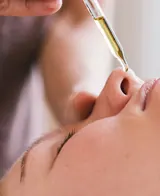
- Steam inhalation and nasal care, including Nasya (herbal oil placed in the nose) and Jala Neti (salt-water nasal rinse)[15]
- Breathing practices from the yoga tradition, taught by a qualified instructor
Panchakarma procedures are not appropriate during pregnancy, acute illness or frailty. Nasal therapies should wait until a physician has evaluated the cause of the snoring.
What the research shows
There are no clinical trials of Ayurvedic treatment for snoring or sleep apnea. A PubMed search found none, so any benefit is unknown. A review of Jala Neti said that most studies support its use in sinus and allergic conditions, and called for randomized trials. The review does not report any results for snoring.[15]
Herbal medicine for Snoring
Herbs and formulas that have been studied
No herbs have been studied for simple snoring. Chinese herbal formulas have been studied in obstructive sleep apnea, and the formulas vary and are chosen by pattern.[16]
What the research shows
The evidence is limited and is for sleep apnea, not snoring. A systematic review of 58 trials with 4,590 participants found that Chinese herbal medicine lowered the apnea-hypopnea index more than placebo in 7 studies, and that herbs combined with CPAP reduced it more than CPAP alone in 28 studies. The authors concluded herbs may be an option for sleep apnea.[16] The placebo comparison rested on only 7 studies with 583 participants, so it should be read cautiously.
Treatment of sleep apnea should be directed by a sleep physician, and herbs should never replace CPAP or other prescribed treatment.[7]
Safety and herb-drug interactions
Herbs are active substances and can interact with medicines. Case reports describe serious bleeding or clotting events when warfarin was combined with herbs including dan shen, dang gui, ginger, ginseng and Boswellia.[17] Sedating herbs or supplements may be unsuitable for people with sleep apnea, so tell your practitioner about any sleep medicines you use.
In one study, about one fifth of Ayurvedic products bought online contained detectable lead, mercury or arsenic.[18] Herbs should come from tested sources and be prescribed individually. Tell us if you are pregnant or breastfeeding, have liver or kidney disease, take blood thinners, or have surgery planned.
Translating traditional medicine into modern biological language
The links drawn here are interpretation, not equivalence. Chinese medicine describes snoring and noisy breathing in terms of phlegm and dampness blocking the airway, sometimes with spleen qi weakness. Researchers might loosely compare this with nasal congestion, excess tissue bulk and low muscle tone around the airway.[1]
Ayurveda's excess Kapha likewise describes heaviness and congestion. No study has shown that a dosha or a qi pattern corresponds to a specific biological process in snoring.
How this care fits with your medical care
Integrative care for snoring is complementary. Snoring should be evaluated by a physician to check for sleep apnea, and anyone who is prescribed CPAP or an oral appliance should keep using it as directed.[3, 7] Do not stop or change prescribed treatment without your prescriber. We do not diagnose sleep apnea.
Please bring your diagnosis, any sleep study report, a full list of medicines and supplements, and notes from your bed partner about your sleep. A child who snores regularly should be seen by a pediatrician.
When to seek urgent medical care
Loud snoring is not an emergency by itself, but some signs point to sleep apnea or another serious problem.[3]
- Pauses in breathing, choking or gasping during sleep
- Falling asleep while driving or at work
- Excessive daytime sleepiness, morning headaches or confusion
- Chest pain, an irregular heartbeat or severe shortness of breath at night
- Sudden swelling of the face or throat, or severe trouble breathing
If any of these occur, call 911 or go to the nearest emergency department.
Frequently asked questions
What is snoring?
Snoring is the sound made when soft tissues of the nose and throat vibrate during sleep. It can be harmless, called primary snoring, or a sign of sleep-disordered breathing such as obstructive sleep apnea. About half of adults over 60 snore. A physician can tell which type you have, often with a sleep study.
Can acupuncture help with snoring?
No trials of acupuncture for snoring itself were found, so its effect on snoring is unknown. In sleep apnea, small trials and meta-analyses report some improvement, but quality is low and results are mixed. Acupuncture may be used as complementary care, not in place of a sleep evaluation or CPAP.
Does Ayurvedic or herbal medicine work for snoring?
There are no clinical trials of Ayurvedic treatment or herbs for snoring. Chinese herbs have been studied in sleep apnea with some positive results, but this is a different condition. Herbs should be prescribed individually and checked against your medicines.
Can I stop using CPAP if I have acupuncture?
No. Acupuncture, Ayurveda and herbal medicine are complementary care. CPAP performed best in a large comparison of treatments for sleep apnea. Do not stop or change prescribed treatment without talking to your prescriber.
How soon might I notice a change with acupuncture?
It differs from person to person and no result can be promised. Two of the sleep apnea trials used about 10 sessions. Acupuncture is usually given as a course of several visits with reassessment along the way.
Does insurance cover acupuncture for snoring?
It may. Netra Integrative Health Clinic is in-network with Blue Cross Blue Shield, Cigna and UnitedHealthcare. Other plans may be covered through out-of-network benefits, and we offer a free benefits check. HSA and FSA cards and CareCredit are also accepted. Call (908) 402-7301 to ask about your plan.
References
- Yap YY. Evaluation and Management of Snoring. Sleep Med Clin. 2022;17(1):25-39. PMID 35216759. Review of snoring evaluation and management distinguishing harmless snoring from sleep-disordered breathing, anatomic and non-anatomic phenotypes, and mouth breathing as a sign of nasal obstruction.
- Yaremchuk K. Why and When to Treat Snoring. Otolaryngol Clin North Am. 2020;53(3):351-365. PMID 32336469. Review noting that about half of adults over 60 snore and discussing the effects of snoring on partners and when to treat.
- Slowik JM, Sankari A, Collen JF. Obstructive Sleep Apnea. StatPearls [Internet]. 2025. PMID 29083619. StatPearls chapter on obstructive sleep apnea covering snoring, witnessed apneas, daytime sleepiness and effects on cardiovascular health and driving safety.
- Deary V, Ellis JG, Wilson JA, et al. Simple snoring: not quite so simple after all?. Sleep Med Rev. 2014;18(6):453-62. PMID 24888523. Review of simple snoring, its prevalence, risk factors and correlates, and the view that it lies on a continuum with obstructive sleep apnea.
- De Meyer MMD, Jacquet W, Vanderveken OM, et al. Systematic review of the different aspects of primary snoring. Sleep Med Rev. 2019;45:88-94. PMID 30978609. Systematic review of definitions of primary snoring finding no consensus, with cut-offs for apnea-hypopnea index ranging widely.
- Ramar K, Dort LC, Katz SG, et al. Clinical Practice Guideline for the Treatment of Obstructive Sleep Apnea and Snoring with Oral Appliance Therapy: An Update for 2015. J Clin Sleep Med. 2015;11(7):773-827. PMID 26094920. AASM and AADSM guideline recommending oral appliances for adults who request treatment of primary snoring and for CPAP-intolerant sleep apnea.
- Papageorgiou SN, Konstantinidis I, Papadopoulou AK, et al. Comparative efficacy of non-pharmacological interventions for adults with sleep apnea: A systematic review and network meta-analysis. Sleep Med. 2025;128:130-138. PMID 39933212. Network meta-analysis of 197 trials of sleep apnea treatments finding CPAP performed best, oral appliances next, and acupuncture possibly helpful with weak evidence.
- Rueda JR, Mugueta-Aguinaga I, Vilaró J, et al. Myofunctional therapy (oropharyngeal exercises) for obstructive sleep apnoea. Cochrane Database Syst Rev. 2020;11(11):CD013449. PMID 33141943. Cochrane review of 9 trials of myofunctional therapy for sleep apnea, finding reduced sleepiness and a slight reduction in snoring intensity.
- Sperger T, Araujo ACF, Soares CFP. Effect of myofunctional therapy on snoring in obese patients: a randomized trial. Sleep Sci. 2022;15(4):421-428. PMID 36419818. Randomized trial of myofunctional therapy in 40 obese people who snore, finding no significant effect on measured snoring.
- Wang L, Xu J, Zhan Y, et al. Acupuncture for Obstructive Sleep Apnea (OSA) in Adults: A Systematic Review and Meta-Analysis. Biomed Res Int. 2020;2020:6972327. PMID 32258139. Meta-analysis of 9 trials (584 participants) of acupuncture for sleep apnea finding lower apnea-hypopnea index and sleepiness, with low to very low quality evidence.
- Lin J, Kong Y, Chen H, et al. Effects of acupuncture on obstructive sleep apnea-hypopnea syndrome: A meta-analysis. Res Nurs Health. 2023;46(2):220-235. PMID 36808731. Meta-analysis of 19 trials (1,365 participants) of acupuncture for sleep apnea reporting lower apnea index, sleepiness and inflammatory markers.
- Freire AO, Sugai GC, Chrispin FS, et al. Treatment of moderate obstructive sleep apnea syndrome with acupuncture: a randomised, placebo-controlled pilot trial. Sleep Med. 2007;8(1):43-50. PMID 17023212. Single-blind pilot trial of 36 people with moderate sleep apnea finding acupuncture reduced breathing events compared with sham acupuncture.
- Silva MVFP, Lustosa TC, Arai VJ, et al. Effects of acupuncture on obstructive sleep apnea severity, blood pressure control and quality of life in patients with hypertension: A randomized controlled trial. J Sleep Res. 2020;29(2):e12954. PMID 31868987. Sham-controlled trial of 44 hypertensive people with sleep apnea finding no benefit from 10 acupuncture sessions on apnea severity, blood pressure or quality of life.
- Bäumler P, Zhang W, Stübinger T, et al. Acupuncture-related adverse events: systematic review and meta-analyses of prospective clinical studies. BMJ Open. 2021;11(9):e045961. PMID 34489268. Systematic review of 21 prospective studies finding minor acupuncture reactions in about 9 percent of patients and serious events in about 1 per 10,000.
- Meera S, Vandana Rani M, Sreedhar C, et al. A review on the therapeutic effects of NetiKriya with special reference to JalaNeti. J Ayurveda Integr Med. 2020;11(2):185-189. PMID 30616871. Review of Jala Neti nasal rinsing, a yoga and Ayurvedic practice, finding most studies supportive in sinus conditions but calling for randomized trials.
- Birling Y, Wu Y, Rahimi M. Chinese herbal medicine for obstructive sleep apnoea: a systematic review with meta-analysis. Sleep Breath. 2024;29(1):56. PMID 39665846. Systematic review of 58 trials of Chinese herbal medicine in sleep apnea finding lower apnea-hypopnea index versus placebo and when added to CPAP.
- Milić N, Milosević N, Golocorbin Kon S, et al. Warfarin interactions with medicinal herbs. Nat Prod Commun. 2014;9(8):1211-6. PMID 25233607. Review of reported interactions between warfarin and medicinal herbs, including bleeding or clotting events with dan shen, dang gui, ginger, ginseng and Boswellia.
- Saper RB, Phillips RS, Sehgal A, et al. Lead, mercury, and arsenic in US- and Indian-manufactured Ayurvedic medicines sold via the Internet. JAMA. 2008;300(8):915-23. PMID 18728265. JAMA study finding detectable lead, mercury or arsenic in about one fifth of Ayurvedic medicines purchased over the Internet.
This page is for general education and is not medical advice. Acupuncture, Ayurvedic medicine and herbal medicine are complementary therapies; they do not replace diagnosis or treatment by your physician. Do not stop or change prescribed treatment without talking to your prescriber. In an emergency call 911.