



















- What it is: Inflammation of the throat (pharyngitis) or tonsils (tonsillitis) that causes pain, especially when swallowing. Most cases are viral.
- Common symptoms: Throat pain, painful swallowing, red or swollen tonsils, swollen neck glands, fever, and sometimes white patches on the tonsils.
- Conventional care: Rest, fluids and pain relievers for viral cases; testing for group A strep and antibiotics when bacterial infection is likely.
- How integrative care fits: Acupuncture, Ayurvedic therapies and individually prescribed herbs are used alongside medical care to help with throat pain and discomfort.
- Evidence at a glance: Limited for acupuncture, with one pooled review of trials that compared acupuncture with antibiotics, not placebo, and one small sham-controlled trial that found no clear benefit; limited for herbal medicine; very limited for Ayurveda.
What is Sore Throat?
A sore throat is pain, scratchiness or irritation in the throat, often worse when swallowing, and it usually comes from inflammation of the pharynx (pharyngitis) or the tonsils (tonsillitis).[1, 2] Most cases are caused by viruses and get better with supportive care, while a minority are caused by bacteria, most often group A Streptococcus.[1, 2]
Common symptoms
The main symptom is throat pain, which is often worse when swallowing. Tonsillitis commonly adds swollen tonsils, sometimes with white patches (exudate).[2]
- Fever and swollen, tender glands in the neck
- Hoarseness, cough, runny nose or red eyes, which point toward a virus rather than strep[1]
- Difficulty swallowing
Causes and risk factors
Viral infections cause most sore throats, and non-infectious causes also exist.[1] Group A Streptococcus is the leading bacterial cause. Less often, other bacteria, including some sexually transmitted infections, are responsible.[1] In the United States, only about 10 percent of adults who seek care for a sore throat have strep throat.[3]
Strep throat is more likely in children aged 3 to 15 years, and school-age children have the most tonsillitis.[2, 3] Close contact with infected people is the main route of spread.
How it is diagnosed and treated conventionally
Doctors use your symptoms and an exam, sometimes with scoring rules such as the Centor criteria, to decide who needs a strep test.[1, 3] Examination alone cannot reliably identify strep, so a rapid antigen test, a molecular test or a throat culture is used when bacterial infection is possible.[1]
Without red-flag features, an acute sore throat usually clears on its own, in about 7 days on average.[4] Treatment of viral cases is supportive, with pain relief and fluids.[2] Ibuprofen and naproxen are recommended for symptom relief in a German guideline.[4]
Antibiotics are used when strep is confirmed or likely. A Cochrane review found they modestly shortened sore throat symptoms and lowered the risk of complications such as quinsy (abscess beside the tonsil) and rheumatic fever. It also found that most people not given antibiotics were symptom-free within a week.[5] Penicillin or amoxicillin are first-line choices for strep, and surgery to remove the tonsils is considered only after repeated episodes.[3]
Why Sore Throat calls for a whole-person approach
Most sore throats are caused by a single infection, and treatment aimed at that infection comes first. Recurrent or lingering throat symptoms are different, and several factors can be involved at once.
Care that supports comfort, sleep and general health is a reasonable addition to medical care. It is not a substitute for finding out whether the infection needs antibiotics.
Infection and who is at risk
Whether an infection is viral or bacterial changes what treatment is needed, and strep that goes untreated can lead to complications such as abscess or rheumatic fever.[1] This is why testing matters more than any other step.
Inflammation and pain
Pain in pharyngitis comes from inflammation of the throat lining. Laboratory work on classical Chinese herbs, for example, studies inflammatory signaling pathways in cells and animals, but this is early research and has not been shown to apply to people.[6]
Persistent or non-infectious causes
Chronic sore throat usually has non-infectious causes.[4] These can include irritation, allergy, dryness or reflux, so a throat that stays sore for weeks needs a medical assessment rather than repeated home treatment.
Rest, hydration and symptom relief
Viral tonsillitis is treated with rest, fluids and pain relief.[2] These basics matter for any complementary therapy used alongside them.
Acupuncture for Sore Throat
What the research shows
Acupuncture may reduce sore throat pain, but the evidence is limited and mixed. A 2023 meta-analysis of 19 randomized trials with 1,701 patients with acute throat infections found a higher response rate and shorter duration of sore throat with acupuncture than with antibiotics. The authors urged caution because of the limitations of the studies and called for higher-quality trials.[7] The comparison was with antibiotics, not with a placebo needle, and the review does not tell us whether the effect is more than a placebo response.
Two smaller trials point in different directions. In a pragmatic trial of 54 adults in a US family medicine clinic, ear acupuncture added to standard care was linked to lower pain for 24 hours and less pain medicine use for up to 48 hours. This trial was not blinded.[8] A sham-controlled trial of 60 patients with tonsillitis or pharyngitis tested a single treatment on the arm and found no significant difference from sham laser acupuncture 15 minutes later. It was stopped early for lack of suitable patients.[9]
How acupuncture may work
The mechanism of acupuncture for sore throat has not been well studied. The meta-analysis reported that acupuncture shortened sore throat and improved a blood marker of immune inflammation (white blood cell count), but not other markers such as C-reactive protein.[7] The sham-controlled trial's authors suggested that part of the pain relief could come from the intense touch of palpating the acupuncture area, not only from the needles.[9]
What treatment involves
Treatment uses fine, sterile, single-use needles, usually left in place for about 20 to 40 minutes. Points may be on the neck, hands, arms, legs or ears, and several visits are usual with reassessment along the way. The sham-controlled trial above tested a single treatment, and the ear acupuncture trial followed patients for 48 hours after treatment.[8, 9]
Serious problems are rare. In prospective studies, about 9 in 100 patients had a minor reaction such as brief bleeding, soreness or redness at a needle site, and serious events occurred in about 1 in 10,000 patients.[10] Tell the practitioner first if you have a bleeding disorder, take blood thinners, are pregnant, or have a pacemaker (relevant to electroacupuncture).
Ayurvedic medicine for Sore Throat
The Ayurvedic view
Ayurveda describes tonsillitis as Tundikeri.[11] Classical texts relate throat conditions to imbalance of Kapha and Pitta. In this traditional framework, a sore throat is understood through the person's constitution and the qualities of the illness. These are traditional categories for choosing treatment, not biomedical diagnoses.
Therapies that may be used
Care is chosen for the individual and traditionally combines:
- Diet and daily routine, such as warm fluids, light meals and rest
- Warm salt-water or herbal gargles
- Herbs that have been used traditionally for throat problems, such as guggulu-based formulas, prescribed individually
- Pratisarana, a traditional practice of applying a herbal paste to the throat or tonsils[11]
Panchakarma procedures are not appropriate during pregnancy, during acute illness such as a fever or active infection, or in frailty. They are not used for an ordinary sore throat.
What the research shows
The research on Ayurveda for sore throat is very limited. A 2023 systematic review of complementary therapies for tonsillitis in children found only five studies in all, one of them Ayurvedic. It concluded that quality and quantity were too low to judge whether the treatments work.[12] That Ayurvedic study enrolled 31 children aged 5 to 16 and gave Kanchnara Guggulu tablets with or without a paste of Tankana (borax) and honey applied to the tonsils. Most children improved, but there was no placebo or untreated group, and this study was in children.[11]
Because most sore throats improve on their own within about a week, studies without a comparison group cannot show that a treatment caused the change.[4]
Herbal medicine for Sore Throat
Herbs and formulas that have been studied
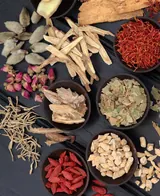
Chinese herbal formulas have been used for sore throat for centuries, including Jiegeng decoction, which combines licorice root with platycodon root.[6] Other plants studied include licorice (Glycyrrhiza) and mangosteen, and Andrographis, a bitter herb also used in Ayurveda.[13, 14]
What the research shows
The evidence is limited. A Cochrane review of 12 trials with 1,954 participants found that some Chinese herbal formulations performed better than the comparison treatment for sore throat, but 10 of the trials were of poor quality. The authors concluded that no Chinese herbal formulation could be recommended as an effective remedy.[15]
A 2023 trial of 60 adults with viral pharyngitis compared an Andrographis spray with a chamomile spray. Both groups improved, and the Andrographis group responded about half a day faster. There was no placebo group.[14]
Laboratory studies add some background. In test-tube experiments, ethanol extracts of licorice and mangosteen inhibited the growth of bacteria that cause pharyngitis. These results have not been shown to carry over to people.[13]
Safety and herb-drug interactions
Herbs are active substances and can interact with medicines. Reviews describe interactions with warfarin, aspirin and other prescribed drugs, some of which led to bleeding or other serious effects.[16] Tell us about all medicines and supplements you take.
Licorice deserves a specific caution. In a meta-analysis of 18 studies, regular intake of products containing glycyrrhizic acid raised blood pressure and lowered potassium, which matters for people with heart disease or high blood pressure.[17] About one fifth of Ayurvedic products bought online contained detectable lead, mercury or arsenic, so herbs should come from tested sources.[18] Tell us if you are pregnant or breastfeeding or have liver or kidney disease. A transdermal herbal preparation applied to the skin is also possible, but we know of no trials of it for sore throat.
Translating traditional medicine into modern biological language
The links drawn here are interpretation, not equivalence. Chinese medicine often describes a sore throat as wind-heat or heat toxin affecting the throat, and some formulas are classed as clearing heat. Researchers studying such formulas look at anti-inflammatory signaling in cells and animals, and at antibacterial activity of related plants in laboratory tests.[6, 13]
In Ayurveda, an aggravated Kapha or Pitta in the throat describes swelling, heat and mucus.[11] No study has shown that a dosha corresponds to a particular biological process.
How this care fits with your medical care
Integrative care for sore throat is complementary. Keep your physician or pediatrician involved, get tested for strep when it is suspected, and do not stop or change prescribed medicines, including antibiotics, without your prescriber. Untreated strep can lead to complications, so complementary care should never delay testing.[1]
Please bring your diagnosis or strep test result, a full list of medicines and supplements, and details of how often the problem has recurred.
When to seek urgent medical care
Some throat symptoms point to a serious infection or a blocked airway and need prompt medical care.[1]
- Trouble breathing, noisy breathing or drooling because swallowing is too painful
- Inability to swallow fluids, or signs of dehydration
- A stiff neck, trouble opening the mouth, or a muffled "hot potato" voice, which can signal an abscess
- Swelling of the face, tongue or neck
- High fever that does not settle, or symptoms that worsen after starting antibiotics or are still present 5 days into treatment[3]
- Sore throat that lasts more than a week or keeps returning
For trouble breathing, drooling, inability to swallow, or swelling of the face, tongue or neck, call 911 or go to the nearest emergency department. For the other symptoms, contact your doctor promptly.
Frequently asked questions
What is sore throat?
A sore throat is pain, scratchiness or irritation in the throat, usually worse when swallowing. It is most often caused by a virus, which clears on its own, and less often by bacteria such as group A Streptococcus, which needs testing and sometimes antibiotics. Tonsillitis is inflammation of the tonsils and commonly causes a sore throat with swollen tonsils and fever.
Can acupuncture help with sore throat?
It may help, but the evidence is limited. A meta-analysis of 19 trials, mostly compared with antibiotics, found better response rates with acupuncture, and the authors urged caution. One small sham-controlled trial of a single treatment found no clear difference from sham. Acupuncture is used alongside medical care and testing, not in place of them.
Do Ayurvedic or herbal remedies work for sore throat?
The evidence is thin. Ayurvedic treatment of tonsillitis has been tested only in small studies without placebo groups. A Cochrane review of Chinese herbal formulas for sore throat found mostly poor-quality trials and could not recommend any formula. Herbs should be prescribed individually and checked against your medicines.
Can I skip antibiotics if I have acupuncture or take herbs?
No. Strep throat that goes untreated can lead to complications such as abscess or rheumatic fever. Get tested if your doctor suggests it, and follow your physician’s advice about antibiotics. Do not stop or change prescribed medicines because you are having complementary care.
How soon might I notice a change?
It differs from person to person and no result can be promised. Many sore throats improve on their own within about a week, so it can be hard to tell what helped. In the studies we found, effects were measured from 15 minutes to 48 hours after a treatment. We reassess after a short course of visits.
Does insurance cover acupuncture for sore throat?
It may. Netra Integrative Health Clinic is in-network with Blue Cross Blue Shield, Cigna and UnitedHealthcare. Other plans may be covered through out-of-network benefits, and we offer a free benefits check. HSA and FSA cards and CareCredit are also accepted. Call (908) 402-7301 to ask about your plan.
References
- Goldin J, Graber M. Acute Pharyngitis. StatPearls [Internet]. 2024. PMID 32644433. StatPearls chapter on acute pharyngitis covering causes, viral versus bacterial disease, group A strep, testing, complications and uncommon causes.
- Nguyen VTN, Ngo L, Stratton E, et al. Tonsillitis. Prim Care. 2025;52(1):27-35. PMID 39939088. Primary care review of tonsillitis: symptoms, viral causes being most common, strep, complications and supportive treatment.
- Hamilton JL, McCrea Ii L. Streptococcal Pharyngitis: Rapid Evidence Review. Am Fam Physician. 2024;109(4):343-349. PMID 38648833. American Family Physician evidence review of strep throat: how common it is, decision rules, testing, antibiotics, steroids and tonsillectomy thresholds.
- Krüger K, Töpfner N, Berner R, et al. Clinical Practice Guideline: Sore Throat. Dtsch Arztebl Int. 2021;118(11):188-94. PMID 33602392. German clinical practice guideline on sore throat: usually self-limiting, about 7 days, NSAIDs for symptoms, risk scores and antibiotic use.
- Spinks A, Glasziou PP, Del Mar CB. Antibiotics for treatment of sore throat in children and adults. Cochrane Database Syst Rev. 2021;12(12):CD000023. PMID 34881426. Cochrane review of 29 trials of antibiotics for sore throat: modest symptom benefit and fewer complications, with most untreated people symptom-free by one week.
- Huang H, Wu D, Li Q, et al. Jiegeng decoction ameliorated acute pharyngitis through suppressing NF-κB and MAPK signaling pathways. J Ethnopharmacol. 2024;332:118328. PMID 38734391. Laboratory and animal study of Jiegeng decoction (licorice and platycodon) showing anti-inflammatory effects in a pharyngitis model.
- Zhang S, Cui Y, Zhou X, et al. Efficacy of acupuncture on acute pharynx infections: A systematic review and meta-analysis. Medicine (Baltimore). 2023;102(25):e34124. PMID 37352021. Meta-analysis of 19 randomized trials (1,701 patients) finding acupuncture had better response rates than antibiotics in acute pharyngeal infections, with calls for higher-quality trials.
- Moss DA, Crawford P. Ear Acupuncture for Acute Sore Throat: A Randomized Controlled Trial. J Am Board Fam Med. 2015;28(6):697-705. PMID 26546644. Unblinded pragmatic trial of 54 adults finding ear acupuncture added to standard care reduced sore throat pain and pain medicine use.
- Fleckenstein J, Lill C, Lüdtke R, et al. A single point acupuncture treatment at large intestine meridian: a randomized controlled trial in acute tonsillitis and pharyngitis. Clin J Pain. 2009;25(7):624-31. PMID 19692805. Sham-controlled trial of 60 patients finding single-point acupuncture no better than sham laser acupuncture for immediate pain in tonsillitis and pharyngitis.
- Bäumler P, Zhang W, Stübinger T, et al. Acupuncture-related adverse events: systematic review and meta-analyses of prospective clinical studies. BMJ Open. 2021;11(9):e045961. PMID 34489268. Systematic review of 21 prospective studies finding minor acupuncture reactions in about 9 percent of patients and serious events in about 1 per 10,000.
- Adhvaryu TR, Patel KS, Kori VK, et al. Evaluation of the effect of Kanchnara Guggulu and Tankana-Madhu Pratisarana in the management of Tundikeri (tonsillitis) in children. Ayu. 2016;37(3-4):190-197. PMID 29491671. Small study of 31 children with tonsillitis (Tundikeri) given Kanchnara Guggulu with or without Tankana-Madhu paste; improved, with no placebo group.
- Büttner R, Schwermer M, Ostermann T, et al. Complementary and alternative medicine in the (symptomatic) treatment of acute tonsillitis in children: A systematic review. Complement Ther Med. 2023;73:102940. PMID 36868289. Systematic review finding only five studies of complementary therapies for childhood tonsillitis, including one Ayurvedic, with too little quality to judge effectiveness.
- Siriwattanasatorn M, Panthong S, Itharat A. Antimicrobial Activities of Medicinal Plants Mostly used for Acute Pharyngitis Treatment. J Med Assoc Thai. 2016;99 Suppl 4:S144-52. PMID 29926693. Laboratory study of ten Thai medicinal plants used for pharyngitis; licorice and mangosteen extracts inhibited throat bacteria in vitro.
- Okonogi R, Thampanya V, Okonogi S. Efficacy of Andrographis paniculata spray in acute pharyngitis: A randomized controlled trial. Drug Discov Ther. 2023;17(5):340-345. PMID 37821383. Randomized trial of 60 adults with viral pharyngitis comparing an Andrographis spray with a chamomile spray; both improved, with no placebo group.
- Huang Y, Wu T, Zeng L, et al. Chinese medicinal herbs for sore throat. Cochrane Database Syst Rev. 2012;2012(3):CD004877. PMID 22419300. Cochrane review of 12 trials of Chinese herbal medicines for sore throat; mostly poor quality, no formulation could be recommended.
- Hu Z, Yang X, Ho PC, et al. Herb-drug interactions: a literature review. Drugs. 2005;65(9):1239-82. PMID 15916450. Literature review of herb-drug interactions, including bleeding with warfarin or aspirin and other clinically significant interactions.
- Penninkilampi R, Eslick EM, Eslick GD. The association between consistent licorice ingestion, hypertension and hypokalaemia: a systematic review and meta-analysis. J Hum Hypertens. 2017;31(11):699-707. PMID 28660884. Meta-analysis of 18 studies finding regular licorice ingestion raised blood pressure and lowered potassium.
- Saper RB, Phillips RS, Sehgal A, et al. Lead, mercury, and arsenic in US- and Indian-manufactured Ayurvedic medicines sold via the Internet. JAMA. 2008;300(8):915-23. PMID 18728265. JAMA study finding detectable lead, mercury or arsenic in about one fifth of Ayurvedic medicines purchased over the Internet.
This page is for general education and is not medical advice. Acupuncture, Ayurvedic medicine and herbal medicine are complementary therapies; they do not replace diagnosis or treatment by your physician. Do not stop or change prescribed treatment without talking to your prescriber. In an emergency call 911.