






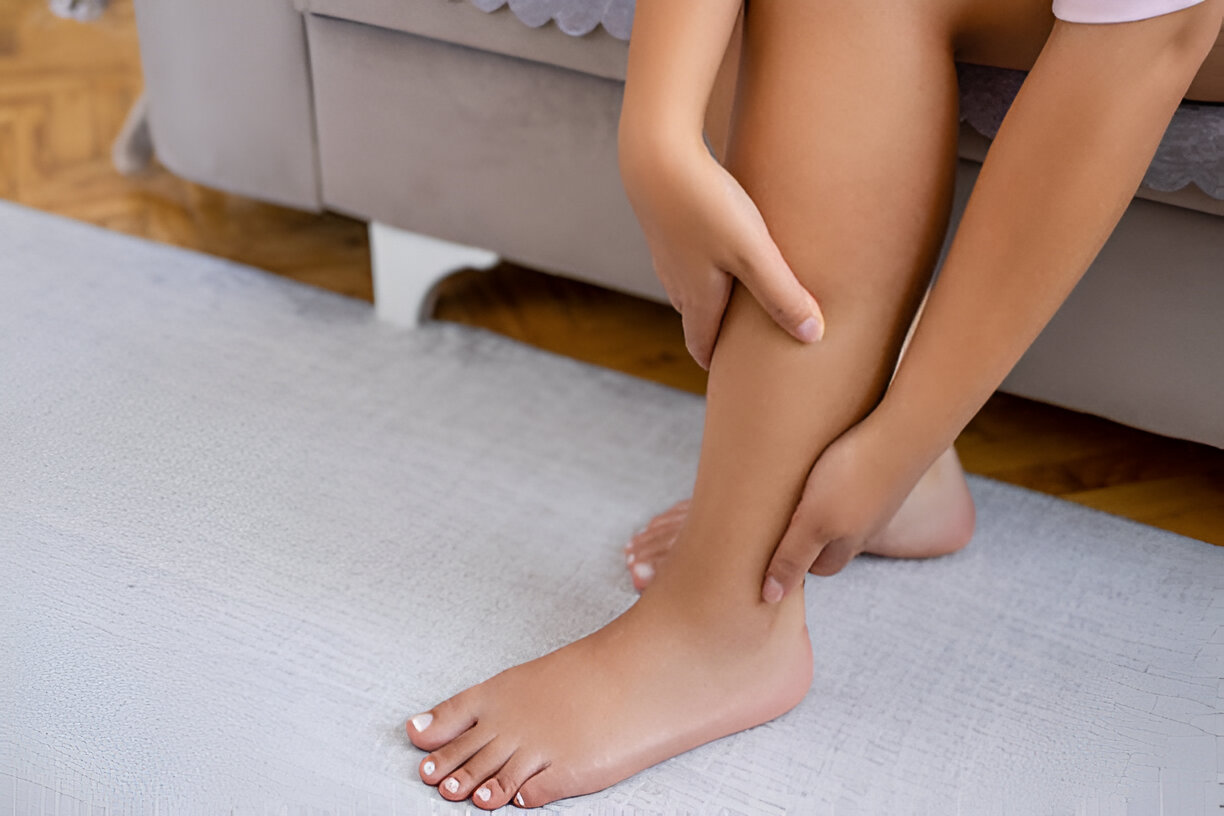
- What it is: Enlarged, twisted veins under the skin, usually in the legs, caused by weak or leaking vein valves and raised pressure in the veins.
- Common symptoms: Heavy, aching or tired legs, swelling, itching or burning, and visible bulging veins that are worse after standing.
- Conventional care: Compression stockings, leg elevation, exercise and weight management, and vein procedures such as ablation or sclerotherapy when needed.
- How integrative care fits: Acupuncture, Ayurvedic therapies and individually prescribed herbs are used alongside medical care for comfort and symptoms, not to treat the veins themselves.
- Evidence at a glance: Very limited for acupuncture and Ayurveda; moderate for a few plant extracts such as horse chestnut seed extract in short-term studies of venous insufficiency, with important caveats.
What is Varicose Veins?
Varicose veins are swollen, twisted veins just under the skin, usually 3 millimeters or wider, most often in the legs. They are a common visible sign of chronic venous disease, in which the veins do not return blood to the heart efficiently.[1, 2]
Common symptoms
Varicose veins can cause no symptoms beyond how they look, or they can cause a heavy, achy feeling and itching or burning that gets worse with prolonged standing.[3]
- Heaviness, aching or tiredness in the legs
- Swelling of the ankles and lower legs
- Itching, burning or throbbing along the veins
- Skin darkening or hardening near the ankle in longer-standing disease
- Open sores (venous ulcers) in advanced cases[2]
Causes and risk factors
Varicose veins develop through a mix of inherited tendency, valves that no longer close properly, weakened vein walls and higher pressure inside the veins.[3] Risk factors include family history, female sex, older age, obesity, pregnancy, and prolonged standing.[3, 4]
A pooled analysis of studies from six continents found chronic venous disease to be common, with female sex, age, obesity, long periods of standing, family history and number of pregnancies among the reported risk factors.[4]
How it is diagnosed and treated conventionally
Diagnosis rests on a history and examination, and a duplex ultrasound scan is used to look for backward flow (reflux) in the veins.[1, 5]
Conservative care includes compression stockings, leg elevation, exercise, weight loss and avoiding long periods of standing. A review notes that evidence for compression in varicose veins without ulcers is limited, while in people with venous leg ulcers, compression probably speeds healing.[3, 6] Procedures such as thermal ablation, sclerotherapy and surgery treat the faulty veins, and endovenous ablation has largely replaced surgery.[3] Clinical practice guidelines cover when each option is appropriate, including the role of drugs and supplements.[5]
Why Varicose Veins calls for a whole-person approach
Varicose veins are not only a problem of one weak valve. Genes, body weight, pregnancy history, hours spent standing and sitting, and inflammation in the vein wall all contribute, and symptoms can vary widely between people with similar-looking veins.[3, 7]
Complementary care therefore focuses on comfort, activity and daily habits. It sits beside the vein-specific treatments decided with your physician or vascular specialist.
Raised pressure in the veins
Chronic venous disease is driven by sustained high pressure in the leg veins while standing, called ambulatory venous hypertension, which then promotes inflammation and changes in the vein wall.[2, 7]
Inflammation
Inflammation is part of the disease process in the veins and the surrounding tissue.[2, 7]
Body weight and pressure inside the abdomen
Obesity, pregnancy and chronic constipation raise pressure inside the abdomen and are listed as risk factors for varicose veins.[3]
Standing, sitting and movement
Long periods of standing are a recognized risk factor, and exercise is part of standard conservative advice.[3, 4]
Acupuncture for Varicose Veins
What the research shows
The research on acupuncture for varicose veins is very limited, and no large well-controlled trial has tested whether it improves the veins or their symptoms.
A small randomized trial of 70 people having an endovenous ablation procedure found that acupuncture the day before reduced pain during and analgesic use after the procedure, and changed some inflammatory markers. It treated procedure pain, not the varicose veins themselves.[8]
A Chinese study of 260 people with leg varicose veins treated trigger point acupuncture with self-massage and stretching and reported lower symptom scores after the course and at one year. It had no control group, used an in-house scoring tool, and its claim that the method "could cure" varicose veins is not supported by that design, so it should not be taken as evidence of benefit.[9]
How acupuncture may work
Researchers propose that acupuncture may release nerve peptides that widen blood vessels and act against inflammation.[10] This was described in a general review of inflammatory conditions and has not been shown to change varicose veins. These remain proposed explanations, not settled facts.
What treatment involves
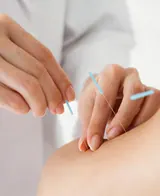
Treatment uses fine, sterile, single-use needles placed at points on the legs and elsewhere, usually left in place for about 20 to 40 minutes, with a course of several visits and a reassessment. Serious problems from acupuncture are rare. In prospective studies, about 9 in 100 patients had a minor reaction such as bleeding, pain or redness at a needle site, and serious events occurred in about 1 in 10,000 patients.[11] Tell the practitioner first if you have a bleeding disorder, take blood thinners, are pregnant, have a pacemaker (relevant to electroacupuncture), or have a leg ulcer, a recent blood clot or skin infection.
Ayurvedic medicine for Varicose Veins
The Ayurvedic view
Ayurveda describes enlarged, twisted veins as Siragranthi, with related conditions including Vata-Rakta and Dushta Vrana (a poorly healing wound), depending on the presentation.[12] In this traditional framework, vitiated Vata and blood are thought to cause obstruction in the vessels. These are traditional categories, not biomedical diagnoses.
Therapies that may be used
Care is individualized and traditionally combines:
- Diet and daily routine, with regular movement and avoiding long periods of standing or sitting
- Warm herbal oil application to the legs
- Herbs and classical formulas, prescribed individually by a qualified practitioner
- Panchakarma procedures, only where medically sensible
Panchakarma is not appropriate during pregnancy, acute illness or frailty, or when a leg ulcer, infection or suspected blood clot has not been medically assessed. Basti (medicated enema therapy) is described in a published Ayurvedic case report of a varicose ulcer.[13]
What the research shows
The research on Ayurveda for varicose veins is very limited. A PubMed search found no controlled trials. A 2024 observational study of 25 people with chronic venous insufficiency taking a Terminalia arjuna bark extract reported improved clinical severity scores and ulcer healing over 90 days, but it had no control group.[12] A case report described healing of one varicose ulcer after Ayurvedic cleansing treatment.[13]
Studies without a comparison group and single case reports cannot show that the treatment caused the change.
Herbal medicine for Varicose Veins
Herbs and formulas that have been studied
Plant-based products studied for chronic venous insufficiency, the vein-valve problem behind varicose veins, include horse chestnut seed extract, Centella asiatica (gotu kola), maritime pine bark extract, grape seed extract and Ruscus extract.[14, 15, 16] Most studied products are standardized extracts used in pharmacy-type preparations. Traditional herbs from Ayurveda and Chinese medicine are not well tested for this condition.
What the research shows
The evidence is moderate for short-term symptom relief in venous insufficiency but is limited by study quality. A Cochrane review of horse chestnut seed extract found that leg pain and leg volume improved more than with placebo in most trials, with mostly mild side effects. The authors called it an effective short-term treatment while noting that larger trials were needed.[14]
A larger Cochrane review of 69 trials of oral phlebotonics (a group that includes plant-derived and synthetic compounds, among them two trials of Centella asiatica) found moderate-certainty evidence of slightly less leg swelling than with placebo, little or no difference in quality of life, and low-certainty evidence of no effect on ulcer healing. Side effects were slightly more common than with placebo, most often gastrointestinal.[15]
A 2025 review judged some venoactive compounds to have the best evidence, such as purified flavonoid fraction and a Ruscus combination, and supported using them alongside compression and procedures.[16] These are pharmacy preparations rather than traditional herbal formulas, and the results show these products help symptoms, not that they remove varicose veins.
Safety and herb-drug interactions
Herbs are active substances and can interact with medicines. Case reports describe bleeding when warfarin was combined with herbs including ginkgo, dang gui, dan shen, garlic, ginger and ginseng, so people taking blood thinners need a practitioner's review before using any herb.[17, 18]
In one study, about one fifth of Ayurvedic products bought online contained detectable lead, mercury or arsenic.[19] Herbs should come from tested sources and be prescribed individually. Tell us if you are pregnant or breastfeeding, have liver or kidney disease, or have a procedure planned. Transdermal medication therapy, an herbal preparation applied to the skin, is also offered, and no evidence for it in varicose veins was found.
Translating traditional medicine into modern biological language
The links drawn here are interpretation, not equivalence. Chinese medicine describes varicose veins in terms of qi deficiency and blood stasis, with dampness settling in the legs. Researchers studying the veins measure things that loosely parallel this picture, such as vein-wall inflammation, edema, vein tone and microcirculation.[7, 16]
Ayurveda's description of blocked, disturbed blood and Vata in the vessels likewise refers to a pattern of heavy, swollen or painful legs. No study has shown that a dosha or a pattern corresponds to a specific biological process in the veins.
How this care fits with your medical care
Integrative care for varicose veins is complementary. We do not diagnose vein disease or treat, close or remove varicose veins, so new leg swelling, skin changes or sores should be medically evaluated. Keep your physician or vascular specialist, continue compression if prescribed, and do not stop or change prescribed medicines without your prescriber.
Please bring your diagnosis, any ultrasound results, a full list of medicines and supplements, and details of any vein procedures, planned or past.
When to seek urgent medical care
Some changes in the legs can signal a blood clot or serious vein complication and need prompt assessment.[3]
- A leg that suddenly becomes swollen, warm, red or painful, which can signal a blood clot
- A varicose vein that bleeds heavily and does not stop with firm pressure
- An open sore on the leg or ankle that is not healing, or that is red, hot or draining pus
- A hard, tender, red cord along a vein, with fever
- Sudden shortness of breath, chest pain or coughing blood
If any of these occur, call 911 or go to the nearest emergency department.
Frequently asked questions
What is Varicose Veins?
Varicose veins are swollen, twisted veins under the skin, most often in the legs. They develop when valves inside the veins stop closing properly so blood pools, raising pressure in the vein. They can cause aching, heaviness, swelling and itching, or only a change in appearance. Risk rises with age, family history, pregnancy and long periods of standing.
Can acupuncture help with Varicose Veins?
There is very little research. One small trial found acupuncture reduced pain around a vein ablation procedure, and an uncontrolled study reported symptom improvement, but no good trial shows it improves varicose veins themselves. Acupuncture may be used for comfort alongside medical care and does not close or remove veins.
Do Ayurvedic or herbal medicines work for varicose veins?
Ayurveda has only one small observational study and case reports, so benefit is uncertain. Some standardized plant extracts, such as horse chestnut seed extract, eased leg pain and swelling more than placebo in short-term trials, though trial quality is limited. They do not remove varicose veins and can interact with medicines.
Can this care replace compression stockings or a vein procedure?
No. Acupuncture, Ayurveda and herbal medicine are complementary care. Compression, ablation, sclerotherapy and surgery are medical treatments decided with your physician or vascular specialist. Do not stop or change prescribed treatment without talking to your prescriber.
How soon might I notice a change?
It differs from person to person and no result can be promised. Studies of horse chestnut extract were short term, lasting weeks. We reassess after a short course of visits to see whether the care is helping, and we would not delay medical evaluation of new swelling, skin changes or sores.
Does insurance cover acupuncture for varicose veins?
It may. Netra Integrative Health Clinic is in-network with Blue Cross Blue Shield, Cigna and UnitedHealthcare. Other plans may be covered through out-of-network benefits, and we offer a free benefits check. HSA and FSA cards and CareCredit are also accepted. Call (908) 402-7301 to ask about your plan.
References
- Antani MR, Dattilo JB. Varicose Veins. StatPearls [Internet]. 2023. PMID 29262112. StatPearls chapter on varicose veins covering definition, risk factors such as age and family history, evaluation of venous reflux, and the range from mild discomfort to ulcers.
- Singh A, Zahra F. Chronic Venous Insufficiency (Archived). StatPearls [Internet]. 2023. PMID 36508515. StatPearls chapter on chronic venous insufficiency describing symptoms, venous hypertension and inflammation, and the burden of venous ulcers.
- Raetz J, Wilson M, Collins K. Varicose Veins: Diagnosis and Treatment. Am Fam Physician. 2019;99(11):682-688. PMID 31150188. American Family Physician review of varicose veins: pathophysiology, risk factors, symptoms, complications, conservative care, and interventional treatments.
- Salim S, Machin M, Patterson BO, et al. Global Epidemiology of Chronic Venous Disease: A Systematic Review With Pooled Prevalence Analysis. Ann Surg. 2021;274(6):971-976. PMID 33214466. Systematic review of global chronic venous disease prevalence, identifying female sex, age, obesity, prolonged standing, family history and parity as risk factors.
- Gloviczki P, Lawrence PF, Wasan SM, et al. The 2023 Society for Vascular Surgery, American Venous Forum, and American Vein and Lymphatic Society clinical practice guidelines for the management of varicose veins of the lower extremities. Part II: Endorsed by the Society of Interventional Radiology and the Society for Vascular Medicine. J Vasc Surg Venous Lymphat Disord. 2024;12(1):101670. PMID 37652254. 2023 vascular society guideline part II on varicose veins covering compression, drugs and supplements, tributaries and complications, based on systematic reviews.
- Shi C, Dumville JC, Cullum N, et al. Compression bandages or stockings versus no compression for treating venous leg ulcers. Cochrane Database Syst Rev. 2021;7(7):CD013397. PMID 34308565. Cochrane review of 14 trials (1,391 people) finding compression probably speeds venous leg ulcer healing and reduces pain.
- Ortega MA, Fraile-Martínez O, García-Montero C, et al. Understanding Chronic Venous Disease: A Critical Overview of Its Pathophysiology and Medical Management. J Clin Med. 2021;10(15). PMID 34362022. Review of the pathophysiology and medical management of chronic venous disease, including venous hypertension, inflammation and vein wall remodeling.
- Orak Y, Eroğlu E, Baylan FA, et al. Effects of acupuncture on pain and levels of IL-17 and IL-23 in the treatment of non-thermal endovenous ablation: A randomized clinical trial. Vascular. 2022;30(3):532-541. PMID 33977797. Randomized trial of 70 patients finding acupuncture before endovenous ablation reduced procedural pain, analgesic use and some inflammatory markers.
- Liu L, Wu ZH, Huang QM, et al. Clinical observations in treatment of lower extremity varicose veins with trigger points acupuncture. Phlebology. 2023;38(10):675-682. PMID 37705487. Uncontrolled study of 260 people with varicose veins treated with trigger point acupuncture, self-massage and stretching, reporting symptom score improvement without a control group.
- Zijlstra FJ, van den Berg-de Lange I, Huygen FJ, et al. Anti-inflammatory actions of acupuncture. Mediators Inflamm. 2003;12(2):59-69. PMID 12775355. Review of proposed anti-inflammatory mechanisms of acupuncture, including nerve peptide release causing vessel widening, noting large randomized trials are missing.
- Bäumler P, Zhang W, Stübinger T, et al. Acupuncture-related adverse events: systematic review and meta-analyses of prospective clinical studies. BMJ Open. 2021;11(9):e045961. PMID 34489268. Systematic review of 21 prospective studies finding minor acupuncture reactions in about 9 percent of patients and serious events in about 1 per 10,000.
- Pratap Shankar KM, Ashwathykutty V. Effectiveness of herbal drug Terminalia Arjuna in chronic venous insufficiency - A prospective observational study. J Vasc Nurs. 2024;42(1):53-59. PMID 38555178. Observational study of 25 patients with chronic venous insufficiency given Terminalia arjuna extract, reporting improved clinical severity scores without a control group, and describing the Ayurvedic framing of venous disease.
- Patil D, Jahagirdhar SH, Toshikhane HD. An integrated approach in the treatment of varicose ulcer. Anc Sci Life. 2013;32(3):161-4. PMID 24501445. Ayurvedic case report of a single varicose ulcer treated with a cleansing purgation and Basti protocol and reported as healed.
- Pittler MH, Ernst E. Horse chestnut seed extract for chronic venous insufficiency. Cochrane Database Syst Rev. 2012;11(11):CD003230. PMID 23152216. Cochrane review of horse chestnut seed extract for chronic venous insufficiency finding reduced leg pain and volume versus placebo in short-term trials, with mild side effects and a call for larger trials.
- Martinez-Zapata MJ, Vernooij RW, Simancas-Racines D, et al. Phlebotonics for venous insufficiency. Cochrane Database Syst Rev. 2020;11(11):CD003229. PMID 33141449. Cochrane review of 69 trials of oral phlebotonics finding moderate-certainty evidence of slightly less leg swelling, little effect on quality of life or ulcer healing, and slightly more side effects.
- Gloviczki ML, Kakkos SK, Urbanek T, et al. The role of venoactive compounds in the treatment of chronic venous disease. J Vasc Surg Venous Lymphat Disord. 2025;13(5):102258. PMID 40348378. 2025 review of venoactive compounds for chronic venous disease, rating purified flavonoid fraction and a Ruscus combination highest in evidence and supporting use alongside compression and procedures.
- Milić N, Milosević N, Golocorbin Kon S, et al. Warfarin interactions with medicinal herbs. Nat Prod Commun. 2014;9(8):1211-6. PMID 25233607. Review of reported interactions between warfarin and medicinal herbs, including bleeding events with ginseng, dan shen, ginkgo, dang gui, garlic and ginger.
- Hu Z, Yang X, Ho PC, et al. Herb-drug interactions: a literature review. Drugs. 2005;65(9):1239-82. PMID 15916450. Literature review of herb-drug interactions including bleeding with ginkgo and warfarin or aspirin, mostly from case reports.
- Saper RB, Phillips RS, Sehgal A, et al. Lead, mercury, and arsenic in US- and Indian-manufactured Ayurvedic medicines sold via the Internet. JAMA. 2008;300(8):915-23. PMID 18728265. JAMA study finding detectable lead, mercury or arsenic in about one fifth of Ayurvedic medicines purchased over the Internet.
This page is for general education and is not medical advice. Acupuncture, Ayurvedic medicine and herbal medicine are complementary therapies; they do not replace diagnosis or treatment by your physician. Do not stop or change prescribed treatment without talking to your prescriber. In an emergency call 911.