












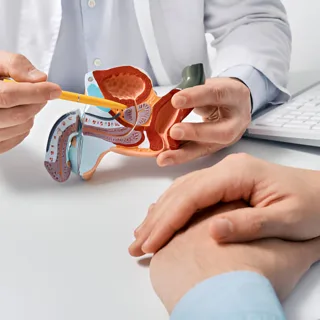








- What it is: Pain in the thoracic (mid) spine and the muscles around the shoulder blades, between the neck and the lower back.
- Common symptoms: Aching, tightness or sharp pain between or around the shoulder blades, often with neck or shoulder tension.
- Conventional care: Staying active, exercise and physical therapy, posture and workstation changes, pain medicines, and further tests only when red flags are present.
- How integrative care fits: Acupuncture, Ayurvedic therapies and individually prescribed herbs are used alongside medical care to help with pain, muscle tension and stress.
- Evidence at a glance: Very limited for acupuncture in upper back pain itself, with indirect support from studies of neck, myofascial and general chronic pain; none found for Ayurveda or herbal medicine in upper back pain.
What is Upper Back Pain?
Upper back pain, also called thoracic spine pain or mid-back pain, is pain in the region between the neck and the lower back, around the thoracic spine, the ribs and the muscles of the shoulder blades. Research on it is much thinner than for neck or low back pain, although it is common across the population.[1, 2]
Common symptoms
The usual symptom is an ache, tightness or sharp pain in the upper or middle back, often between or around the shoulder blades. Many people also notice neck or shoulder tension, and trigger points (tender knots in a tight muscle) can send pain to nearby areas.[3] Pain may vary with posture, activity or breathing.
Causes and risk factors
Most upper back pain is musculoskeletal, meaning it comes from muscles, joints or ligaments. Thoracic pain has been linked in studies to other musculoskeletal pain, posture, psychological factors, and, in young people, backpack use.[1] Among working adults, factors include heavy workload, ergonomic problems at work, high mental pressure and other musculoskeletal conditions.[4]
In postmenopausal women, one study found that weaker upper back extensor muscles were associated with more upper back pain.[5] Trauma, poor posture and vitamin D deficiency or an underactive thyroid are named as risk factors for myofascial pain.[3]
The thoracic region is also a site for inflammatory, tumor, infectious, metabolic and degenerative conditions, which is why a physician should evaluate pain that is persistent or unusual.[6]
How it is diagnosed and treated conventionally
Upper back pain is diagnosed from your history and a physical examination. Imaging is generally not needed for uncomplicated acute pain and may be considered if pain persists despite 6 weeks of conservative treatment, or sooner if red flags are present, such as a history of cancer, infection, weakened immunity or trauma, or signs of spinal cord involvement.[6]
Initial care is usually conservative. For myofascial pain, this may include anti-inflammatory medicines, muscle relaxants, physical therapy, ergonomic changes and treatment of any underlying problems, with acute episodes often settling on their own.[3]
Why Upper Back Pain calls for a whole-person approach
Upper back pain seldom has a single cause. Posture and muscle endurance, work demands, mood and general health all show links to it in studies, so care that addresses only one may miss the others.[1, 4]
Evidence on how to prevent or manage thoracic pain is limited, and researchers have called for more prospective studies.[1]
Muscle tension and trigger points
Tight muscles around the shoulder blades are a common source of upper back pain. Myofascial pain is marked by tender trigger points in taut muscle bands and can be linked to poor posture.[3]
Posture, work and daily load
In working adults, ergonomic problems, heavy workload and repetitive or tedious tasks were among the factors associated with thoracic pain.[4] Adjusting the workstation and moving regularly are part of standard care for muscle-related pain.[3]
Stress and mood
Psychological factors were associated with thoracic pain in the general population, and high mental pressure at work was associated with thoracic pain in employees.[1, 4] Psychological treatment may help people with myofascial pain who also have depression or anxiety.[3]
Other body systems
Because the thoracic region can be a site of non-spinal disease, new or unexplained upper back pain needs a physician's assessment before any complementary care.[6]
Acupuncture for Upper Back Pain
What the research shows
The evidence for acupuncture in upper back pain itself is very limited. A PubMed search found no good-quality trials focused on thoracic spine pain, so the research below comes from closely related conditions.
For neck pain, a Cochrane review of 27 trials found moderate-quality evidence that acupuncture relieved pain better than sham acupuncture at the end of treatment and at short-term follow-up, and the benefit did not seem to last long term.[7] For myofascial pain, a meta-analysis of 10 sham-controlled trials found that manual acupuncture at trigger points reduced pain, while needling at traditional acupuncture points did not show a significant benefit, and the authors called for better-designed studies.[8]
For chronic pain more broadly, an individual patient data meta-analysis of 29 trials (17,922 patients) found acupuncture was better than sham and than no acupuncture for back and neck pain. The difference from sham was small, which suggests that factors other than needling also contribute.[9] A network meta-analysis of chronic non-specific neck pain rated the evidence for multimodal non-drug care as low to very low certainty and noted that most of the mild adverse events came after acupuncture or dry needling.[10]
Dry needling, a related technique that places needles into trigger points, has also been studied. A meta-analysis of six trials (241 participants) in neck and upper back myofascial pain found that dry needling and trigger point manual therapy both improved pain and function in the short to medium term, with neither clearly better.[11] Physical therapist-delivered dry needling was found to reduce pain in the short term, with evidence of very low to moderate quality and no clear long-term benefit.[12]
How acupuncture may work
How acupuncture might help upper back pain is not settled, and it has not been studied for this condition. In the meta-analysis of myofascial pain, needling trigger points raised the pressure pain threshold, a measure of muscle tenderness.[8] In chronic pain trials, the difference from sham was small, which suggests that factors beyond the needling itself also contribute.[9]
What treatment involves
Treatment uses fine, sterile, single-use needles placed at points along the upper back, shoulders, neck and arms, usually left in place for about 20 to 40 minutes. In myofascial pain trials, a course of about eight sessions was used.[8] We reassess after a short course of visits.
Serious problems from acupuncture are rare. In prospective studies, about 9 in 100 patients had a minor reaction such as brief bleeding, soreness or redness at a needle site, and serious events occurred in about 1 in 10,000 patients.[13] Needling over the chest wall carries a small risk to the underlying lungs, so depth and placement matter. Tell the practitioner first if you have a bleeding disorder, take blood thinners, are pregnant, or have a pacemaker (relevant to electroacupuncture).
Ayurvedic medicine for Upper Back Pain
The Ayurvedic view
Ayurveda has no exact counterpart to upper back pain. Pain and stiffness of the back and shoulders are generally described as a Vata disturbance, the principle said to govern movement, and long-standing tightness is sometimes linked to Kapha. These are traditional categories for choosing treatment, not biomedical diagnoses.
Therapies that may be used
Care is chosen for the individual and traditionally combines:
- Diet and daily routine intended to calm Vata, such as warm, regular meals and steady sleep hours
- Warm herbal oil massage of the back, shoulders and neck, with local heat
- Gentle stretching and breathing practices
- Herbs prescribed individually by a qualified practitioner, such as turmeric or ashwagandha, traditionally used for pain, stiffness and stress
Panchakarma procedures are not appropriate during pregnancy, acute illness or frailty, or before red-flag symptoms have been medically assessed. Transdermal medication therapy, an herbal preparation applied to the skin, may be considered for tight areas, but no trial of it for upper back pain was found.
What the research shows
No clinical trials of Ayurvedic treatment for upper back pain were found in a PubMed search, so there is no evidence on whether it helps. A systematic review of 113 studies of Ayush treatments, mostly Ayurveda, Siddha and yoga, for neck and low back spondylosis found that only about one in eight reported any adverse events and noted that these might be underreported.[14] That review looked at safety reporting and not effectiveness. In one study, about one fifth of Ayurvedic products bought online contained detectable lead, mercury or arsenic.[15]
Herbal medicine for Upper Back Pain
Herbs and formulas that have been studied
No herbs have been tested in trials for upper back pain. The nearest research covers Chinese herbal medicine for neck pain from cervical disc degeneration, including an oral formula called Compound Qishe Tablet and a topical herbal preparation called Compound Extractum Nucis Vomicae.[16] Dietary ingredients such as boswellia and ginger have been reviewed for chronic musculoskeletal pain.[17]
What the research shows
There is no direct evidence for upper back pain, and the indirect evidence is weak. A Cochrane review of four trials of Chinese herbal medicine for neck pain with nerve root signs found low-quality evidence that Compound Qishe Tablet reduced pain more than placebo and that the topical preparation reduced pain more than a diclofenac gel. All the studies were in Chinese and the effect sizes were not clinically relevant, and the authors said further research would likely change the results.[16]
A review of dietary ingredients for chronic musculoskeletal pain gave no recommendation for boswellia or ginger because the research was low quality or unclear.[17] These findings are from neck or general musculoskeletal pain and may not apply to upper back pain.
Safety and herb-drug interactions
Herbs are active substances and can interact with medicines. Case reports describe bleeding when warfarin was combined with herbs including dang gui (Angelica sinensis), dan shen (Salvia miltiorrhiza), ginger, ginseng and Boswellia.[18] People taking blood thinners need a practitioner's review before using herbs for pain. Herbs can also interact with muscle relaxants, antidepressants and anti-inflammatory drugs.
Ayurvedic products vary in quality, and some have been found to contain lead, mercury or arsenic.[15] Herbs should come from tested sources and be prescribed individually. Tell us if you are pregnant or breastfeeding, or have liver or kidney disease.
Translating traditional medicine into modern biological language
The links drawn here are interpretation, not equivalence. Chinese medicine often describes upper back and shoulder pain as stagnation of qi and blood in the channels of the back, sometimes with wind or cold, or with stress tightening the muscles. Researchers studying this area look at things that loosely parallel the picture: tender trigger points, tight muscle bands, the pressure pain threshold, and the influence of stress and posture.[3, 8]
Ayurveda's aggravated Vata describes stiffness, aching and restricted movement. No study has shown that a dosha corresponds to a specific biological process.
How this care fits with your medical care
Integrative care for upper back pain is complementary. Keep your physician, physical therapist or spine specialist, and do not stop or change prescribed medicines or therapy without your prescriber. We do not diagnose the cause of upper back pain, so pain that is new, severe, persistent or unexplained should be medically evaluated first.
Please bring your diagnosis, any imaging reports, a list of medicines and supplements, and details of any injury, injections or surgery, planned or past.
When to seek urgent medical care
Some upper back pain points to a serious problem outside the muscles and needs prompt assessment.[6]
- Sudden severe back pain with chest pain, shortness of breath, sweating or fainting
- Back pain after a fall, accident or other trauma
- Numbness, tingling or weakness in the legs, or trouble walking
- New loss of bladder or bowel control
- Back pain with fever, unexplained weight loss, or a history of cancer, infection or weakened immunity
- Pain that is severe at night or steadily getting worse
If any of these occur, call 911 or go to the nearest emergency department.
Frequently asked questions
What is upper back pain?
Upper back pain, also called thoracic spine or mid-back pain, is pain in the area between the neck and the lower back, around the ribs, thoracic spine and shoulder blades. It is often muscular and linked to posture, work demands, and stress, and it is commonly felt with neck or shoulder tension. A physician should check pain that is severe, persistent or unexplained.
Can acupuncture help with upper back pain?
It may help, but the evidence for upper back pain itself is very limited. We found no strong trials focused on upper back pain itself. Reviews of acupuncture for neck pain, trigger point pain and chronic pain show benefit over sham, though the effects are modest and the studies vary in quality. Acupuncture is used alongside medical care, not in place of it.
Does Ayurvedic or herbal medicine work for upper back pain?
The evidence is very thin. No trials of Ayurvedic treatment for upper back pain were found. For herbs, a few low-quality trials of Chinese herbal products for neck pain exist, and reviews of herbs such as boswellia and ginger for musculoskeletal pain did not support a recommendation. Herbs should be prescribed individually and checked against your medicines.
Can I stop my pain medicine if I have acupuncture?
No. Acupuncture, Ayurveda and herbal medicine are complementary care. Do not stop or change prescribed medicines or therapy without talking to your prescriber. If your pain comes with chest symptoms, leg weakness, bladder or bowel changes, or fever, you need prompt medical assessment.
How soon might I notice a change with acupuncture?
It differs from person to person and no result can be promised. In trials of acupuncture for myofascial pain, a course of about eight sessions was used. We reassess after a short course of visits to see whether treatment is helping and whether to continue.
Does insurance cover acupuncture for upper back pain?
It may. Netra Integrative Health Clinic is in-network with Blue Cross Blue Shield, Cigna and UnitedHealthcare. Other plans may be covered through out-of-network benefits, and we offer a free benefits check. HSA and FSA cards and CareCredit are also accepted. Call (908) 402-7301 to ask about your plan.
References
- Briggs AM, Smith AJ, Straker LM, et al. Thoracic spine pain in the general population: prevalence, incidence and associated factors in children, adolescents and adults. A systematic review. BMC Musculoskelet Disord. 2009;10:77. PMID 19563667. Systematic review of 33 studies on thoracic spine pain in the general population, covering prevalence and associations with posture, psychological factors, backpacks and other pain.
- Johansson MS, Jensen Stochkendahl M, Hartvigsen J, et al. Incidence and prognosis of mid-back pain in the general population: A systematic review. Eur J Pain. 2017;21(1):20-28. PMID 27146481. Systematic review of seven studies on incidence and prognosis of mid-back pain, finding research limited and adult recovery data lacking.
- Dua A, Chang KV. Myofascial Pain Syndrome. StatPearls [Internet]. 2025. PMID 29763057. StatPearls chapter on myofascial pain syndrome covering trigger points, risk factors, acute and chronic forms, and treatment including dry needling and acupuncture.
- Briggs AM, Bragge P, Smith AJ, et al. Prevalence and associated factors for thoracic spine pain in the adult working population: a literature review. J Occup Health. 2009;51(3):177-92. PMID 19336970. Literature review of 52 studies on thoracic spine pain in working adults, linking it to workload, ergonomic problems, mental pressure and other musculoskeletal disorders.
- Spencer L, McKenna L, Fary R, et al. Upper back pain in postmenopausal women and associated physical characteristics. PLoS One. 2019;14(7):e0220452. PMID 31365548. Cross-sectional study of 119 postmenopausal women finding that better upper back extensor endurance was associated with less upper back pain.
- Expert Panel on Neurological Imaging, Shah VN, Parsons MS, et al. ACR Appropriateness Criteria® Thoracic Back Pain. J Am Coll Radiol. 2024;21(11S):S504-S517. PMID 39488357. American College of Radiology guideline on thoracic back pain covering causes, red flags and when imaging is appropriate.
- Trinh K, Graham N, Irnich D, et al. Acupuncture for neck disorders. Cochrane Database Syst Rev. 2016. PMID 27145001. Cochrane review of 27 acupuncture trials for neck pain finding moderate-quality evidence of short-term pain relief versus sham, without clear long-term benefit.
- Wang R, Li X, Zhou S, et al. Manual acupuncture for myofascial pain syndrome: a systematic review and meta-analysis. Acupunct Med. 2017;35(4):241-250. PMID 28115321. Meta-analysis of 10 sham-controlled trials finding manual acupuncture at myofascial trigger points reduced pain and raised pressure pain threshold.
- Vickers AJ, Cronin AM, Maschino AC, et al. Acupuncture for chronic pain: individual patient data meta-analysis. Arch Intern Med. 2012;172(19):1444-53. PMID 22965186. Individual patient data meta-analysis of 29 trials (17,922 patients) finding acupuncture better than sham and no acupuncture for chronic back and neck pain, with modest effects over sham.
- Castellini G, Pillastrini P, Vanti C, et al. Some conservative interventions are more effective than others for people with chronic non-specific neck pain: a systematic review and network meta-analysis. J Physiother. 2022;68(4):244-254. PMID 36266185. Network meta-analysis of 119 trials in chronic non-specific neck pain finding multimodal non-drug care helpful but low to very low certainty, with mild adverse events mostly after acupuncture or dry needling.
- Lew J, Kim J, Nair P. Comparison of dry needling and trigger point manual therapy in patients with neck and upper back myofascial pain syndrome: a systematic review and meta-analysis. J Man Manip Ther. 2021;29(3):136-146. PMID 32962567. Meta-analysis of six trials (241 participants) finding dry needling and trigger point manual therapy both improved neck and upper back myofascial pain, with neither clearly superior.
- Gattie E, Cleland JA, Snodgrass S. The Effectiveness of Trigger Point Dry Needling for Musculoskeletal Conditions by Physical Therapists: A Systematic Review and Meta-analysis. J Orthop Sports Phys Ther. 2017;47(3):133-149. PMID 28158962. Meta-analysis of 13 trials of physical therapist dry needling for musculoskeletal pain finding short-term benefit of very low to moderate quality with no clear long-term effect.
- Bäumler P, Zhang W, Stübinger T, et al. Acupuncture-related adverse events: systematic review and meta-analyses of prospective clinical studies. BMJ Open. 2021;11(9):e045961. PMID 34489268. Systematic review of 21 prospective studies finding minor acupuncture reactions in about 9 percent of patients and serious events in about 1 per 10,000.
- Ponnaiah M, Elumalai R, Muthappan S, et al. Adverse events in India's Ayush interventions for cervical and lumbar spondylosis: a systematic review. Eur J Med Res. 2024;29(1):396. PMID 39085970. Systematic review of 113 Ayush studies (Ayurveda, Siddha, yoga and others) for spondylosis finding adverse events reported in about one in eight; effectiveness not assessed.
- Saper RB, Phillips RS, Sehgal A, et al. Lead, mercury, and arsenic in US- and Indian-manufactured Ayurvedic medicines sold via the Internet. JAMA. 2008;300(8):915-23. PMID 18728265. JAMA study finding detectable lead, mercury or arsenic in about one fifth of Ayurvedic medicines purchased over the Internet.
- Cui X, Trinh K, Wang YJ. Chinese herbal medicine for chronic neck pain due to cervical degenerative disc disease. Cochrane Database Syst Rev. 2010;2010(1):CD006556. PMID 20091597. Cochrane review of four Chinese trials of herbal medicine for neck pain from cervical disc degeneration, finding low-quality evidence of pain relief for two products.
- Crawford C, Boyd C, Berry K, et al. Dietary Ingredients Requiring Further Research Before Evidence-Based Recommendations Can Be Made for Their Use as an Approach to Mitigating Pain. Pain Med. 2019;20(8):1619-1632. PMID 30986310. Systematic review of dietary ingredients for chronic musculoskeletal pain, giving no recommendation for boswellia or ginger because evidence was low quality or unclear.
- Milić N, Milosević N, Golocorbin Kon S, et al. Warfarin interactions with medicinal herbs. Nat Prod Commun. 2014;9(8):1211-6. PMID 25233607. Review of reported interactions between warfarin and medicinal herbs, including bleeding events with dang gui, dan shen, ginger, ginseng and Boswellia.
This page is for general education and is not medical advice. Acupuncture, Ayurvedic medicine and herbal medicine are complementary therapies; they do not replace diagnosis or treatment by your physician. Do not stop or change prescribed treatment without talking to your prescriber. In an emergency call 911.